The brunch lines are out to the street on a sunny Sunday…
And people start to wear something other than black.
Colorfully dressed bald men going to brunch.
The weather this winter was weird but I won’t spend too much time on it because we all know what’s happening with the climate (except for Ted Cruz). But, it finally feels like maybe? it might be spring.
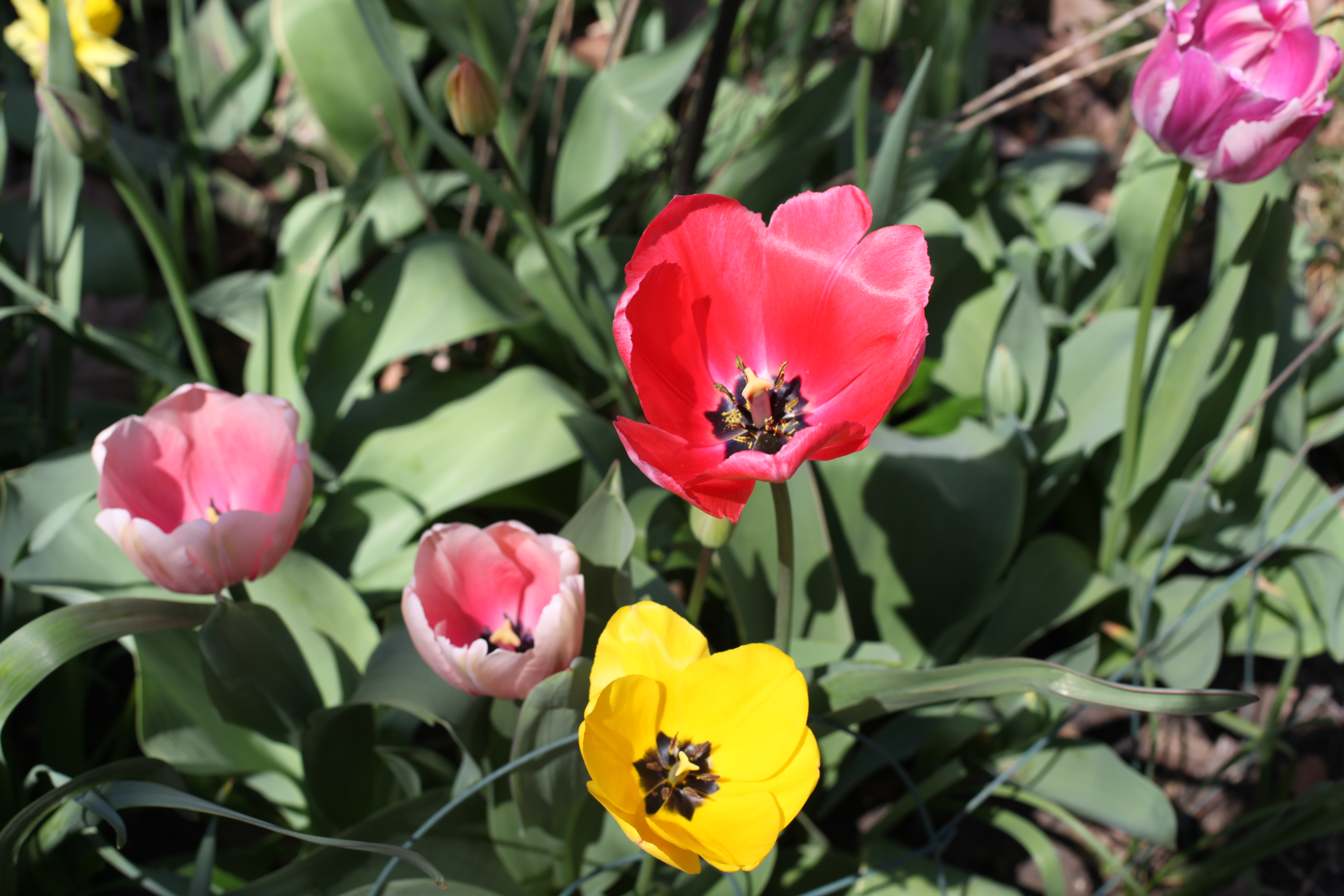
There’s no tulip festival in New York, unfortunately.
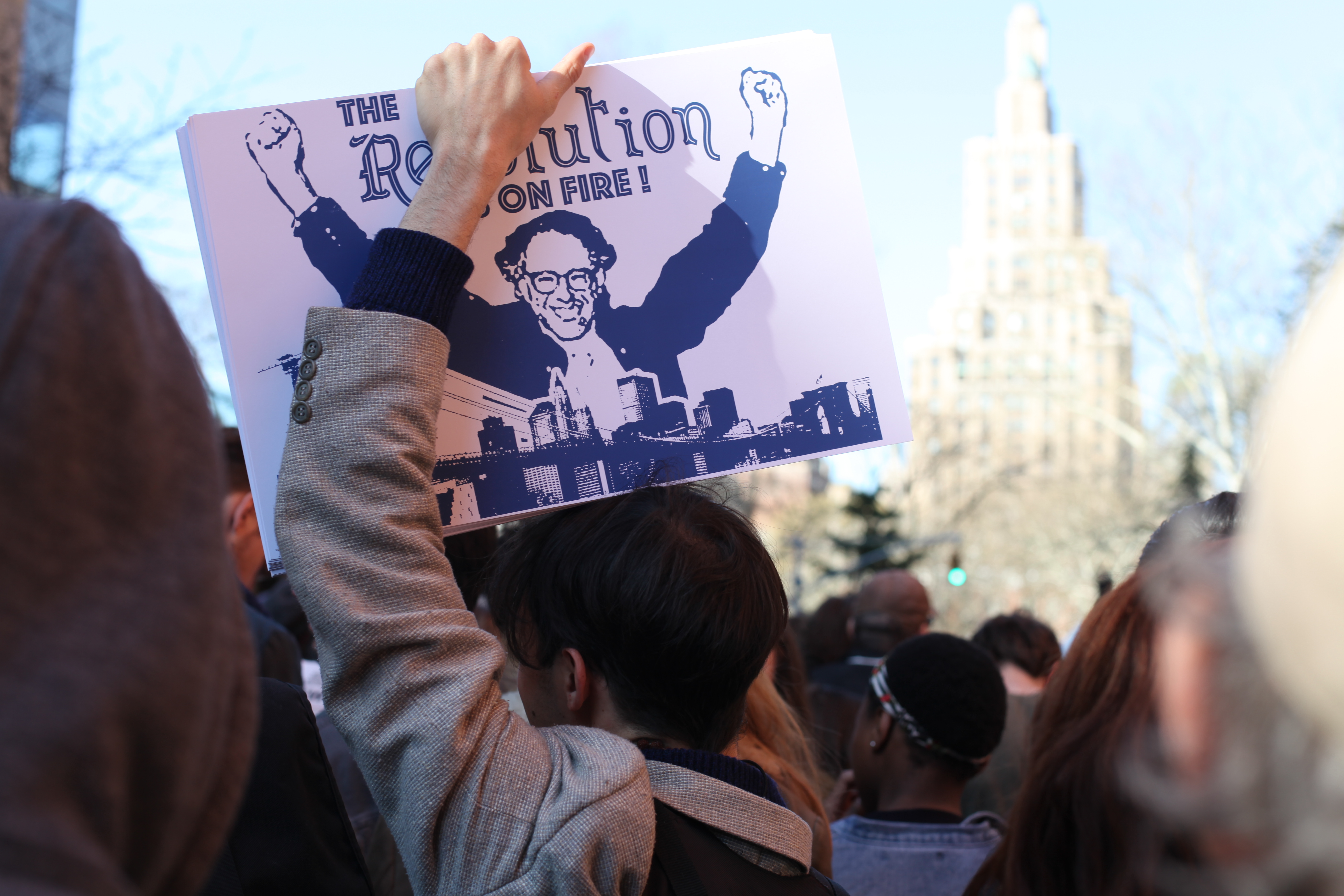
This year, the transition to spring in New York came with excitement as the presidential race headed to the city. The Bernie vs. Hillary tension has been in the air for a couple weeks now. I didn’t run into Hillary on the subway, but I did attend the massive Bernie rally in Washington Square Park (and therefore have the inclination to think that Bernie could win on Tuesday, but I’m still not sure I would place money on that bet.)
27,000 attended the rally. The one today in Brooklyn apparently had 28,000 attendees.
New York is an exciting state to be in for a presidential primary! My favorite bit so far has been seeing the performance artist going around dressed as Trump allowing people to beat him up for a small fee. The dedication is real.
I love how New Yorkers are willing to hit the streets and rally for their candidate, but also won’t put up with campaigning in places it doesn’t belong. For example, when students in the Bronx wrote a letter to their principle to cancel Ted Cruz’s visit, or when 1,000 people protested Trump outside the Grand Hyatt.
I have to say I feel like I have front row seats to the election right now, partially because I work for a news broadcast, but also because New York is just being New York. It’s hard to miss things here.
Everyone at the rally was kind, polite and eager to talk with other supporters.
After Tuesday things will probably start to go back to normal, and then I’m in the home stretch to summer vacation… where I will hopefully have a lot more time to write blog posts! I’ve been lacking a bit this semester.
For now, let’s hope my final projects & exams don’t eat me alive… and that John Kasich wins New York instead of Cruz or Trump. (Unlikely. Is John Kasich even here?? Has he given up???)
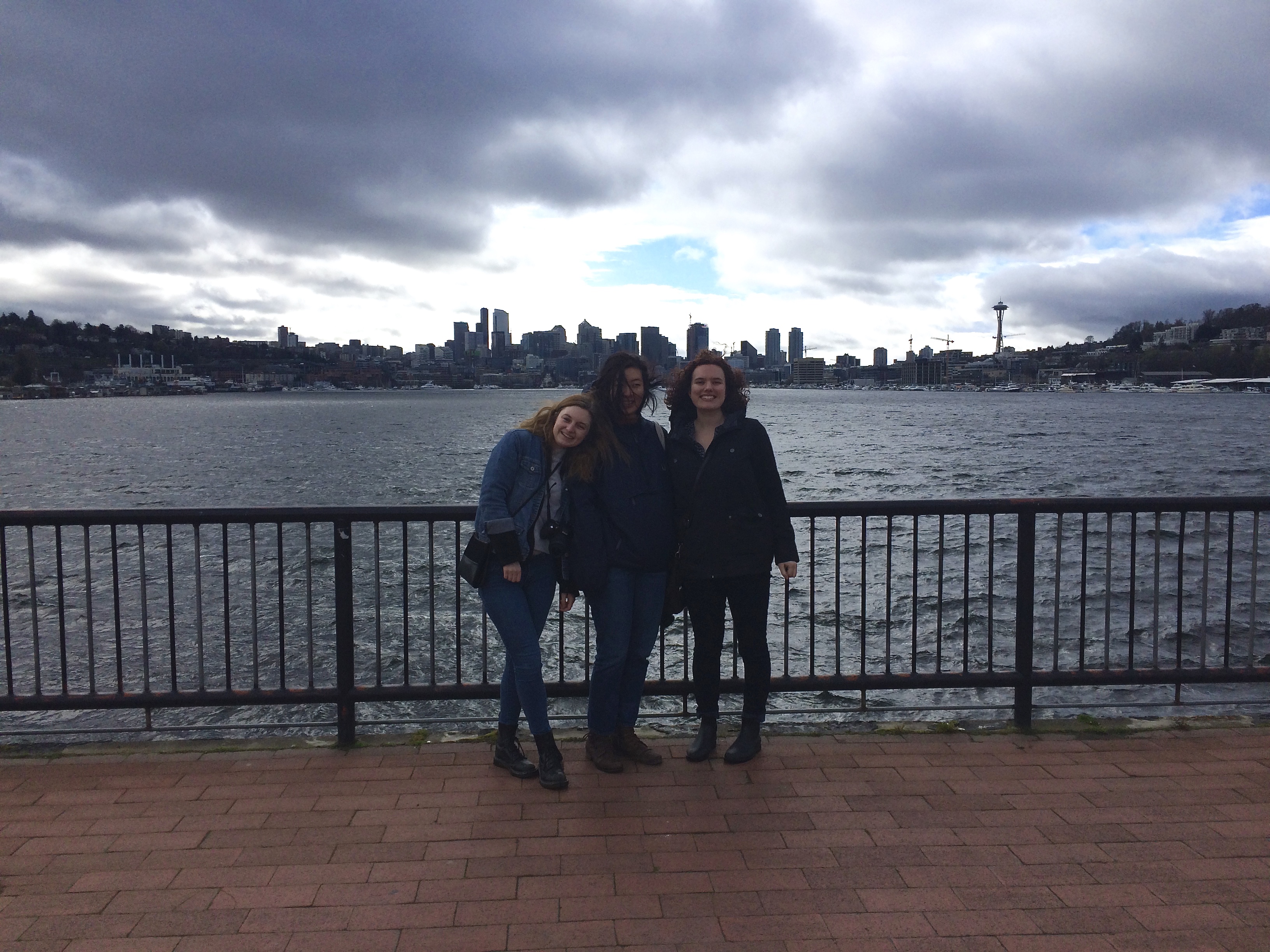
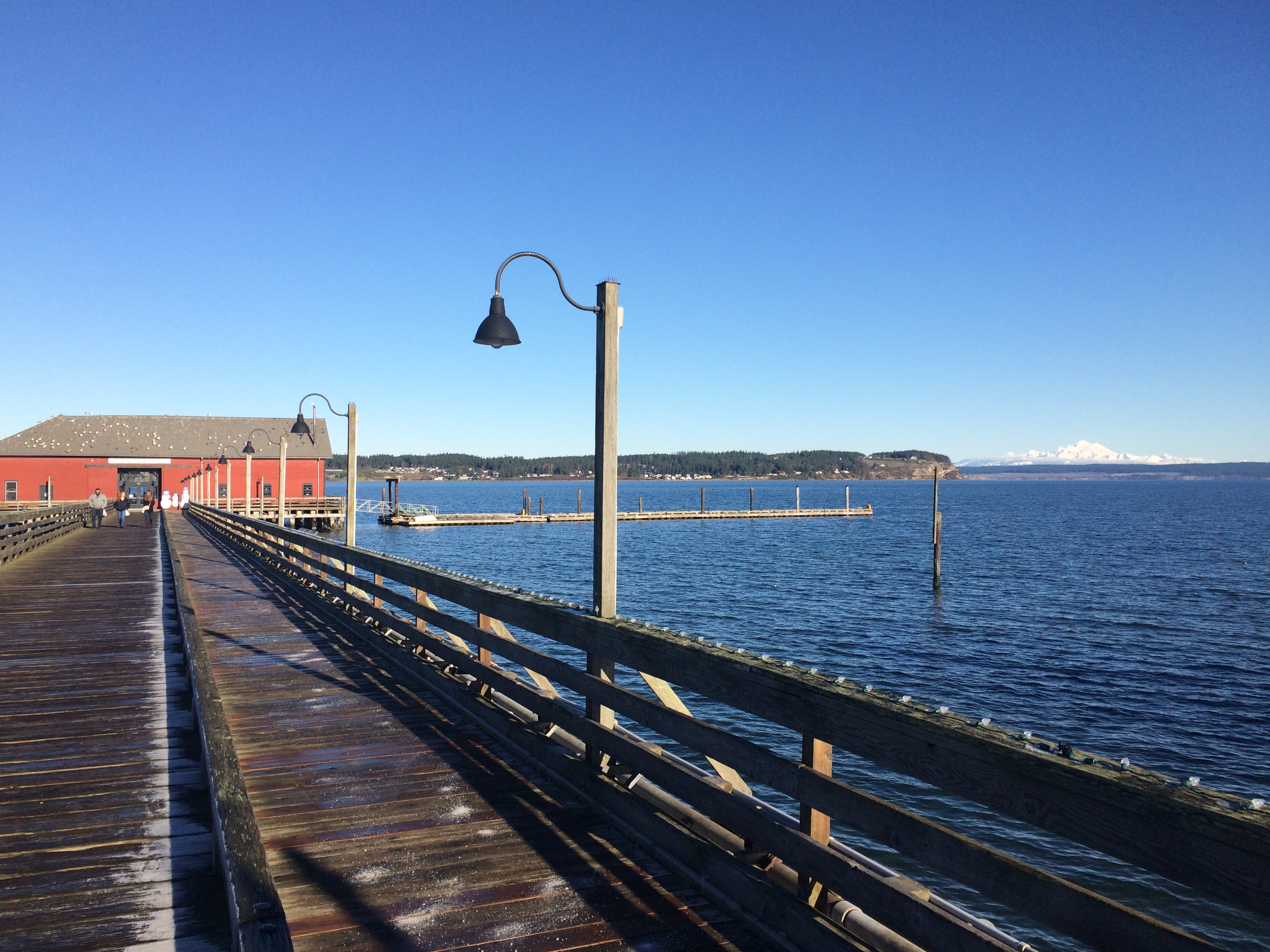
For spring break I brought two of my friends from college to the wild wild west known as Coupeville, WA. They’d never been to the PNW before and so got to experience some special Washington things, such as rain.
Could be in Grey’s Anatomy.Silly kayakers being chased by harbor seals.
If you’ve never been to Coupeville before and want to know what it’s like you’re in luck because I’m working on a short story about it.
Here’s part one:
Un-William and the Gods of the Deep
(This is a fiction story based off some true facts. It is also a rough draft, so suggestions and critiques are welcome as always.)
William, owner of the famous Local Grown Cafe on the Coupeville wharf, retired and sold Local Grown to Un-William. I think Un-William’s name is Dave.
Ever since William’s departure Local Grown has lost some of its flavor. I don’t mean literal flavor, because you can still get a lavender latte and purchase fresh mussels on Friday’s. I mean its local flavor.
First of all, Un-William is friendlier than William and that turns people off. He is faster at making drinks than William, which is confusing for people. He doesn’t have a dog lying in the middle of the cafe, so people no longer have to watch where they walk and now they don’t really know what to do with their feet. He also doesn’t have the limp that William had, which means he has less mystère, which makes the whole experience a bit too average.
The people of Coupeville aren’t that accustomed to change.
There’s also the flies. William must not have shared his pest killing secrets with Un-William, because the flies circling the dessert case and sucking up the leftover drops of syrup are a major issue.
The writing group still meets there on Thursdays. Tourists still wander in, mostly because there’s not really anything else to do–why do they come here anyway? This town is not interesting, touristically speaking. But there’s something off about it, some sort of bad juju to the place now that Un-William is the owner. Like when a hermit crab wears the discarded shell of an older hermit crab friend. Or like when you walk around your quiet home, wrapped up in your dead father’s sweater. Cozy, but also a bit creepy.
Coupeville isn’t really a magical place, although it was the set for the movie “Practical Magic” with Sandra Bullock and Nicole Kidman. But it is a place where nature still has the upper hand, and there’s something cruel about it. Beautiful and merciless, like the cold sea… or a forest full of stinging nettles.
My cousin Evan (a vrai islander) and I on the Port Townsend ferry. Photo Credit: Judy Gu
Un-William–Dave–knows what he has to do to get the good juju back to the cafe on the wharf.
Everyone agrees that Local Grown is a dumb name. Maybe a good name for a food co-op or a farm store, but not a coffee shop. Even a coffee shop that also sells mussels and local wines. Dave decides on “The Salty Mug.” It’s cute and likeable. Tourists will now know that it is a coffee shop and not a random fishing store for boaters who dock nearby.
Everyone also agrees that the cafe is not a boat. However, it is kind of like a boat because it’s on the very edge of the wharf, sticking way out into the water like a giant red barn on stilts. When the tide’s in and the wind is blowing it moves side to side with the waves, causing customers that are light of heart to get a bit worried and take their coffee to go. It’s not a boat, but it still should follow the rules of the water, and Dave was a sailor for years before he retired and bought this coffee shop. So he confers with the harbormaster and they decide that it would be best for the good of the cafe and the good of the wharf if they do a renaming ceremony.
Dave has never renamed a boat before because he always loved the name that his sweet sailboat came with: Orcinus, named after the killer whale. So he had to do a bit of research at the local library in order to get down the details of renaming. Especially since this was a delicate situation, given that it was the renaming of a coffee shop, not a boat.
Luckily the library had a whole section on it.
Actually luck has nothing to do with it. Because having an unlucky vessel is not about luck at all; it’s about the wrath of the Gods of the Deep. Poseidon, for example, records the name of every vessel into the Ledger of the Deep and knows them personally. To change the name of a vessel unceremoniously brings about his wrath, therefore the resulting storms that trash the unnamed vessel are not due to bad luck at all, but the results of the laziness and ignorance of the Gods of the Deep. Poseidon is a control freak.
Dave is not lazy nor is he ignorant of the Gods of the Deep, and so he photocopied the three-step renaming process out of an old book and began his preparations.
The three steps are:
Removal of Previous Identity
De-naming Ceremony
Re-naming Ceremony
Sounds simple, right?
No, it is actually very complicated. And missing a step could be disastrous.
Dave held the ceremony on a rainy Saturday morning. The people of Coupeville are early risers and prefer when there’s a bit of a drizzle.
First he purged the previous identity. This was easy and just included taking all the signs down from inside and outside that said “Local Grown.” It was imperative that the new name not enter the premises until after the ceremony, so Dave had yet to even speak it.
Then, on the section of the wharf outside the coffee shop, with the small crowd of Coupevillians around him (and a few confused tourists as well) Dave wrote the name “Local Grown” on a piece of driftwood and held it out, along with a bottle of champagne. Reading from his photocopy, he called out to the Ruler of the Deep for the de-naming part of the ceremony:
“Oh mighty and great ruler of the seas and oceans, to whom all ships and we who venture upon your vast domain are required to pay homage, implore you in your graciousness to expunge for all time from your records and recollection the name “Local Grown” which has ceased to be an entity in your kingdom. As proof thereof, we submit this ingot bearing her name to be corrupted through your powers and forever be purged from the sea.”
He dropped the driftwood off the wharf and into the sea.
“In grateful acknowledgment of your munificence and dispensation, we offer these libations to your majesty and your court.”
He opened the bottle of champagne with a pop and poured it all into the ocean. The Coupevillians clapped politely as Dave went to get another bottle of champagne. He flipped over the crinkly page of his photocopy.
“Oh mighty and great ruler of the seas and oceans,” he called out, the wind whistling slightly.
“To whom all ships and we who venture upon your vast domain are required to pay homage, implore you in your graciousness to take unto your records and recollection this worthy vessel–in the form of a coffee shop–hereafter and for all time known as The Salty Mug, guarding her with your mighty arm and trident and ensuring her of safe and rapid passage throughout her journeys within your realm,” the crowd cheered a bit here.
Photo Credit: Judy Gu
“In appreciation of your munificence, dispensation and in honor of your greatness, we offer these libations to your majesty and your court.”
After finishing this speech, he walked to the West side of the wharf and poured the second bottle of champagne into the ocean while walking to the East side of the wharf.
The crowd clapped and cheered a little. Then Dave got another bottle of champagne and a glass and called out to the mighty rulers of the winds, Great Boreas, Zephyrus, Eurus, and Notus, flinging a glass of champagne towards the North, West, East, and South respectively.
As soon as Dave had finished calling out to Aeolus, guardian of all the winds and all that blows before them, he turned to the crowd and gave a small nod. Everyone clapped rather politely as he started distributing glasses of champagne (from the never ending supply) and the Shifty Sailors (the local Coupeville group of old men who sing sea shanties while wearing striped shirts) began to sing heartily.
Suddenly, not three seconds into the Shifty’s song, there was a deep rumbling that came from underneath the wharf. The wooden structure trembled. The crowd made that noise that crowds make when they’re surprised, then quieted as the wind began to blow a bit harder, the rain suddenly large and fast droplets instead of the mist it was before.
Dave’s white hair was plastered to the top of his head, his socks were soaked through as sandals quickly filled with water. As the crowd drew closer together, for warmth maybe or security, he turned away with his glass of champagne and looked out into the cove, as if searching for something.
The rumbling grew louder. Dave flipped through his photocopies frantically, wondering if he missed something, but they were now streaked with water as the sea began to slosh up against the sides of the wharf.
The rumbling had become painfully loud when a voice from the crowd rose up, “Look!”
At my family’s cabin in the woods of Plain, Washington we have an amalgamation of things that people don’t really want anymore. Old lamps, way too many couches, and old books that have been read, but are still laying around. One of these books is a self-help book called Don’t Sweat The Small Stuff… And It’s All Small Stuff, by a guy named Richard Carlson.*
None of the books we had at the cabin hooked me the way Richard Carlson’s self-help book did. Maybe it was out of boredom–during down times at the cabin, when everyone was napping or knitting or secretly switching the music from Beethoven to Mozart, I would flip through his book and open it to random chapters, such as chapter 6, titled, “Remind Yourself That When You Die, Your ‘In Basket’ Won’t Be Empty,” or chapter 21, which is called, “Imagine Yourself At Your Own Funeral” or chapter 58, titled simply, “Relax.”
Bubbles and happy people at Washington Square Park.
In my kid mind, Carlson was an amazing human being. He wrote about how he would wake up at 5 am every morning for “alone time” before his family would wake up. He would meditate, tell his wife he loved her every single day, and smile and wave at strangers.
At the time I was reading Carlson’s book (I can’t remember my exact age, maybe I was 10 or maybe 13?) I lived a very stress-free, happy life filled with loving family members and cats. But I also felt the need for constant self-improvement, and I wanted to be like Richard Carlson. I would sit and picture my future life as Richard Carlson–of waking up and meditating on my deck as the sun rose, kissing my wife on the cheek when she woke up and petting my golden lab named Daisy while making my kids a healthy breakfast, while the sun shone through my windows illuminating my beautiful, clean and minimalist house.
A peaceful sunset in a busy place.
Going into the records of my past journals (all of which I still have, since they provide a good laugh) I see a pattern of Carlson-inspired self-improvement action plans–lists that include things like getting up and going running before school (which I never did), cutting carbs from my diet (also never did), and being kinder to my sister (you’ll have to ask her about that).
I don’t want to say Richard Carlson’s books were wrong because he was actually quite famous and his theories probably helped a lot of people (also maybe I still harbor a weird admiration for him). But I did realize that for me, not “sweating the small stuff” is literally impossible. I’m always sweating the small stuff.
For example, while I’m writing this I am worrying about whether or not I should print out a document for my next class. This includes a circling line of questioning in my head that goes like: Do I really need the document? Are we going to get that far in class? Could I get away with not printing it? If I do print it, where should I go to print? Where is the closest printer on campus? What time do I need to leave this cafe in order to print and then get to class on time?
What would Richard Carlson do?
(Carlson would’ve printed the document out over the weekend. He would’ve also read the document, something which I have not yet done, despite the possibility of us discussing it in class.)**
What would Richard Carlson do?
I turned 21 last Monday, and I definitely felt more like a Bridget Jones than a Richard Carlson. But I also realized that everything Richard Carlson was trying to help me achieve, things like “happiness” and “inner peace” are quite arbitrary.
Not only that, but despite being unable to make lifestyle changes such as waking up early and running and eating salads, the major goals that I found written down in my old journals I actually did achieve. Like graduating high school, going to NYU and studying journalism in New York.
Looking back, I find it funny how my younger self was fixated on this book, and the idea that a few changes in my life could bring me closer to self-actualization. As a 21-year-old my life feels a bit like when you’re skiing too fast down a very steep slope and barely hanging onto your control. But I haven’t crashed yet, so where Richard Carlson would see room for improvement, I’m choosing to see a pretty good–if slightly shaky–skier.
Anyway, MIA knows what I’m talking about:
*Disclaimer: I haven’t actually read Richard Carlson’s book since I was young. Therefore everything about it might be a figment of my imagination and memory (although I did look up the chapter titles).
**Update on the printing worries: I did end up printing the document for my class, but we didn’t end up discussing it.
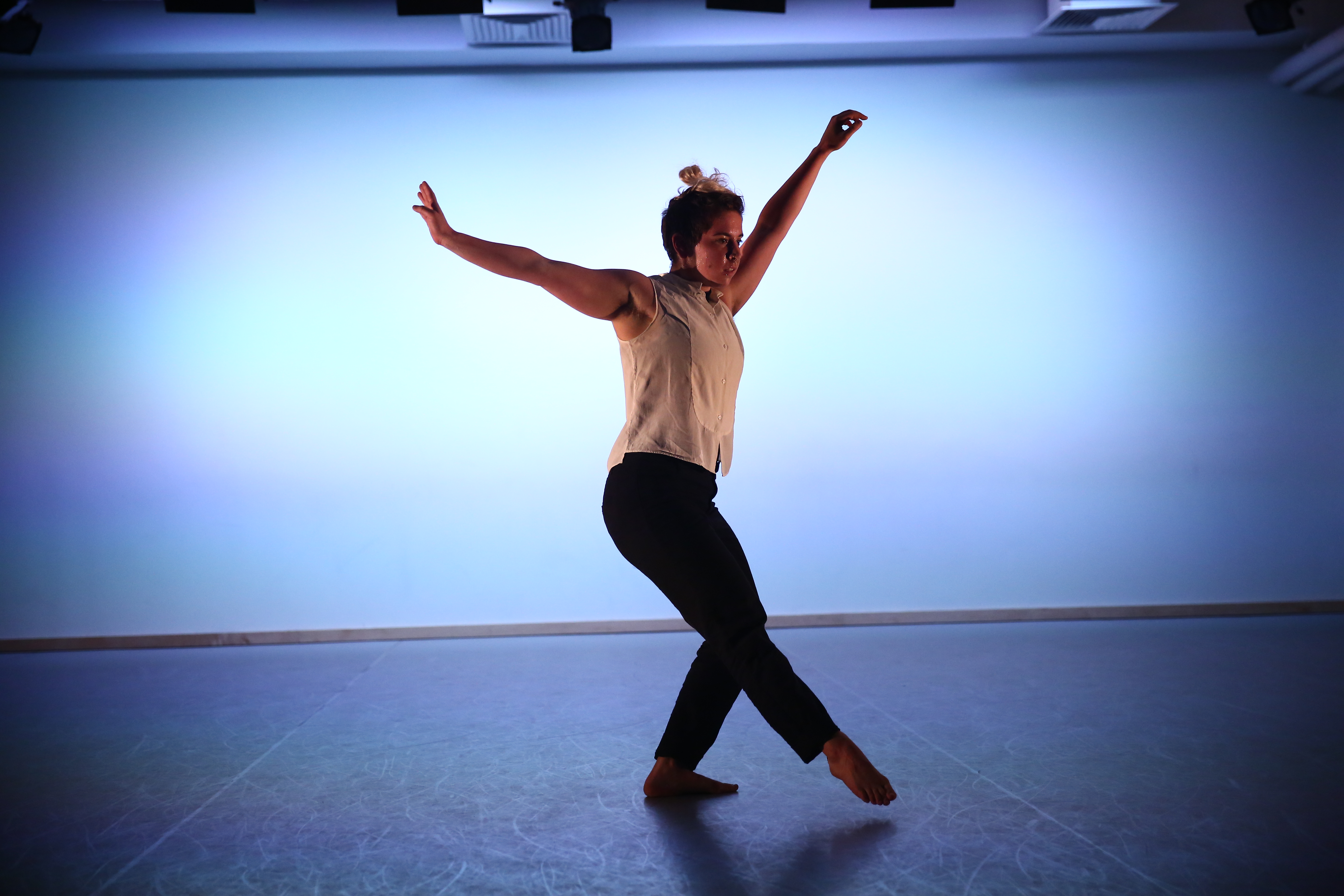
Just a few minutes before she leapt onto the Astroturf stage dressed as a bumblebee with bright red lipstick, Robin Cantrell, artistic director of Indelible Dance, was dressed in pre-show clothing–sweats, a shirt, some thick socks–and giving her audience members a quick PSA.
Robin Cantrell, Artistic Director of Indelible Dance, at her show “The City of Seasons” in September. Photo Credit: Darial Sneed
Besides welcoming everyone to Indelible Dance’s annual show, Cantrell explained to the audience that they could get up and get more drinks whenever they wanted, that they could stand up if the seats were too uncomfortable, or they could sit on the floor instead. She said that they could laugh if they found something funny, cry if they found something sad, clap or cheer if they felt moved to do so.
Then she disappeared behind a curtain and with the first few upbeat notes of Vivaldi’s Spring movement from “The Four Seasons,” Cantrell was fully transformed into a bumble bee, smiling, jumping, and twirling around the circular stage, “pollinating” the flowers with a pair of antennae sticking out of her short brown hair. The audience laughed; her happy energy was contagious.
“I think most of us spend most of the day sitting and looking at a flat screen. And so when you go to see a show and you pay money for it, it seems silly to do the exact same thing,” said Cantrell. “I want the audience to feel fully in something and that it’s a really exciting, enjoyable experience.”
After spending her beginning years as a performer dancing ballet, Cantrell decided to shed the pointe shoes and tutus–and the rigidity of the ballet technique–to delve into the world of modern and contemporary dance. She’s a teacher, a traveler, and a performer, but most of all she is a unique voice standing out in the New York City dance community.
“I remember being in kindergarten and telling everyone I was going to be a professional dancer, I was going to move to New York and I was going to marry Michael Jackson,” she said. “I’ll let you guess which two of those things happened.”
Originally from Minnesota, Cantrell, who is 35 years old, started dancing at the age of 2, attended a competition dance school throughout high school and then got her BFA in Ballet Performance from the University of Utah. After performing for the City Ballet of San Diego for a few years, she was “pretty bored of all the Swan Lake” and started taking modern dance classes.
Eventually Cantrell and a fellow dancer, Mira Cook, decided to put on a modern dance show in a coffee shop. Realizing modern dance and choreography was something she was passionate about, Cantrell moved to New York at her first job offer–which happened to be dancing for a company that did ballet to heavy metal.
Now, Cantrell dances for Battery Dance Company, a modern dance company of five dancers based in lower Manhattan that is largely funded by the state department.
Cantrell has the body of a dancer, thin but with the hidden muscle that comes from years of dance training, and a calm demeanor–results of the meditating and yoga she does regularly.
“She’s very rubbery,” said Cook, who has been dancing with Cantrell for 13 years. “She looks weightless, but not in a floating way. Some people have said that she looks like a puppet sometimes, like that her body moves itself without effort.”
Besides traveling, teaching, and performing with Battery Dance Company, Cantrell keeps her home life with her husband in Williamsburg as organized as possible so that she can be wildly creative when choreographing and coming up with ideas for shows.
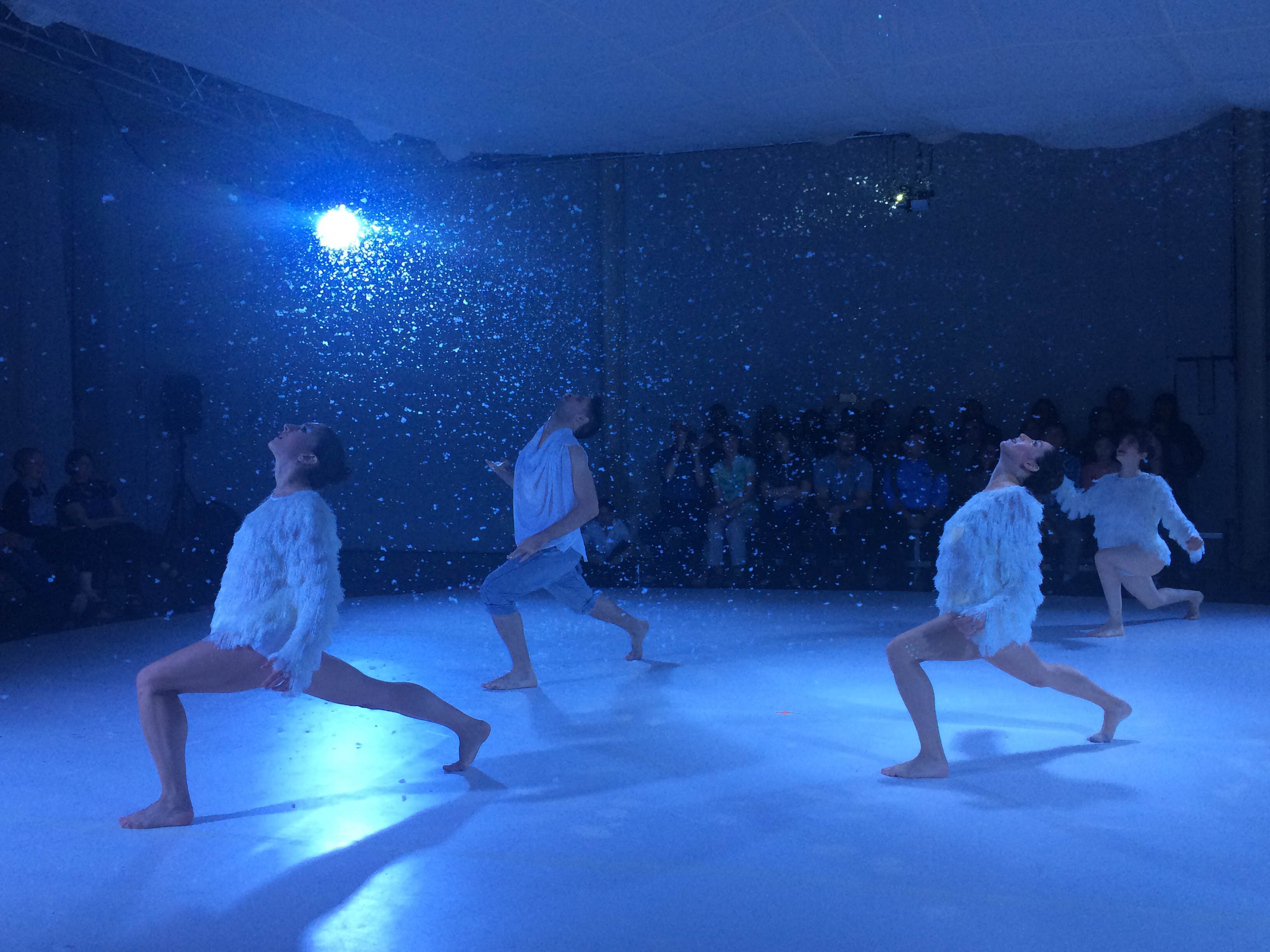
During the “Winter” part of Cantrell’s show, where snowflakes fell from the ceiling onto the dancers.
“Usually I think of the whole show at once in the shower, the moment the previous show ends,” she said, making the creative process sound incredibly easy.
The ideas might come easily to Cantrell, but putting together a show requires the collaborative effort of her entire company. While the dancing and choreography is the most important part, Cantrell also puts a lot of energy into figuring out ways to connect with the audience. For example, she never has shows in a traditional theater, opting instead for a more interactive layout, where the audience is at the same level as the dancers.
“She has a very good eye for the big picture of what she wants,” said Cook. “Having known her for a while, I see her exploring ideas that I know are themes in her life. So I think it’s kind of personal, but she takes it to a really fantastical place.”
Her show this September, called “The City of Seasons” took a twist on a classical piece by the baroque composer Vivaldi, including a pas de deux done under the spray of a hose during Spring, dancers serving ice cream to the audience during Summer, a fight over sweaters during Fall, and chilly fog and falling snowflakes during Winter. The special effects created palpable season changes for the audience, making the dancing that much more powerful.
For Cantrell, keeping dance alive means creating a connection with the audience and making them feel comfortable at a dance show. She especially tries to connect with a younger audience, those who aren’t necessarily interested in attending a more traditional ballet or dance show.
“A show is for the audience, you can’t do it in a vacuum. It’s for them, it should be entertaining,” said Cantrell. “Whether that entertaining is making someone horrified or laugh or cry or fall in love, you have to illicit something.”
To see Robin Cantrell and Mira Cook dance, check out duetproject.com
This post is in response to my friend Christina who asked for an update on my life and to show her NY in the fall.
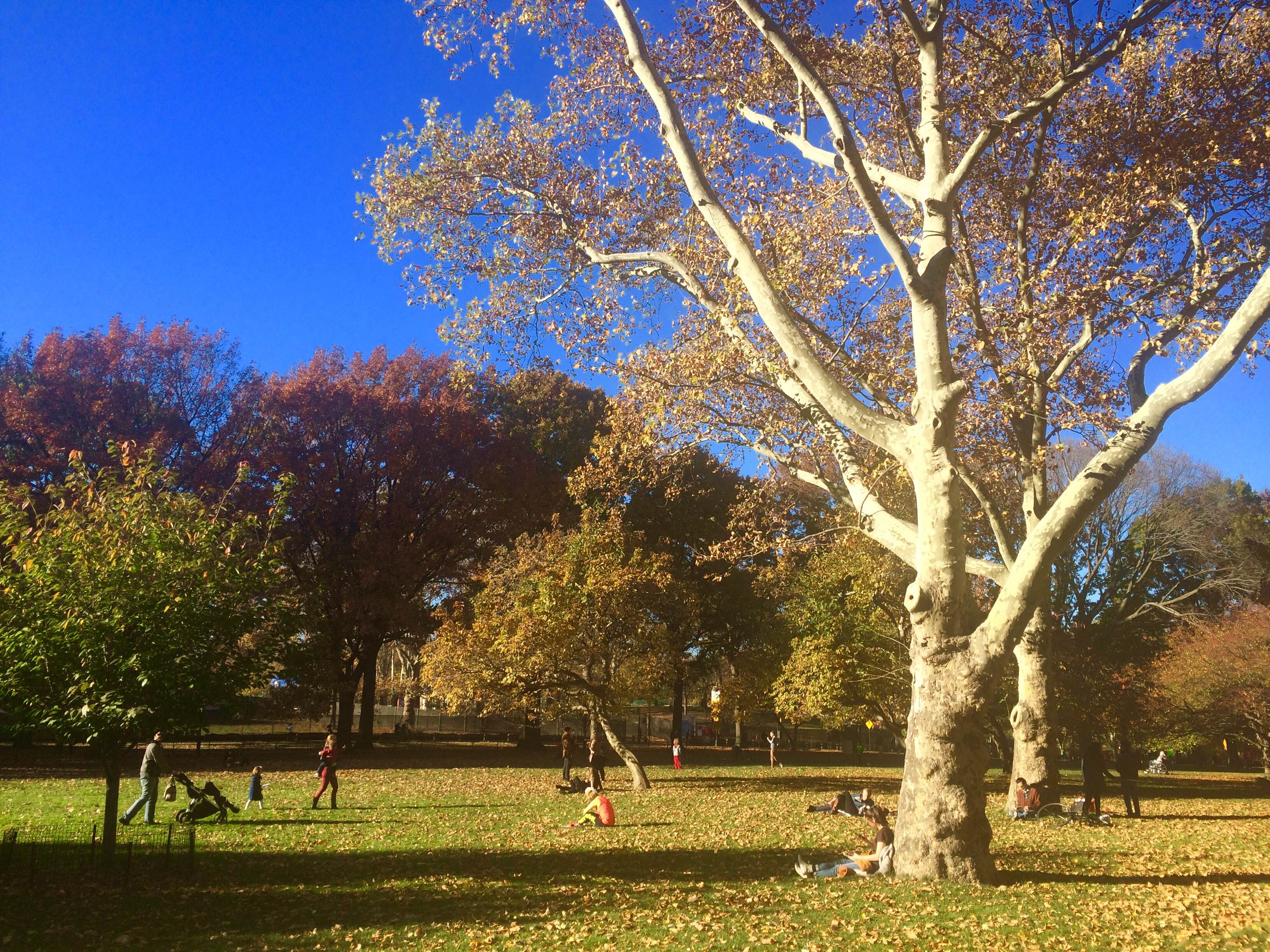
I feel so nostalgic in the fall, but I think that’s actually a pretty universal feeling.
At the very beginning of the semester in my French lit class we were studying French Romanticism, and this line by Étienne-Pivert de Senancour (super long name) is something I still think about when walking through piles of leaves and drinking peppermint hot cocoa:
“Quand la mort nous sépare de tout, tout reste pourtant, tout subsiste sans nous. Mais, à la chute des feuilles, la végétation s’arrête, elle meurt; nous nous restons pour des générations nouvelles, et l’automne est délicieuse parce que le printemps doit venir encore pour nous.”
I’ll let you put it into google translate (in other words, I’m not super confident in my translation skills). My personal interpretation of what Senancour is saying is that when we die, everything continues without us–life goes on. But in autumn, when the leaves fall and everything begins to die, we remain and get to watch as spring comes again. It’s kind of like we get to experience death, without actually dying.
Kinda dark, but he was a Romantic, so I get it.
The hot cocoa I drink while thinking about French romantic writers. (Pretty sure what I was actually thinking about at this moment was how I had sat on a partially wet bench..)
And speaking of nostalgia, we’ve been studying the King of Nostalgia in my French lit class this week: Marcel Proust! Although I think what he experiences when eating madeleines and drinking tea is so much more than nostalgia. It’s a lighting strike of feeling, so strong that he shudders from the sensation. I’ve never had a Proustian experience from tasting something, but I do get the same flash of remembrance when I smell grapefruit perfume (thanks to that really sweet Bath & Body Works spray that Lois used to wear in middle school) or the smell of a certain type of mold (the kind that grows in really old Honda Civics).
The nostalgia that comes with fall is different than this. It’s slower, less specific. More melancholy.
(Me.)
But I love the fall, and the feeling of melancholy. This article, “The Case for Melancholy” does a really good job of explaining why sometimes a little sadness can feel good. It’s something I’ve been thinking, and writing, about a lot lately because it’s a newer development within me. I used to shy away from all things sad, even my clothes (remember when I wore pink every day?) were a protest against sadness. But the more I study literature, the more I realize that sadness is a part of humanity that’s vital for creativity. (The beginnings of this transition can be seen in this blog post I wrote Freshman year. So young, so naive.)
Super intense old dudes in the park playing with RC boats–their own form of nostalgia.
I think what I’m getting out of writing this blog post is that I love my French lit class. Every time I leave that class I have a world of new things to ponder.
Sophie Sotsky, the artistic director and founder of the modern dance company, TYKE DANCE, is familiar with the trope of the “starving artist.”
“Everybody has a Kickstarter every week. It’s like, ‘Okay everyone, give your $15 to this person, then the next week it’s this person.’ And it’s the same dollar bill that’s just going around in a circle and nobody has any money,” she said.
Sophie Sotsky, artistic director of TYKE DANCE. Photo by Paula Court, courtesy of Gibney Dance.
With her curly hair cropped asymmetrically short, a septum piercing, and an array of layered clothing—which she gestures to when explaining how she “sucks” at creating dance costumes—Sotsky fits the part of an unconventional choreographer.
She says she’s still working on “codifying her movement vocabulary,” but since starting TYKE DANCE in 2011 Sotsky has been creating pieces that combine modern dance techniques and extreme athleticism. It’s a language that’s not always easy to understand.
“You know how when you see a Jackson Pollock painting, it’s actually just paint. The paint doesn’t represent something else, the subject matter and the materials are just the same: paint. That’s my dance. It’s about what’s physically happening,” she said.
The public’s inability to understand dance could be the reason it is one of the more underfunded art forms, and at a time when the cost of living in New York is at an extreme high, dance companies are constantly trying to find cheaper ways to continue making their art.
Sotsky combines modern dance techniques and extreme athleticism. Photo courtesy of Lindsay Keys.
According to Sotsky, the days of large donors giving money to dance companies are over, so dancers have to rely on crowd funding sites like indiegogo.com or kickstarter.com, which are platforms for online fundraising. But crowd funding can only be successful if donations are made from donors outside of the community, otherwise it becomes a cycle of the same ten dollars being passed from dancer to dancer, ultimately making the dance community more isolated.
“I worry that as an artist I have resigned myself to the fact that I will unquestioningly spend the rest of my life asking everyone I know for $10,” said Sotsky. “So I’m 26 and I’m not going to ask for that money until I know that this is the show of my career.”
Instead, Sotsky pays for all of her performances and projects out of pocket by working as a freelance electrical technician for nine different dance venues in Manhattan. She lives in an apartment building in Bushwick that has a rehearsal space she can use and she has a group of nine dancers willing to work with her for free.
Gregory Dolbashian, artistic director of the DASH Ensemble, a group of contemporary dancers based in Manhattan, thinks that people need to stop using the words “starving” and “artist” in the same sentence.
“You have to believe that the power is in your hands,” he said. “I think that there’s a lot of money in the city and there’s a million and one ways to get it.”
Dolbashian has been successful with Indiegogo campaigns in the past, but he says that the key is in the personal connections.
“I really try to actually be shaking hands and speaking with people as opposed to just typing on my computer,” he said, but he credited some of his success to the fact that he was born and raised in New York City, and therefore has lifetime relationships he can rely on.
Compared to other art forms such as music and film, funding for dance on crowdfunding sites is incredibly low. In 2014, around 4,000 music projects were funded on Kickstarter, but only 416 dance projects were funded.
One producer who is working on creating more opportunities for emerging artists is Alexis Convento, the founder of The Current Sessions, a performing arts organization that provides a space for choreographers and dance companies to perform.
The Current Sessions charges choreographers a production fee ranging from $125 to $150 and then provides rehearsal space, light design, sound design, and two performances at the Wild Project Theater in the East Village.
Convento enjoys being able to bring opportunities to emerging dancers; a group of people that she says are not ready to give up, despite the lack of funding.
“There’s this energy from the younger crowd to just keep on working even though it costs money,” she said. “When I was first starting work I had a bunch of part time jobs. I was maybe working two restaurants at times, which I know a lot of choreographers are doing now in order to sustain their artistic career.”
Not only do some dancers and choreographers work multiple jobs, but they also turn to alternative methods to stay fit because dance training classes are often too expensive.
“People are taking donation based yoga classes or people are training with their friends or becoming gyrotonic certified, or pilates certified,” said Convento. “It’s been difficult, but there are definitely ways of people coming together.”
Sotsky, who has worked with Convento and The Current Sessions before, has seen this energy in the dance community as well. It’s what keeps her working hard to make her art.
“I think that’s part of what makes the community so amazing to me,” she said. “Everybody here knows that we’re all going to be living in relative poverty for the foreseeable future and yet we choose it every day anyway. And I’m totally in love with that.”
Being with someone you’ve know for so long (12 yrs, people!), that you can be your terrible self around, is a bit like going home to your childhood bedroom and flopping down on your bed with a sigh of relief. Or shedding your humanity to reveal that you are actually a lizard. Whatever.
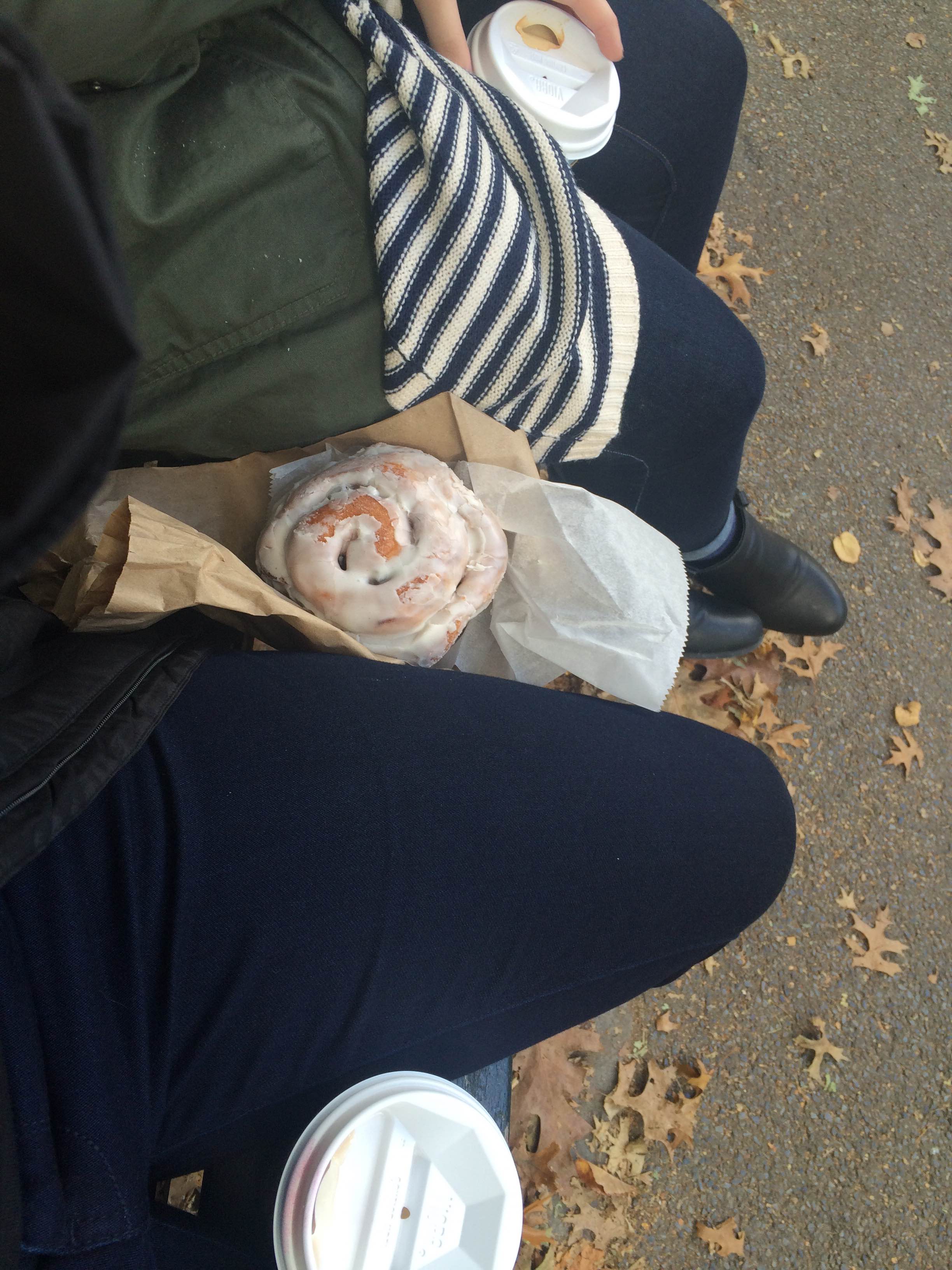
Balancing coffee between our legs and eating a giant sin-roll
It is also a bit exhausting because Em and I like to do as many things as possible in the amount of time she is here, so by the end we are like dead people walking around with lipstick smudges on our lattes.
Here are some highlights from this past weekend:
Walking across the Williamsburg bridge. Cool graffiti.
When I asked Em what she wanted to do while in NY, she said “Eat delicious food. Drink good coffee. That’s about it.” I said, “That’s pretty much what I do every weekend so sounds good.”
This is an aesthetically pleasing bathroom (at Two Hands).
Blurry snapchat selfies.
Street art in Brooklyn. Em and I like to talk about politics, which is something that’s developed in our friendship as we’ve gotten older. (You can’t sustain a relationship on talking about American Girl dolls forever I guess.) We have a great balance of agreement vs. disagreement to make the conversation really interesting. (Em’s a Bernie fan, I’m a Hillary fan. But we don’t let it come between us).
I really hope everyone has someone they can be their lizard selves with.
Just when we are beginning to stress out, NYU gives us a fall break. It’s amazing how one day off can make that much of a difference, but normal two-day weekends are just too short. It’s nice to have some free time in New York, because there are always things to see and do.
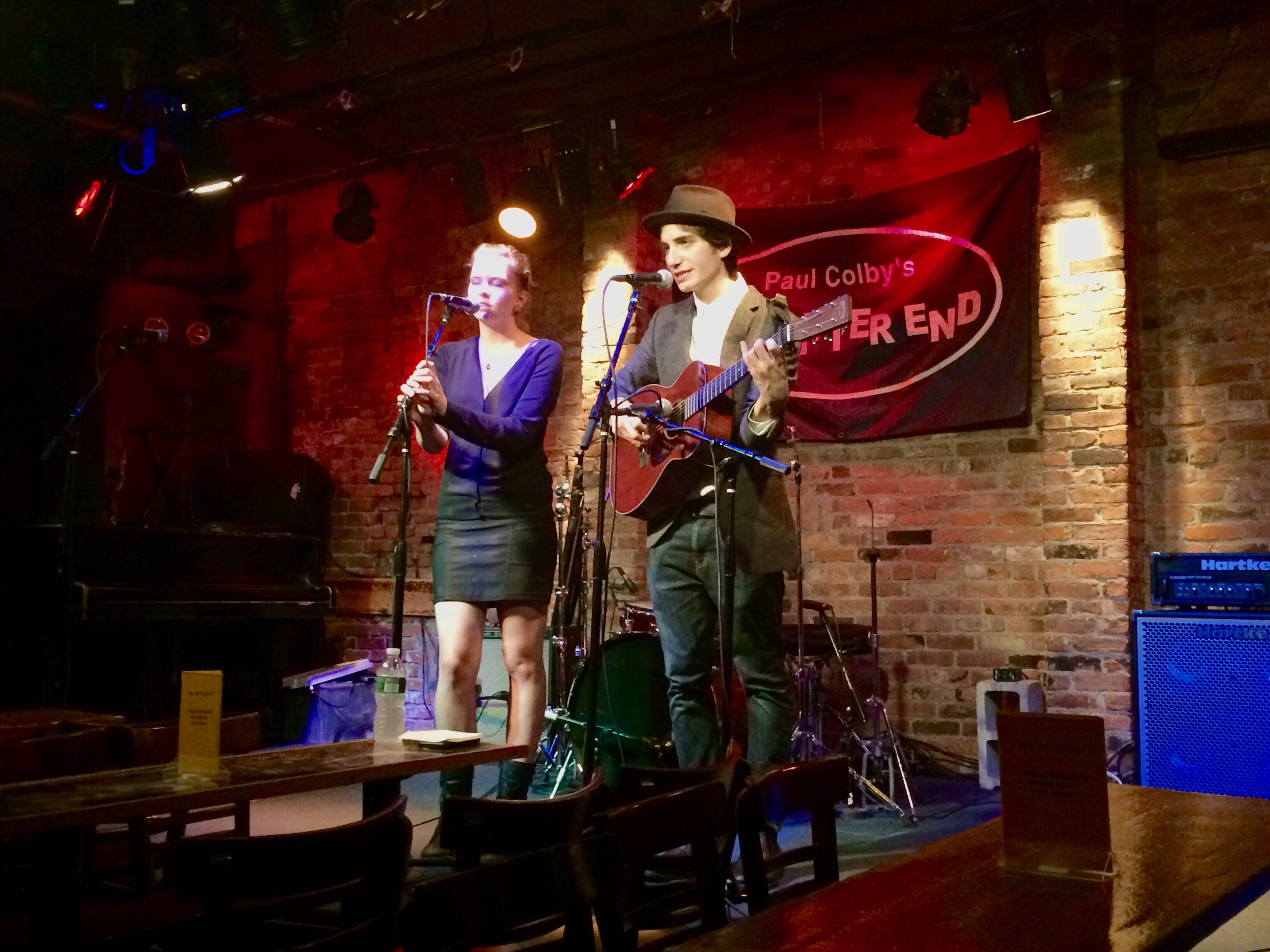
The weekend started after work on Friday, when I had basically planned to watch TV and eat candy corn all evening, but got pulled into the pouring rain by my friend Catherine. It was worth it to see this cool folk duo play at the Bitter End.
Afterwards, the rain had stopped and Catherine and I headed to her place, where she has an amazing view of the East River. We made cookies and drank wine. There really is no better way to spend a Friday night.
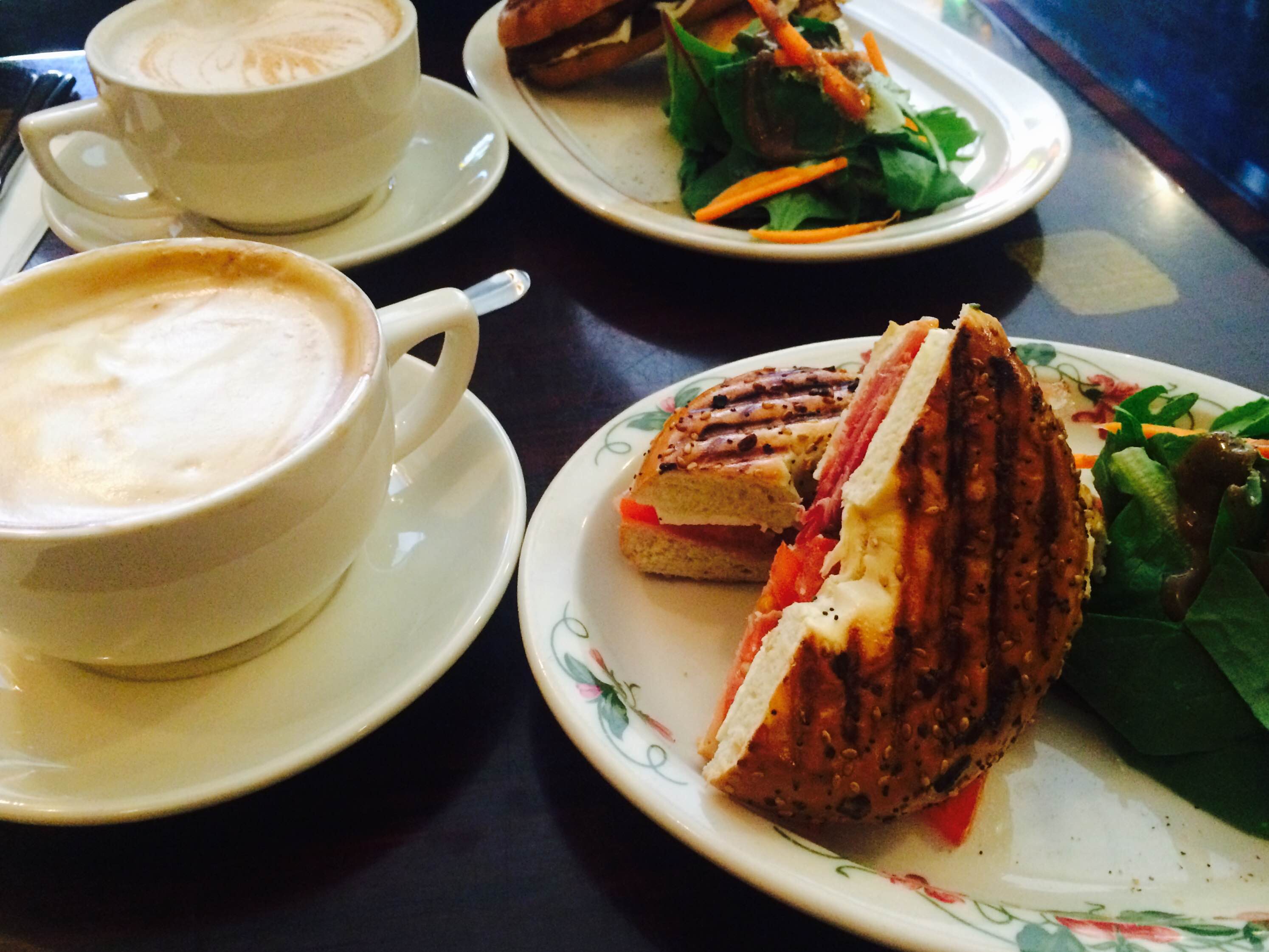
On Saturday morning, Judy and I got up early to go to yoga (Ok, not early… more like 11am, but still. It’s Saturday!) which turned out to be cancelled. So we got lunch & coffee at the B Cup Cafe in Alphabet City.
One of my favorite places.
After a long amount of time spent chatting/lazing about, we headed to the Whitney Museum in Chelsea. It reminded us a lot of the Centre Pompidou; there was great modern art and a beautiful view of the city.
Oui? Non.
In Freshman year, because we were in Europe, a lot of our friends went traveling over the fall break, but Judy and I decided to stay in Paris and see things/eat food. It was one of the first times I remember spending a lot of time with her, and so it seemed right to spend fall break together again eating food and seeing art. I really miss Paris sometimes–the city, but also the specific time, circumstances, and people of that year I spent there.
Cool sculpture balconies.
Yesterday some Original Paris People and some New New York Friends celebrated our Third Annual Canadian Thanksgiving, another tradition that started in Paris. Our cooking abilities have improved greatly over three years. (Or I should say Judy’s have, because she cooked an amazing spread with only the help of me and Noah mashing potatoes with our fists.)
Legit dinner party status. We accidentally color coordinated our outfits.
And finally today, on my day off I am getting to the things that need to be done… groceries, overdue library books, etc. But it’s not the worst thing in the world because of my fulfilling weekend. I also have something to look forward to: Emily’s coming next weekend! Gonna be wild.
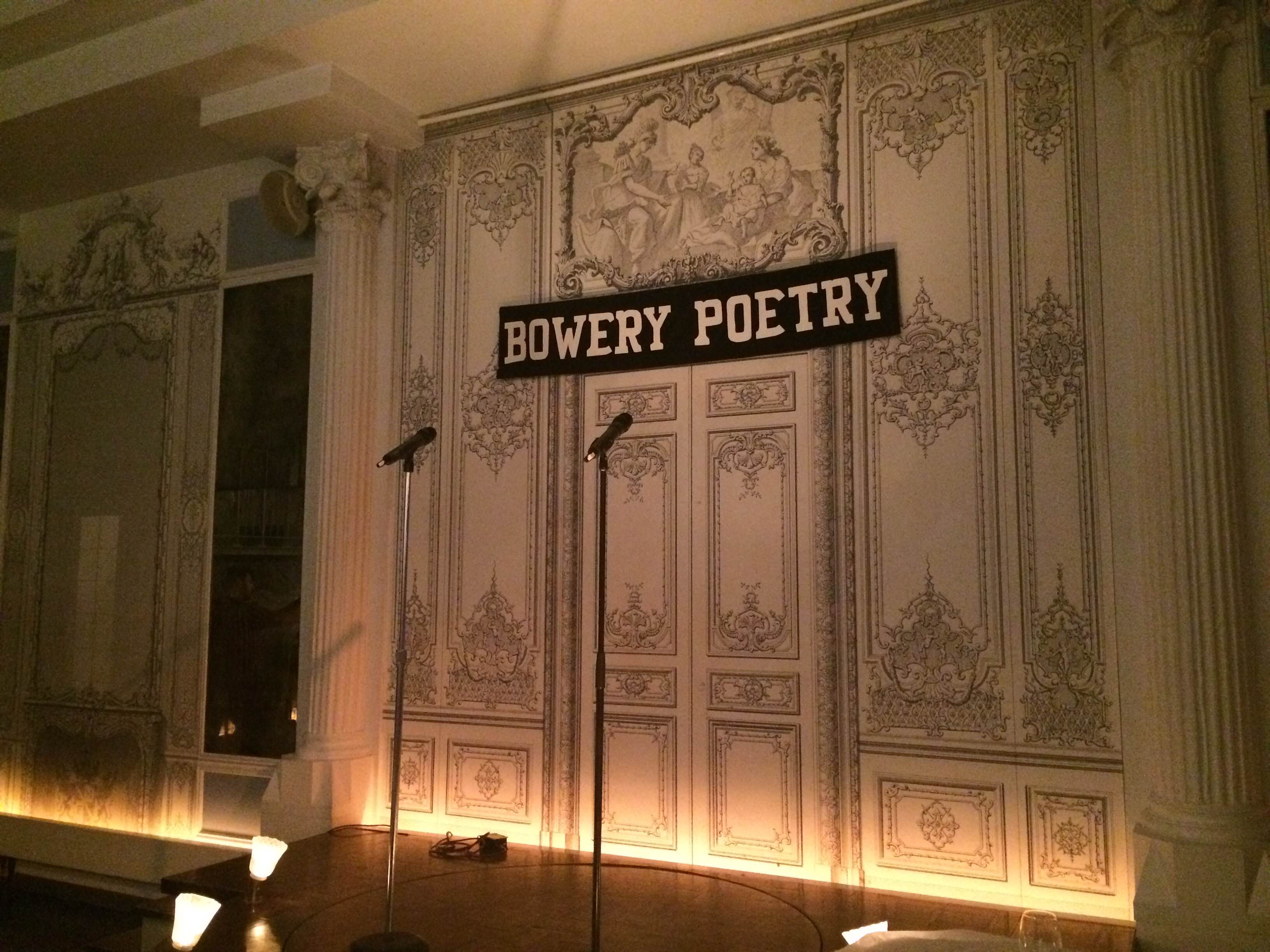
Every Monday night poets gather at 308 Bowery, not in a low-lit, dingy bar that one might expect for New York poets to hang out in, but in a room that has high ceilings, a glittering chandelier, and fancy French rococo-style wallpaper.
The décor might seem too extravagant for the starving poets of the lower east side, but since its foundation by the American poet Bob Holman in 2002, this space—called The Bowery Poetry Club—has become one of the few places in New York where aspiring poets can come together and share their work.
On Sundays and Mondays, poets and musicians take over the Burlesque stage.
“When it opened it was very much the quintessential bohemian dive poetry club, with exposed brick walls and sticky floors,” said Executive Director of Bowery Poetry Nikhil Melnechuk. “It really had a sense of both the eclectic and impoverished nature of poets.”
In 2012 the Bowery Poetry Club became a non-profit organization called Bowery Arts & Science. The space was renovated and rented out to a Burlesque club for 5 days of the week—hence the extravagant furnishings. Now, Bowery Poetry hosts open mics for poetry and music, as well as poetry workshops and reading nights.
“It has weight to it, to be able to say, ‘I’m performing at the Bowery Poetry Club.’ It holds a prestige to it,” said Ariel Yelen, who works alongside Melnechuk as the community manager.
On Monday nights, Bowery Poetry hosts “The Poet In New York,” which features a reading from a published poet—they have featured Eliot Weinberger, Forrest Gander, Eileen Myles, Adam Fitzgerald, and many more—followed by ten open mic spots.
“Poetry encompasses a lot, so it’s very generous in what it considers to be part of its community,” said Yelen. “ [Open mics] bring people from every kind of background and different communities a chance to be at the mic and be a part of it, not just watching it.”
Not only does Bowery Poetry allow new poets to read their work to an audience, but it also provides a place for poets to meet other poets.
“I think poets are masochists. They love a challenge, and they also are loners who are desperate to find people like them,” Melnechuk said.
Becoming a non-profit organization has allowed Bowery Poetry to focus more on keeping poetry and the arts alive in the East Village, a place that has recently become too expensive for many art and cultural spaces.
Bowery Poetry charges $10 at the door for most of their events, relying on ticket revenue and grants to be financially sustainable.
“Now that we’re a non-profit we have a sustainable model, so we’re here. We’re here to stay,” Melnechuk said. “And that’s been something that the community really is happy about.”
Future plans at Bowery Poetry include starting a slam poetry team, creating poetry videos for the web, and possibly opening a pop-up space in Brooklyn.
It’s been a crazy busy week, but I’ve been trying to take a quick break now and then to enjoy being back in New York, surrounded by art and creativity.
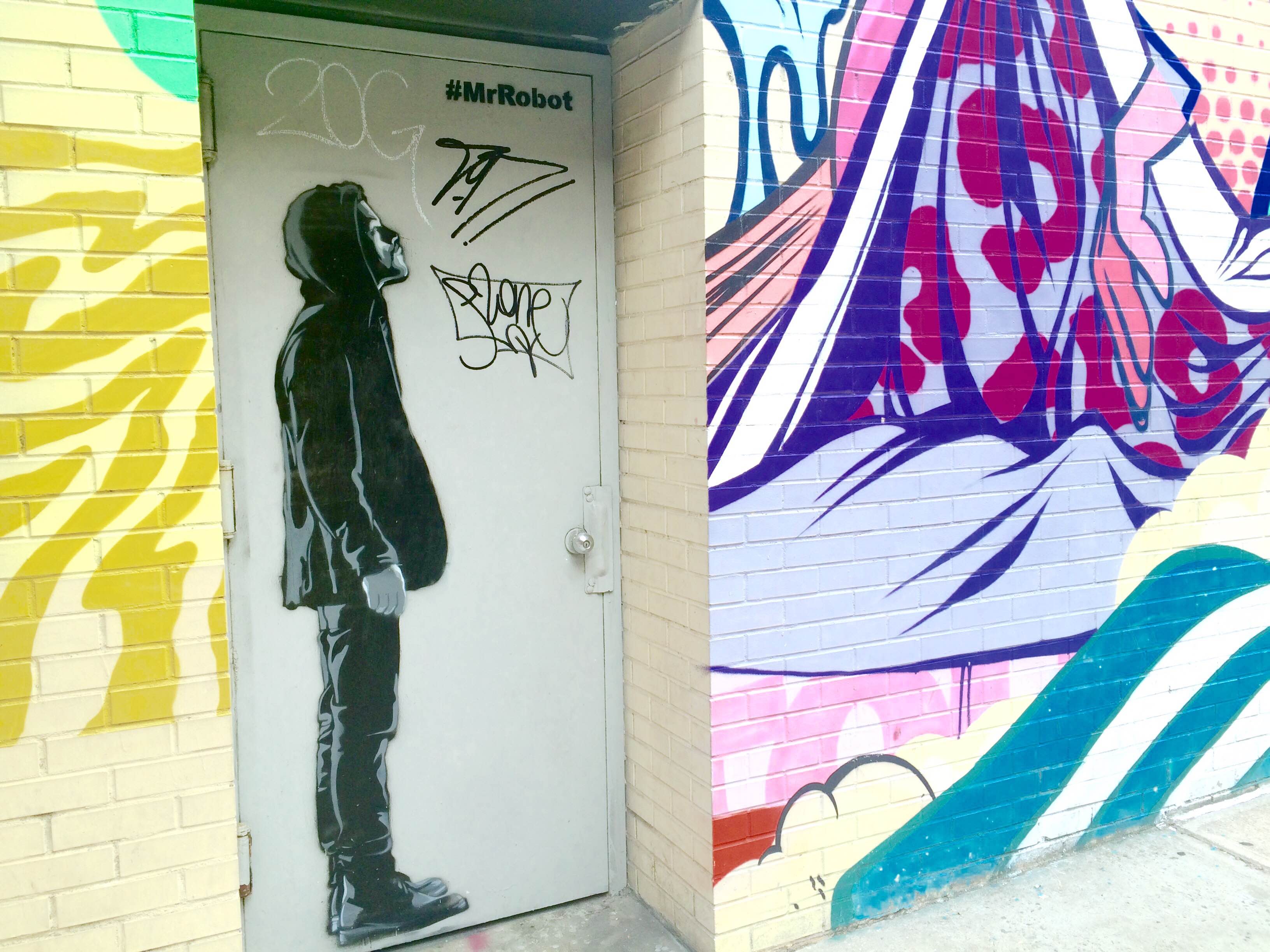
1. Some great street art on Lafayette St. that I walk by every day on the way to school. (And now that Mr. Robot is my new favorite TV show, I get extra happy every time I walk by this hidden portrait of Elliot!)
2. I live so close to the Hudson river now! Perfect for Sunday evening sunset-watching.
3. New life motto? I loved this from the exhibit at the Center for Book Arts where Judy interned over the summer.
Right now I am working on choosing a “beat” for my Reporting NYC Subcultures class and I’m finding it so difficult because New York is so alive with so many cultures and subcultures and sub-subcultures. In the class we are exploring how a city can be a breeding ground for arts and culture and it makes me picture New York as a petri-dish, not growing germs (although that is also probably true) but growing the newest and coolest artists, musicians, poets, writers, dancers, and everything inbetween. I think the city has always been this way and I really hope it never dies. Human creativity is so inspiring to me!
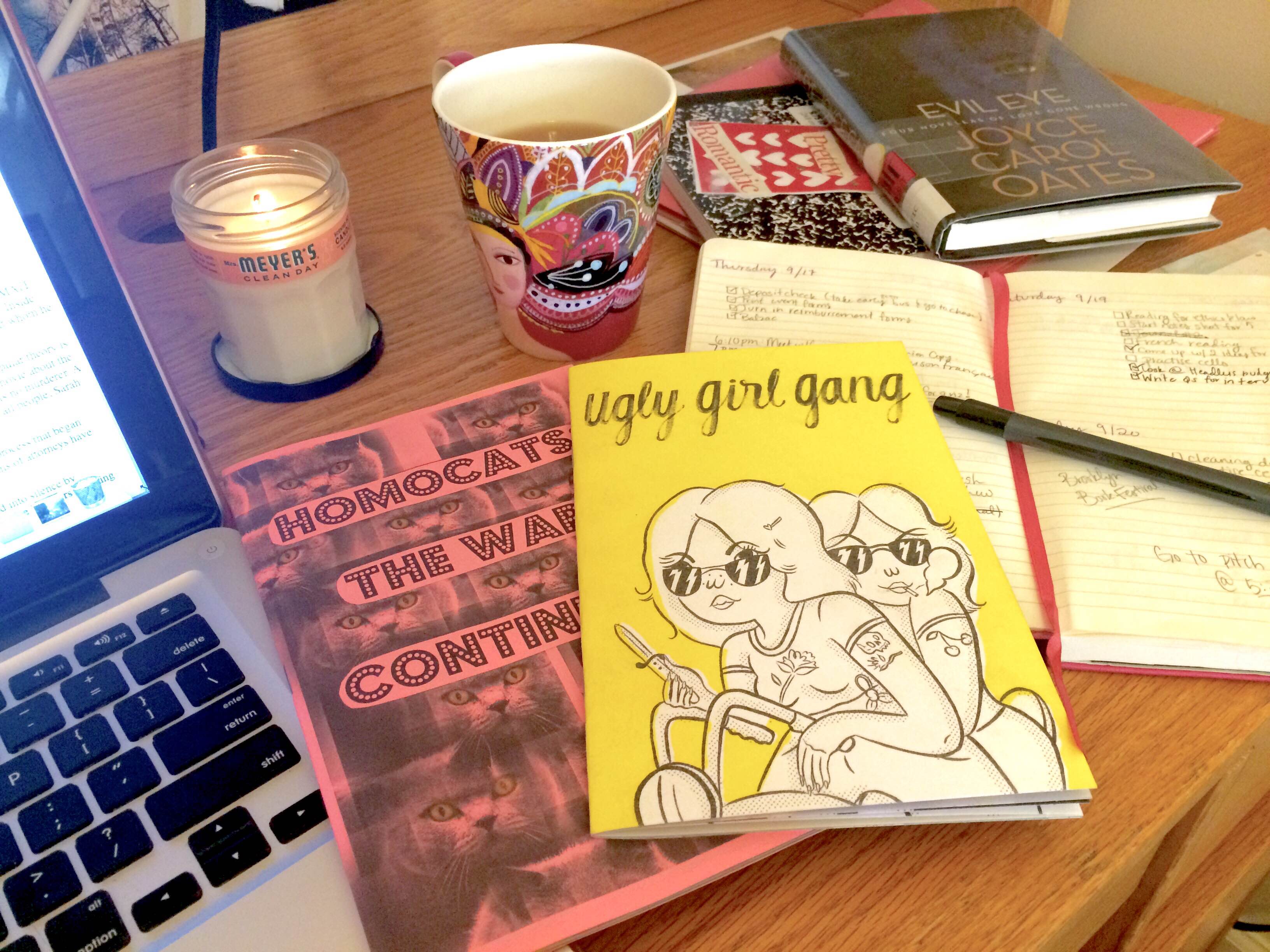
4. New cool zines that I got at the New York Art Book Fair in Queens.
5. It’s now autumn, but the days are still incredibly beautiful and warm. The chilling memory of last winter is still on my mind as a warning to enjoy it while I can.

























 Lily Haight