Eric Marcus, a journalist, author and historian, lives across the street from radio producer Sara Burningham in West Chelsea. With his three-decade-old audio archive of interviews with LGBTQ activists, icons and allies combined with Burningham’s production skills, the two neighbors have created a podcast, “Making Gay History.”
The podcast first launched in October 2016 and is now in its second season. Each episode runs about 15 to 20 minutes long and features one person’s story, with an introduction from Marcus, giving details about when he interviewed them and why they were significant in the gay rights movement. Because he recorded the interviews in the late 80s while he was preparing to write a book by the same name, many of the interviewees have since died, making the recordings precious recollections of vibrant people who helped change the world.
Chelsea’s gallery district has reigned as the heart of the city’s contemporary art movement since the late 1990s.
But could skyrocketing rents, coupled to the availability of cheaper options in other parts of the city, mean the district is losing some of its cachet with gallerists?
An August 2016 report by StreetEasy found that real estate prices near the High Line had increased by nearly 50 percent since the park’s opening in 2011.
Longtime Chelsea gallerists have recently made the move to the Lower East Side (Danziger Gallery and CRG), and new galleries are skipping over Chelsea altogether and setting up shop downtown (Magenta Plains, for example, which opened on Allen Street, just north of Broome Street, last year).
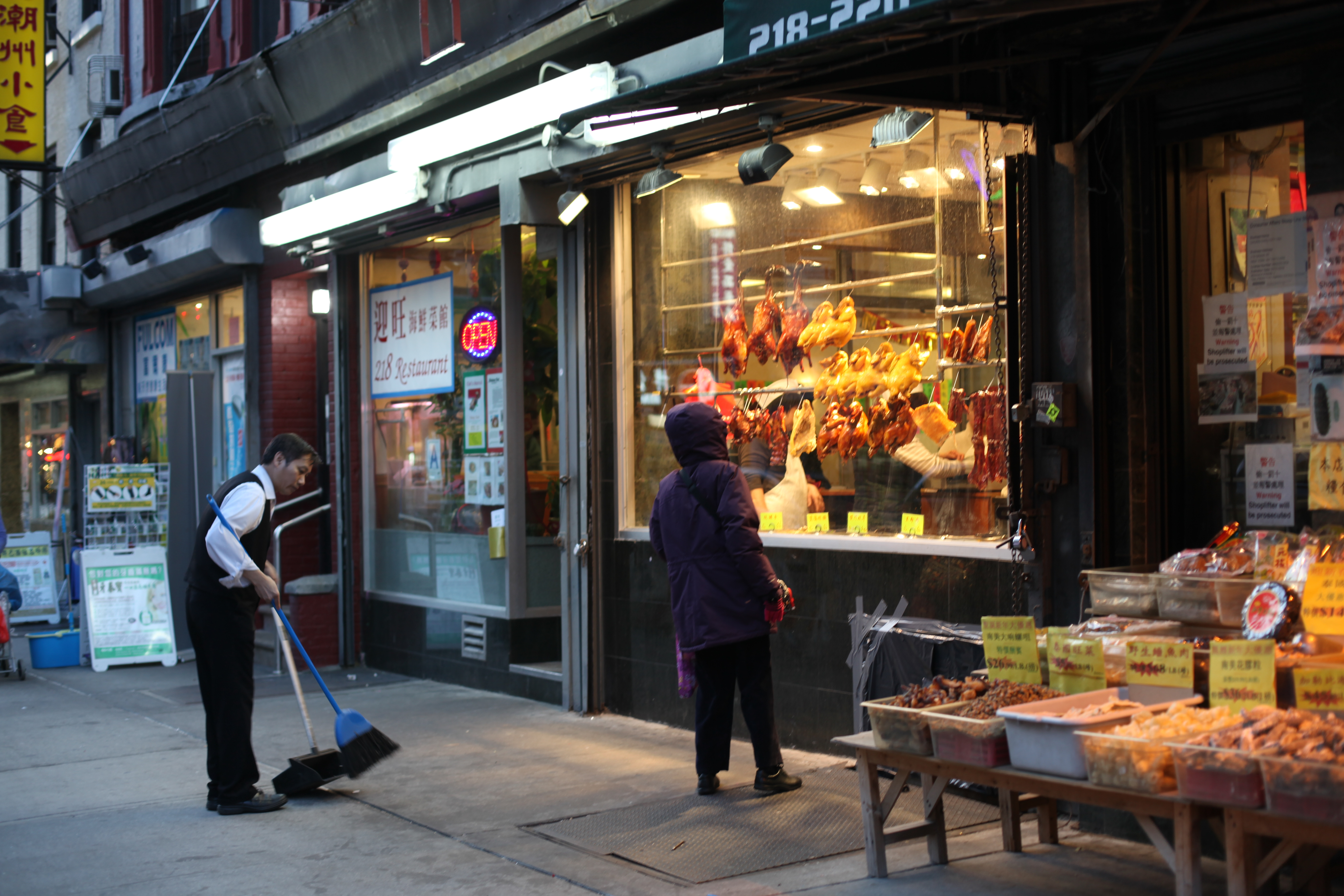
Gallerists have also set their sights on Chinatown. Marc Straus, who has been collecting art since he was in college, opened his gallery at 299 Grand St., near Allen, in 2011.
Straus is now planning on tearing down three nearly 200-year-old buildings at 282-286 Grand St. that he also owns and developing an 8-story luxury condominium building with an attached 6,000 square feet of gallery space on their footprint.
I’ve recently had a Pinterest reawakening. Yes, you do have to sift through thousands of truly horrible recipes for things like 5-minute blender enchilada sauce or various low fat salad dressings, but buried beneath all that are endless links to lifestyle blogs that always have a neat DIY that will help you forget about everything that’s going wrong in your life and instead create a really great Instagram projection of how Everything Is Pretty Great.
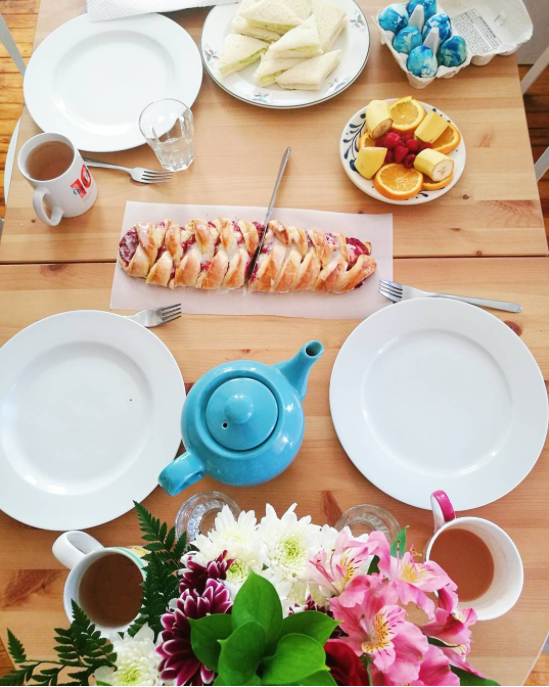
Anyway, to satisfy my DIY craving and my love for Easter I tried making these marble indigo dyed eggs which were fun because they still look cool even if they’re not totally perfect like the lifestyle bloggers make them.
They’re really easy, too, and actually way less time consuming then the old vinegar water and food coloring dye-technique. Put some drops of blue nail polish in a (disposable) bowl of water, dip the egg in, and you’ve got yourself a Possibly Toxic Marbled Egg.
I got these Special blue health eggs from the health food store, which added to the blueness of my Indigo eggs. They were so pretty on their own I considered not even dyeing them at all.
I know nail polish is toxic, but I was trusting that the egg shell would protect the egg inside from becoming contaminated. Anyway I ate a few of them and haven’t died yet.
My next endeavor was a Danish Raspberry Pastry Braid, which was really fun to make. The dough had a lot of rolling and folding, which made me feel like I was on the Great British Baking Show. It was perfect for an Easter brunch, so I squeezed some fresh orange juice, cut up some fruit and shared with Judy & Noah.
I felt very serendipitous for a week when three of my classes converged on the same topic.
In my Francophone literature class we had just learned about the second wave of French colonialism, when their “civilizing mission” prompted them to colonize Indochina, as well as large parts of Africa. Then, in my course on the current French presidential election, we discussed the effects of this civilizing mission, and how it plays a huge part in immigration discussion and racism in France today. To top it all off, Zadie Smith, who I am lucky to have as a professor for the second time, assigned us to read Graham Greene’s The Quiet American, which tells the story of two men, one English, one American, living in Vietnam during the French Indochinese war.
(Finally, and this is not super related but I watched an episode of the hot-vicar-detective show Grantchester, in which there was a two second mention of Graham Greene!)
All of this led to me, sitting in a too-hot bath, setting down Graham Greene for a moment and thinking about violence.
Because despite some of his flaws (i.e. female characters who have personality locked behind bars) Greene displays horrors in a way that made me feel as if I myself had been personally there, with the simplicity and brevity of a journalist, yet the heart of a novelist. He incorporates the numbness that one experiences after witnessing a gory event with the bright clarity of images that burn themselves into one’s brain.
Not only that, but I felt like Greene’s book was a good reminder of the fact that there is never a justification for war.
“A two-hundred-pound bomb does not discriminate,” he writes. “How many dead colonels justify a child’s or a trishaw driver’s death when you are building a national democratic front?”
Pick up a copy at your local library and let me know what you thought.
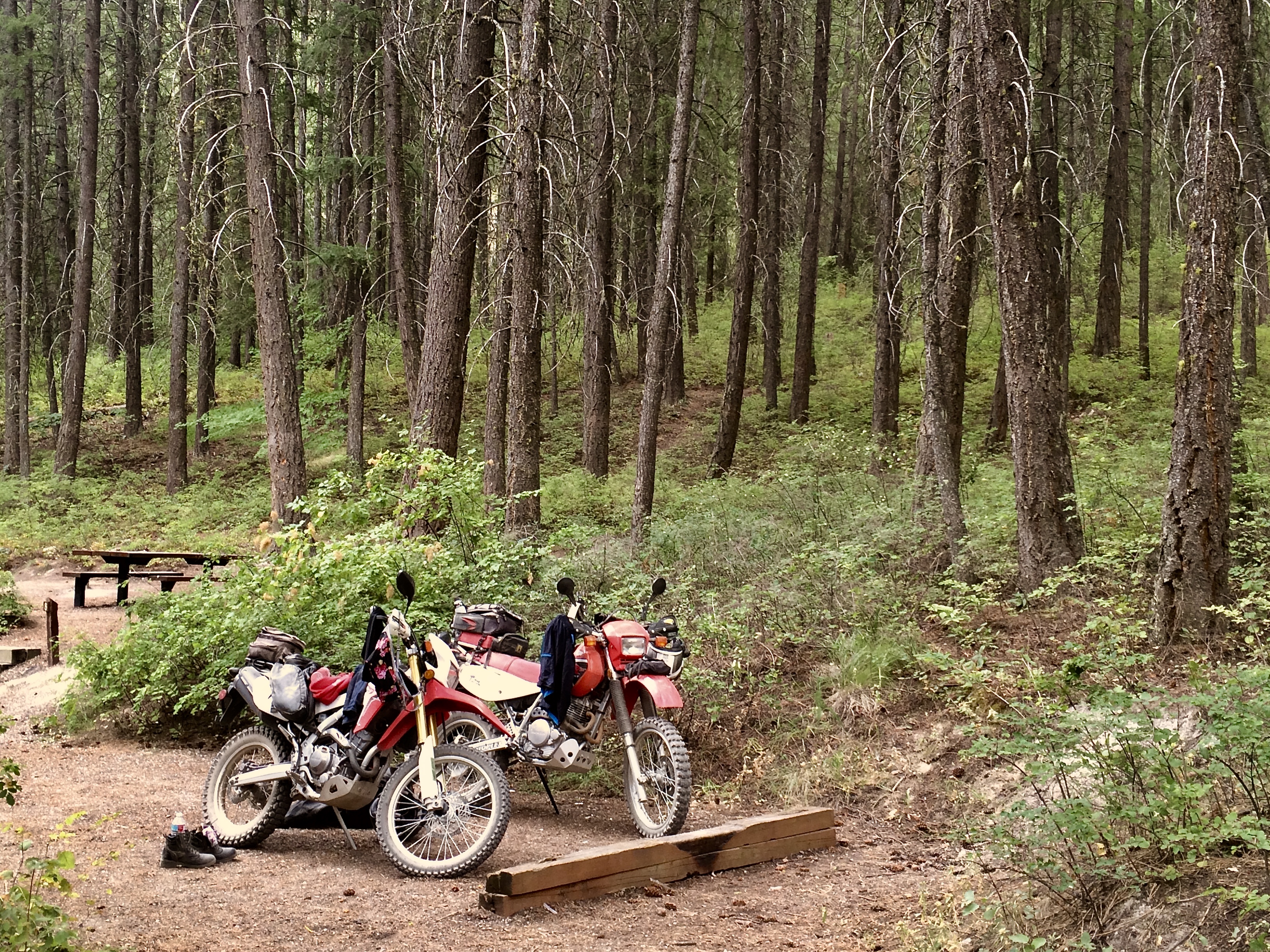
When I daydream, most times I daydream about riding a motorcycle on a curving road surrounded by trees. I do this because before I left for college, when I was 18 years old, my dad and I would go for motorcycle rides together on sunny weekends. I would follow my dad on his red Honda 250, me on my (mom’s) blue Suzuki 200, his taillight always in my sight as we twisted and turned through the lush, green Western Washington countryside.
Sometimes, as we were putting our riding gear on my dad would say, “You wanna lead?”
“Nah. Don’t know where I’m going,” I’d say back.
It wasn’t completely true, I knew some of the roads surrounding Marysville, but my dad knew all of them. He loves looking at maps and I think maybe the inside of his brain has a GPS because he knows all the best roads. He’d start up his motorcycle, I’d start up mine. We’d put our helmet visors down and give each other a little nod and then take off down our street, him in front. This was before we installed radios inside our helmets so I relied on his blinkers and followed him down back roads that had the best views. We would go through roads surrounded by trees that smelled clean like wet earth, up hills to farms where my dad would point at the sheep and goats and cows because he knows how much I love animals.
He would take me on roads that had the least amount of cars because it’s fun to feel alone out there and also because I didn’t have my license yet and we didn’t want to get caught. And for me that was part of the fun, the tiny bit of thrill from the danger of it. And the solitude felt therapeutic, being alone in my helmet but knowing my dad was just up ahead keeping an eye on me in his side mirror.
We would end up somewhere different each time. One time we went to Granite Falls, not the town but the actual falls. We parked our bikes and admired the waterfall. Another time we just went to Starbucks and got coffee. We each have our signature drinks: My dad’s is a mocha, mine’s a chai tea latte. Sugar lovers.
My dad isn’t really a talker, neither am I. But we did talk on those outings. The subjects I don’t even remember. To me, the destination and the conversation did not really matter. It was the action of riding together, sitting together, drinking coffee together, staring at waterfalls together. It’s what I look forward to the most each time I go home from college.
On a rainy Friday afternoon, Swatch the Boston Terrier, famous for his many appearances on the reality television show “Project Runway,” lies fast asleep on the first floor of Mood Fabrics on West 37th street, oblivious to the surrounding bustle.
Designers step over his snoring body as they search through rows and rows of chiffon, silk, cotton and corduroy. Employees cut swatches of fabric, measure lengths of ribbon and help customers find the perfect button, all the while organizing and reorganizing countless rolls of fabric. People stream in and out of the store, some making a beeline for a particular fabric, others headed straight to the counter that sells Mood Fabrics T-shirts and souvenirs. Swatch sleeps through it all, heedless of a tourist leaning down to snap a photo.
Because of its role as fabric supplier for the competing designers on “Project Runway,” more than 1,500 people course through Mood Fabrics each day. Most are tourists, hoping for a glimpse of “Project Runway” judge Heidi Klum, or of the show’s famous fashion mentor, Tim Gunn. According to Mood Fabrics’ owner, Jack Sauma, who has been in the garment industry for 42 years, the show brought “tourists and life” to the industry, and the district, which occupies about a square mile from 34th to 42nd Streets, west of Fifth Avenue. But despite Mood Fabrics’ success, small designers and business owners in the historic district are trying to keep the industry alive as they face skyrocketing rents and hotels and businesses coveting space in the neighborhood.
Black history is not confined to one month, or, for that matter, to any single neighborhood or even region. In Chelsea, for instance, it’s in just about every nook and cranny of that district’s architecture — if you know where to look.
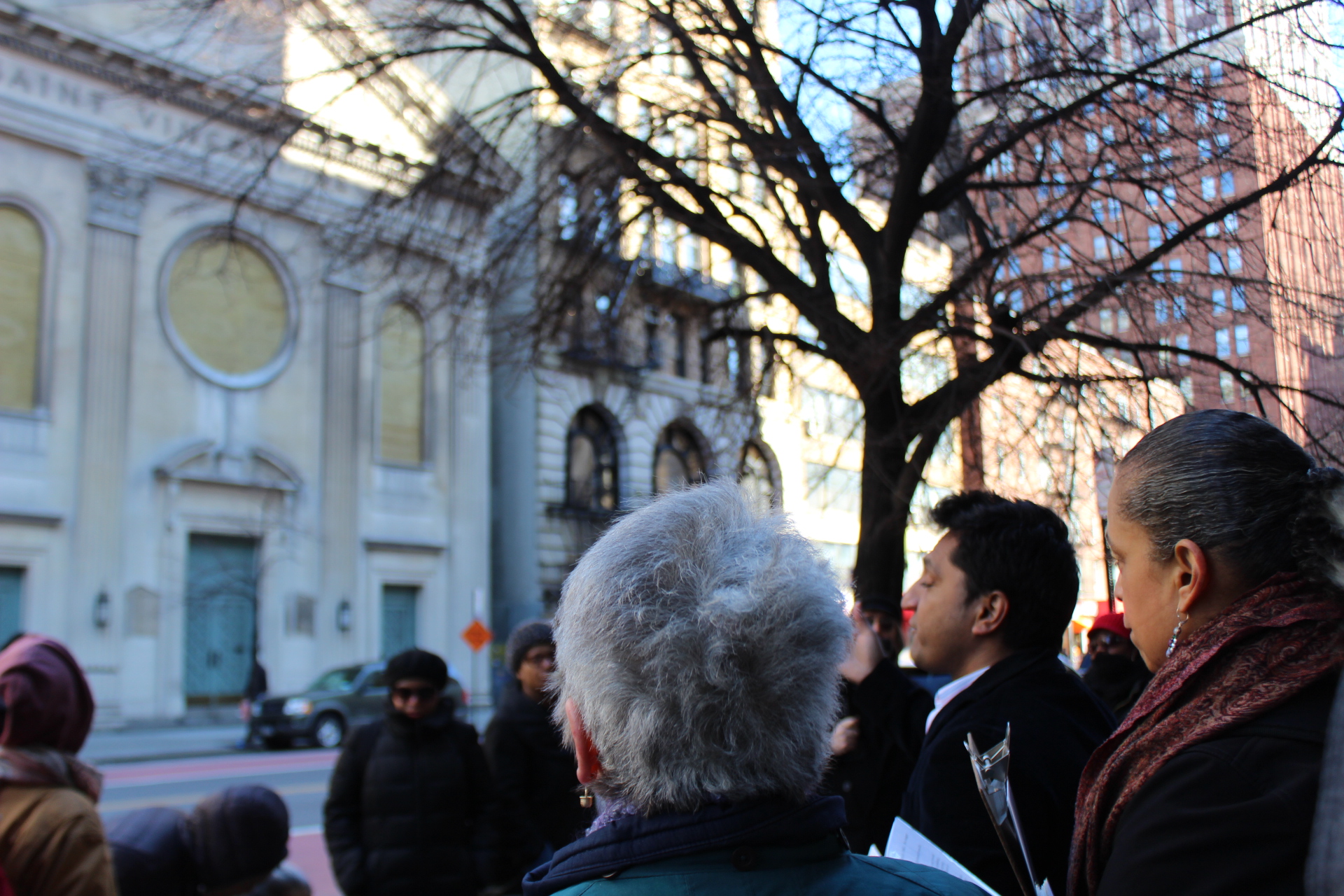
“There’s a lot of people who do not know that this northern part of Chelsea, from 23rd Street and even into the lower 30s, an area that used to be known as the Tenderloin, was also one of the major African-American quarters of the city before Harlem,” said Laurence Frommer, co-president of the preservation group Save Chelsea, which organized a recent tour of the neighborhood’s African-American touchstones.
And now? There’s DŌ, a tiny shop located just a block south of Washington Square Park (where I go to school) that sells cookie dough like it’s ice cream.
People are crazy about it.
Here’s what happens with all food phenomenons (in my estimation):
First, someone thinks, “I really like eating cookie dough. What if I had a shop that sells cookie dough? People would love it!” This happens a lot in New York City, a place where innovation plus wealth plus gentrification equals a new cafe every two feet.
So the cafe opens up. The cronuts are fried. The rainbow bagels rolled. The cookie dough scooped.
Now this next part is vital:Along comes Buzzfeed to write an article about New York City’s latest amazingly cool and delicious and Instagram-worthy food trend. This story gets picked up by all the thousands of other trendy news sites. Soon, its not even 9 am and you’ve already seen three separate short videos about Dō on Facebook. Technology is amazing.
Another important aspect of this phenomenon is that on any given day there are about 3 million people in New York City. If you’ve seen three videos about Dō in the last two hours scrolling through your feed, then chances are high that the other 3 million people have too.
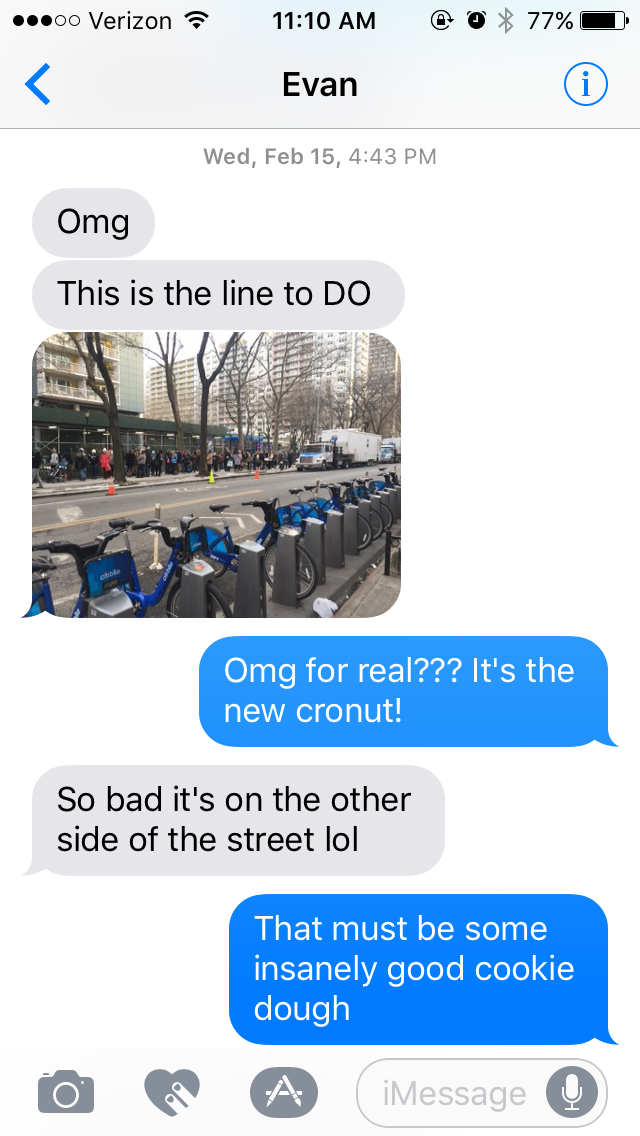
After I got back from winter break, my cousin Evan (who moved to Brooklyn in November) and I got together for brunch at our fave spot in Astoria. We’re catching up, eating pancakes and he mentions this place called Dō. I’m like, “sounds cool we should go sometime!”
But probably at the very same moment that I said that, literally everyone else in New York was having the exact same conversation. Because the shortest the line gets for Dō (according to the bouncer I chatted with outside the shop one day) is a 45 minute wait. Normally, it’s three hours long.
People still wait. Without even knowing if the cookie dough is worth it. And with full knowledge that Target sells edible cookie dough that is probably really similar although way less Instagramable.
Along with having people working inside the shop, Do also has someone working as a kind of bouncer and someone keeping the line in check.
(It should also be noted that while taking stock of the line for Dō, Evan saw his first New York City public fist fight. Tensions are HIGH when it comes to cookie dough!)
But this is why I love this place (sometimes). Trends are tangible here. They come and go so fast, but when something is popular people will wait shamelessly for three hours just for a taste. And sometimes you witness people fighting on the city streets. It never gets boring.
I’ll keep you updated on whether Evan and I ever actually go to Dō.
New York City officials are teaming up with community faith leaders to provide help for undocumented immigrants.
Panic spread through immigrant communities after the New York Immigration Coalition leaked a memo two weeks ago stating that ICE arrested “nearly 40” people in the New York City area.
Since the leak, there have been rumors about ICE agents raiding the 7 train, which runs through immigrant neighborhoods in Queens. That spurred Ravi Ragbir, leader of the New Sanctuary Coalition of New York City, to hold an emergency meeting.
It’s 65 degrees in New York today. My soul, once broken by the cold weather, is fully healed. And I remembered that I love life, living, and things that are alive.
I also found a hoard of notes on my phone with quotes from friends, family and passerby. Here are some of my favorites:
“My least favorite part about the warm weather is that everyone will make posts that say Spring Has Sprung….. Sprung the f*ck off of my feed.”
“Before I even got to know him I was like, ‘His name is Brad.’”
“Our cats name is Colonel Chesapeake Beauregard Butane the Third.” “He was probably at the battle of Antigua.”
“If you get a baby dog you’ll be very sorry.”
“I look sporty but it’s a lie, I just ate half a chicken.”
(Matthew said one of those quotes but you have to guess which one.)
And the best one, a joke told by an old man in a coffee shop:
Old man: Seagulls don’t exist.
Coffee shop owner: Well what are they?
Old man: We call them seagulls because they’re by the sea, but if they were by the bay they’d be…








 Lily Haight