It seemed fitting that the rainiest day my family had while on our trip round Normandie was when we visited Rouen. Despite the weather, the beautiful city just four days away from Noël was still bustling with people in full holiday spirit: the Alsatian market was going strong, the giant wonder wheel taking kids for a ride of their life (no seatbelts), the ice skating rink blasting Christmas music through the windows of the Joan of Arc chapel.
The famously gothic Rouen cathedral.
But we were on a more historical mission than the people in the city that day. Holding our Rick Steves In Normandy library book out to get rained on in the misty streets, we traversed a pathway that led us from one statue of Joan of Arc to another, to another and another. It was a three-church-visit kind of day, and with each steeple came iconography of Joan…… as if the city was desperately trying to apologize for what had happened to her there.
Inside the Joan of Arc church.
That someone who was burned at the stake for heresy was later made into a Saint is amazing to me.
While at the Joan of Arc museum we wondered aloud how many other women had been just like Joan: women who stated their truth, rose to power and then were burned at the stake by men. Or executed. Or thrown in jail. Or lost their jobs, had their careers destroyed, their names trashed in the tabloids. When will we be believed?
If you’re ever in Rouen, I highly suggest going to the Joan of Arc museum. I thought it was going to be super lame, but it turned out to be super cool.
Other sights for lovers of the macabre: the plague cemetery. Go when it’s raining and you’re cold and feel a little sick. It adds to the experience because you begin wondering if you have caught the plague.
Through the passage to the plague cemetery, you pass a cat that’s been petrified. It was gross.We also saw the grave of the Viking King Rolo’s femur.
I will leave you with a video extract of the most terrifying movie I had to watch in my undergrad studies. But I also love it for how it shows Joan, a 19-year-old girl, at the mercy of the buffoonery of men who think they are in charge.
This is a question I’ve been asked many times over the last month as I’ve introduced myself to class after class of English-learning French high schoolers. It’s an easy answer, even if it may be a fudged truth.
“The food.”
After that comes a nod of understanding from everyone respectively, like they’re all thinking about last night’s dinner and going, “yeah, you’re right that is the best part about France.” Then comes another question, a bit more difficult.
“What’s your least favorite part about France?”
It’s harder for me to answer because there might be a few things but I don’t want to offend. So I choose my main complaint, and one that I know will puzzle some of the students.
“I don’t like how nothing is open on Sundays.”
This answer can sometimes prompt a discussion about how one can get anything at any time in America (unless you’re in Coupeville) and how some stores are even open 24 hours a day, seven days a week quellehorreur. But here in Alençon I find my Sundays limited to the Sunday bar–the one bar in Alençon that has capitalized on profits by being the only bar open on Sundays.
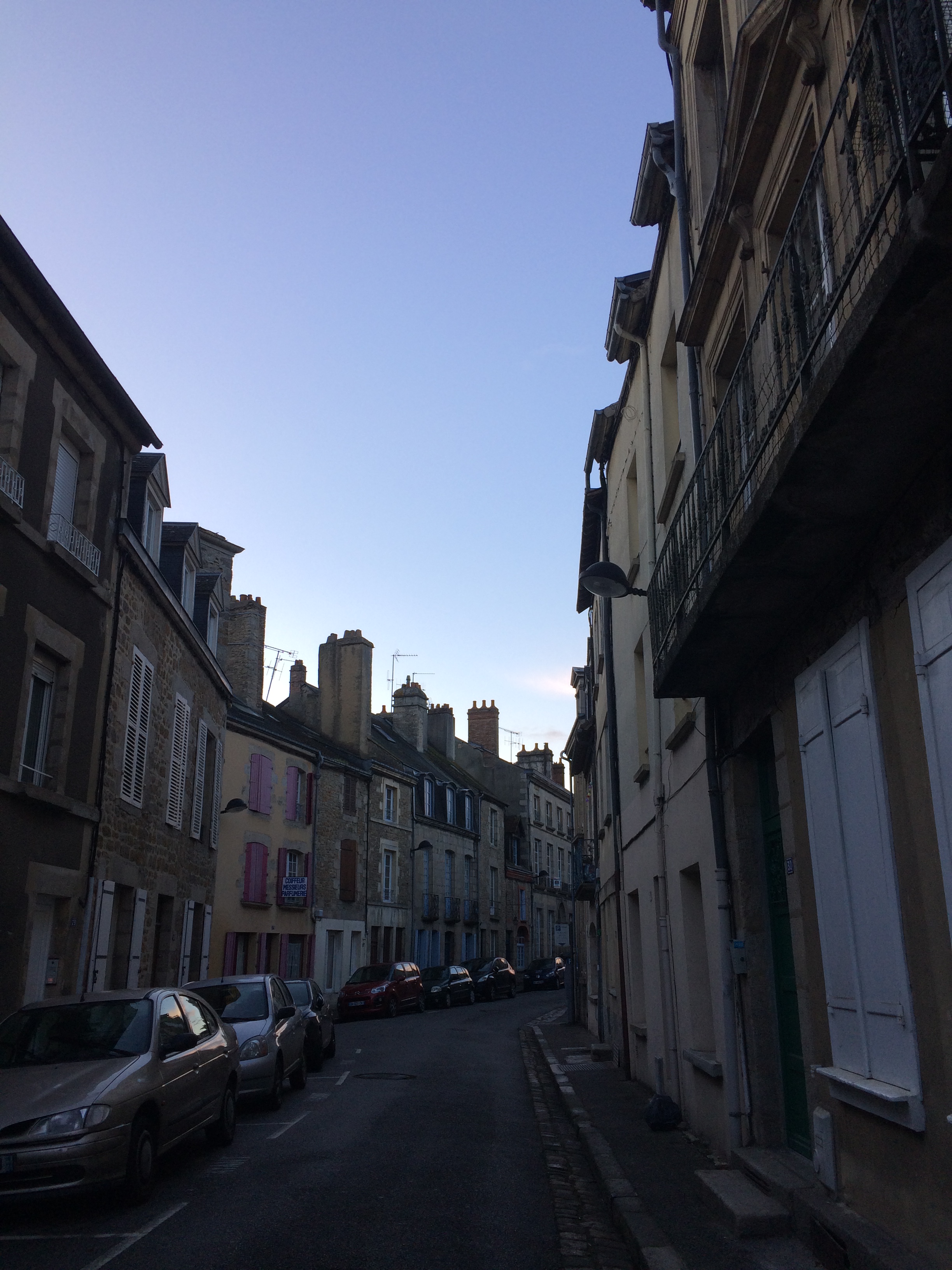
I’m not even really exaggerating. Walk the streets of Alençon on a Sunday at 2pm and it is stunningly quiet. All the shops are shuttered (even H&M!), the jazz music that normally plays 24 hours on the pedestrian street is shut off. The only sounds come from the church bells and the occasional scooter or car hurtling down the tiny roads, but even that is not often.
It gets dark so early now.
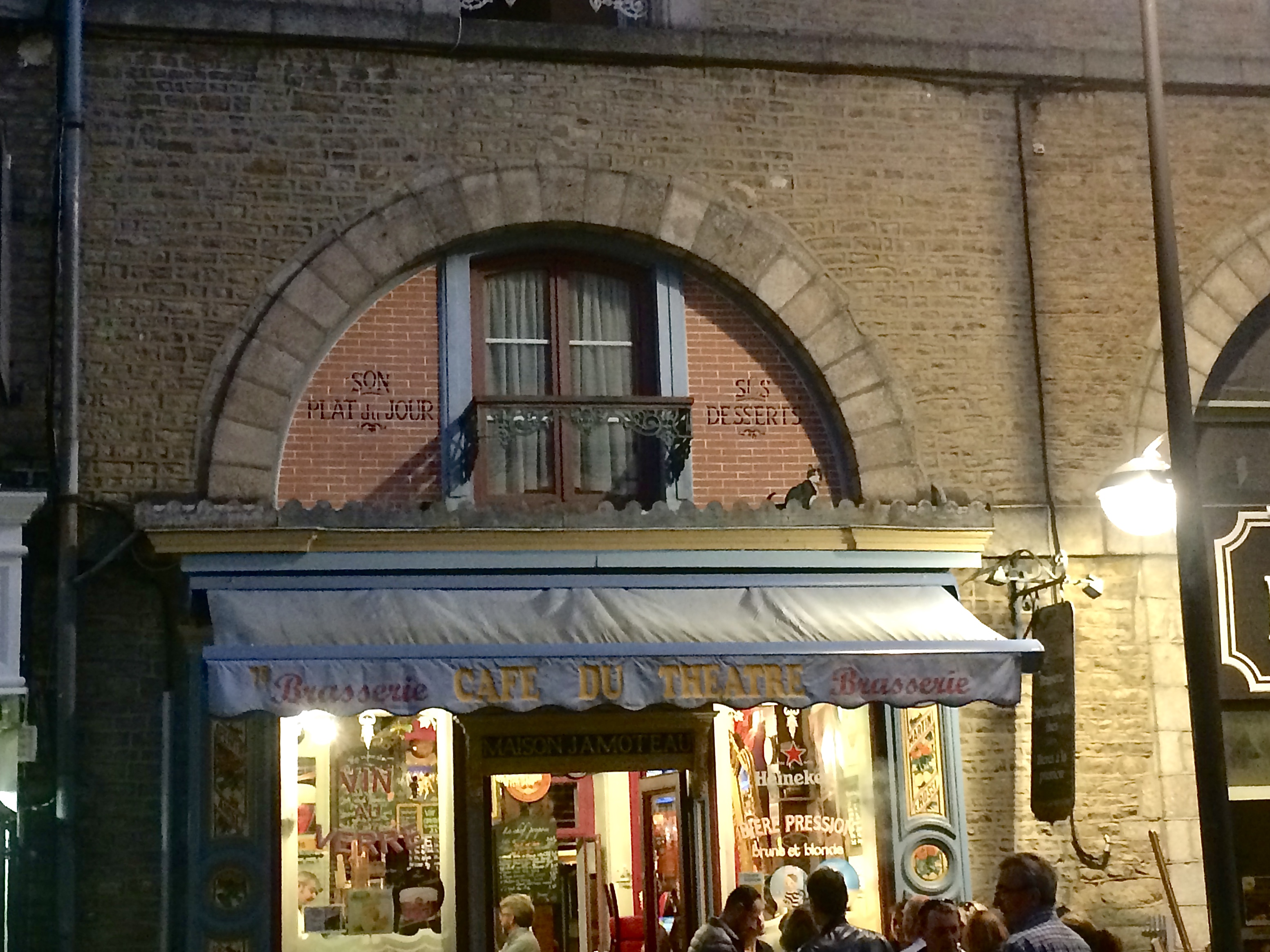
Because of this, taking a walk on a Sunday in Alençon is incredibly peaceful. You don’t feel any rush to be anywhere or do anything other than admire the way that sunlight bounces off the windows of the buildings or notice the tiny bits of moss that grow in between the cobblestones. And then after making your way all around town, which takes maybe 20 minutes in total because it’s small, you make it to the Halle Au Blé. The Halle Au Blé is a rotund dome building where farmers used to sell their grains, hence the name, which means “hall of wheat.” And juste à coté is the Café Du Théâtre, with its blue canopy and old-timey yellow lettering.
A Sunday gathering place.
Outside the cafe, depending on the time of day and the weather, you’ll find small clumps of people drinking and smoking at the tables. Or if it’s 2pm–that time directly between when lunch is over but before the afternoon coffee rush–you’ll find the bartender solo, standing outside the bar’s entrance smoking and waiting for his next customer perhaps hoping that no one will come at all, or at least not for a good while.
Bartender’s on a break.
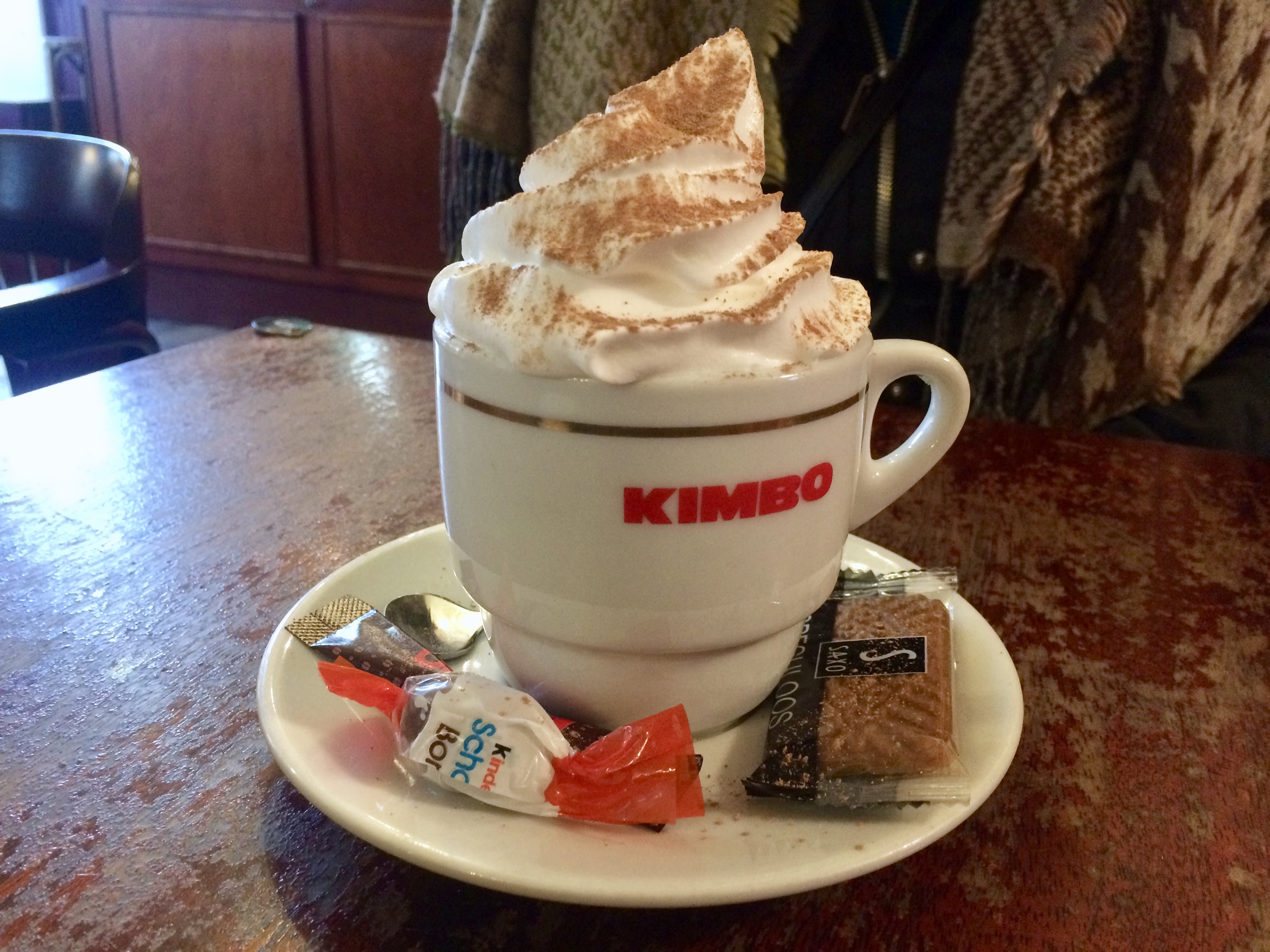
Now that the weather’s gotten colder, I’ve begun to sit inside the cafe, at the tables across from the bar but not directly at the bar. Bar stools are too uncomfortable and reserved mostly for the bartenders friends it seems like. I like watching what he makes because it gives me an idea of what French people like to order. And after observing for about a month now I’ve come to the happy conclusion that there is not a prescribed idea of what one should order in a brasserie. Adults will come in and order a hot cocoa or a diablo (flavored syrup mixed with soda, something I thought for a long while was a kids drink). Yes, the old men will most often get a pint, but other times they’ll nurse a glass of white wine for several hours while reading the newspaper. Fruit juices, espresso, coffee with cream, steamed milk, cider, champagne, beer, vin chaud, rouge, blanc, rosé, and my personal favorite: chocolat viennois, also known as hot chocolate with a pile of whipped cream on top.
The bartender makes all these drinks with ease and a kind of solemnity that gives me the impression that he both values his work and also recognizes the ridiculousness in the way he piles that whipped cream so elegantly. Either way, he’s always there behind that bar except for his smoke breaks and except for Mondays because you can bet a bar that’s open on Sundays will be closed on Mondays.
The man I’ve always assumed is the owner, but who also performs the job of a waiter, is an older man who looks so typically French you can probably picture him in your mind right now. He yells out the orders to the bartender as he gets them in that specific way that French people sometimes speak… like they’re taking pleasure in how their language sounds. He does not know yet that I can speak French even though I order my drink in what I believe is perfect French every time I am there. So instead he communicates with me mostly in mimes, winks, the occasional jaunty dance and by laughing at me. The first time I encountered him I was with the other language assistants–two of whom are Brits–and we all spent several hours drinking beer and chatting at the tables outside. Each time we ordered another round he would express his worry that we were going to get drunk by making various hand signals and over the top expressions that you normally only see in old silent films. I wanted to explain to him that my companions weren’t drunks, just British… but I wasn’t sure how to mime that.
Knitting, writing, drinking vin chaud.
The thing is, every time I’ve been to this bar since that first time, I’ve seen some of the same people there. It’s one of those places that has regulars: the guys with their newspapers, the jokey waiter, the couples coming in for their hot cocoa or beer. I think the routine of it feels so Sunday-ish to me because I grew up with a Sunday routine, a family day.
What would I do on a Sunday if I were at home? Sleep in? Most likely. Eat waffles? If my dad made them. Play with the cat? Certainly. Go to Target or something? Yeah, maybe, why not.
But I’m here on a Sunday, in France. Sans cat, sans waffles, sans family, sans Target. I could lay around. Watch TV, relax, cook some food. Or, I could go for a quiet Sunday walk. Go to the Sunday bar with a friend or a few friends. Or go solo, just to sit. Pretend to read a book and observe the goings on, trying and failing to fit in.
Me, writing this blog post, hair wet from rain, wrinkled shirt and all. Jokey waiter is balding guy in the mirror. Photo courtesy of Sami.
“Go home. Put your best record on. Loud as it’ll play. And with every note, you remember: That’s something the darkness couldn’t take from you.”
— Detective Fred Thursday to Endeavour Morse while the sun sets against the background of the Oxford skyline. (And also me, to myself while reenacting the scene on the tower of the St. Mary’s church in Oxford last week.)
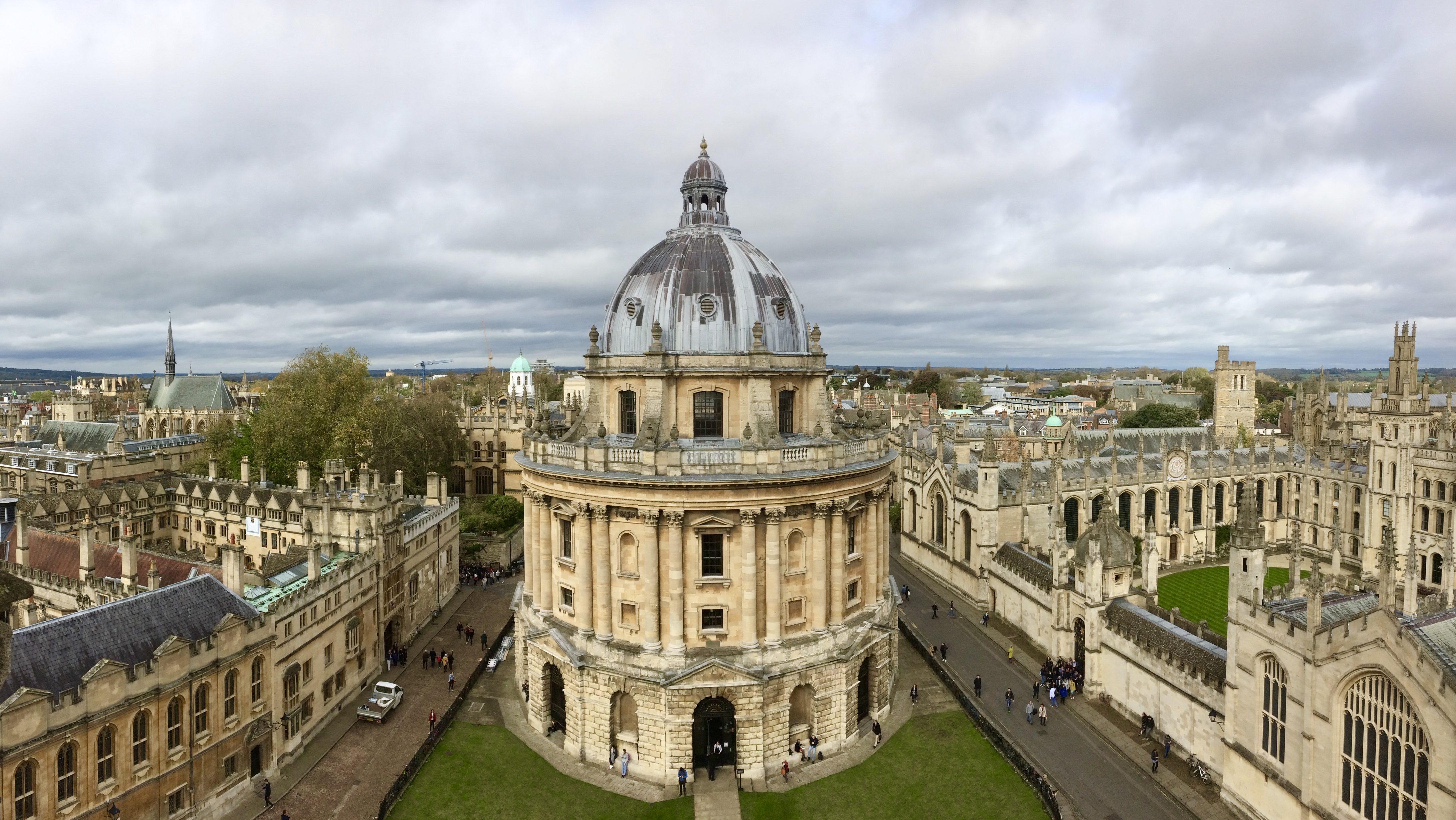
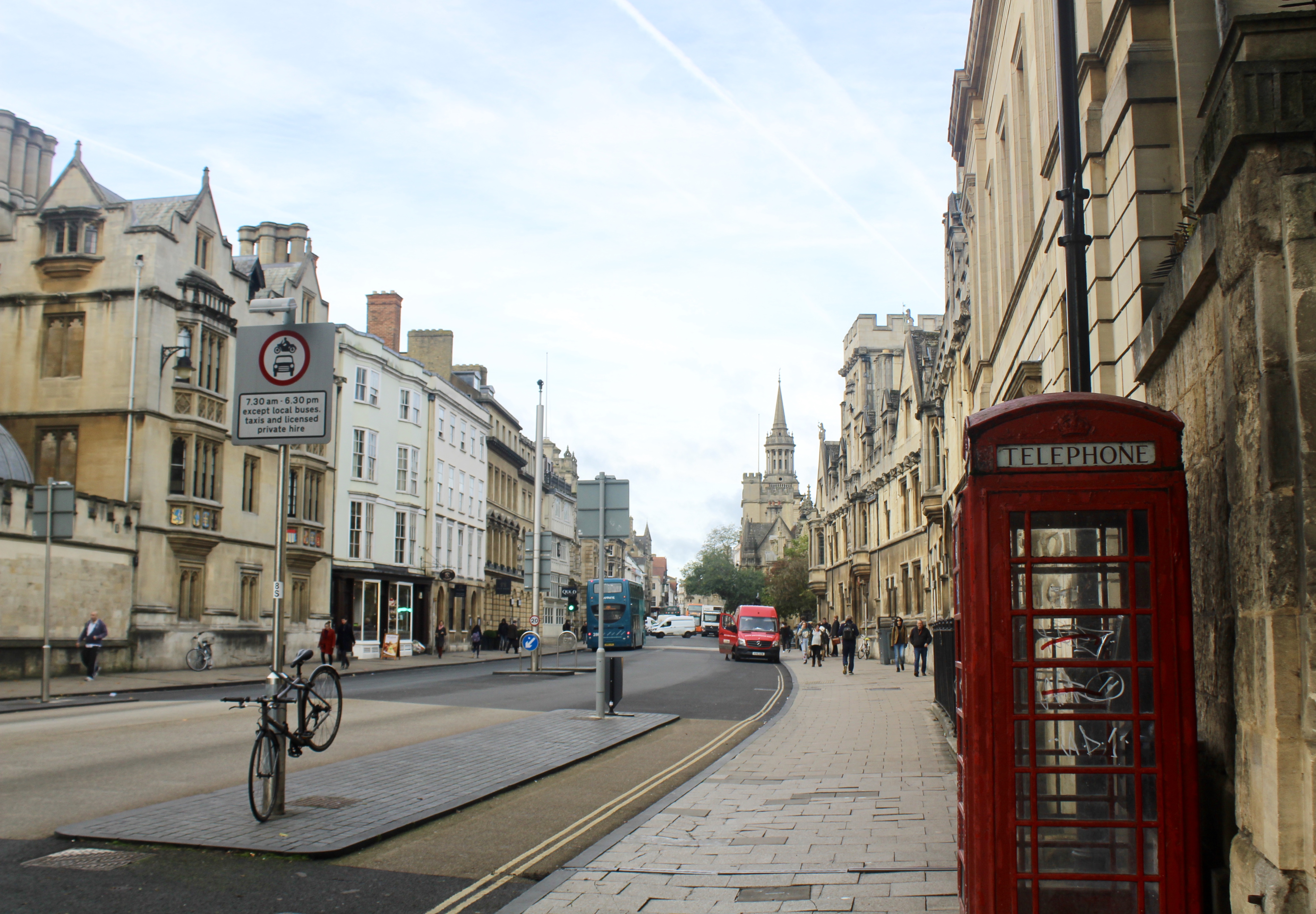
I think Oxford would make an amazing setting for a post apocalyptic movie. Some of the old buildings seem like they’re just waiting to become ruins. Trees growing through their windows, the occasional zombie hidden behind a falling down wall. There’s just something unrealistic about Oxford.
Endeavour Season One, Episode One
It’s probable that the reason I feel this way is because my favorite TV show is set in Oxford, and therefore I feel as if it’s a town that was made to be a backdrop. As I walked around, I felt like I already knew where I was.
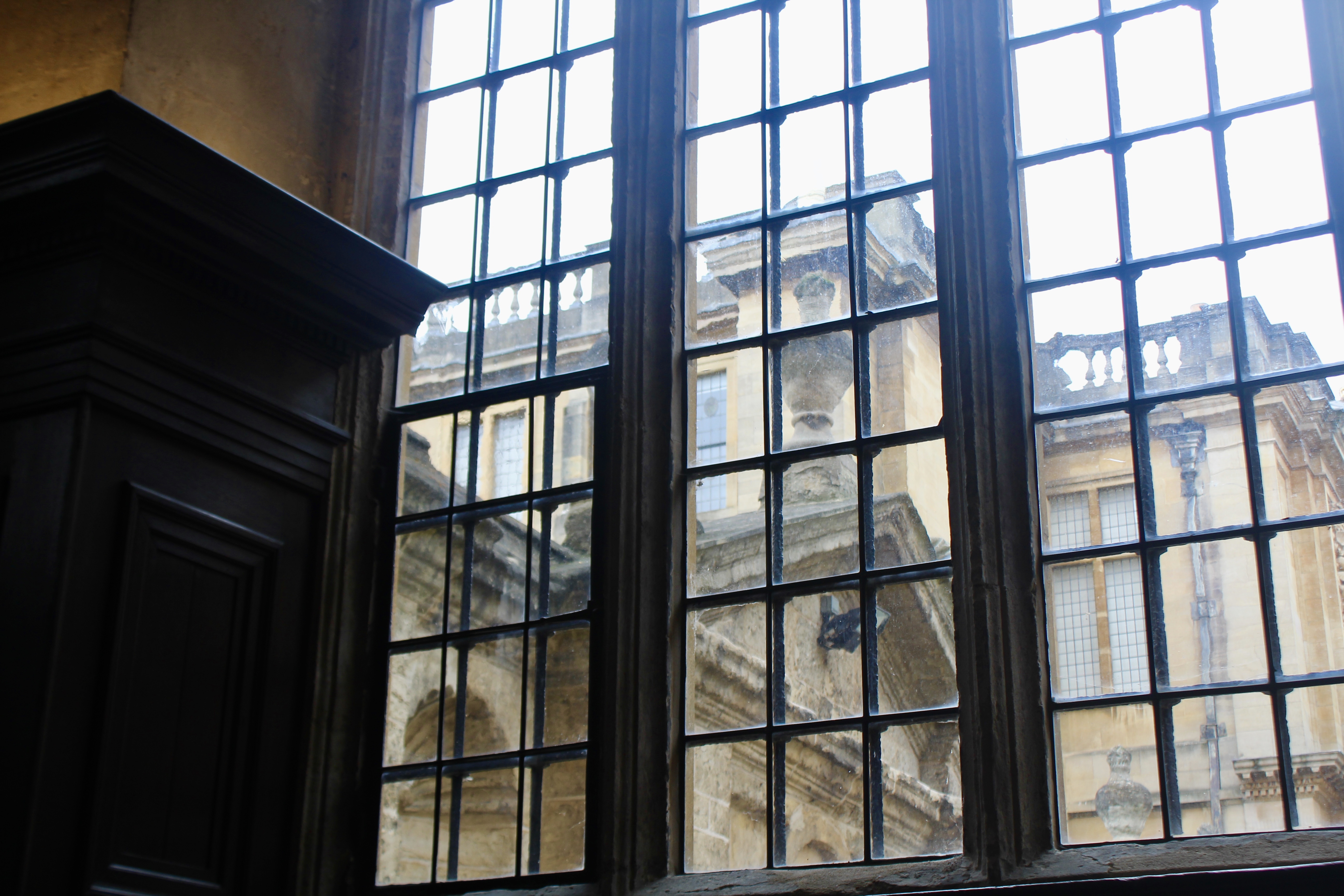
From inside the room where the Gryffindors learn to dance for the Yule Ball in the fourth movie.
And then there were actual real life college students there, which honestly threw me for a loop even though it shouldn’t have. Studying in the library. Getting lunch at the cheap sandwich shop. Wearing their college sweatshirts and nearly running me over on their bikes. I went to college in New York City, so it was almost impossible for me to imagine what it must be like to be a college student at Oxford. So small, so scenic, so many important historical figures.
The sun broke through the clouds for a moment.Did not see any dead bodies. Did see people rowing boats, though.
As I took a break after touring the library I decided that maybe I should go to Oxford. I don’t know what I would study or how to get it in, but I feel it is a definite possibility for me. Either that or becoming a police detective.
Like the people who lived in eighteenth century British high society, I believe in the restorative powers of the sea.
I originally thought this was just a me thing. When I first moved to France it was the first time I had ever been in a city that wasn’t a quick drive away from the beach. To combat the claustrophobia I felt being landlocked, I would go sit by the Seine, breathing in the dirty air and listening to the choppy waves hit the brick walls in an effort to calm down.
Now I’m back in France, back in a landlocked town. To be fair, it’s not so far from the sea which is why going to the beach was my first stop once I hit my first two week vacation. (Yeah I know, I literally just started working a few weeks ago. French schools get a two-week fall break and it is the best thing Ever.)
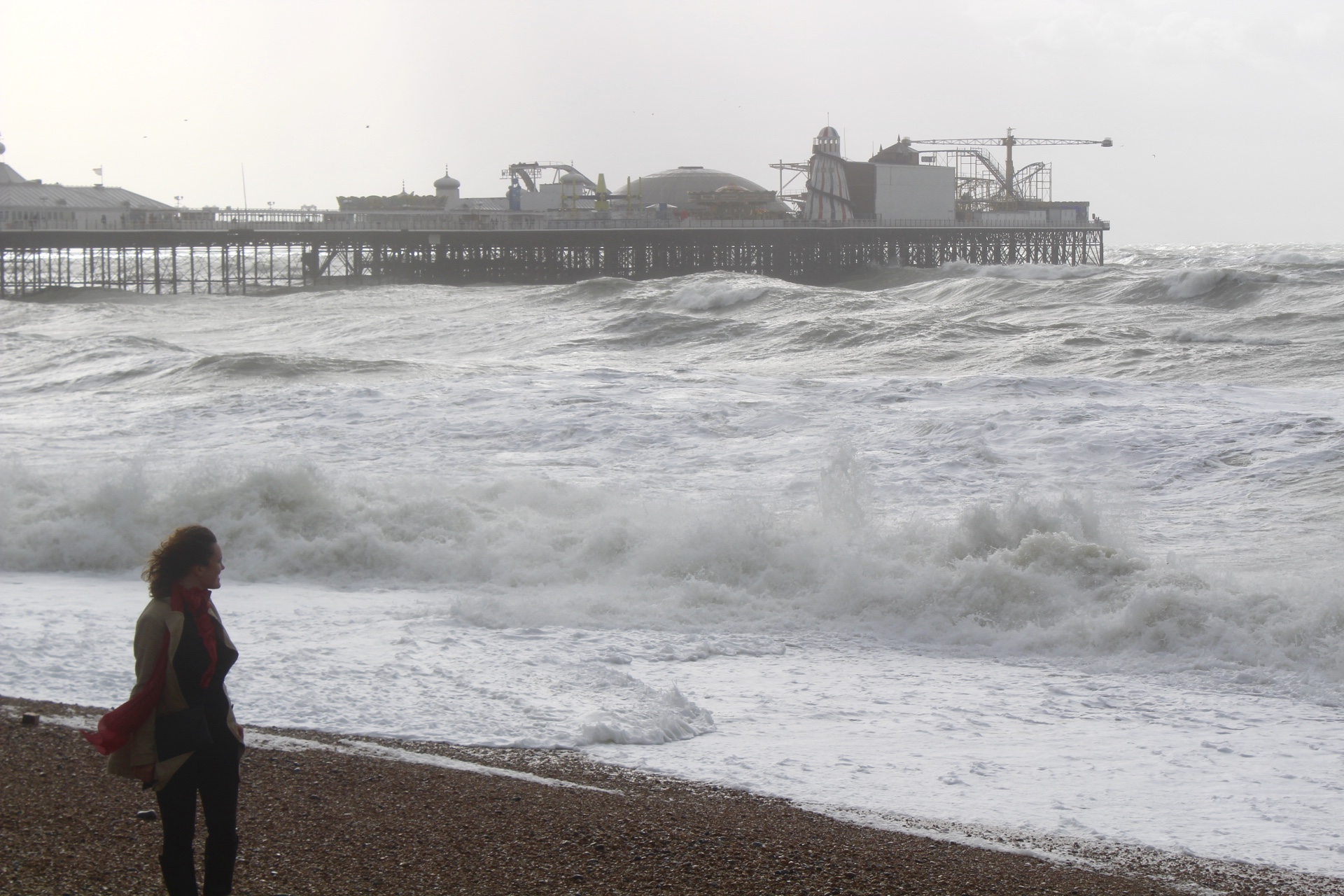
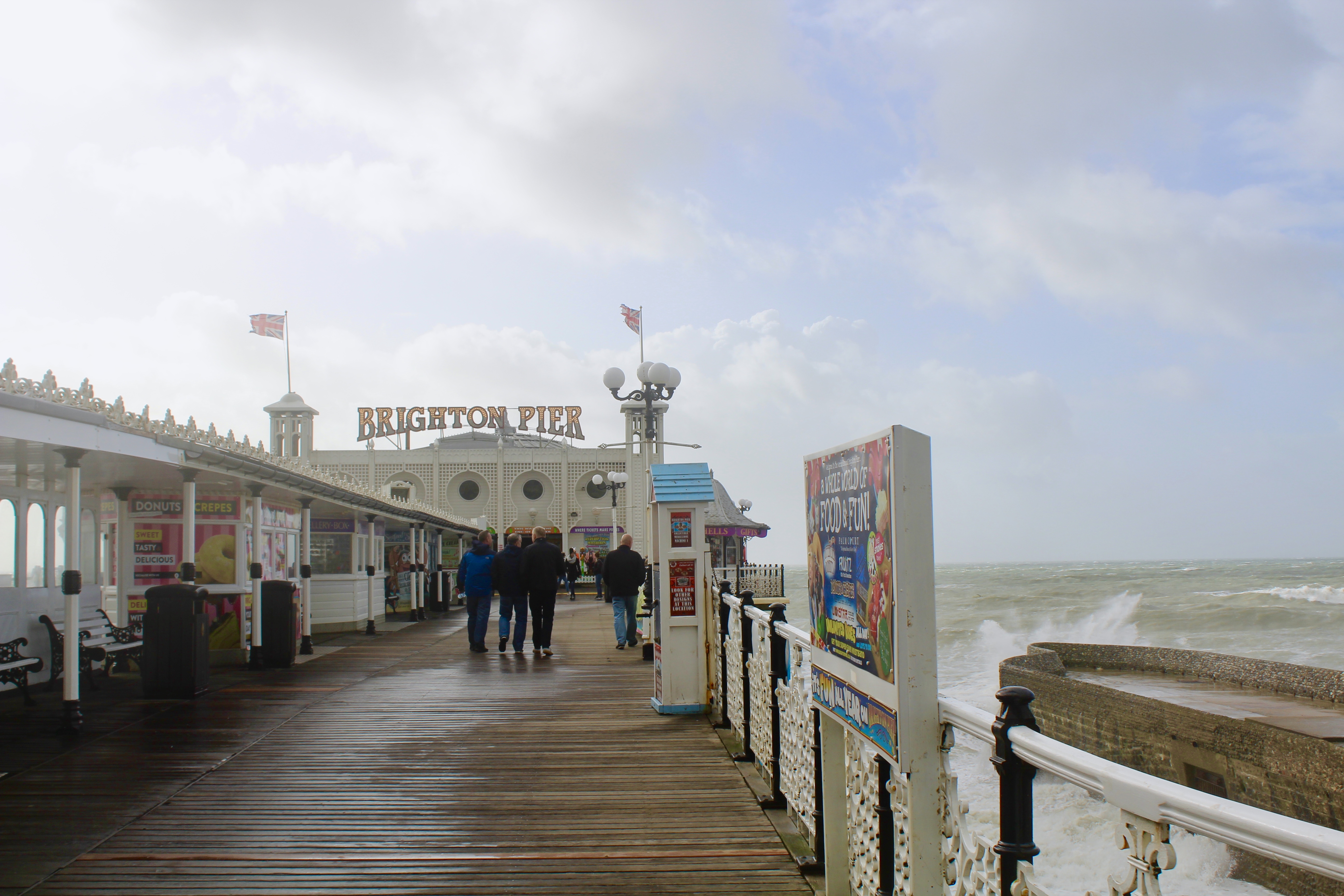
I didn’t go to a French beach however, which is probably sacrilegious to the Normands of my town, but I won’t tell if you don’t. Instead, I headed to London to visit my friend Jenna and we went to Brighton together.
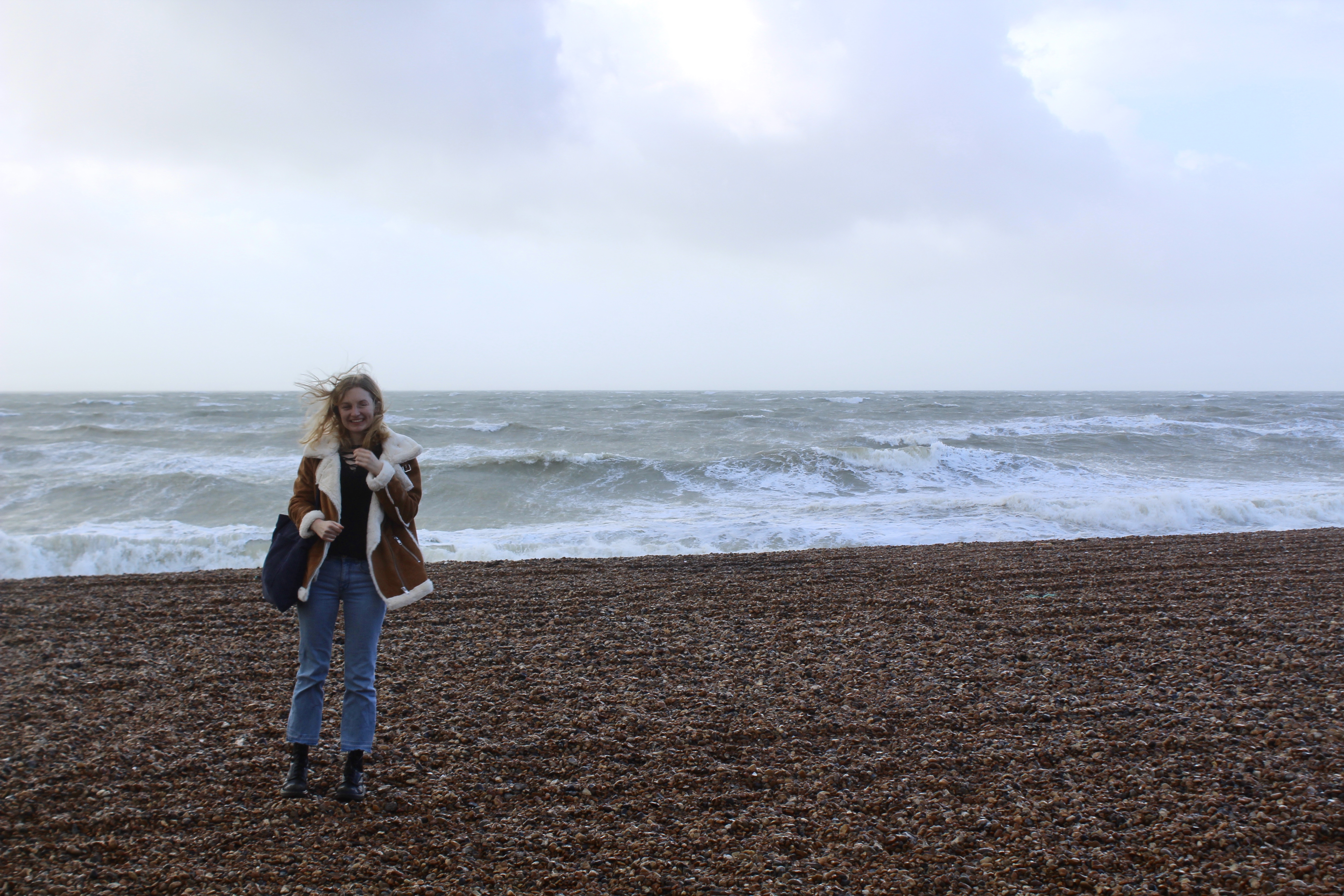
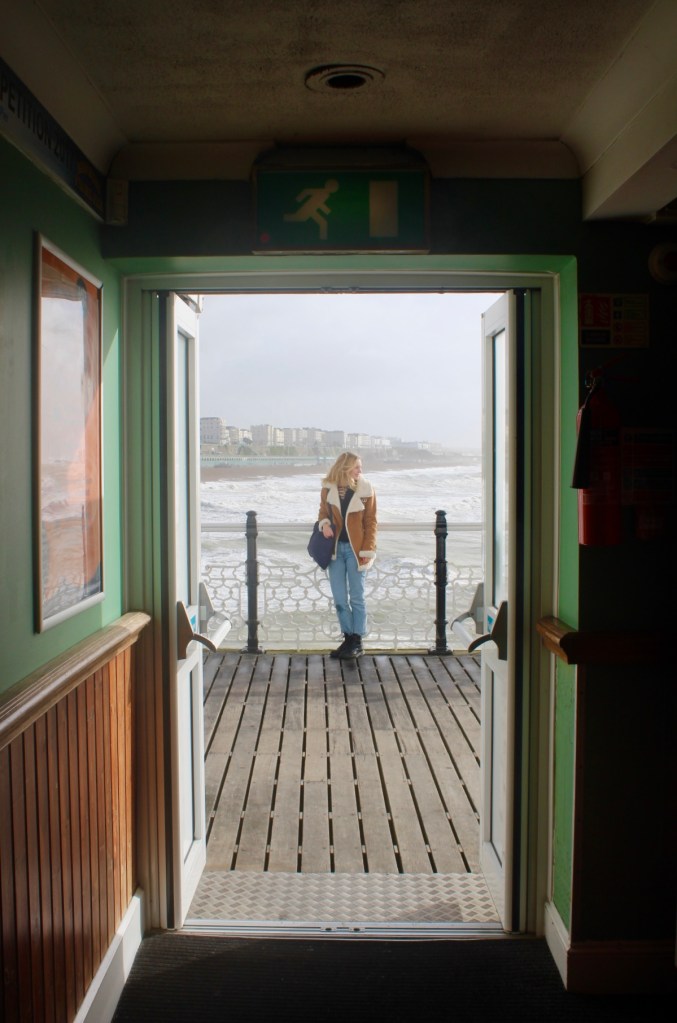
The weather was a crazy mix of extreme wind, sunny spots and occasional rainstorms.Ocean child
Jenna grew up near the ocean, too, and when she told me that she never feels as relaxed as she does when she’s by the sea, I felt like we were two eighteenth century British ladies, diagnosed to go live by the ocean to improve their health.
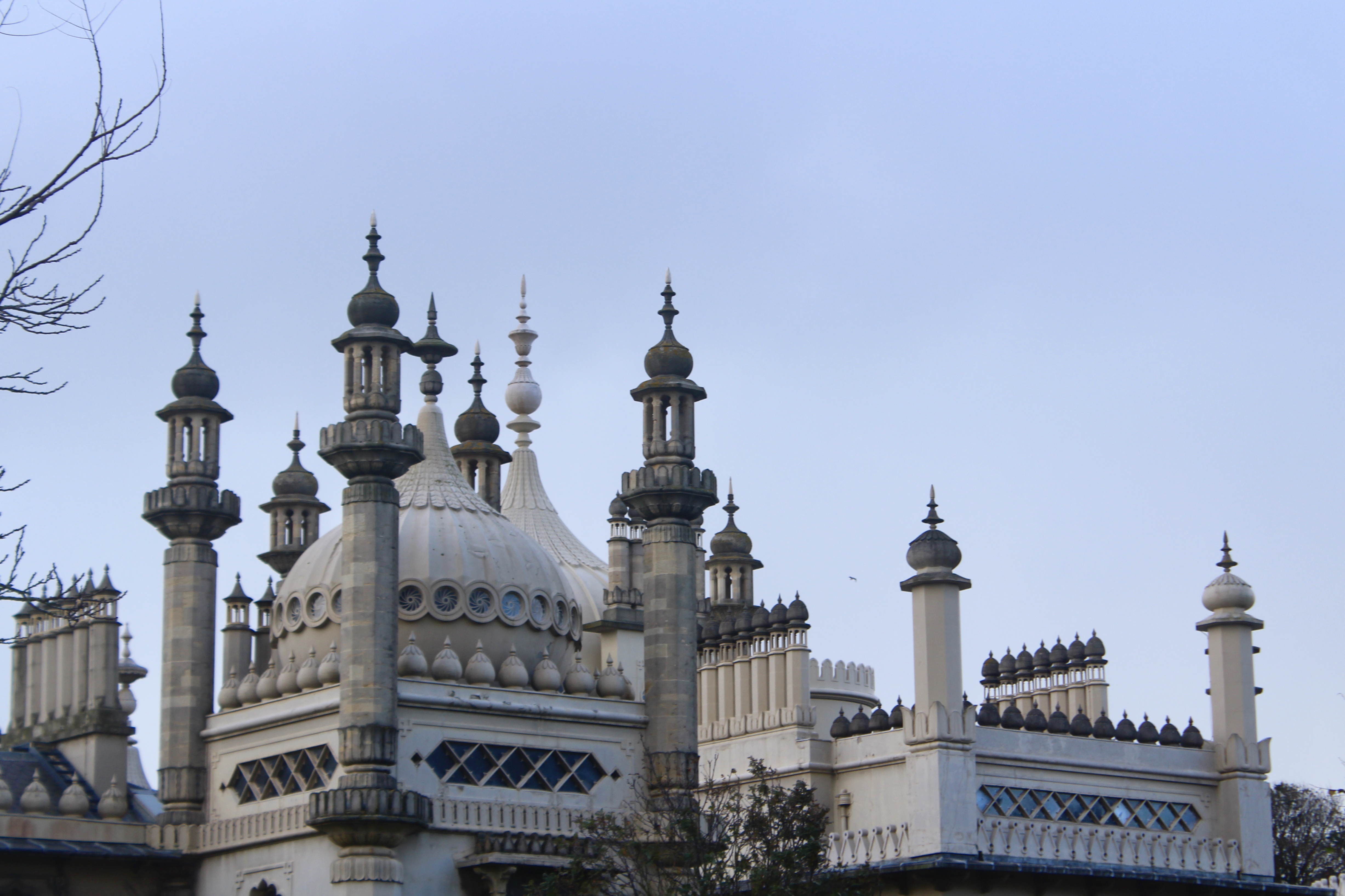
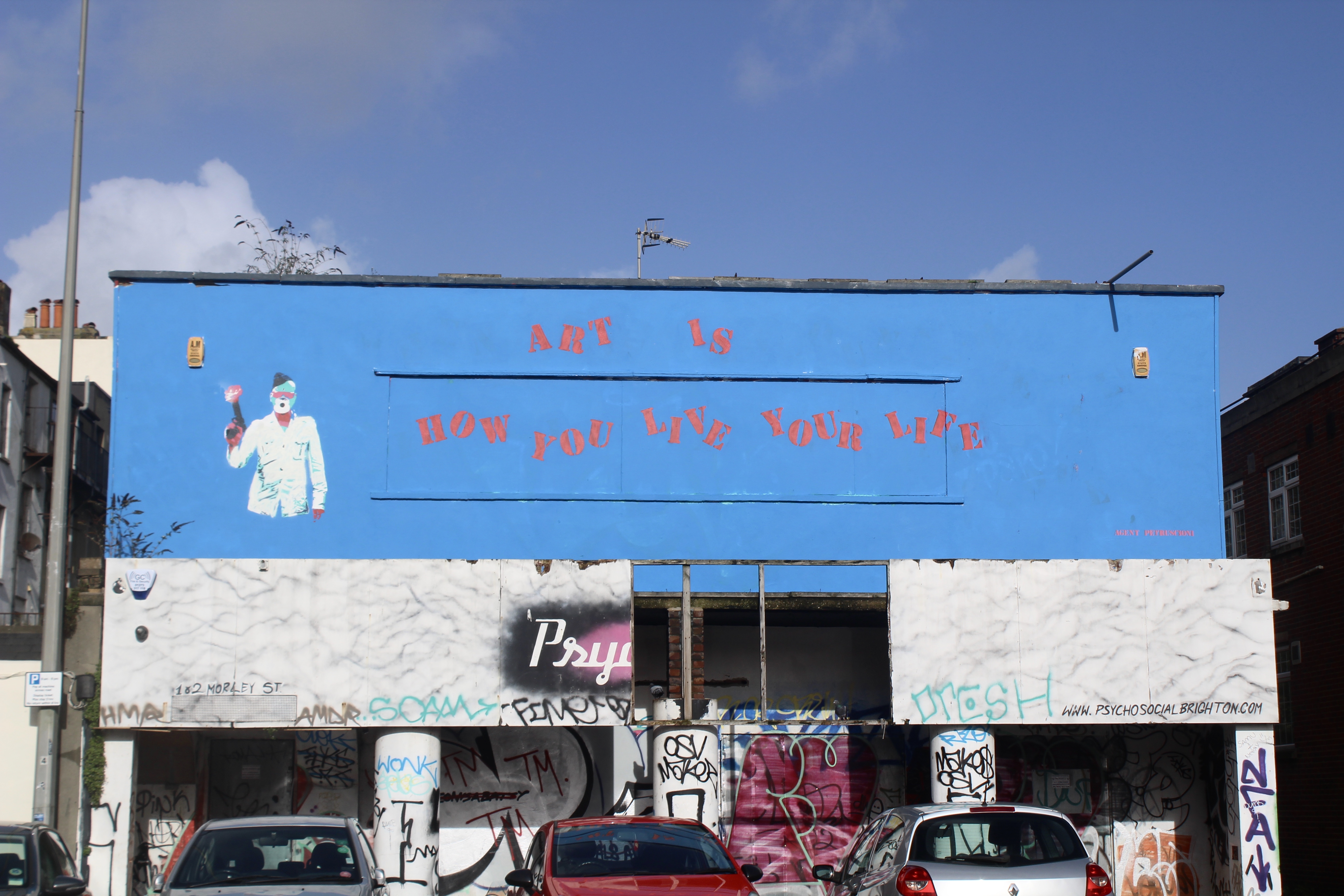
The Royal PavilionInspo, after going to the Brighton University’s print and design festival.
We only spent one day by the sea, but I did feel like it helped. Or maybe it was just the company, that comfort of being near a friend who’s going through something similar to you: living in those weird months after graduation, working your way through a new job, a new home, a new life.
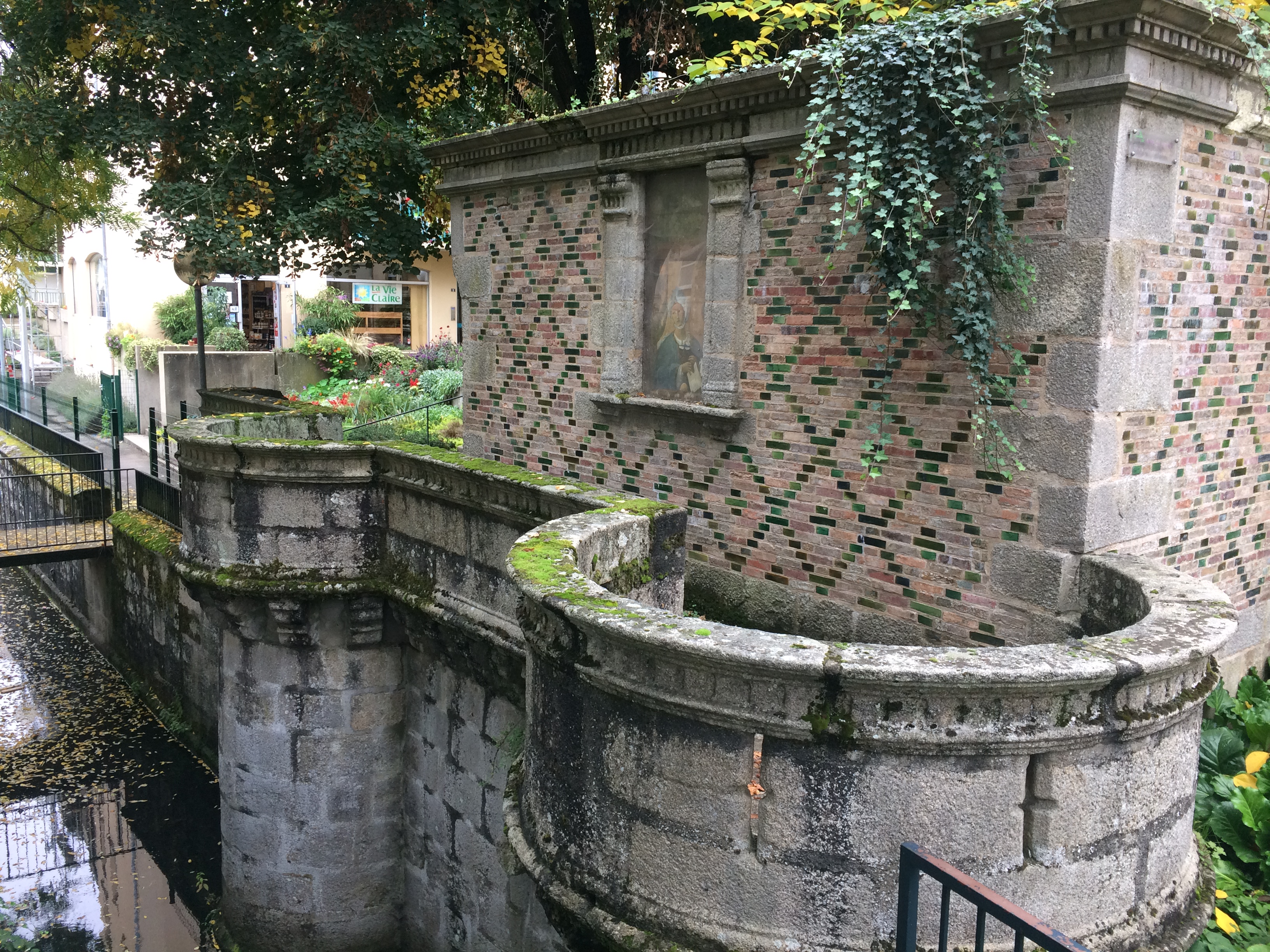
October snuck up on me because one second I was in Summer Mode, riding motorcycles, eating junk food, going camping and playing with cats all day long and then… leaves were falling off trees that were lined up against the remains of a castle in a small town in Normandy.
Which is where I live now.
View from my window is mostly sky. I love it.
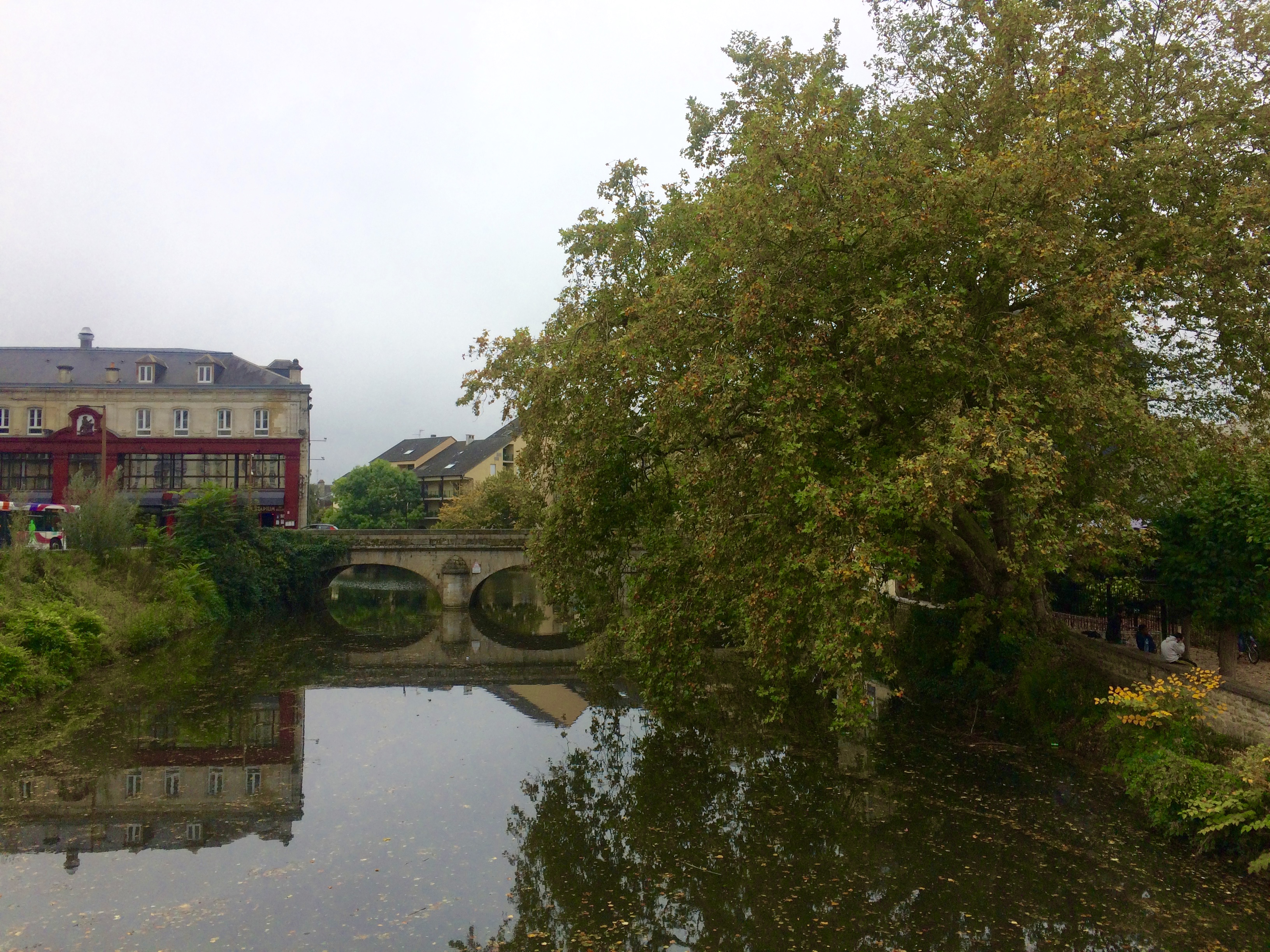
Alençon, located in the southern part of Normandy—maybe an hour and a half by train from Paris and an an hour from Caen—is a small town but not so small that there’s only one street light (lookin’ at you Coupeville!!).
The leaves are falling! Where’s my PSL?? Oh yeah no Starbs here.
On my first full day here, Nicolas, one of the English professors at Lycée Alain where I live and work, took me on a tour and said something along the lines of: “Coming from America, some of these buildings probably look pretty old to you.”
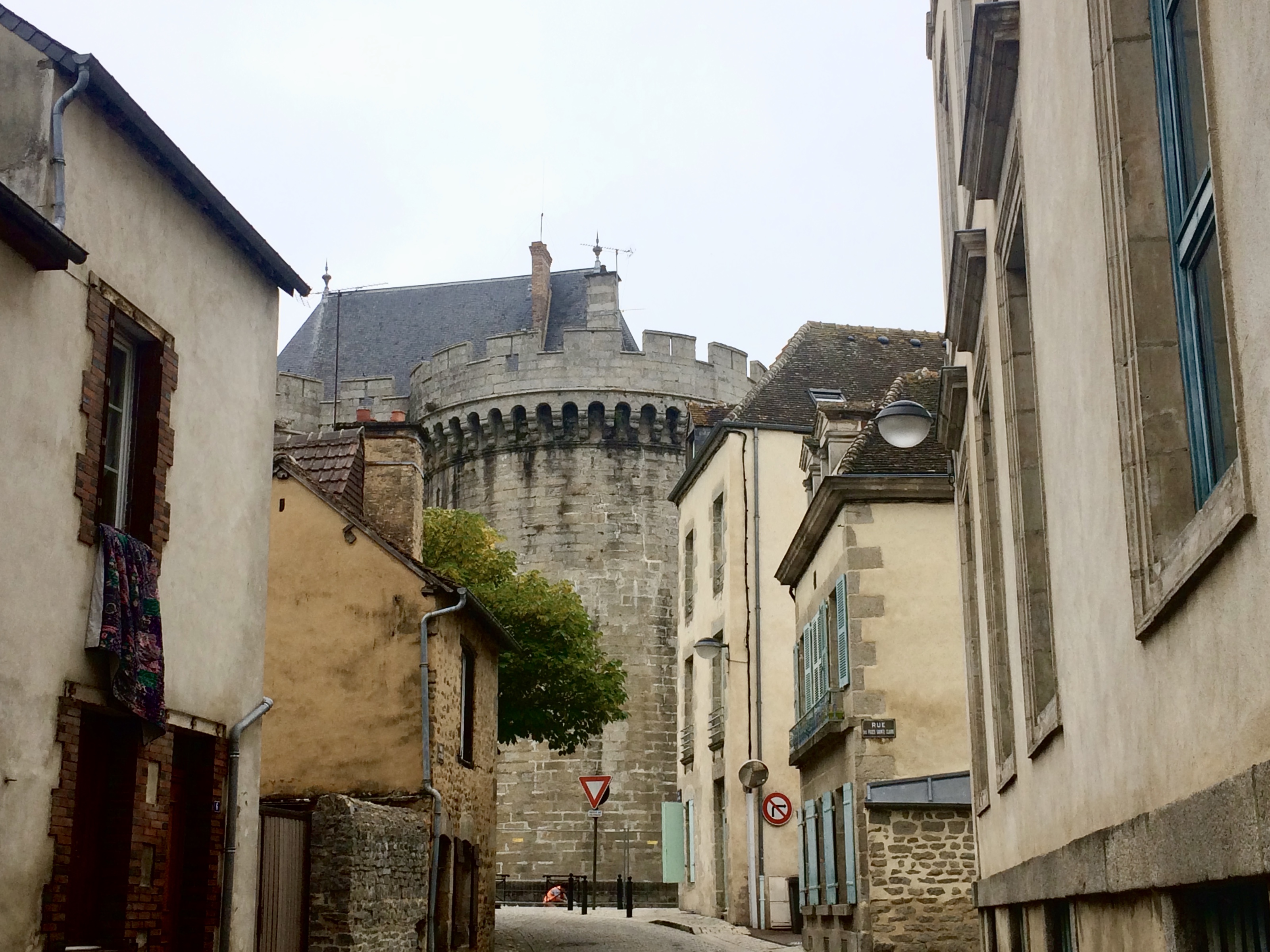
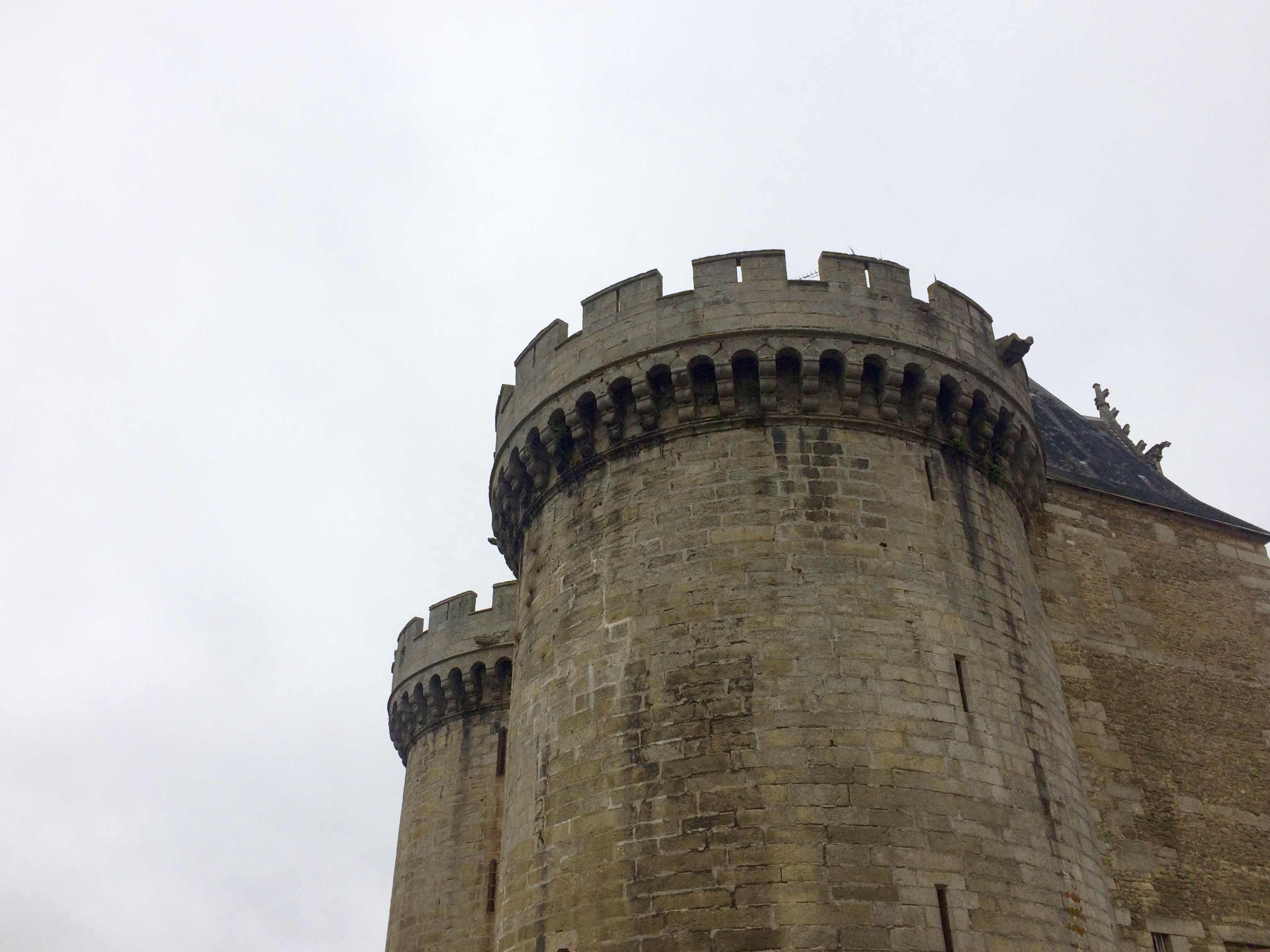
I didn’t let him know that in my head I was reenacting a scene from Camelot because we were standing at the foot of what used to be an actual castle.
“Yeah,” I said back instead.
Walk through the small streets until you reach the castle.There she is.
Already I feel the spirit of Normandy. The sky is almost always cloudy. The rain is a mist, or a steady drizzle through the night. (As of yet unconfirmed if it rains more here or in Seattle. But to say I’m prepared for this weather is an understatement).
The rain keeps it green.
There’s also a feeling of strength that I sense coming from the people who live here, whether it’s because they have worked the surrounding farmland for centuries, or because they’ve dealt with the rain, or because they eat tripe and enjoy it.
Or perhaps it comes from Guillaume Le Conquérant aka William the Conqueror. An illegitimate child who faced murder plots and anarchy as a young duke but grew up to successfully conquer England. Maybe it’s a bit of rebelliousness. Or an unwillingness to take anything sitting down.
Looking for Guillaume.In Caen.
Guillaume’s grave and a street cat I named Guillaume. He wanted my crepe.
This weekend, I visited Guillaume’s grave at the Abbey of Saint-Étienne in Caen—just an hour train ride from Alençon. I’m hoping that I gathered a bit of Guillaume’s spirit while I was there because I have my first English classes tomorrow and feel like I’m going to need it.
For the record, everything I have done in the last four years has been happenstance.
When I go back home, sometimes people ask me questions like, “So are you still interested in getting in the fashion industry?” and I get totally confused… when have I ever been interested in fashion???
Then, I remember. Back in high school I wore pink every single day and had a rather aggressive plan in place on how to become the next Vogue editor and live a Carrie Bradshaw life on the streets of New York.
I did get accepted to NYU, which was admittedly part of the #lifeplan. The added caveat in my acceptance letter that said I was going to spend my first year in Paris was definitely not.
It was probably the day I saw the word “Paris” written on the acceptance email that I developed a more “go with the flow” attitude towards things. I still remember the exhilaration, confusion, and final shrug of “ok, cool,” I went through before accepting. (You just don’t turn a year in Paris down, right? If anyone needs life advice about whether or not they should go to Paris, call me up and I will tell you what to do, which is to say yes.)
Going to Paris before going to New York had an interesting affect on me, and if you interviewed a few of my fellow Paris buddies, they might say something similar.
I used to think that NYU was like my ticket to New York. Go to school there, get a job there, stay there and conquer it. Now, I’ve realized (and this may sound dumb, but I did have to actually come to a realization) that a city is literally just a location. A group of buildings, people, cars.
Sure, cities have individuality, but the idea that New York is somehow one of the best is flawed. And it shows how little I knew about myself back then, that I thought I would be able to stay in one place for more than a few years at a time.
This long-winded jumble of thoughts is to say that, I’m going back to France next year.
It feels good to say. Nicely circular.
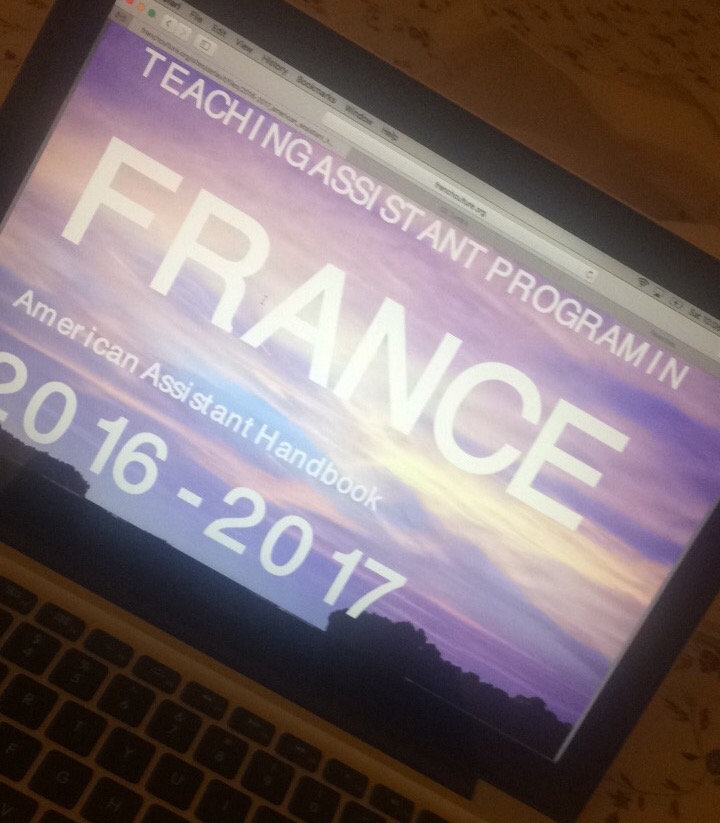
I’m going to be teaching English in Caen (a port town in Normandy). While I have very little experience teaching, I thought I would regret passing up the opportunity. I want to use the year to strengthen my own French skills, relax a bit (New York is stressful, ok?), think, decide what’s next.
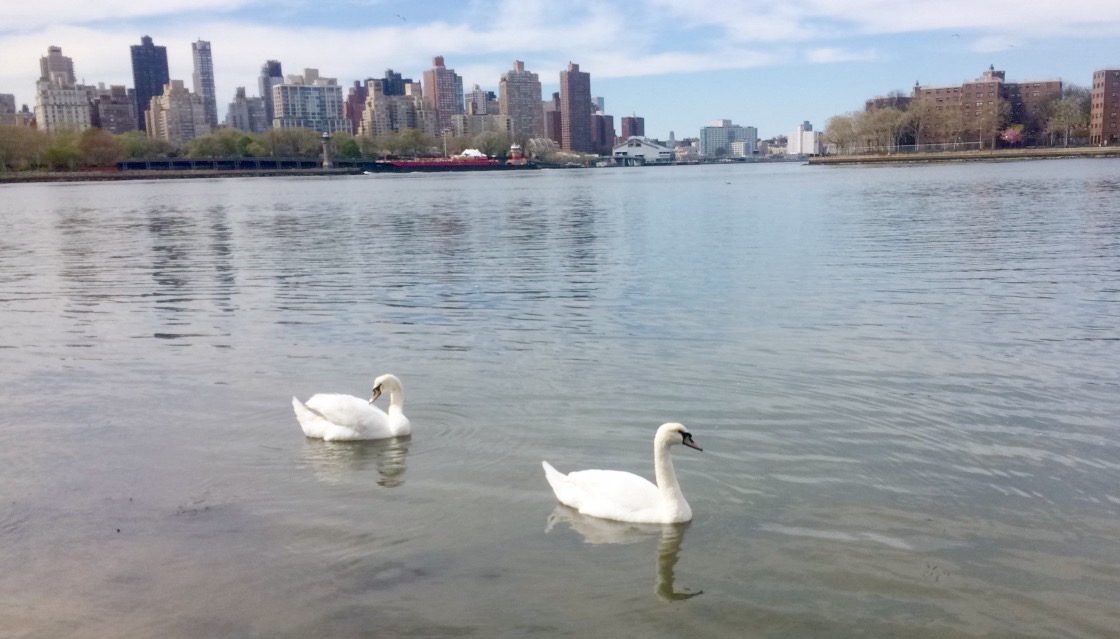
I have a feeling I will come back to New York. I especially fell in love with my neighborhood in Queens this year, and would like to spend more time there.
But for now, I need a bit of an adventure to keep me on my toes.
Last week I headed to Arizona State University’s Cronkite School of Journalism to participate in the Dow Jones News Fund digital media program with 10 other student journalists who had been selected from around the country. After a few days brushing up on our digital media skills, we got to work reporting on the issue of child drownings in the Phoenix area.
We didn’t get much free time, but I enjoyed soaking in the warmth of Arizona in between interviewing firefighters and pediatric ER doctors, trying to get nat sound from fire trucks, and meeting other young journalists from around the country.
Everything from the website coding, to shooting and editing video, to making infographics was done within five days by the 11 students in the program.
A common theme at NYU graduation ceremonies is the anecdote of that infamous first week: the wide-eyed freshman moving into their dorm in the big city, exploring the bustling Washington Square Park with wonder, meeting everyone on their freshman dorm floor and immediately becoming friends only to never speak again after Welcome Week.
I don’t have the same memory.
Looking back on my first week at NYU I see instead a vision of me, sweatily dragging two huge suitcases through Gare de Nord in Paris with a kind stranger from Iceland, waiting in a long line for taxis behind a group of British tourists, walking back and forth on rue Oberkampf in Paris’ 11th arrondissement trying to find the entrance to my building, hungrily eating the tiny cookies left for me on the desk in my studio room, and then collapsing on my new bed, excited but overwhelmed.
Reading my first blog post from Paris, I am astonished at Younger Lily’s ability to jump into that life with such… flexibility.
“Today marks my first full day in Paris and already, it has been a little adventure,” I wrote. “Having awoken with no food in my kitchen, I wandered out onto rue Oberkampf and found a boulangerie to get a croissant.”
I remember this morning so well. The street was quiet. The sky was a blush color. The croissant was perfection. I felt a little sad, a little scared, but the walk I took that morning was peaceful enough to make me more excited than anything else.
It took a bit of time, but I eventually went from walking around the streets of Paris alone, to exploring with the friends I have kept throughout my college career.
And while I’m so sad to be saying goodbye to some of those people, I feel like I am in a similar headspace as I was when I first flew to Paris: a bit scared, but ready to start new. Also props to NYU, for helping me make friends from around the world. I now have places to stay (or friendly tour guides) in several countries if I ever visit.
Here’s a few photos from the crazy, exhausting, but fun graduation week:
Reunited & it feels so GOOD!
Spending time with Judes.
Figuring out how to make my hair look good with the cap.
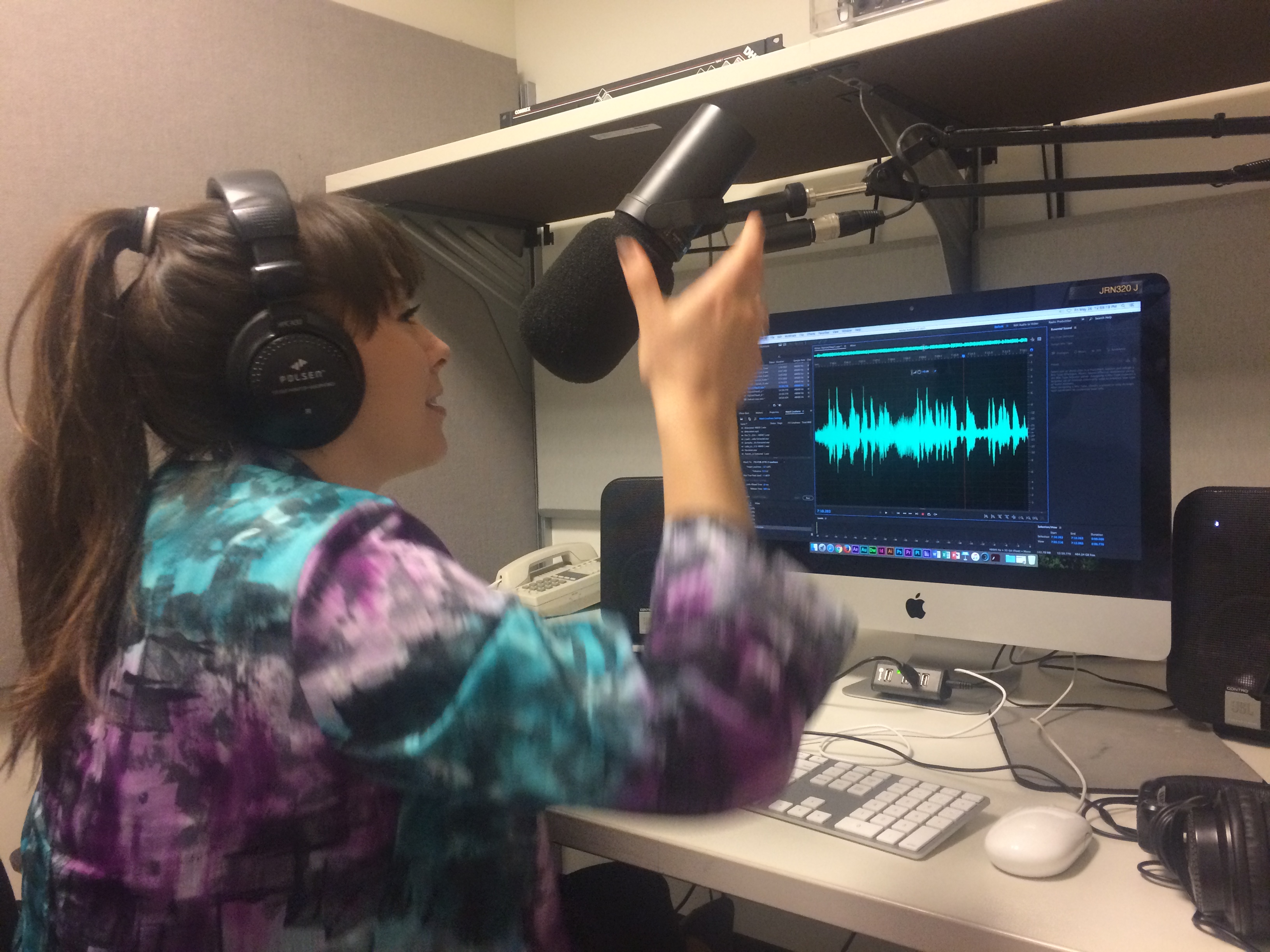
On May 7th, France elected Emmanuel Macron as their new president. But what does Macron offer for France’s overseas departments and territories, who have a vote in the election, but often feel like their voices are not heard?
In this podcast I take a look at the historical, social and economical factors affecting the French overseas departments of Martinique, Guadeloupe and French Guiana and how they decided to vote in the 2017 French election.
Lunchtimes, and at all times, Chen Lieh Tang can be glimpsed in his Chelsea kitchen leaning into steaming pots of Chinese egg noodles, mixing sauces, and teaching his cooks the tricks of his trade.
Since the March opening of his restaurant, Shorty Tang Noodles, on Eighth Avenue and 15th Street, the 64-year-old Tang has been in the kitchen every day, overseeing the making of each dish.
His son, James Tang, says he has a habit of micromanaging. Tang says he just loves to cook. He gets it from his father, the legendary chef Yun Fa Tang.
“Some people can cook for 20 years and still be lousy. For some people, it just takes two or three years to get the talent,” Tang said following a recent lunch rush. “My father, he had the talent.”


















 Lily Haight