Photos from the 2019 Race to Alaska in Port Townsend, WA.


If we didn’t have winter, would we still feel that immeasurable joy on those first warm, spring days?

My job gives me the opportunity to meet and talk with a lot of people. Just last week, I met with a rambunctious crew restoring an old houseboat, talked with a sunny flower farmer, and had lunch with the leader of a local activist group.
Even though other aspects of my job have recently been causing me a lot of (unnecessary) stress, those meetings are what bring me the most joy. I fall in love with someone every day, because humans are interesting, hardworking, creative, smart, and beautiful.
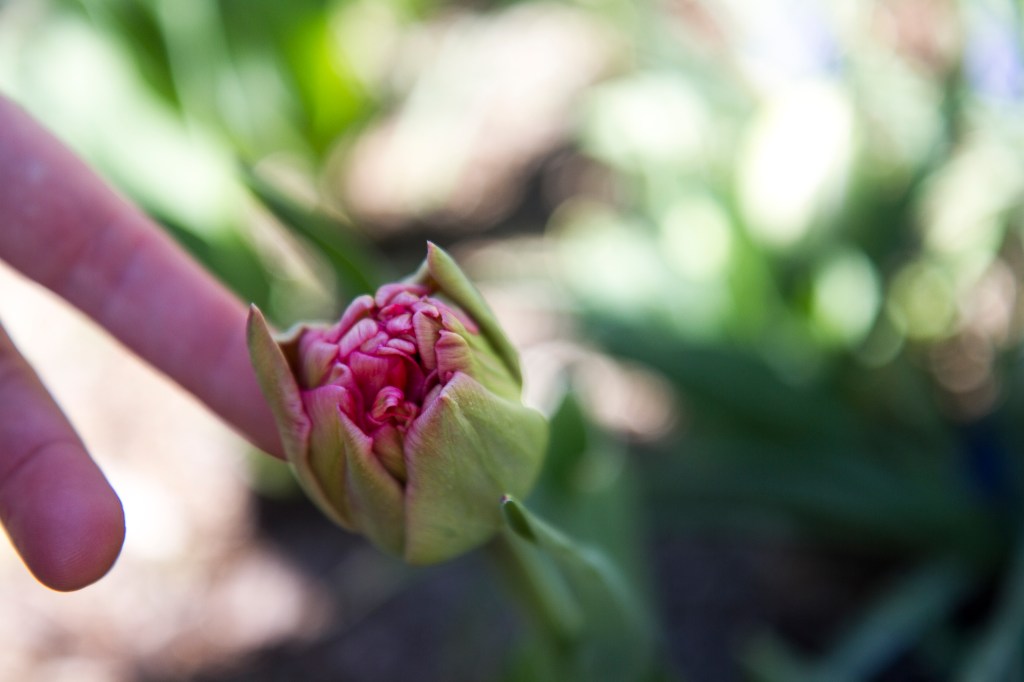

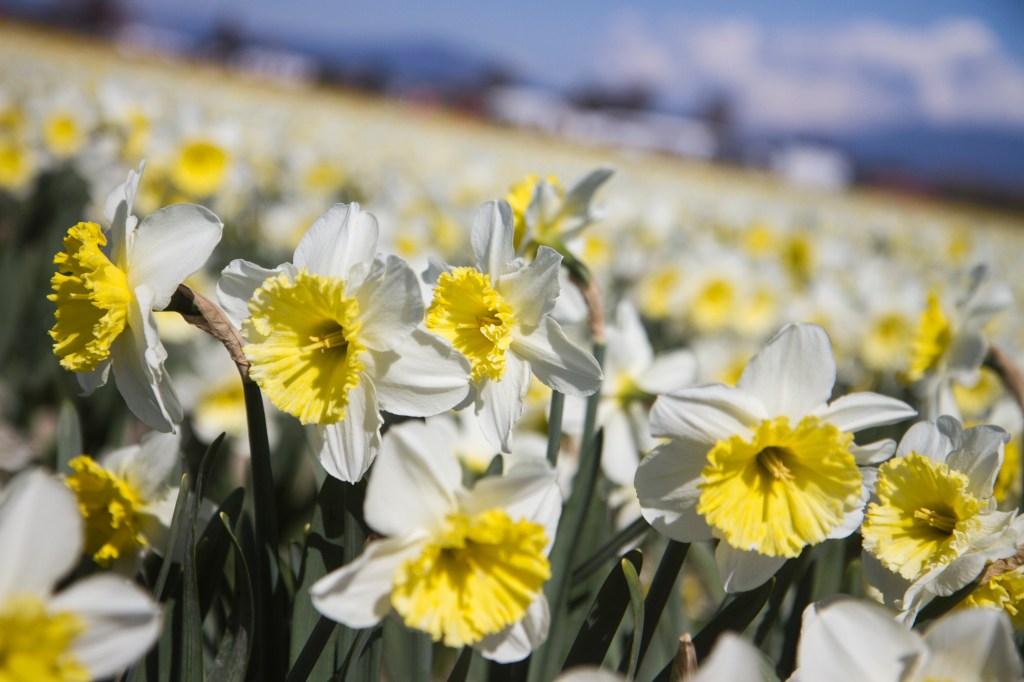
And I feel that not only are these humans fulfilling their purpose by doing whatever it is that they’re doing, but they are also fulfilling their purpose purely by making my day.
Maybe that sounds self-centered. But then I think about how maybe to fulfill my purpose here on this Earth, all I need to do is connect with another human once or twice. Now and then, just have a nice conversation. Share a smile or a thought. Or even a split-second of eye contact. An understanding.
And I like that thought.

Or maybe my purpose in life is just to lie in the grass on a sunny spring day, soaking in the rays, quietly chatting with a good friend, and observing the early season flowers. I also like this thought.
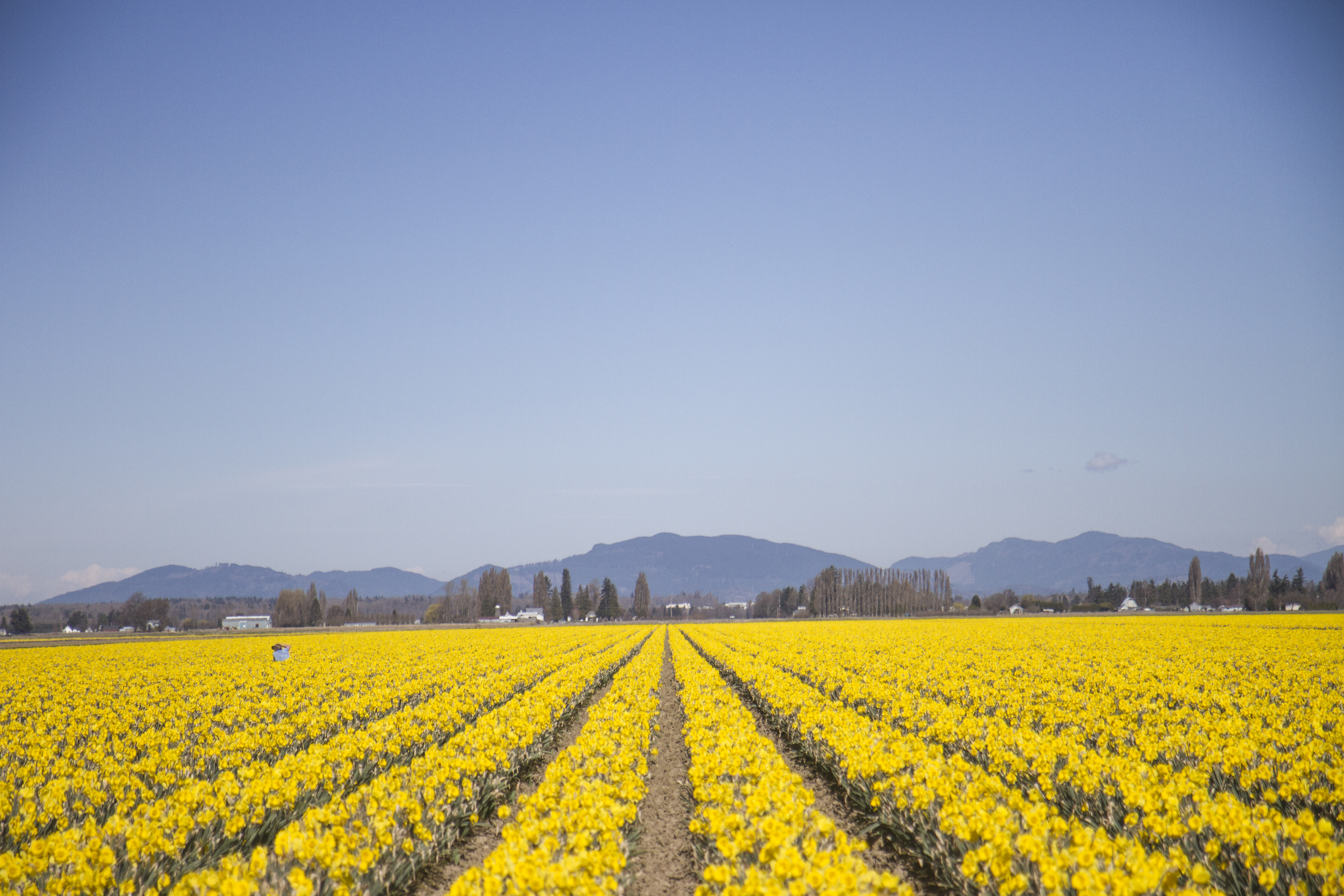
This blog post is sponsored by a crazy amount of optimism and dreaminess.
XO Lily

At 9 a.m. Saturday morning, Bertram Levy, a short, mustachioed sailor wearing the beret he is known to wear got in line at the Northwest Maritime Center to sign up for the annual Shipwrights’ Regatta.
In front of him were two novice sailors — young men from the Northwest School of Wooden Boatbuilding, with zero sailing experience besides a love for woodworking and a desire to get out on the water.
Bertram had raced every year since the thing started 28 years ago. Minutes later the veteran sailor and the two newbies were circled up.
“Meet at the end of the D-dock. My boat is called ‘Able,’” Bertram said.
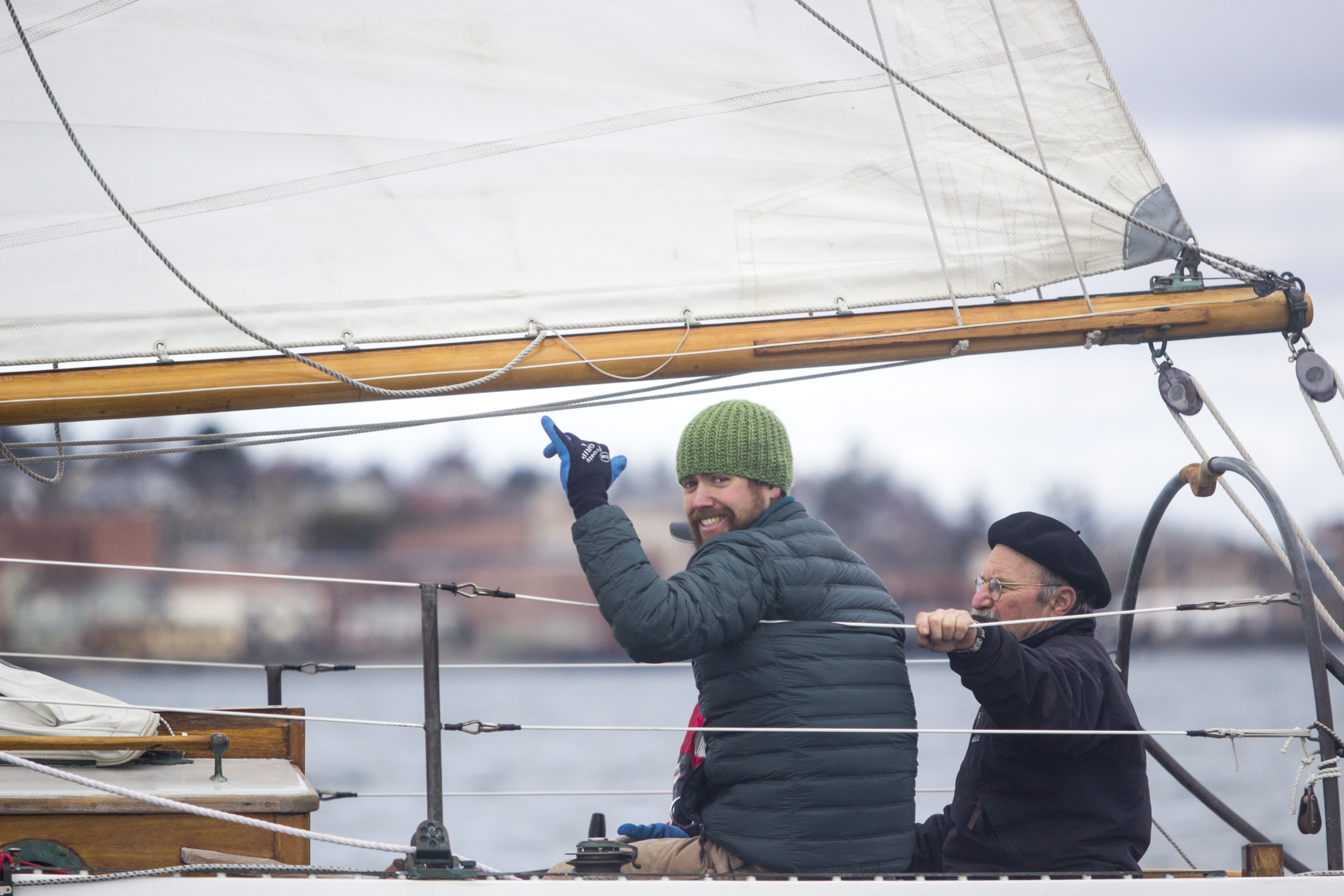

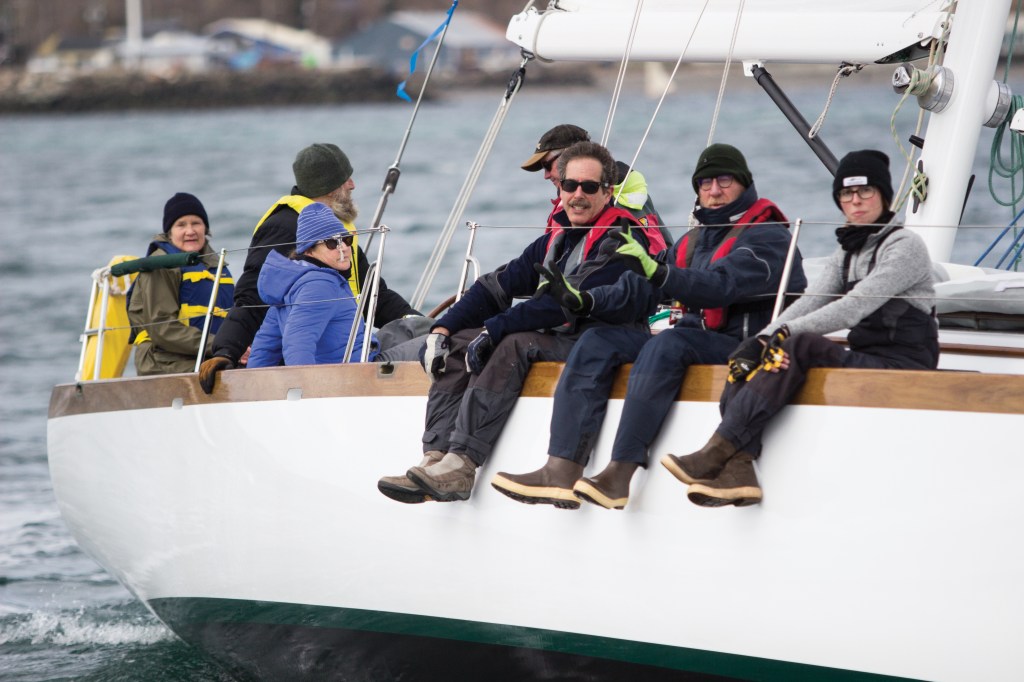


Anyone who shows up to the Skipper’s meeting gets on a boat in the Port Townsend Shipwrights’ Regatta.
This makes for some interesting crews. Old friends, strangers about to become friends.
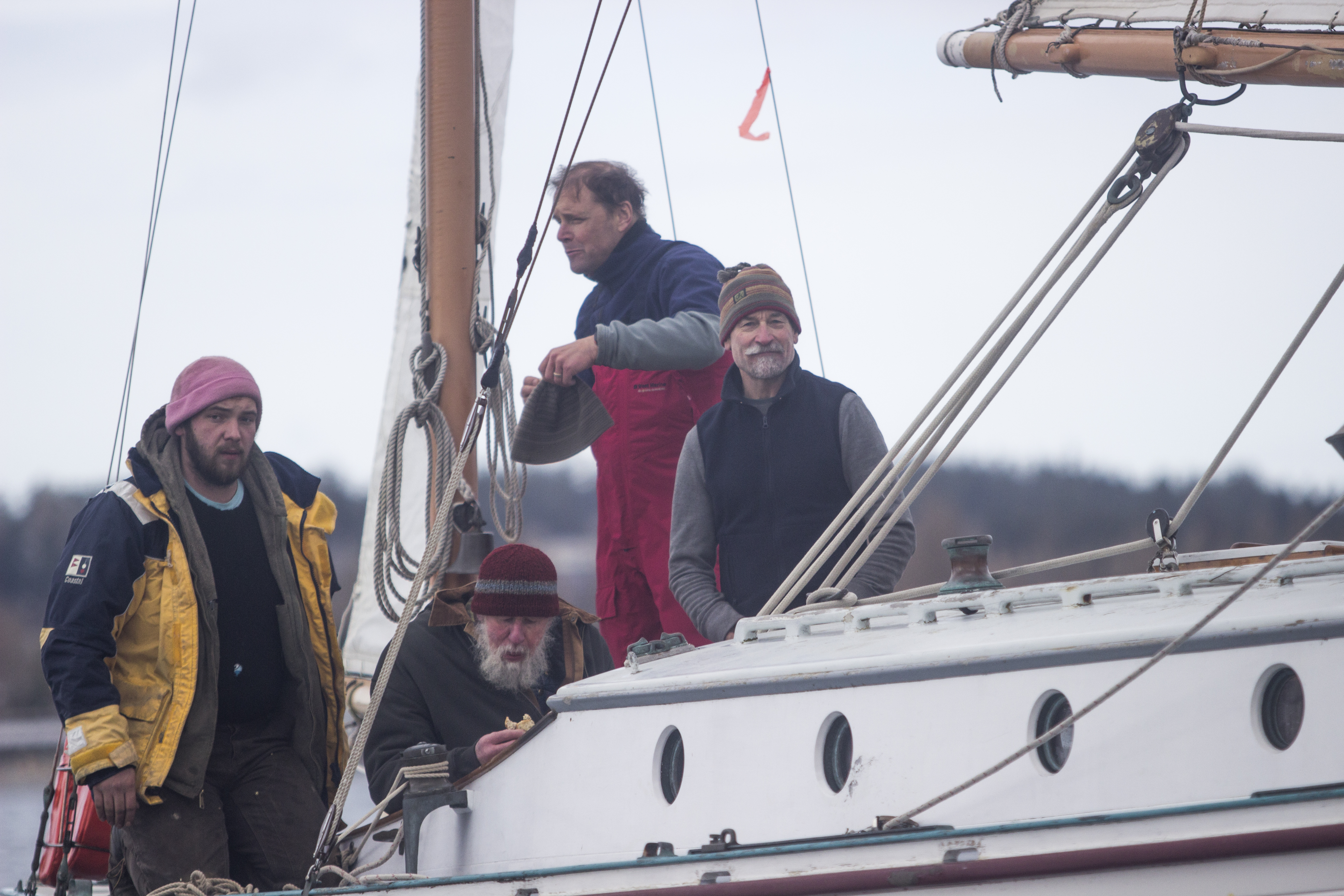
But the February race isn’t about winning (for some). It’s more of a race for the locals to beat the person who beat them last year.
It’s also a chance to show off your handiwork. Many of the boats in the race were wooden, the sails and rigging done by local artisans.
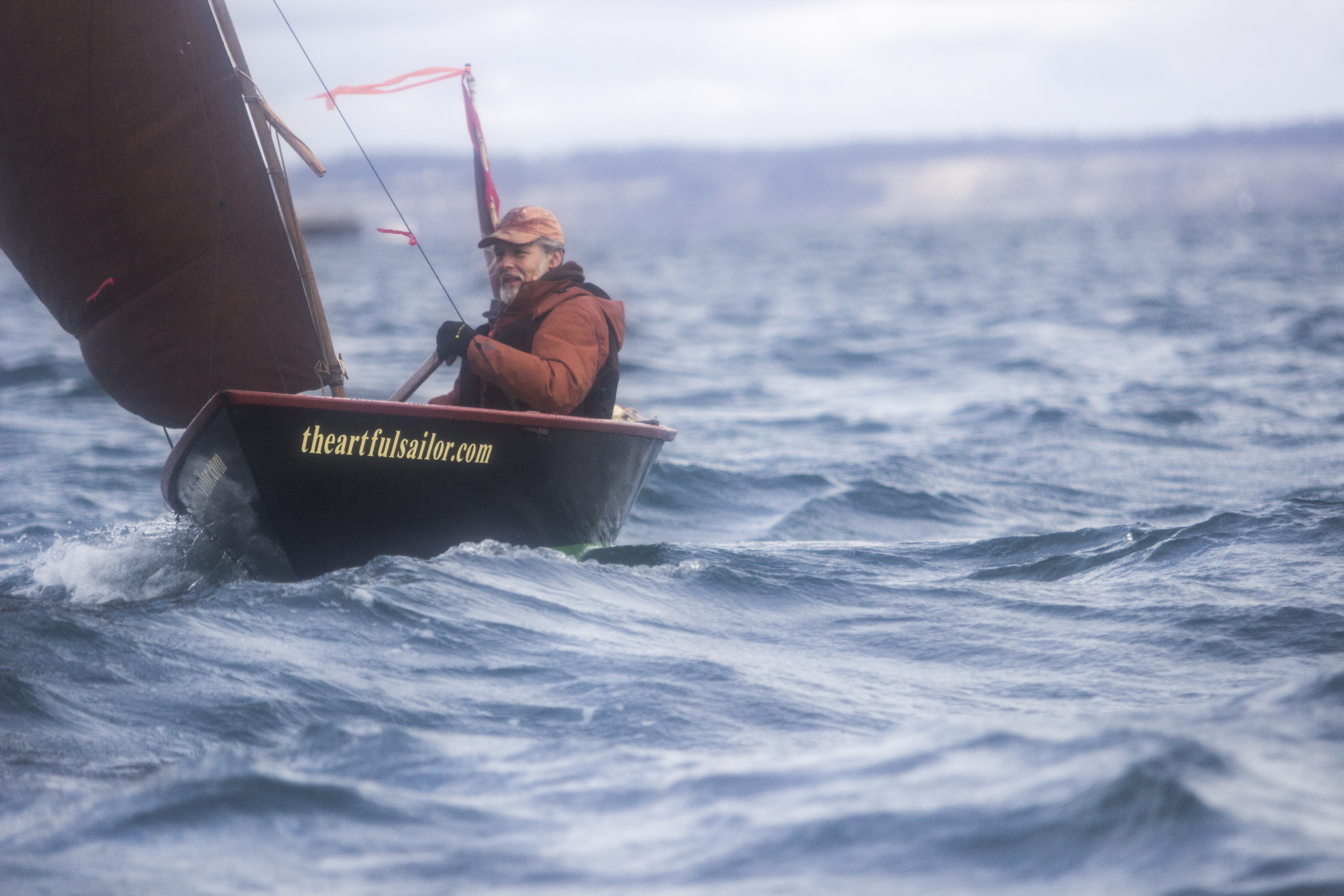
On the “Able,” Bertram and his two novices lined up for the race. As the starting horn rang out, the southeast wind blew Bertram’s beret into the water.
No problem. He reached into the sea, and fished it out again.
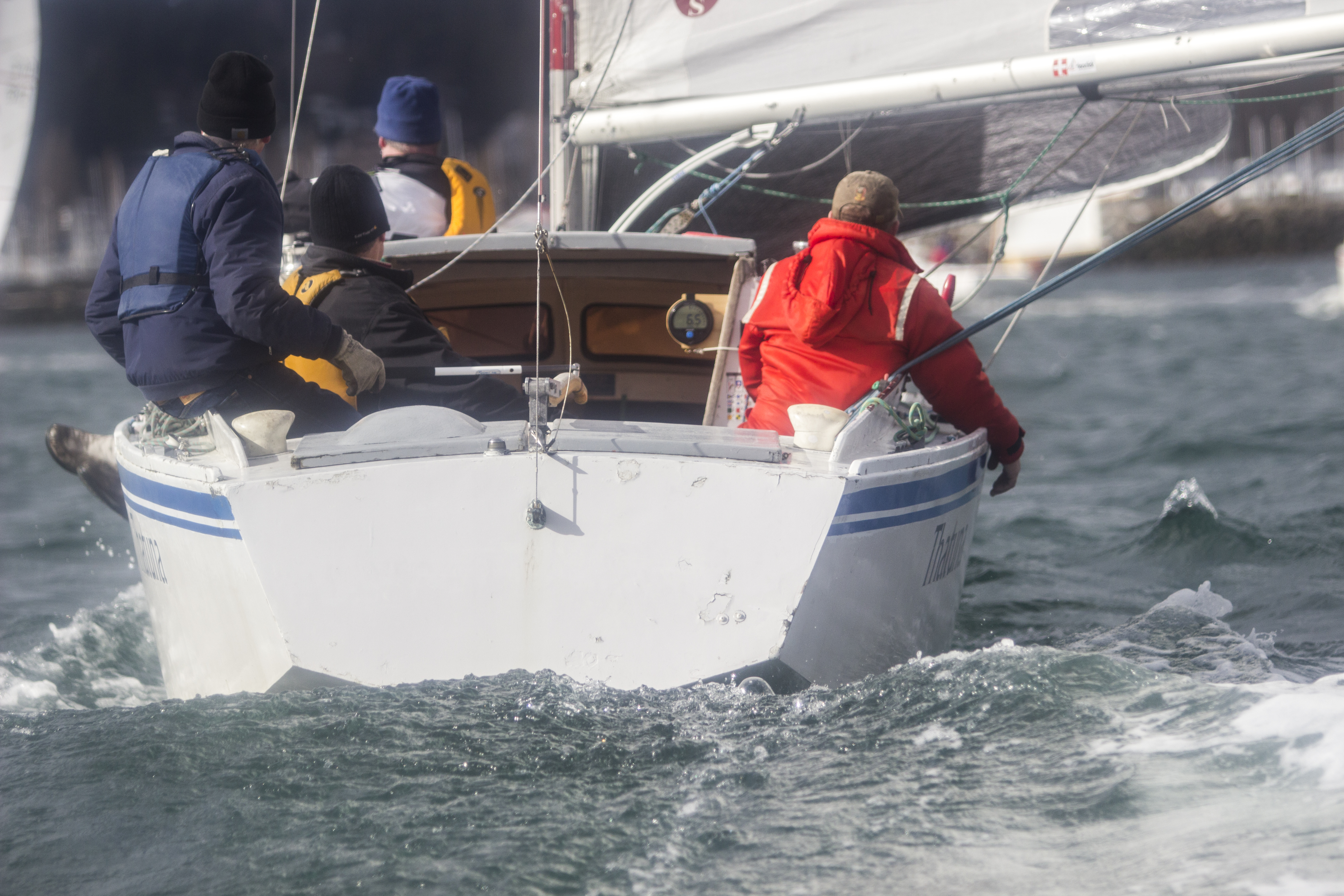
(Some of these photos and the story of the race winners were published in the Port Townsend Leader.)
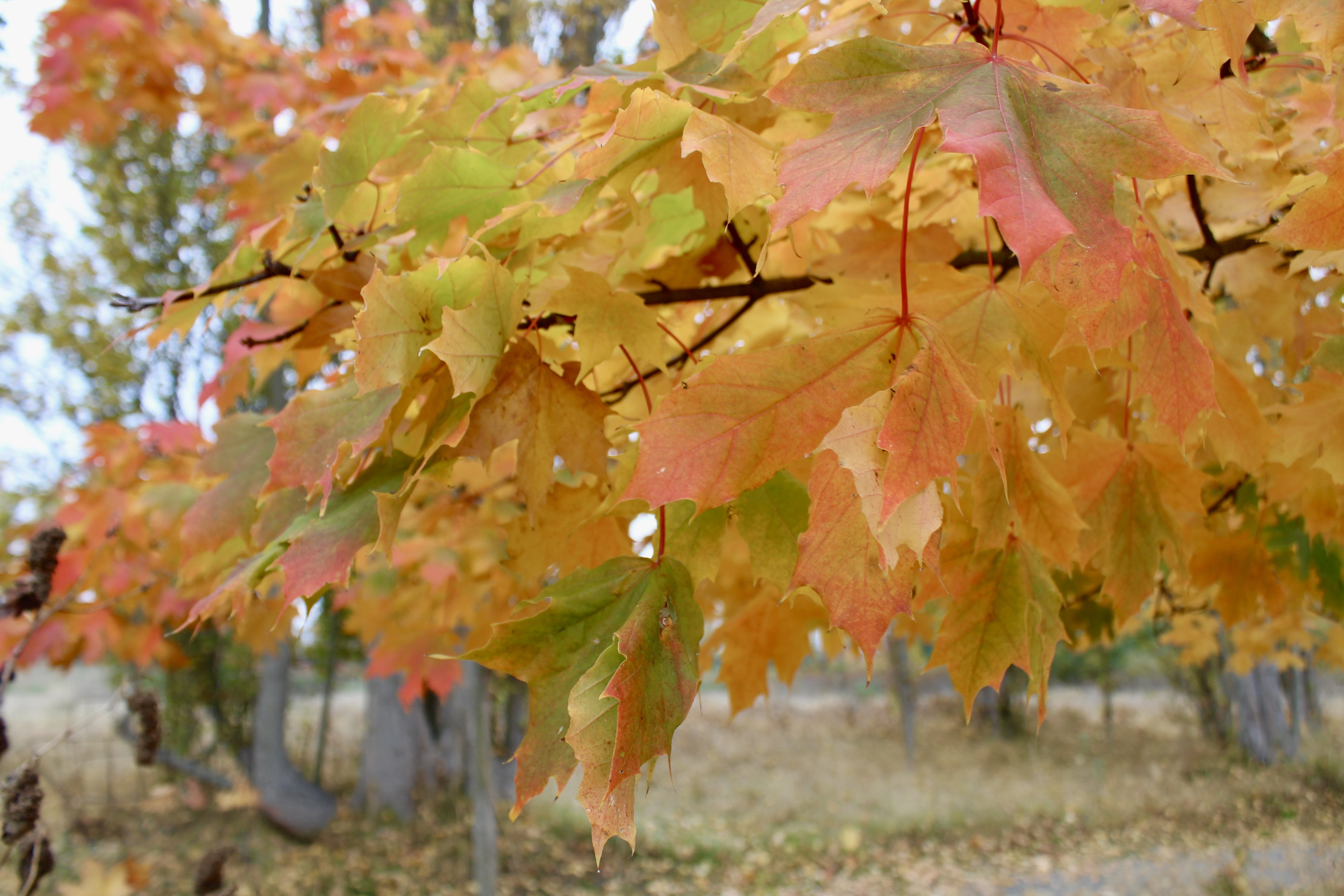
Here’s something I think about a lot: I’m 23 years old. If nothing crazy happens, I might live for another 70 years. What will those 70 years look like?
Smoke-filled skies? Aliens? Lifespans shortening? The rich getting even richer? The poor getting even poorer? The orcas living? Or dying? It’s hard not to imagine the worst. Especially when some things are the worst.
But then… last Sunday. I found the best. In the form of helpers. Tree-planters. Earth-carers.
Otherwise known as a group of Admiralty Audubon members. Some well over the age of 50, and still pulling Scotch broom out of the earth like it was no problem. Bending down, getting dirty, digging holes and planting roses, pines and firs. All so that my fellow young people and I can breathe a little easier in the next 70 years.

I asked if I could take pictures for the paper.
“You working on a Sunday?” They asked. “Lucky for you, we’ve got an extra shovel!”

“Come over here, get a picture of this Monterey Cypress, it’s going to be huge.”
“Look at this Amanita mushroom, isn’t it beautiful?”
…
A lot of shade gets thrown on baby boomers by my generation. Rightly so, in some respects (hello, housing crisis and 2008 financial recession).
However, I recently moved to the county with the oldest population in Washington State and I keep meeting helpers. Nearly every day, whether in the form of tree planters, green crab finders, creek restorers.
Over and over I also hear similar advice: there are people out there working hard, with new technology, new research, and new energy to help the earth. Instead of getting bogged down in nightmares about the Great Pacific Garbage patch, look at what’s happening.
And go plant a tree. They eat carbon dioxide for breakfast.

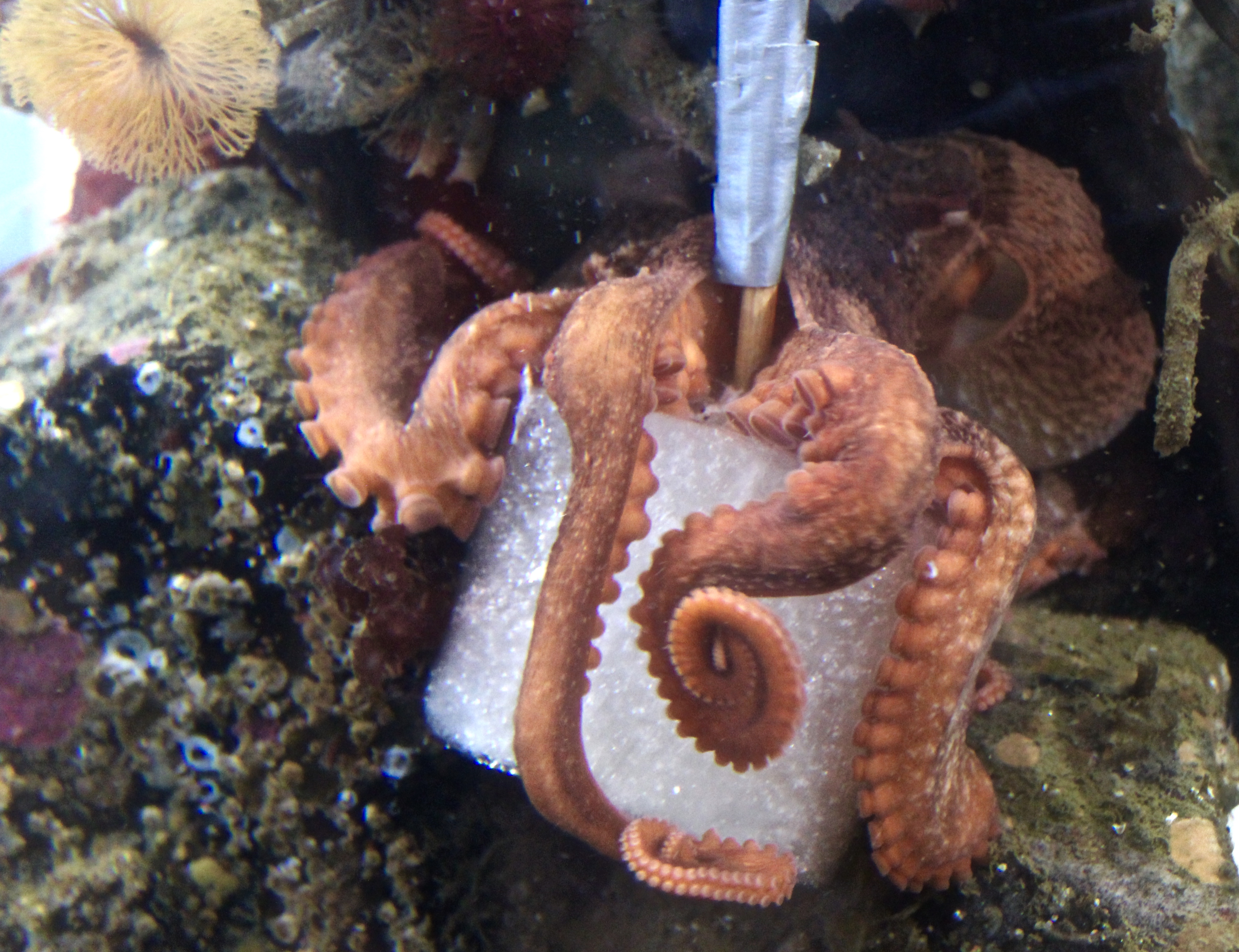
This story was published in the Port Townsend Leader.
She’s friendly, but reserved. She likes to play, but she’s also dignified. She’s a lady, but she also likes to eat fish popsicles.
Her name is Eleanora, and she’s a Giant Pacific Octopus.
“We’re still getting to know each other a little bit,” said Ali Redman, aquarist at the Port Townsend Marine Science Center, where Eleanora has made a new home among a kelp forest in an exhibit tank with fish, a pink starfish and a few other invertebrates. “She has a very distinct personality.”
Eleanora, who is roughly 2 years old, originally came from the area around Whidbey Island. She had been living at the Friday Harbor Laboratories, where she was helping researchers study the intelligence of the Giant Pacific Octopus. Now, Eleanora is a resident of the Port Townsend Marine Science Center aquarium, where she’s being featured in a film that Florian Graner, the underwater documentarian of Sealife Productions, is working on.
Graner will present some of his work at a lecture on “The Octopus Learning Project” at 3 p.m. Dec. 9 at the Fort Worden Chapel as part of the Marine Science Center’s “Future of Oceans” lecture series.
“I’m documenting how they’re bonding,” said Graner, who stops by the aquarium regularly to film Redman feeding Eleanora. “We’re trying to test her problem solving and learning capabilities to demonstrate what the Giant Pacific Octopus are really capable of.”
The Giant Pacific Octopus is a species that is native to the Pacific Ocean and is commonly found in the Puget Sound. According to National Geographic, the Giant Pacific Octopus grows bigger and lives longer than any other octopus species. The record size of one of these native octopi was 30 feet across and over 600 pounds. Eleanora, at roughly 2 years, is still young, but they usually only live for about five years.
The Giant Pacific Octopus is known for having a higher level of intelligence than most marine species, which complicates how the Marine Science Center takes care of Eleanora.
“There is a lot that goes into the care of any of our animals, but especially octopus because of their higher level of intelligence,” Redman said. “Fish don’t really do a lot of escaping.”
The aquarium had to take into consideration everything from how the tank where Eleanora lives is decorated, how much water goes through it, and how to make a secure lid so Eleanora can’t escape, Redman said.
“They’re very strong and very smart and they can be out of the water for some length of time,” Redman said. “There’s all these stories of octopuses getting out of the tank, getting into another tank and getting some fish.”
In her tank, Eleanora shares the space with two different species of schooling fish – who try to keep their distance from her, although they like to sneak some of her food occasionally – a giant pink sea star, anemones, a sea cucumber, and a few other marine invertebrates. Every creature at the aquarium is native to the Puget Sound.
“We hope she doesn’t eat the things in the tank with her,” Redman said, adding that so far, Eleanora seems to prefer eating frozen fish “popsicles.”
Eleanora also differs from most marine life in the aquarium because she needs a special “enrichment” program to keep her from getting bored.
“They are so smart, and because we want to encourage her to show off some of those cool behaviors, both for her sake and for visitors’ learning abilities, it’s important to have a good enrichment program,” Redman said. “Enrichment is just a way of giving her something more to do, and that can be in both food-related toys, such as fish frozen inside an ice cube, but it can also be nonfood related, as well. She does enjoy contact with her keepers.”
According to Redman, Eleanora will often be found hanging out on the side of her tank, watching passersby and grooming her suckers. She recognizes the people who feed her and enjoy giving them “tickles” with her tentacles. And she tends to be most active in the afternoon, when Redman wakes her up for a snack.
While Graner has been working on filming octopus in the wild, he hopes to see how bonds form between Eleanora and her keepers, like Redman, who work with her daily.
Jonathan Crossman, an intern at the aquarium, has also been helping Redman and Graner with the enrichment program, playing with Eleanora and recording her with a GoPro in the water.
“She’s been moving around her exhibit, feeling where everything is, exploring what her new area is,” Crossman said. “She likes to play with cold things a lot. Ice cubes work well as a fun little thing that is cold but also isn’t food. She plays with that a little bit and then it melts away.”
According to Graner, studying the intelligence of octopus in the wild can be difficult because they tend not to be too social.
“Generally they are not social and they retreat into their dens,” Graner said. “When they are in an aquarium, they actually become quite social, which is surprising for an animal that is so different from us.”
While Redman and Eleanora are still getting to know each other, Redman said she’s already started to see Eleanora’s personality. She’s not scared of people and she likes to play with the toys they have given her, but she’s also a bit reserved, said Redman.
To see Eleanora interact with Redman, it’s best to stop by the Port Townsend Marine Science Center aquarium in the later hours of the day, when she is most active. Now in their fall hours, the aquarium is open Friday, Saturday and Sunday from noon to 5 p.m.
By now we’ve all heard of it: that abstract giant mass of garbage, three times the size of France that’s floating out in the middle of the Pacific Ocean. The Garbage Island, or the Great Pacific Garbage Patch. We’re worried about it, collectively, especially when we think of all those cute otters and seals choking on straws and plastic bags.
But out here on the West Coast, especially up north, it’s hard to imagine that much garbage really being in the ocean. Not when the beaches are so beautifully picturesque… so empty and large.

There is one man who probably has no issues imagining all of the garbage floating out there in the ocean. John Anderson lives in Forks, Washington, and no he is not a vampire. He’s a beachcomber. Collecting things from the beach his whole life, little by little, finding messages in bottles, fossils, doll heads, Nikes, and thousands upon thousands of buoys, John has put all of his finds into a treasure-filled museum in his backyard just off the highway in Forks.
 If you were to ask John, what is in the ocean exactly? He would probably answer: a little bit of everything. You never know what you might find.
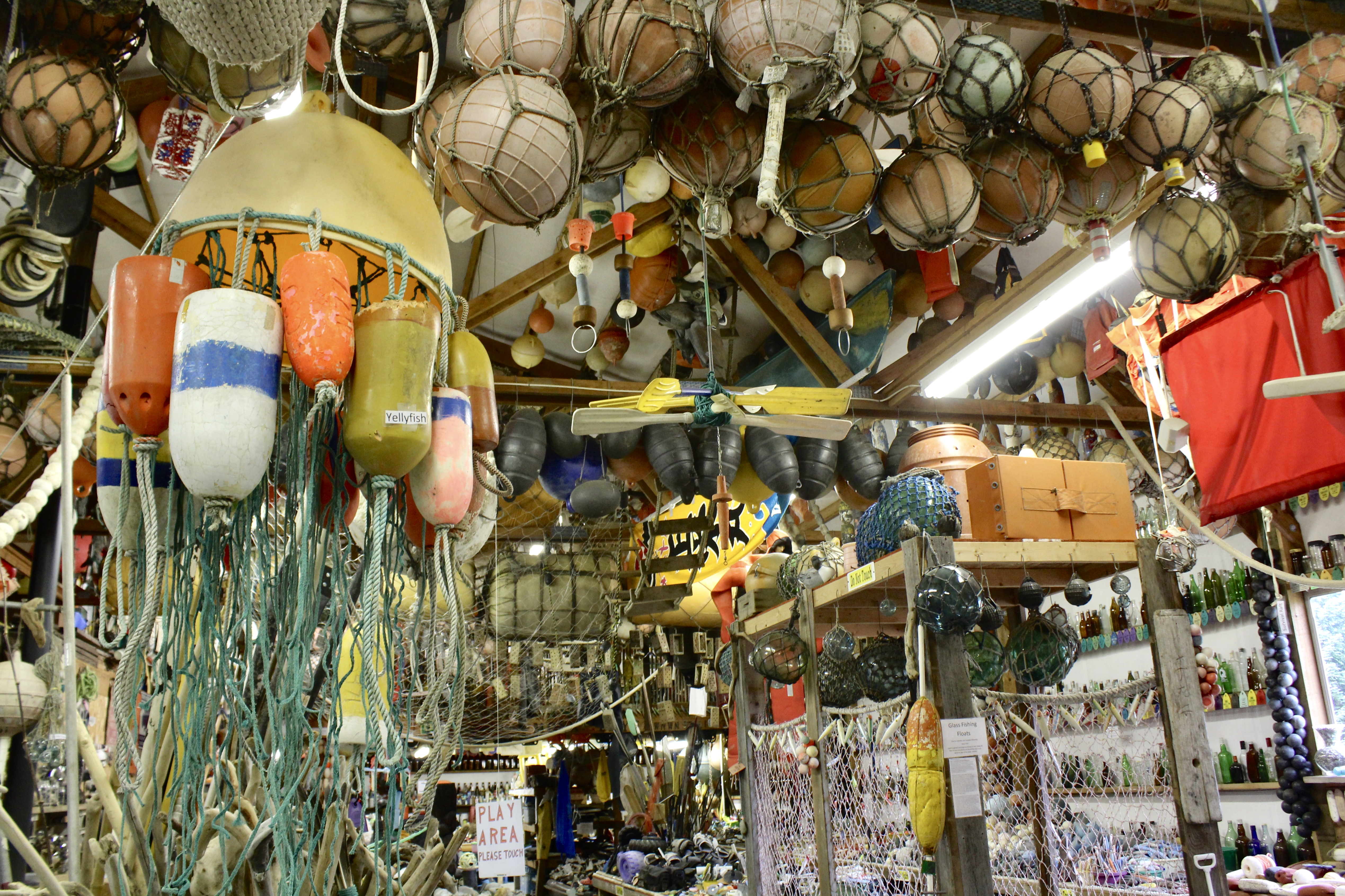
Pay the small $5 entry fee (cash only) for John’s museum and he welcomes you into a world of wonders. Look up and down, he says, and even though he’s a quiet person, he has stories to tell for each item.
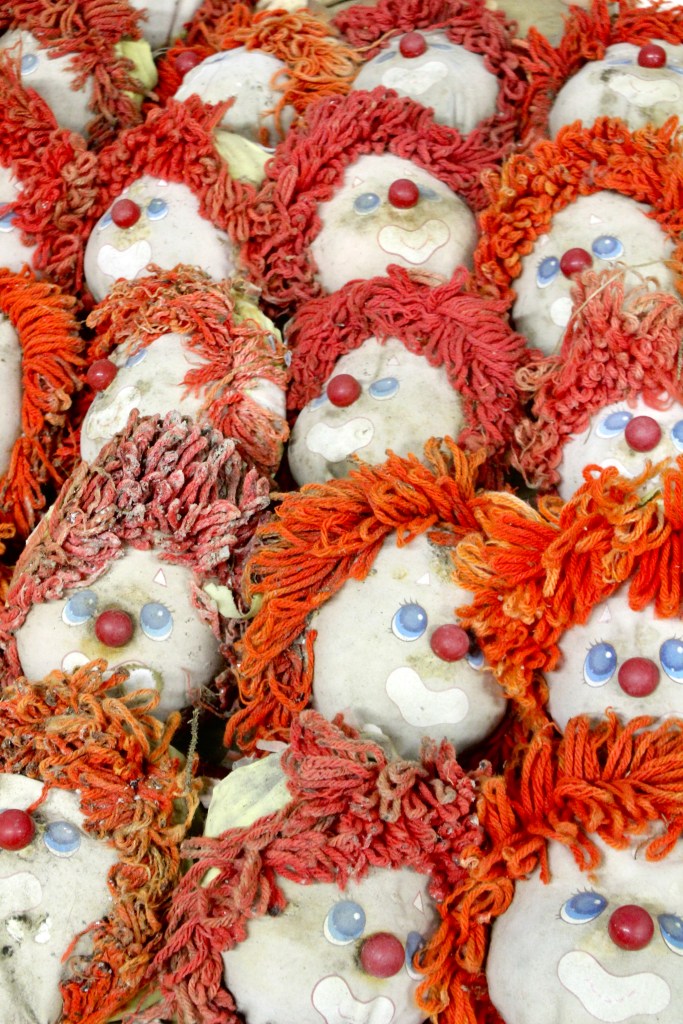

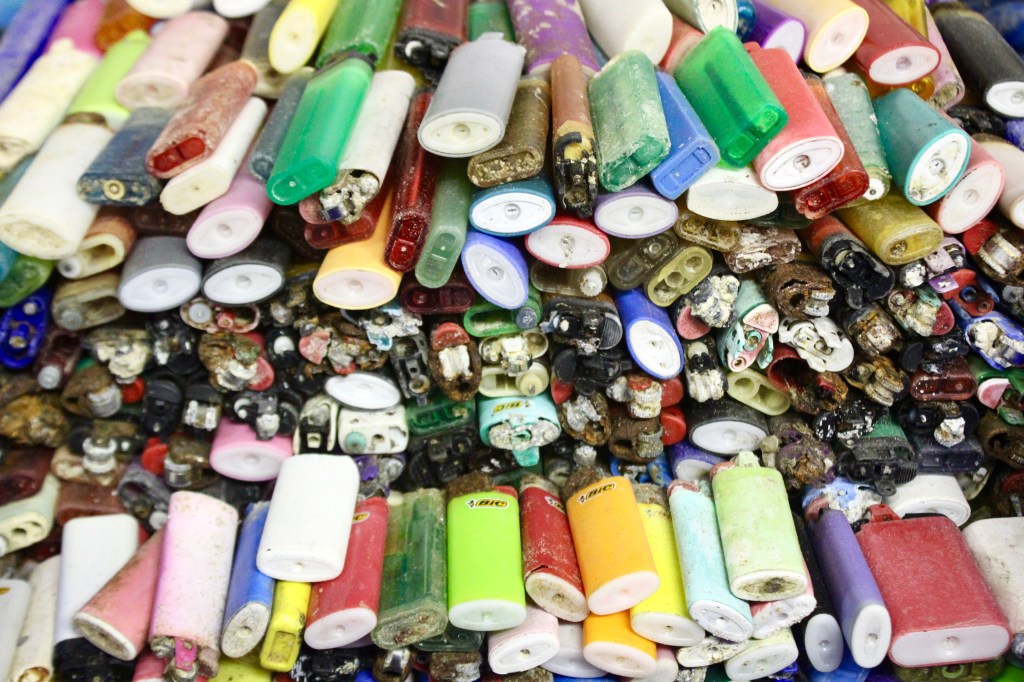
John beachcombs on Pacific Northwest beaches, as well as occasionally taking trips south to the beaches of Texas and Florida. Everything in his museum has been found on the beach, and the variety of things, from whale bones, to mammoth teeth, to hard hats and medical supplies will surprise and captivate you. It’s like taking a dive into the truth of a capitalist world: too much stuff, lost at sea, forgotten forever… until found by John.
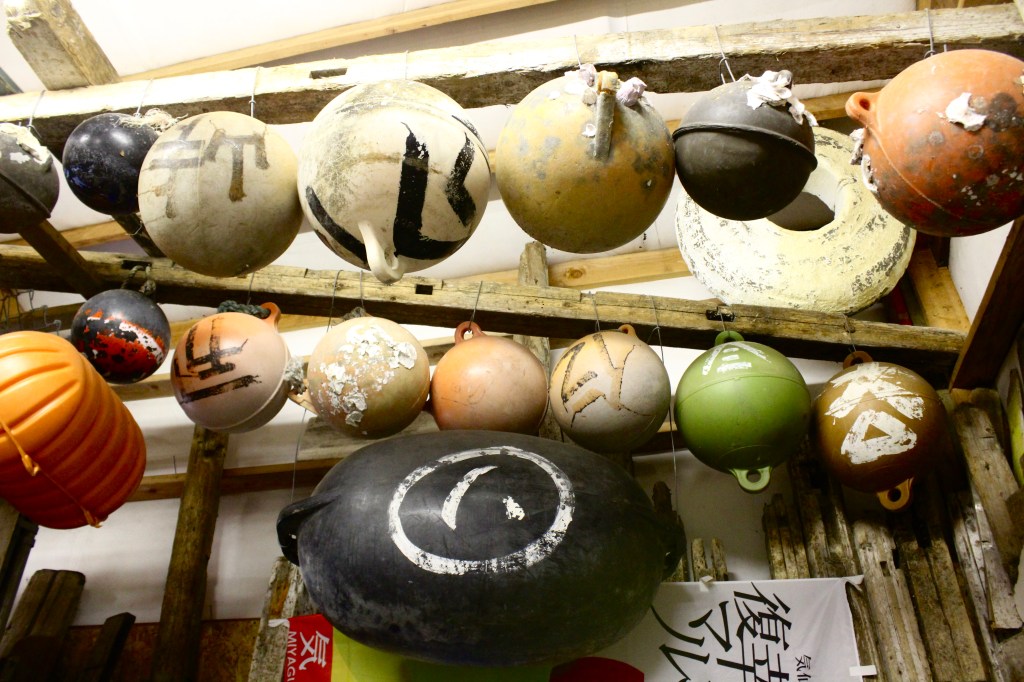
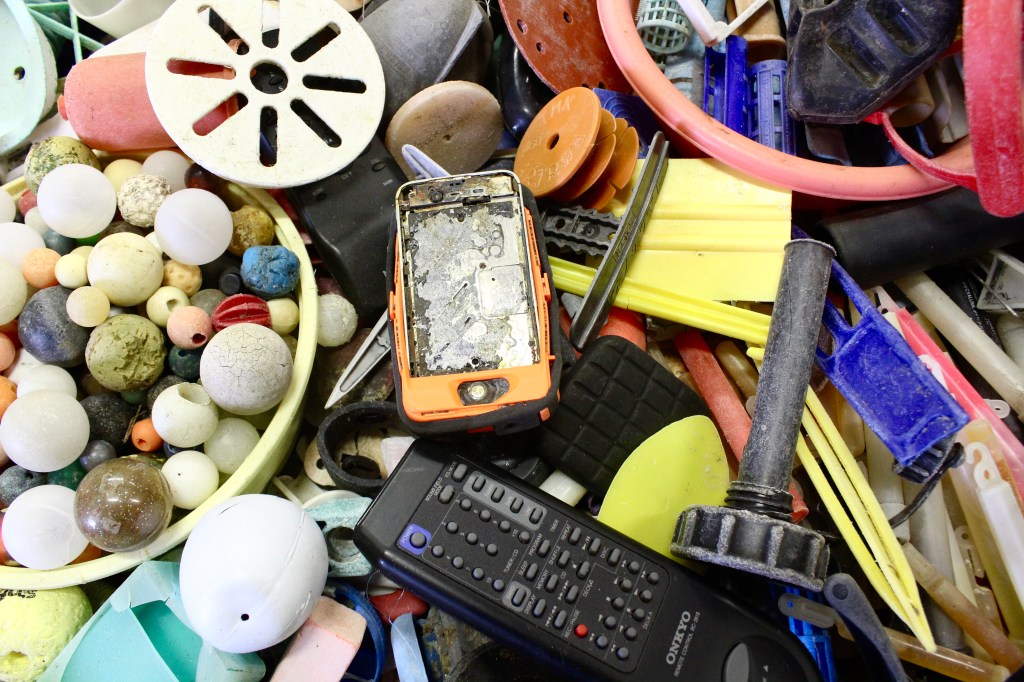
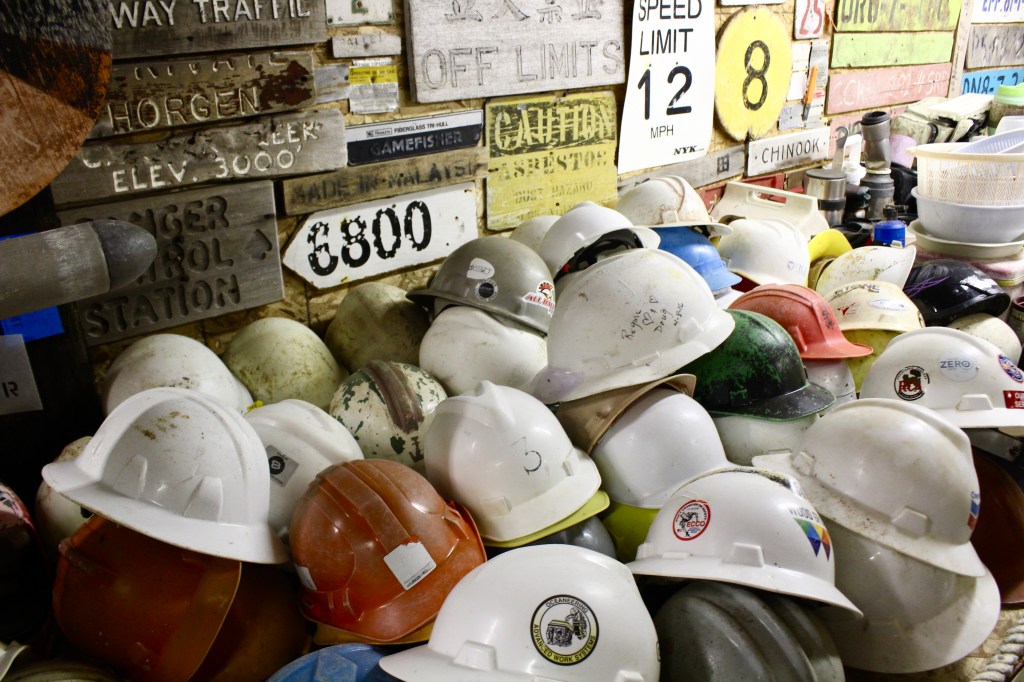

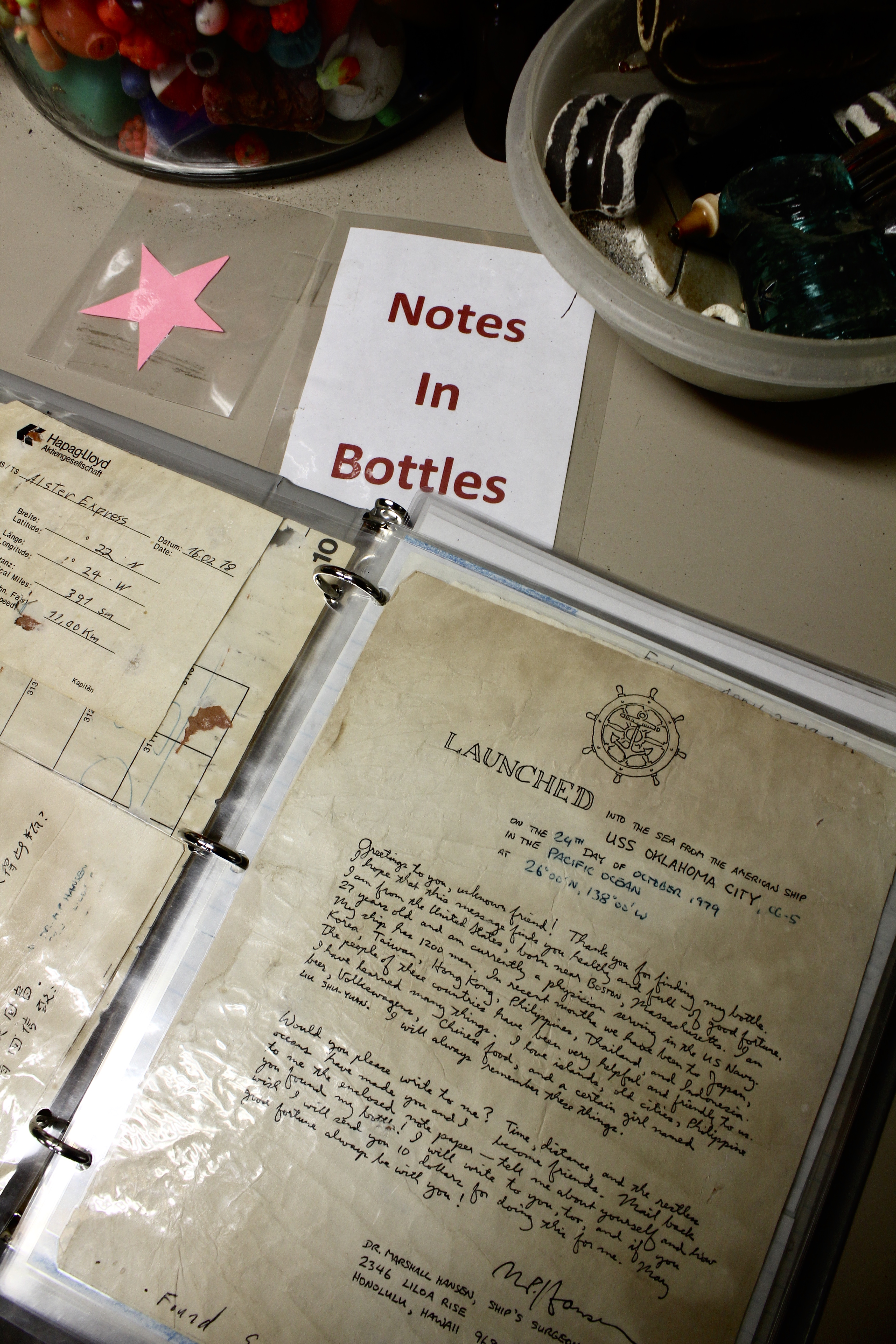


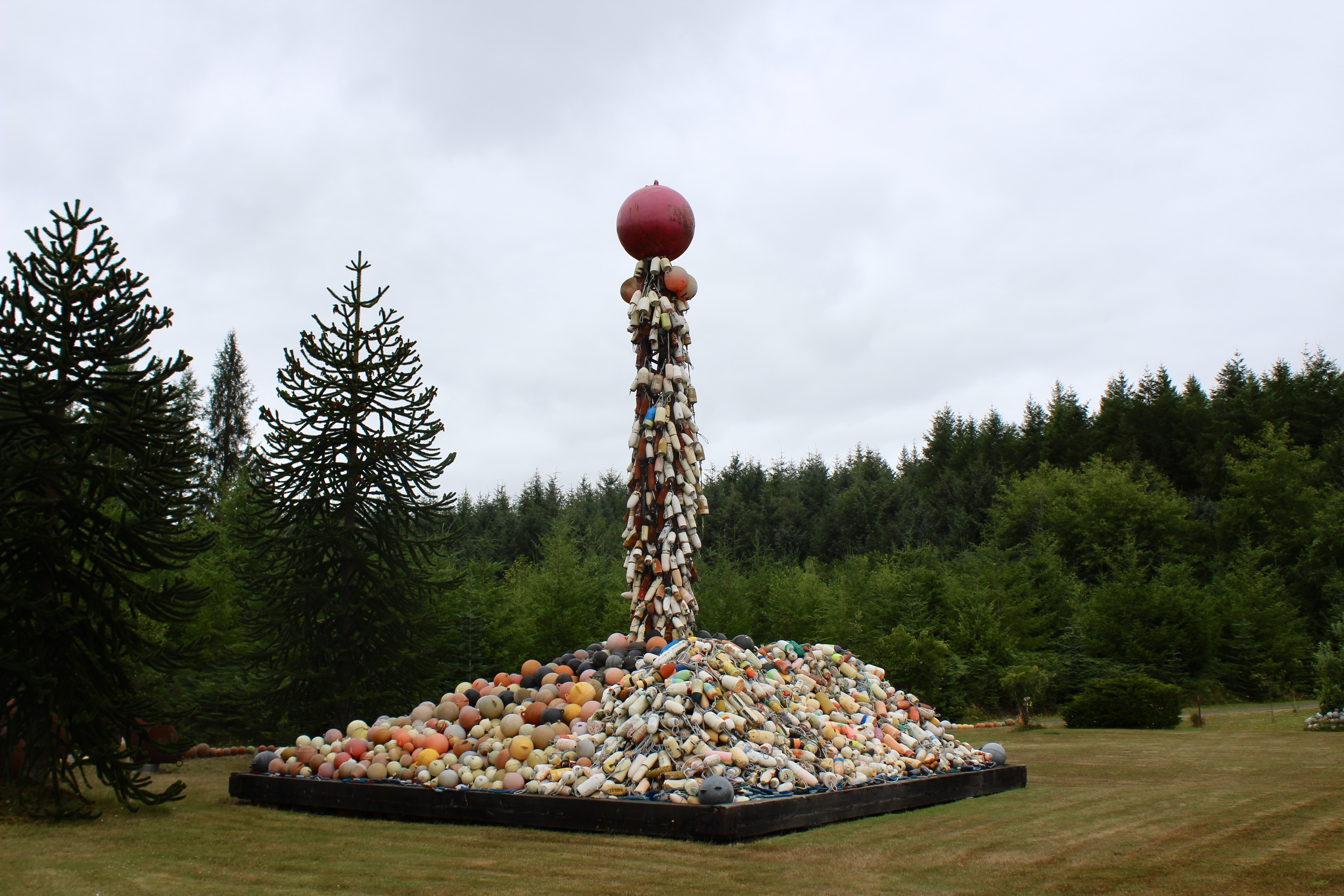
Whether you’re worried about the Great Pacific Garbage Patch or not, whether you use plastic straws or not… the next time you’re in Forks, skip the Twilight walking tour and check out John’s Beachcombing Museum. In my opinion, it’s a necessity.
John’s Beachcombing Museum
143 Andersonville Avenue, Forks, WA 98331
Open daily, 10am-5pm.
I got a coffee and sat down on the boat from Athens to Aegina while trying to make peace with its rockiness. That’s the problem with Adventure Lily. She has limits such as motion sickness and being bad at speaking different languages. Greek is especially hard as a language because when you’re looking at the letters you think you might know what the word is… but then you end up being totally wrong.
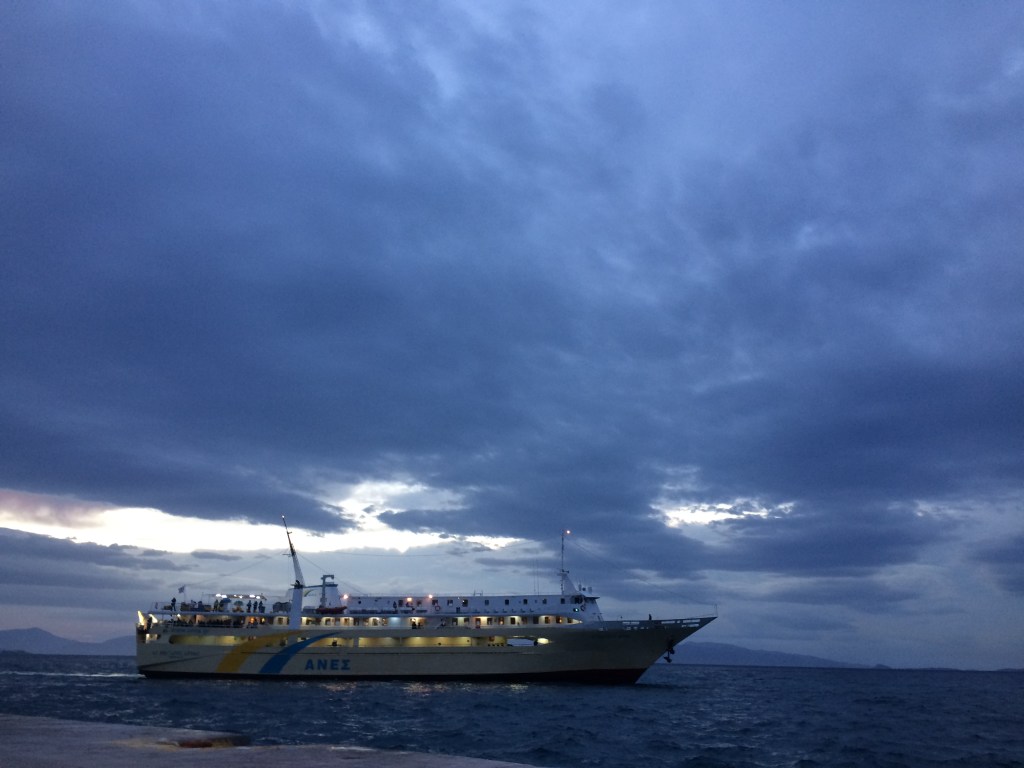
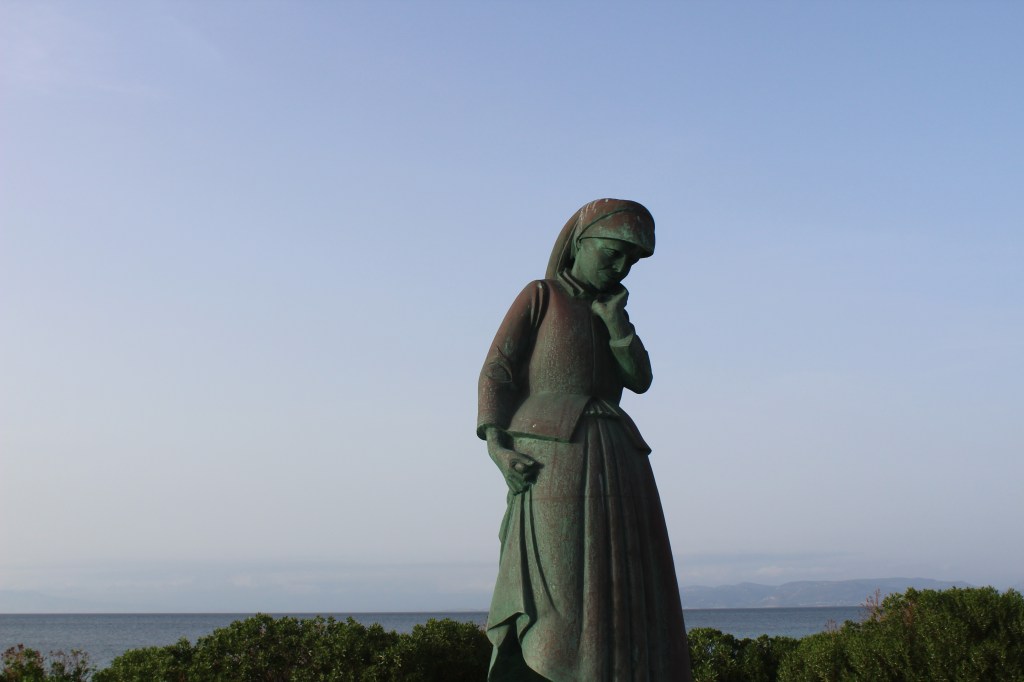
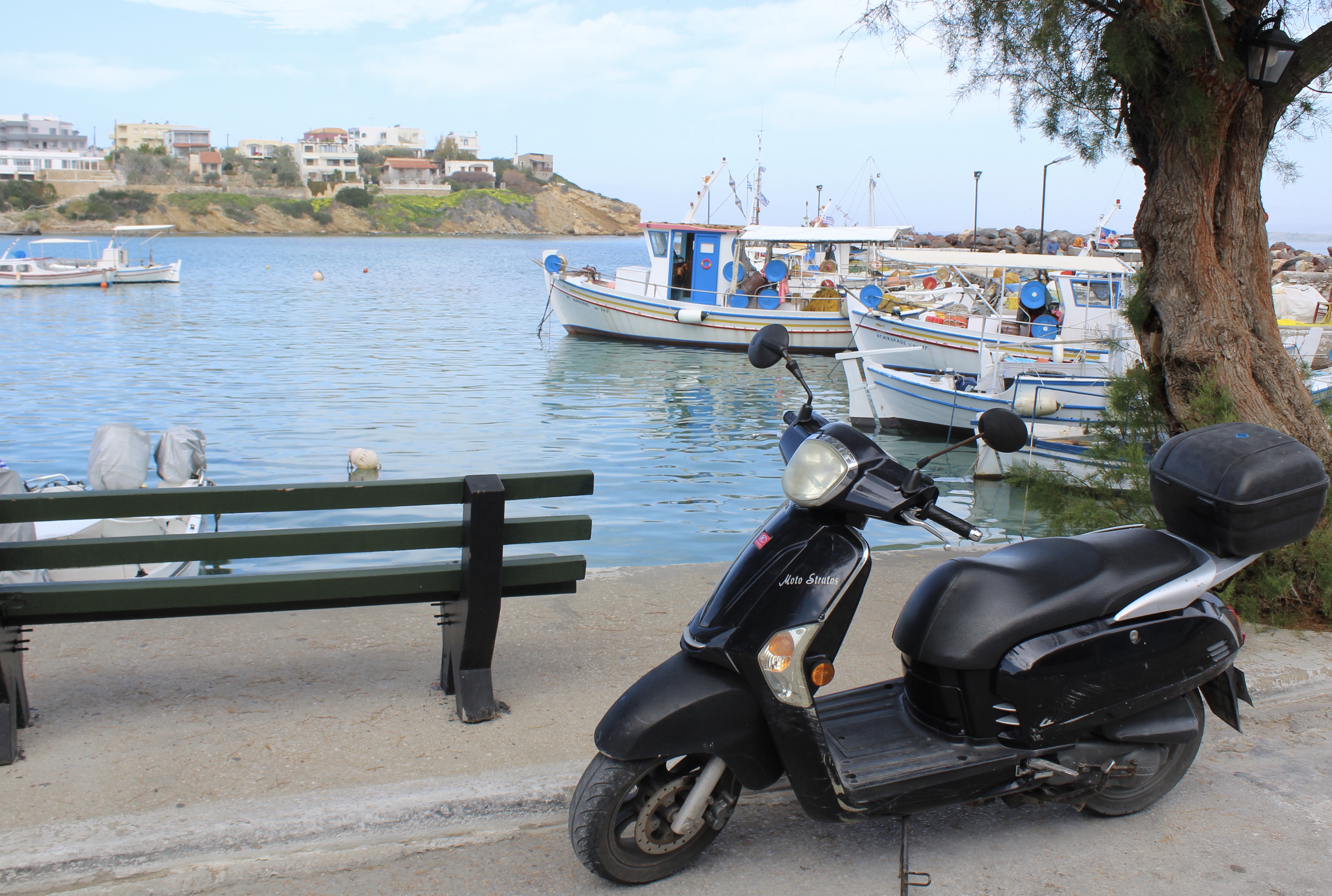
It was a bit stormy when I arrived at the Aeginitiko Archontiko hotel in Aegina, but the door was standing open anyway. The hotel owner, whose name I have since forgotten, pinched my cheeks and said I had a cute face, immediately taking on the role of a sort of Greek auntie. Later that evening, I went down the street to rent a scooter (the best decision I made during the whole trip). The scooter man asked me what hotel I was staying at and after the name came scrambled out of my mouth, he nodded and said, “Ah I know that lady… she talks too much.” But I liked her.
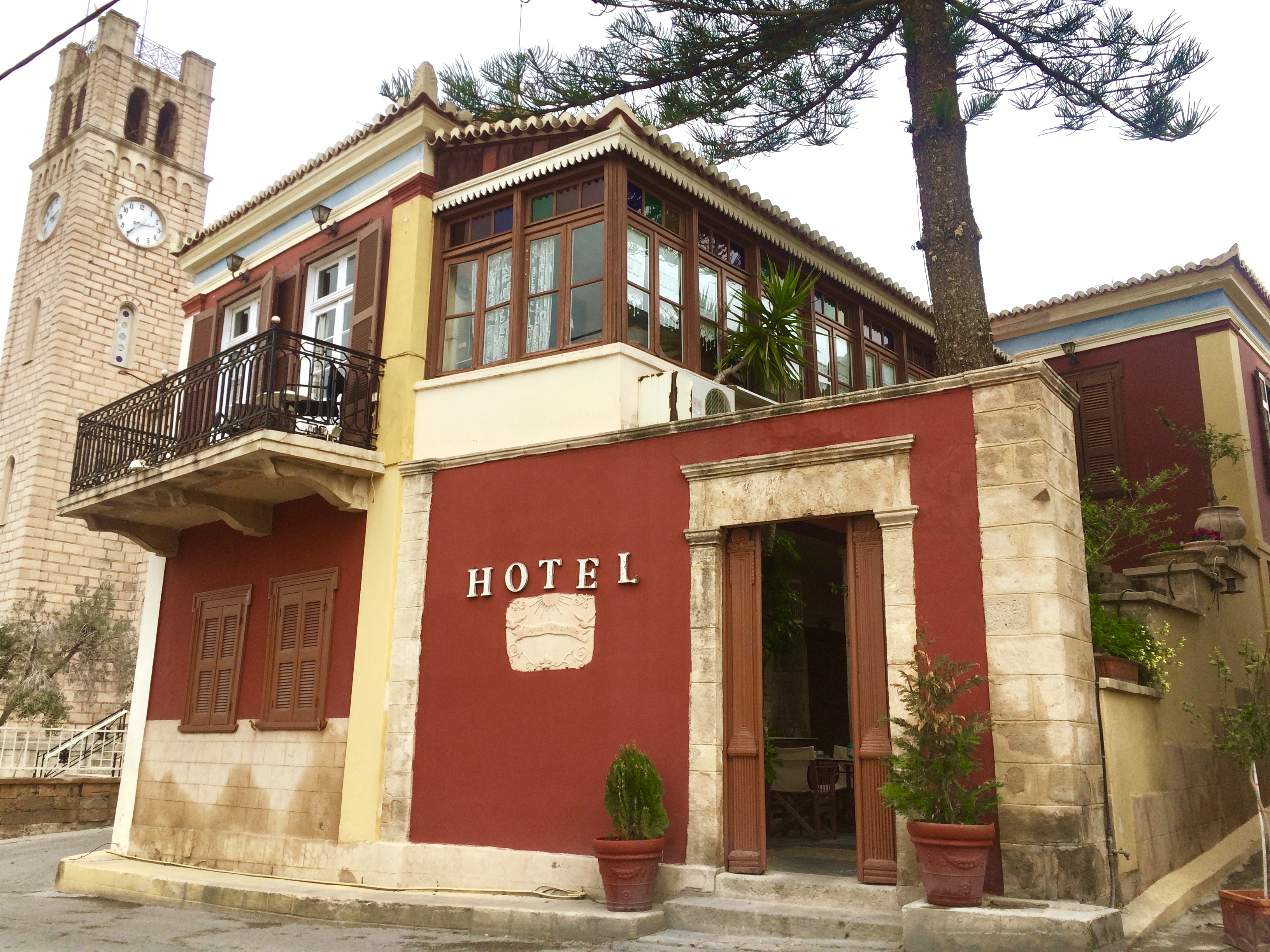
The next morning I climbed up the stairs of the hotel to the breakfast of my dreams in a sunlit indoor terrace. I think the hotel owner made the breakfast in the tiny kitchen that was also her office. She sat me at the corner table, next to stained windows that reflected splotches of color all over the walls, and squeezed some orange juice for me right then and there. Across from me was a buffet table with coffee brewing and a spread of homemade Greek delights. I tried my best to have a little of everything, knowing this was a once in a lifetime opportunity.
That included:
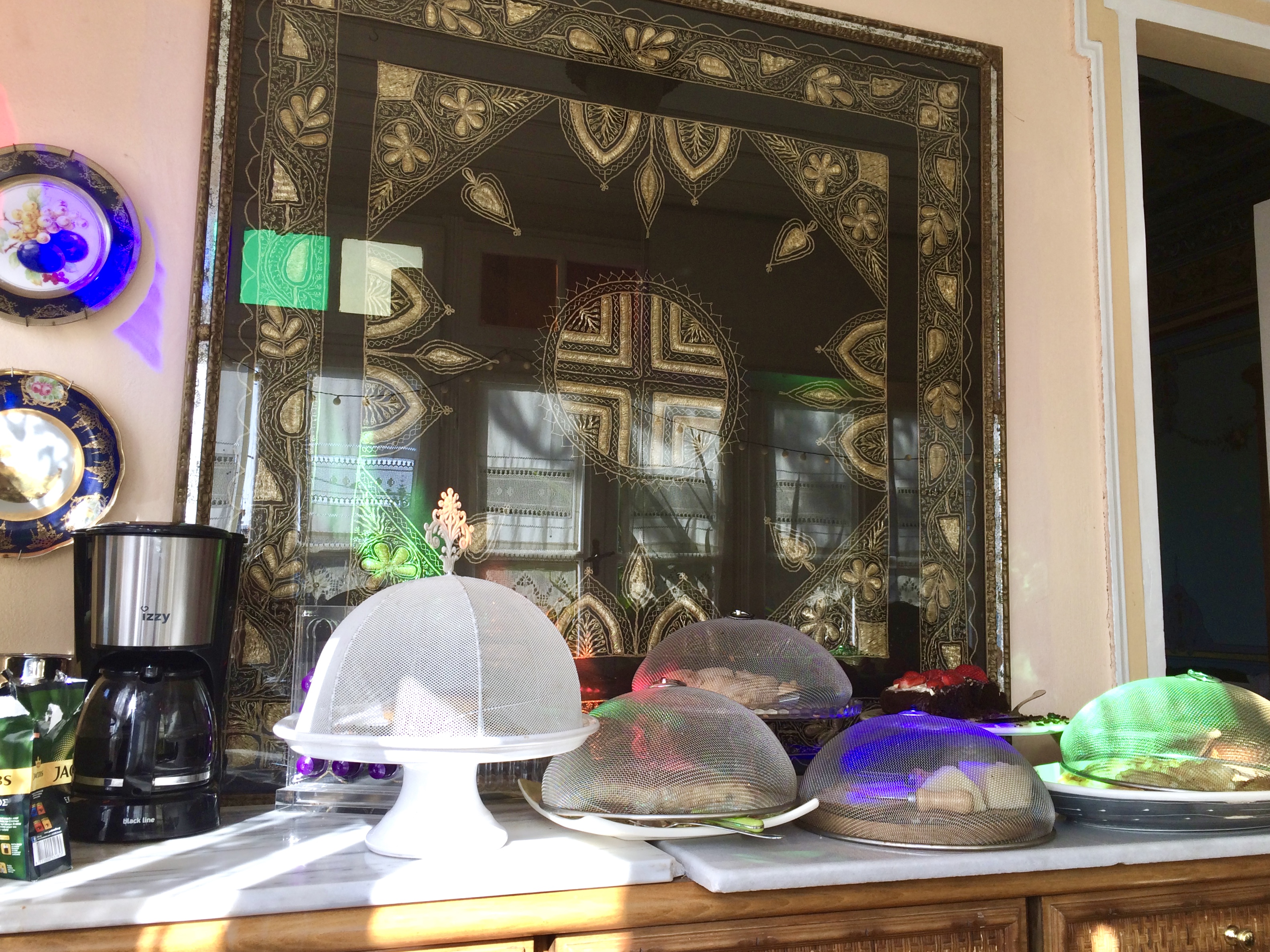
At the table just in front of me two Greek women–I think friends with the hotel owner–were listening intently as she listed the ingredients of the quiche, and the best way to make it. I only know this because I heard the word “feta” and “filo,” in the midst of the Greek. She paused in her instructions to give a loud and long “Kaliméraaaa” to a man who walked into the breakfast room. It had quickly become my favorite Greek word because I understood it and also because in France, I never got the sense that people said “bon matin,” in the same way that we in the States often say, “mornin’.” But the Greek “kaliméra” was said like a mom says “good morrrninggg” to her kid who has just gotten up after sleeping way past the allotted time for the greeting to work.
In the room next to the indoor terrace, a group of Brits sat at a round table underneath a painted ceiling, which was the hotel owner’s pride and joy. I listened to their conversation even though I couldn’t directly see them. They had stayed in the hotel before, and seemed to know the hotel owner… or at least they knew her food quite well. I pictured them as a group of British people from a Miss Marple mystery novel: eating eggs, sipping tea and gossiping about important people. Maybe wearing hats. I, the lone traveler with nothing better to do, was Miss Marple in this particular imaginary situation. (Although she would have been knitting.)

But since there was no actual mystery to solve, I left before their conversation was finished because I wanted to scoot all the way around the island. The scooter rental man had asked me if it was my first time to Aegina, if I knew the roads. I did not know the roads, I told him. “Well,” he said, shrugging. “You’ll figure it out. There’s not that many. Just go easy on the front break around corners.” I told him I had a lot of experience going hard on the front break and crashing. I have lived and learned when it comes to the front break.
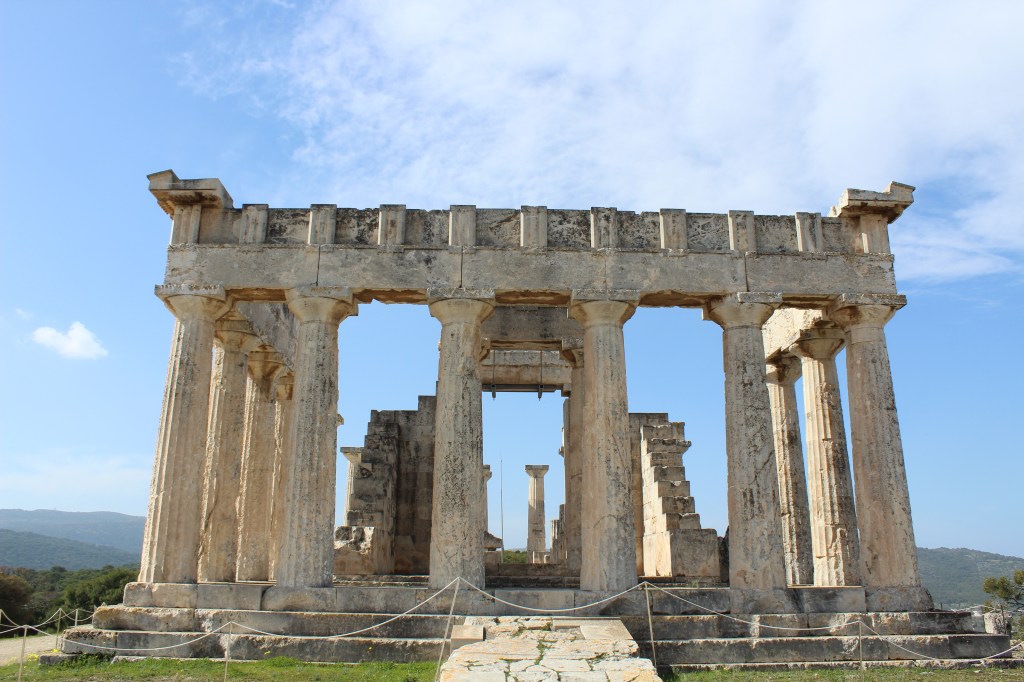
Alone and free, I made many wrong turns as I rode my way around the island in search of the Temple of Aphaea. It was my own personal pilgrimage and I don’t think I’ve ever experienced such a feeling of satisfaction as I did when I took a wrong turn, stopped to turn around and noticed in the distance on the top of a hill the outline of columns rising up above the trees.

The road was lined with flowers that smelled sweet and it was quite hot out, even though it was only March. Alone and without cell service, Adventure Lily was beginning to get tired of being a bit lost… but seeing the temple at the top of the hill renewed my energy.
The right road, once found, was a series of steep switchbacks around pistachio farms. (The pistachios are Aegina’s specialty. They are unlike any other pistachio I have ever had.) It would have been quite a walk for the Ancient Aeginetans to get to the temple. They worshiped Aphaea as a Goddess of fertility and the agricultural cycle. She was friends with Artemis and Athena.

Traveling in Greece off season meant that I was nearly alone at the temple. The bored lady at the pay station took my three euros and I walked around taking pictures and wondering what I would have been like if I had been an Ancient Greek.


Sitting at the top of the hill enjoying the view of the island, I planned my next destination: a coffee in Perdika.

XOLily


Why is it that whenever I’m in France, I’m suddenly like….. “qui suis-je?”
It’s happened before, I know this because I’ve documented it: I suddenly go from reading Cosmo to reading Literature with a Capital L, from writing haikus about eating donuts to thinking about the future of the novel and nonsense like that.
Is it the cafe culture of France, where one finds oneself sitting at those small tables day after day, smelling the cigarette smoke and thinking Deep Thoughts? Is it because I always happen to have loads of time on my hands whenever I am in France? Is there something in the water?
Or is it totally and completely due to the constant and easy access to tiny coffees and whimsical chocolates?

While in Honfleur eating whimsical mussel shell shaped chocolates and drinking a tiny coffee, I discovered that I am not the only one whose personality is weirdly affected by the artistic culture of this country.
Honfleur is a mecca for the Impressionists (Gustave Courbet, Eugène Boudin, Claude Monet and Johan Jongkind, etc.). The tiny harbor lined with boats and tall wooden houses has inspired painters to portray it time and time again, not caring one bit that they are not the first to paint this recognizable stretch of space much like how I did not care that I wasn’t the first (and won’t be the last) college girl to post a picture of herself reading a book by Patti Smith on Instagram.
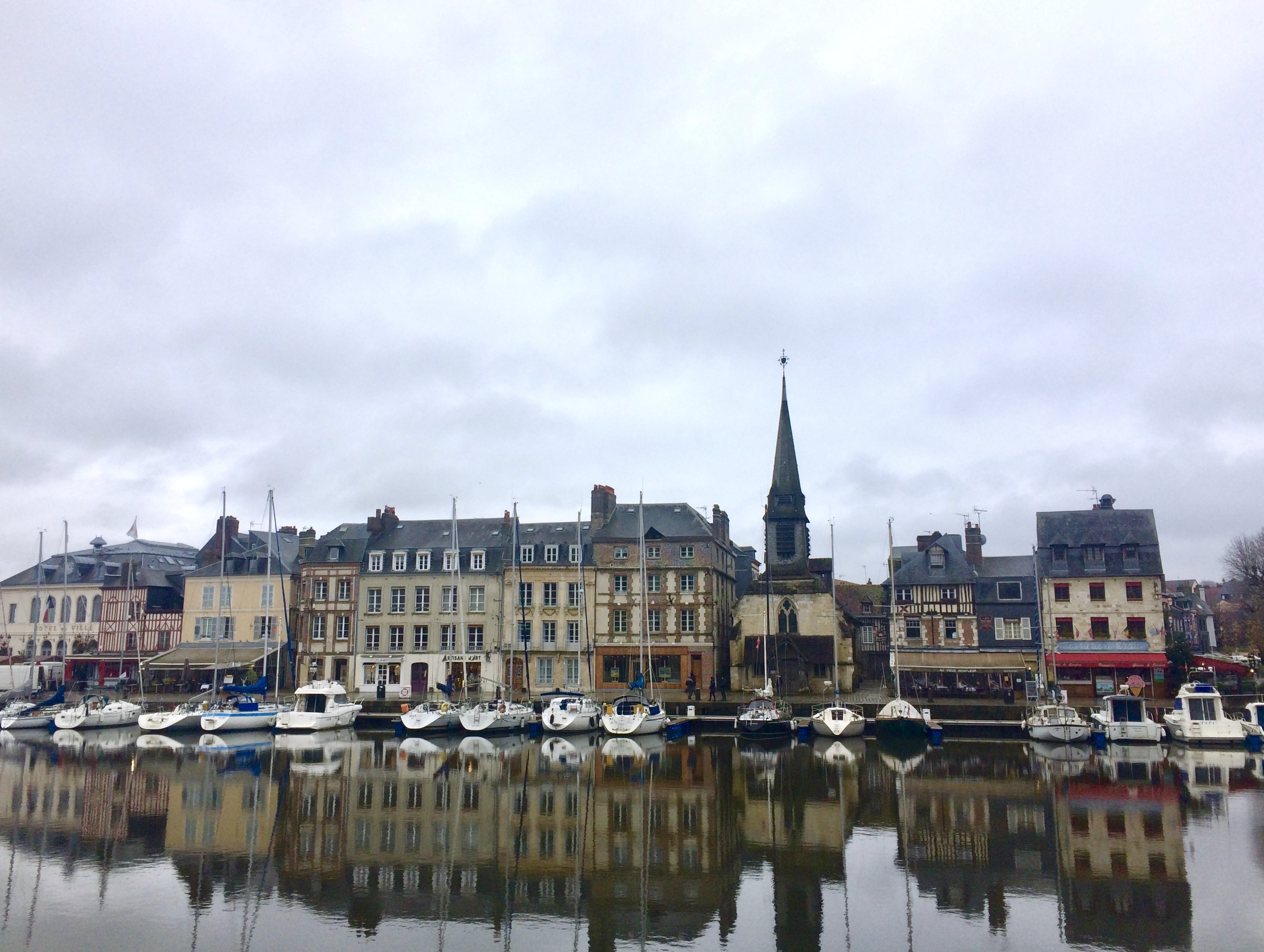
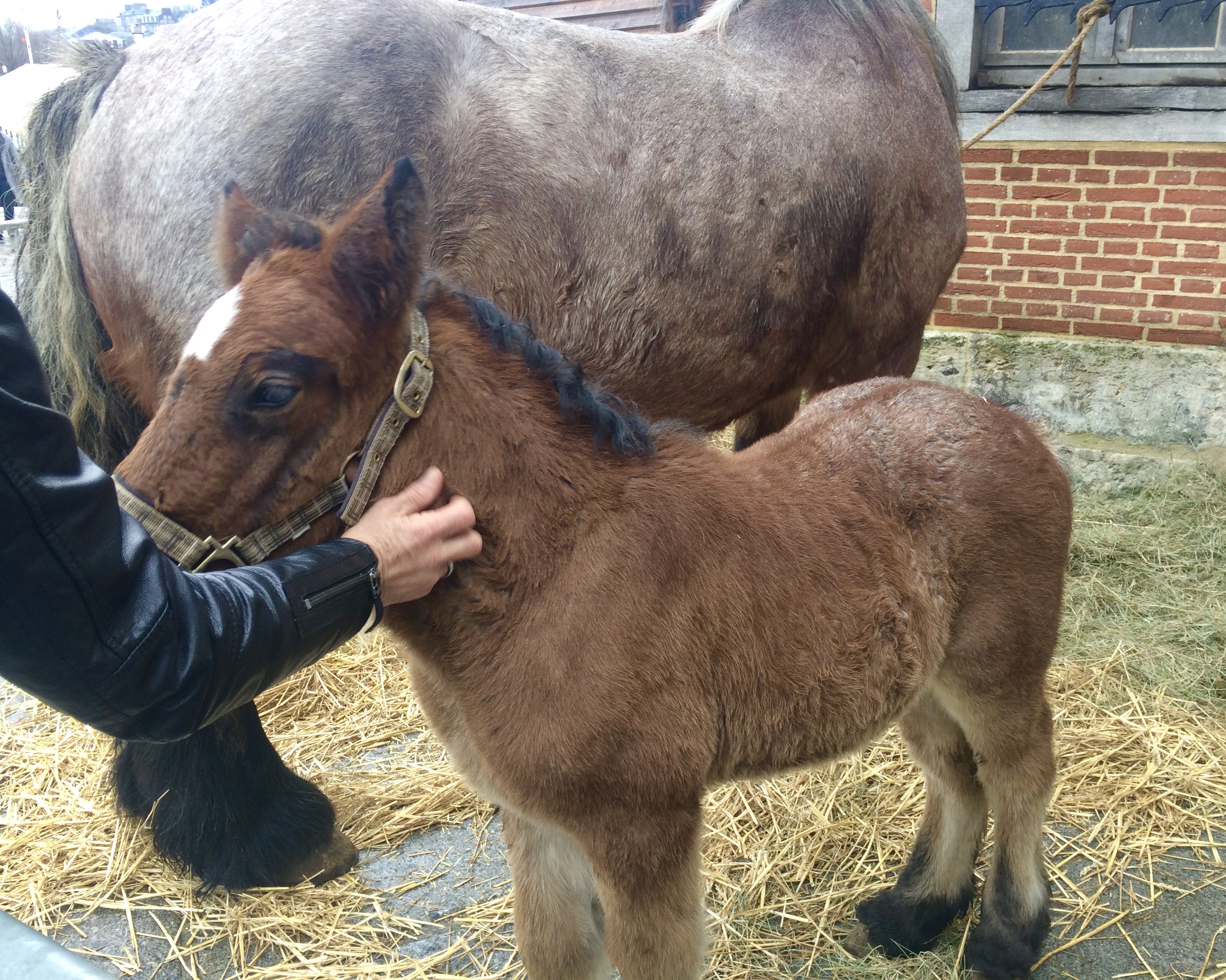
Anyway, because my family is my family, once we arrived in Honfleur (after a quick kebab lunch), we headed straight for the Erik Satie museum, taking just a few moments to pet a baby horse and walk through the oldest and largest wooden church in France.
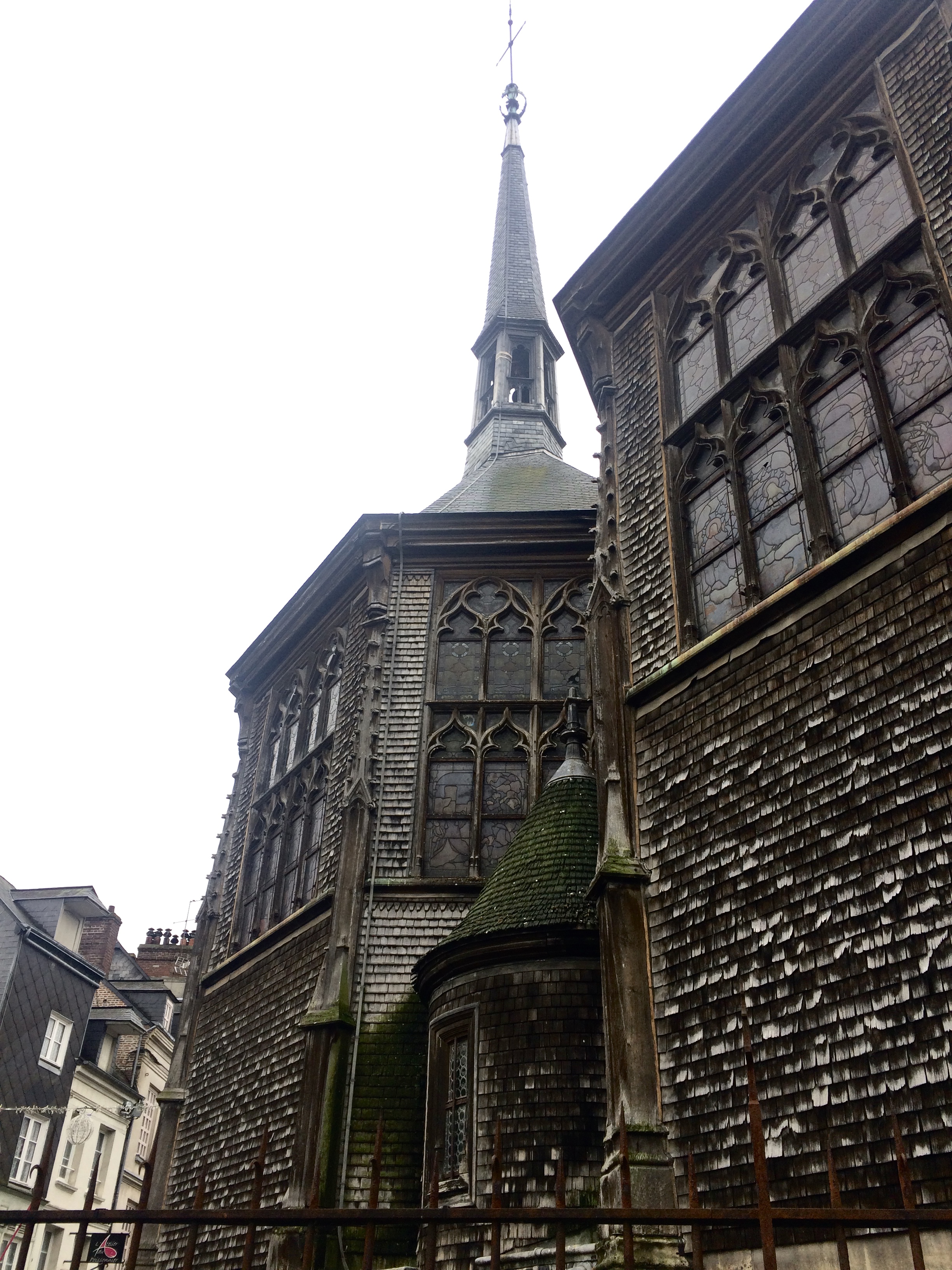
Saint Catherine’s Church smelled deliciously like pine and had one of the most intricately detailed Nativity scenes I have ever seen. It was also guarded by a cute, tiny dog. Within twenty minutes, Honfleur had won me over with its small animals.

Twenty creche pictures later, we were in the Satie museum, having the strangest time. In case you don’t know, Erik Satie was a musician and composer. He composed piano pieces that my mom, the pianist, qualified as “hard to play even though they sound easy.” (I became his fan after Lana Del Rey used one of his pieces at the end of the music video for Carmen.)
France, the queen of interactive museums, did not let us down. The Satie museum has everything: a giant winged pear, a large animatronic monkey, a white self-playing piano, and a whirly-gig pedal operated machine which museum visitors can take for a spin. All of the rooms come paired with Satie’s music and quotes from the man himself, talking about his very, very odd life.

The museum is creative, strange and perfect. I felt like I knew Satie personally by the time we walked back out onto the quaint streets of Honfleur.

I reflected on the oddball life of Erik Satie while looking at the beautiful Honfleur harbor with my family and came up with a short-term answer to the “qui suis-je” question. Maybe wherever I live, I am a different person who adapts to her surroundings. And maybe in France I happen to adapt to the artiste’s lifestyle. A bit weird, a bit creative, a bit existential. Maybe that’s just the French way.
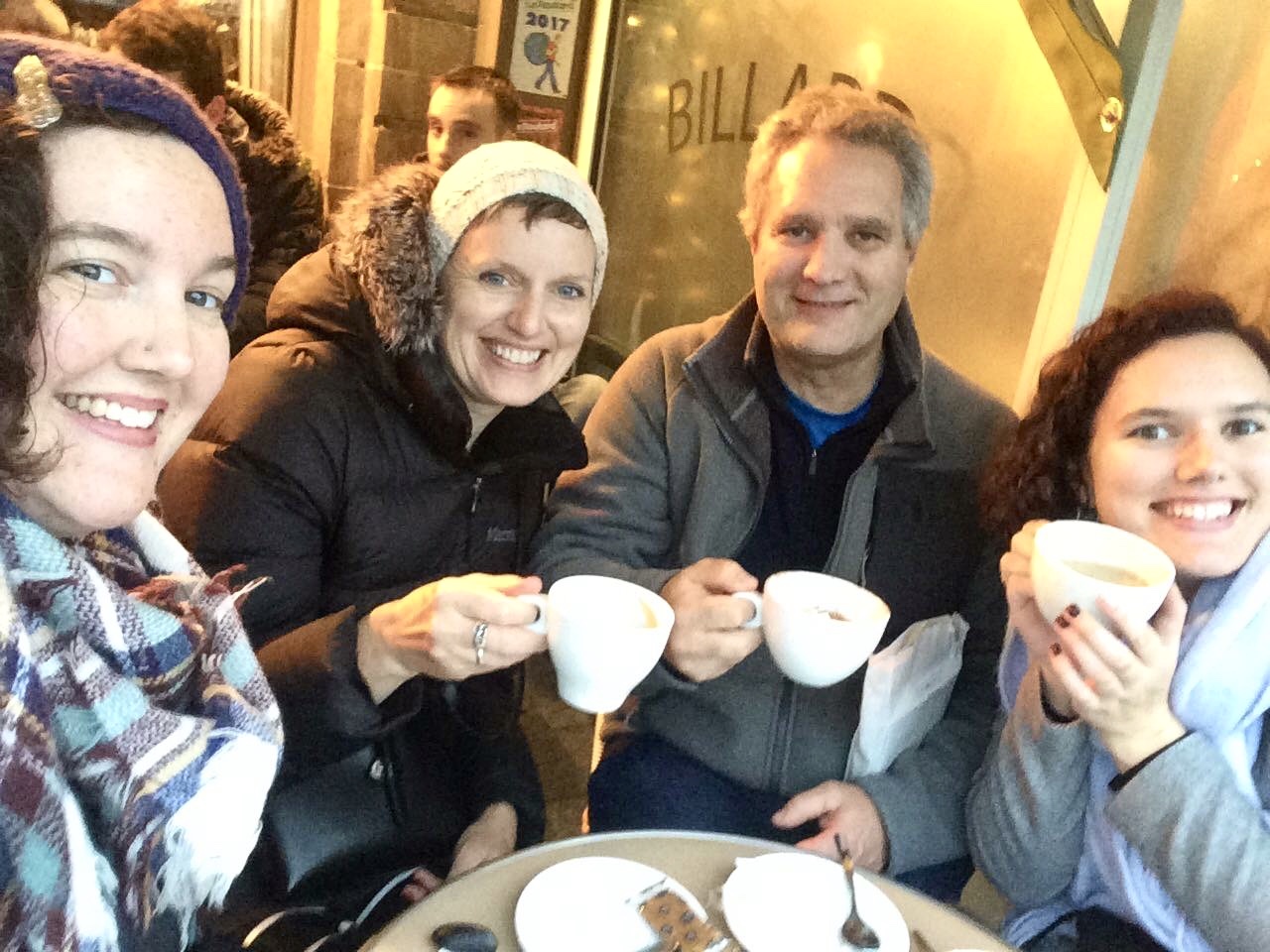
Follow more of my French adventures.
And here’s one of Erik Satie’s Gnossienne’s played on the Cristal Baschet:
I wasn’t originally going to blog about this day of our trip, because I didn’t take very many photos and the most memorable part of it for me was when my GPS took us on the most round-about journey, through one-way streets next to groups of galloping cows and under tunnels not meant for cars. The day felt too crazy to sum up easily.
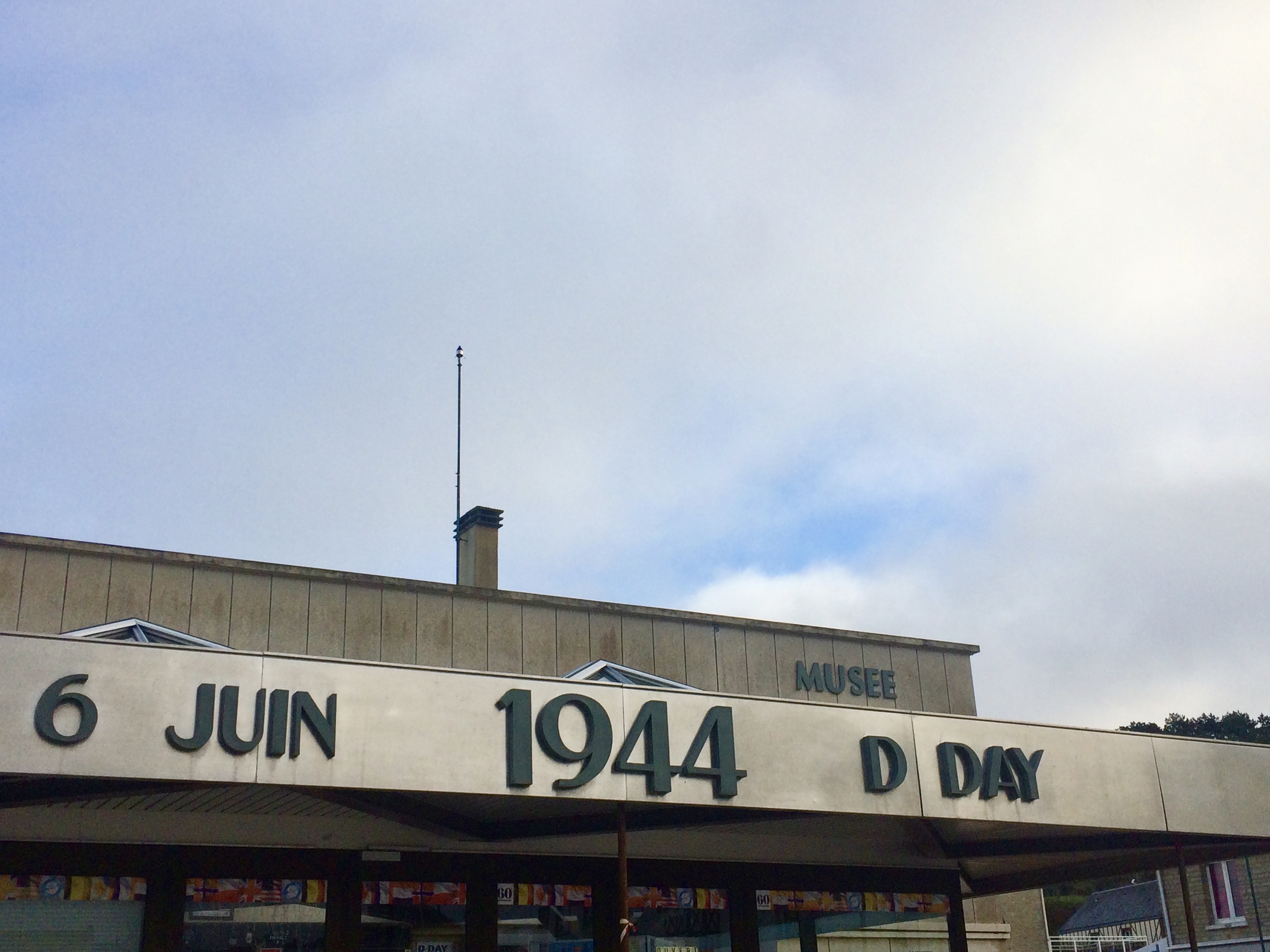
But the D-Day beaches are a part of Normandy’s history that also intersects with America’s history, and even our own family’s history–though my grandpa was stationed in North Africa (I think) and not Normandy. Growing up, I assumed he was in Normandy, I’m not sure why, so it still feels connected somehow. In fact, most of the world’s history was impacted by these beaches, which now stand empty, calm and, on the day we were there, bitterly cold.

With the help of our Good Friend Rick Steves and his handy map, my family and I began our D-Day discovery in Arromanches, where we watched a tear-jerker movie featuring a tiny kitten amongst the rubble of torn-down Normandy villages. It set the mood.
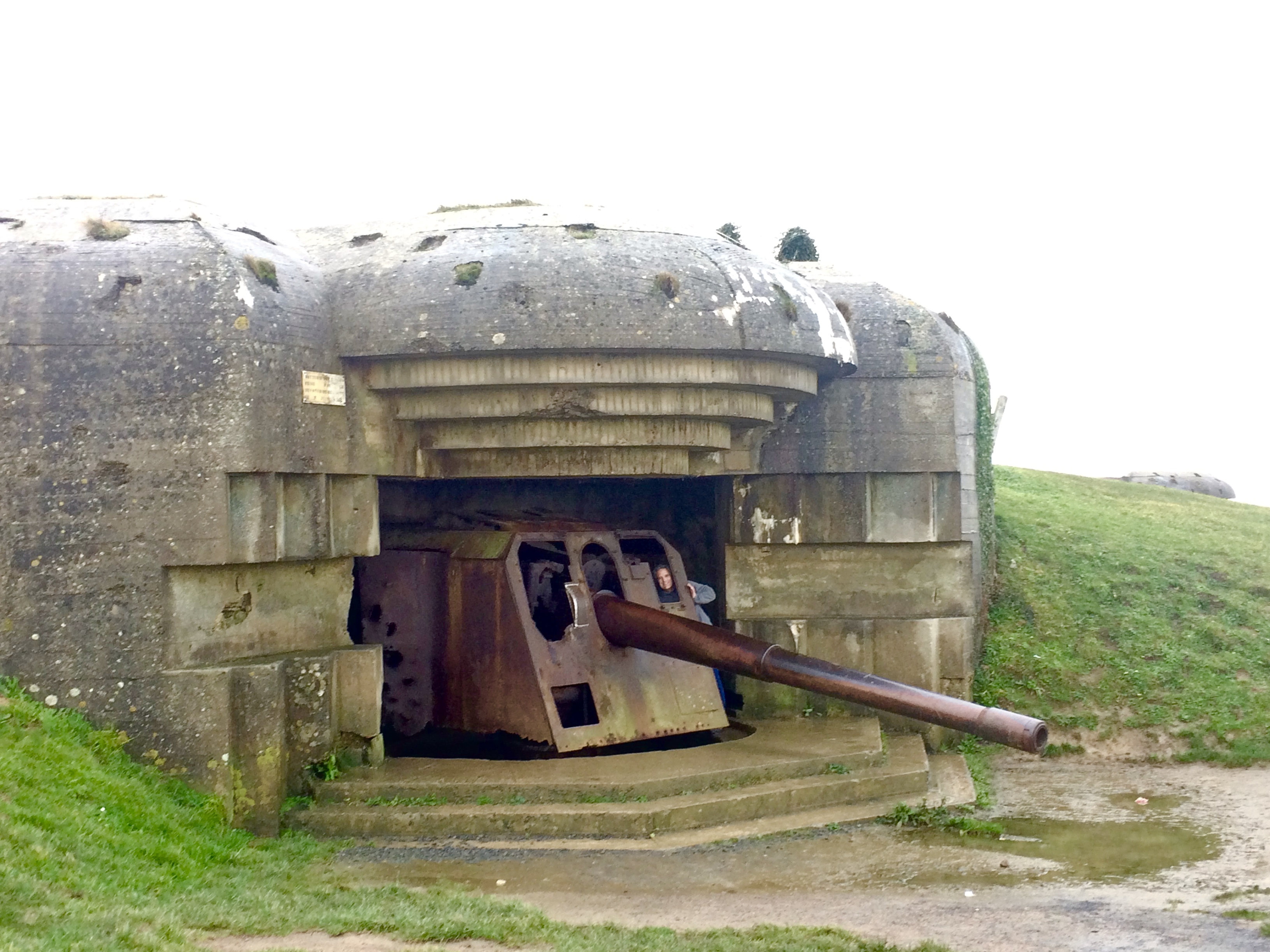
We then hunted down some remaining German artilleries, which looked like they were straight out of Doctor Who and made a stark contrast against the stunning green of the peaceful (and empty, thanks to our off-season traveling) Normandy countryside. It occurred to me that the Germans were there for such a long time, they were able to build such structurally sound artilleries and bunkers that today we can still walk around in them. We peeked our heads through the lookout holes, trying to feel how it felt.

From there, we took in the quiet solitude of the American Cemetery, before going to the German Cemetery and noticing the differences between the two.
My dad is a huge history nerd (but does not realize it) and in the car on the way to the beaches he talked us all into listening to a book on tape he had from the library about D-Day. One part mentioned how Hemingway was there, something I had not known. I don’t know why, but I like thinking about Hemingway being places.
“No one remembers the date of the Battle of Shiloh. But the day we took Fox Green beach was the sixth of June, and the wind was blowing hard out of the northwest,” Hemingway wrote in a piece called Voyage to Victory. “As we moved in toward land in the gray early light, the 36-foot coffin-shaped steel boats took solid green sheet of water that fell on the helmeted heads of the troops packed shoulder to shoulder in the stiff, awkward, uncomfortable, lonely companionship of men going to a battle.”

I tried to imagine it while standing on the orange sand, but couldn’t. I also poked around a bit, as one naturally would, hoping to find a scrap of metal or cloth or something. Like maybe a skull and crossbones to prove that hundreds had actually died there. All I came up with was sea shells. They’re just beaches.
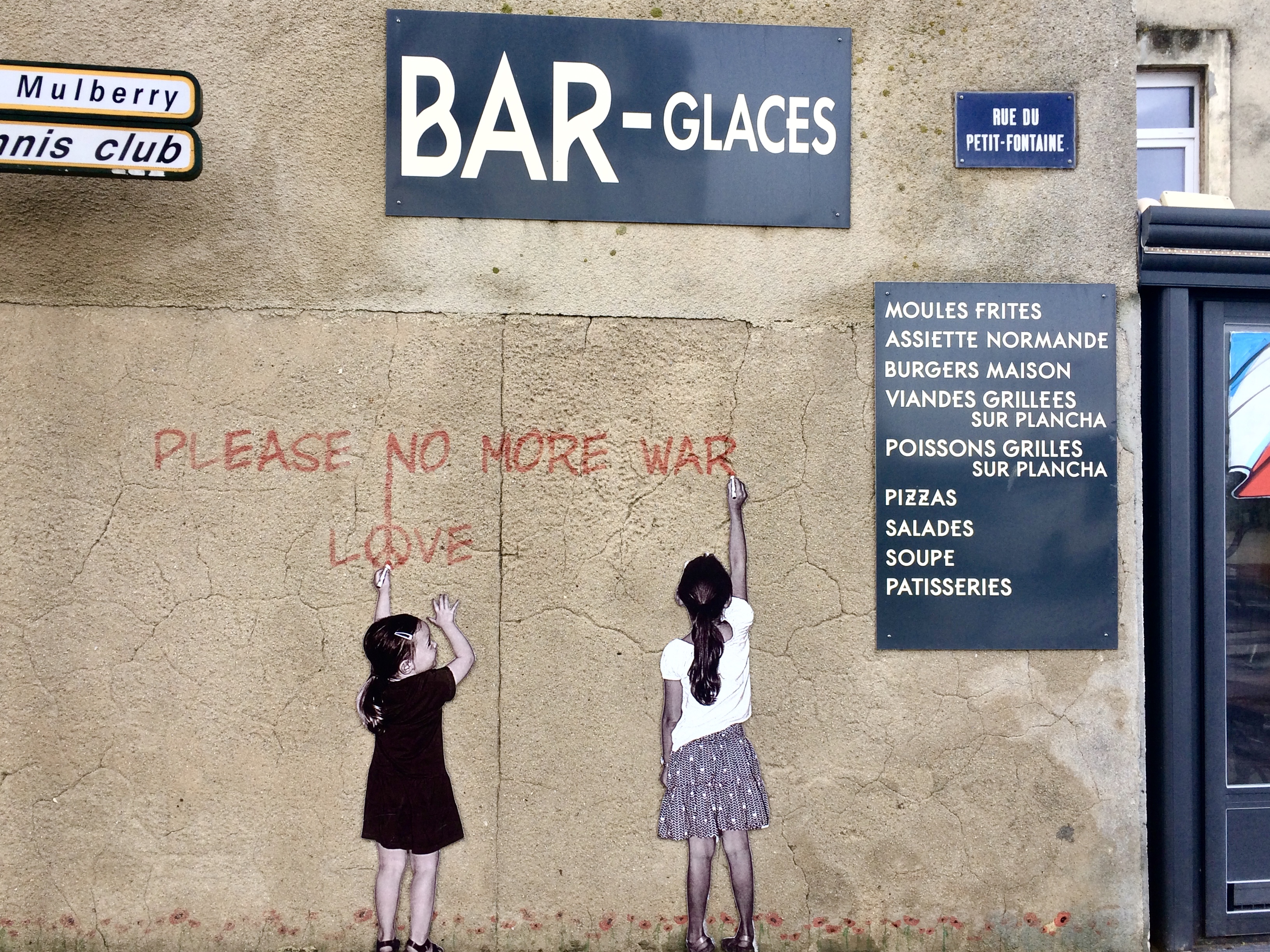
The lack of evidence in the sand reminded me that I, too, grew up in a time of war, became of age while my country was financing destruction overseas. It feels as abstract to me as how the sea of white crosses in the cemetery look, after you’ve stared at them for too long.
 Lily Haight