Three thoughts from road tripping from Port Townsend, WA to Santa Maria, CA and back again on Highway 101.
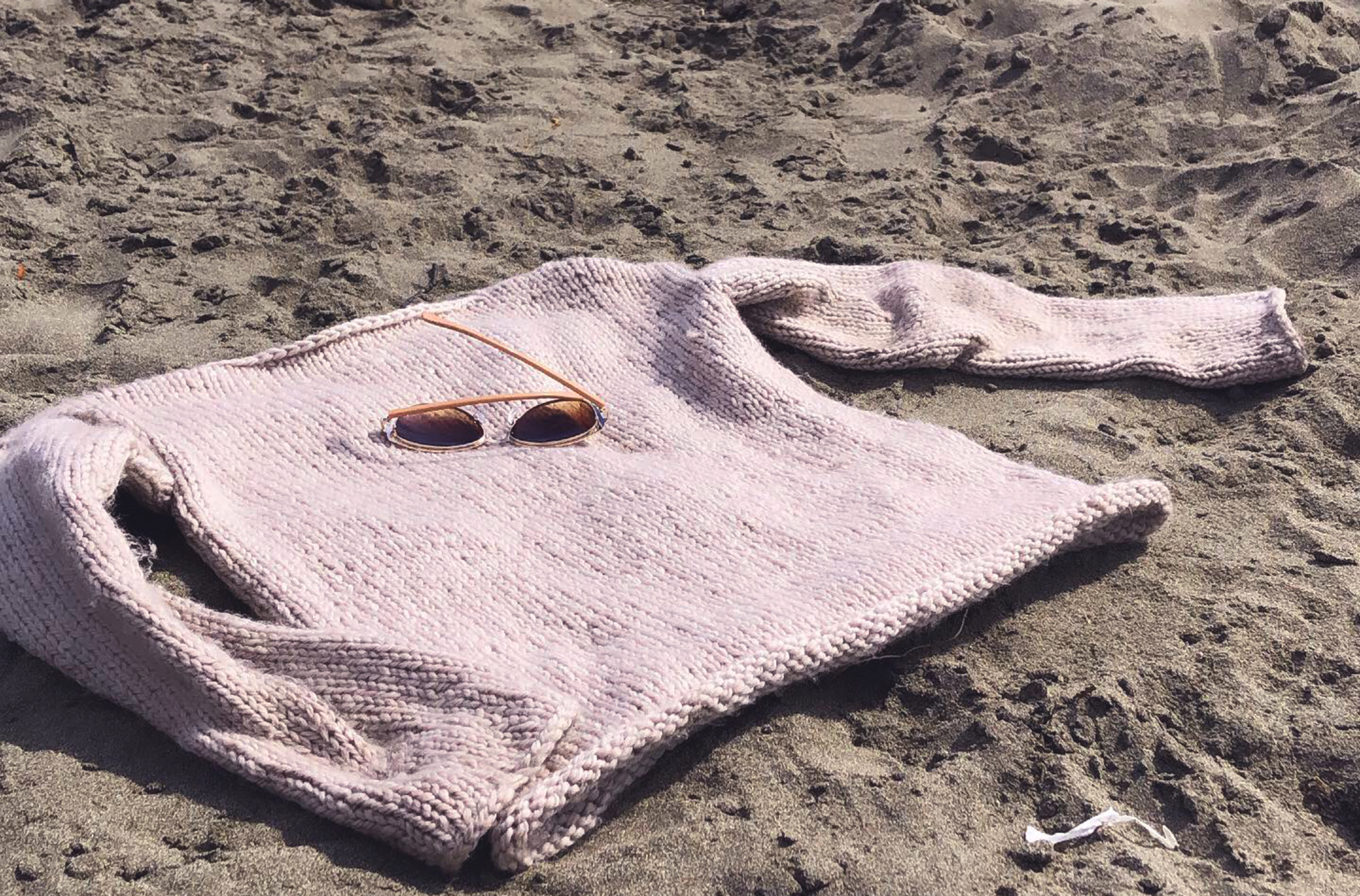
1. Sand beneath fingernails is one of the most uncomfortable feelings I know. But I put up with it for the sensation of running my hands through it; hot, dry sand that you pile on top of your bare legs like a blanket.
Dirty feet, sandal tans
The beauty of a coastal road trip is that when your back gets tired and your legs begin to cramp, you can pull over almost anywhere and plop yourself down on sand. The sea is often the same color as the sky: blue meets blue, or icy grey meets impenetrable fog. But the sand—whether packed down and cold with water, or soft and warm across your toes, or burning hot beneath the soles of your bare feet—is always a contrast, like the rind to a melon.
2. It feels good to be dirty on a road trip. Three days sans shower and your skin and clothes begin to take on their own smells: bacon leggings from when you cooked those massive strips on the ancient Coleman stove in your jammies; a smokey sweater from bathing in the light of a campfire, reaching in to readjust the logs every now and then; gasoline shorts from when you stopped to refill and got a bit of gas on your hand because you’re clumsy and so you wipe it on your shorts which are also known as Nature’s Napkin.
Our favorite campground in Humboldt Redwoods State Park.
Sure, there is also the smell of sweat soaked into a few t-shirts (and you will shower eventually when day three hits mostly because your hair has become so unruly you aren’t sure it will ever be controlled again). But every time you kiss the neck of your loved one and taste a bit of salt, you are reminded of the delights of living outdoors, away from the Rules and Regs of your every day life. That’s what makes it fun.
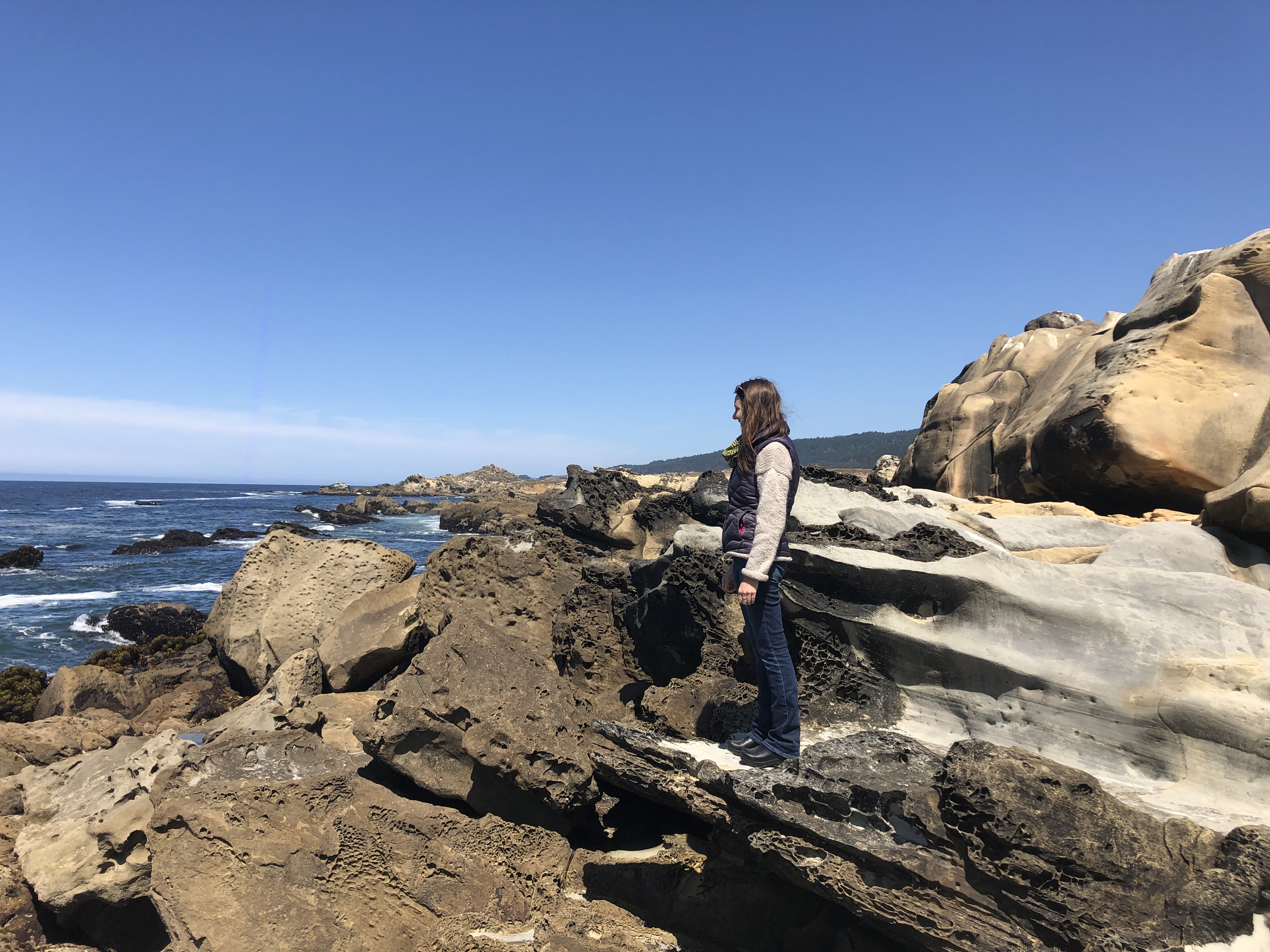
Salt Point State Park, where we got drenched by a sudden wave.
3. Bark is not impenetrable, but when you stroke the side of a massive Sequoia it feels like it is. What makes those trees so special, besides their size and age, is that their bark is relatively fire-resistant. Therefore, those that have been struck by fire become these living caverns—a portion of the inside is hollow, while the outside keeps living and growing.
Lady Bird Johnson Grove in the Redwoods National Park.
I don’t have impenetrable skin although I sometimes wish that I did. Strong, scratchy bark that no one can see through. But recently I’ve been exploring the softness of myself—the vulnerable. It feels warm and dark and secret, like standing in the blackened, hollowed-out insides of a giant Sequoia that survived a fire.
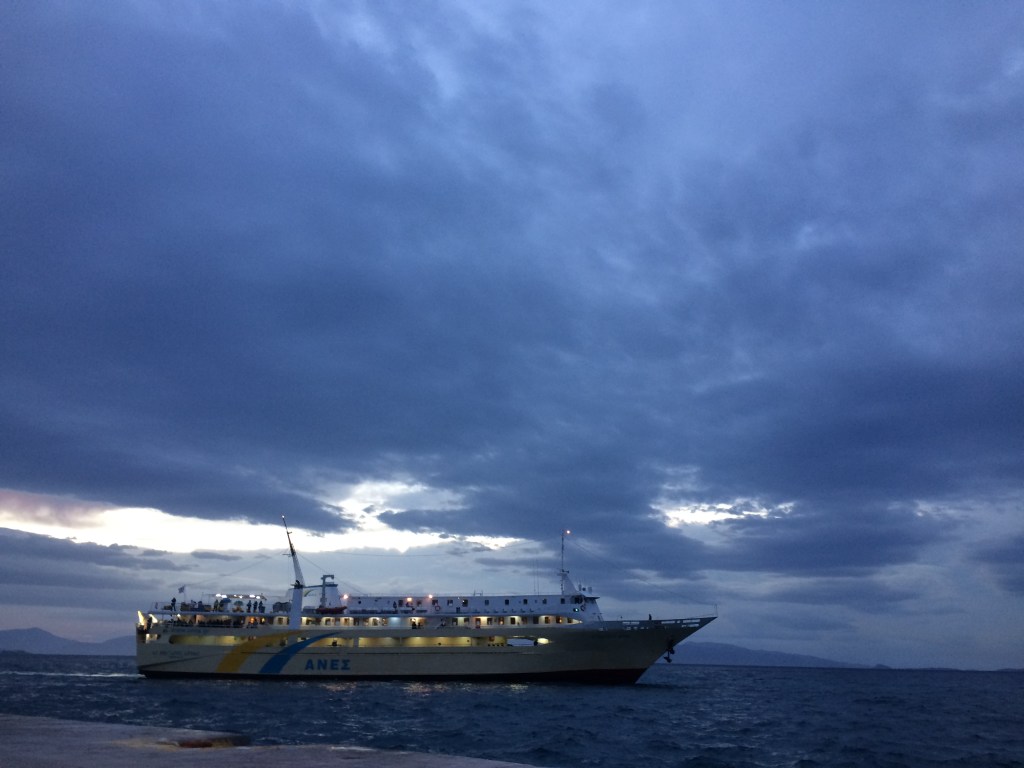
I got a coffee and sat down on the boat from Athens to Aegina while trying to make peace with its rockiness. That’s the problem with Adventure Lily. She has limits such as motion sickness and being bad at speaking different languages. Greek is especially hard as a language because when you’re looking at the letters you think you might know what the word is… but then you end up being totally wrong.
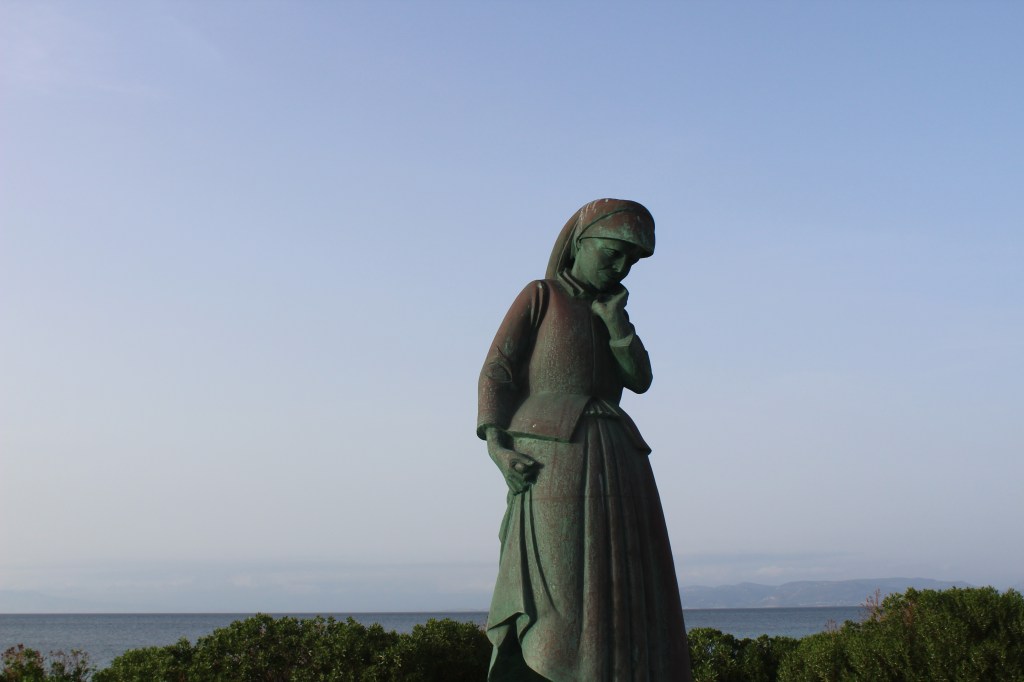
Stormy skies made for a sickening ferry rideMother of Aegina statue.
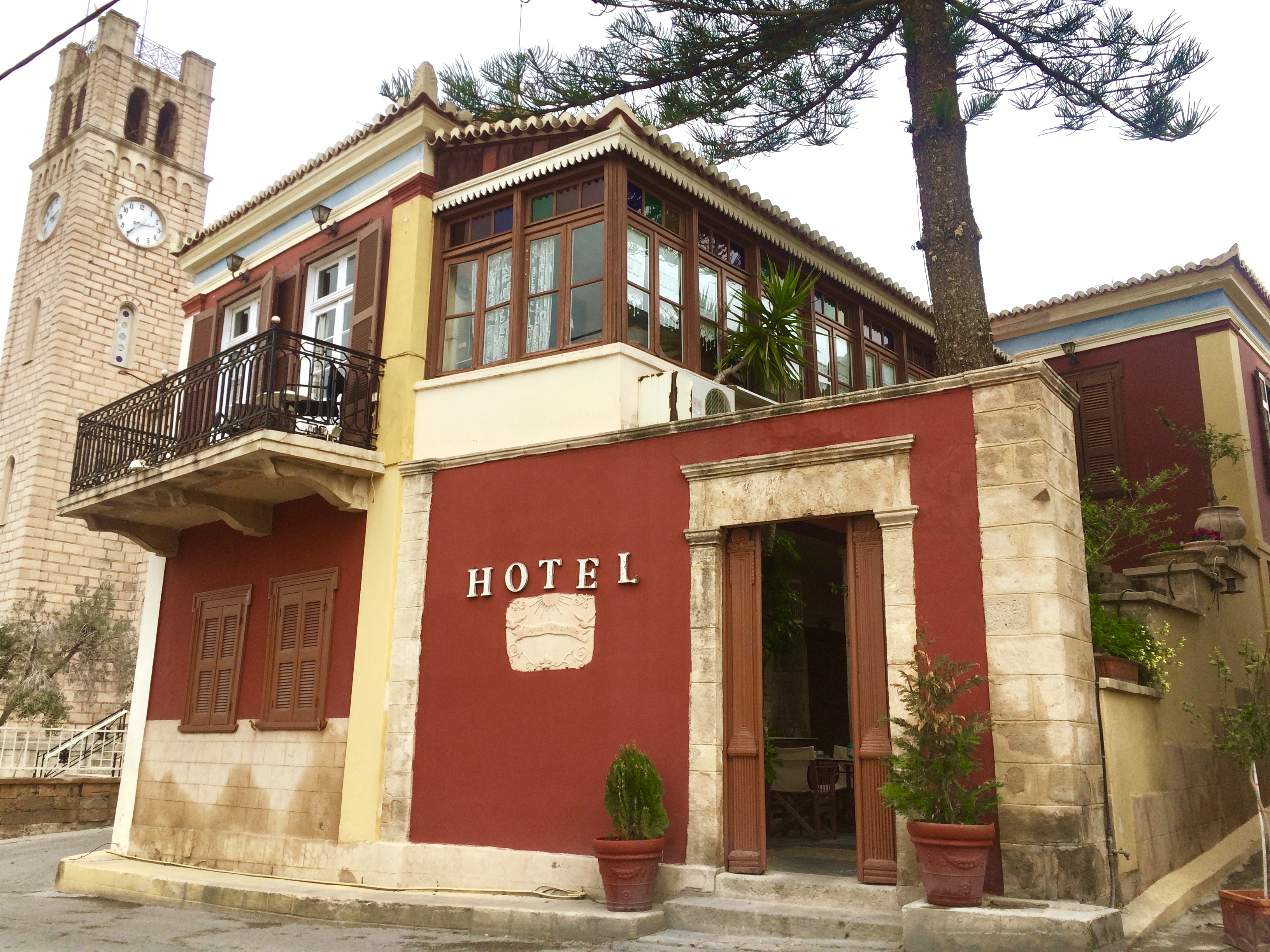
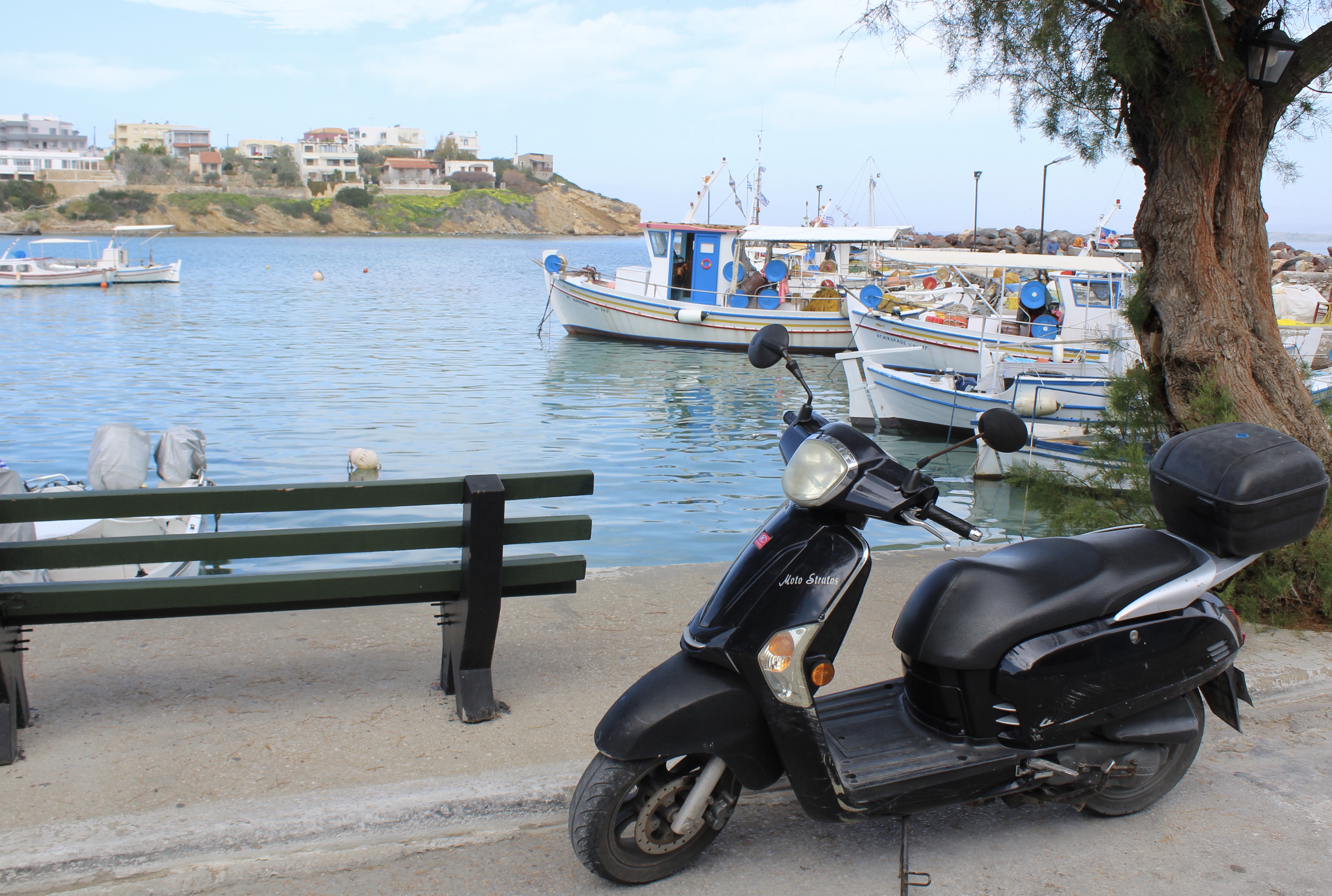
It was a bit stormy when I arrived at the Aeginitiko Archontiko hotel in Aegina, but the door was standing open anyway. The hotel owner, whose name I have since forgotten, pinched my cheeks and said I had a cute face, immediately taking on the role of a sort of Greek auntie. Later that evening, I went down the street to rent a scooter (the best decision I made during the whole trip). The scooter man asked me what hotel I was staying at and after the name came scrambled out of my mouth, he nodded and said, “Ah I know that lady… she talks too much.” But I liked her.
The Aeginitiko Archontiko hotel.
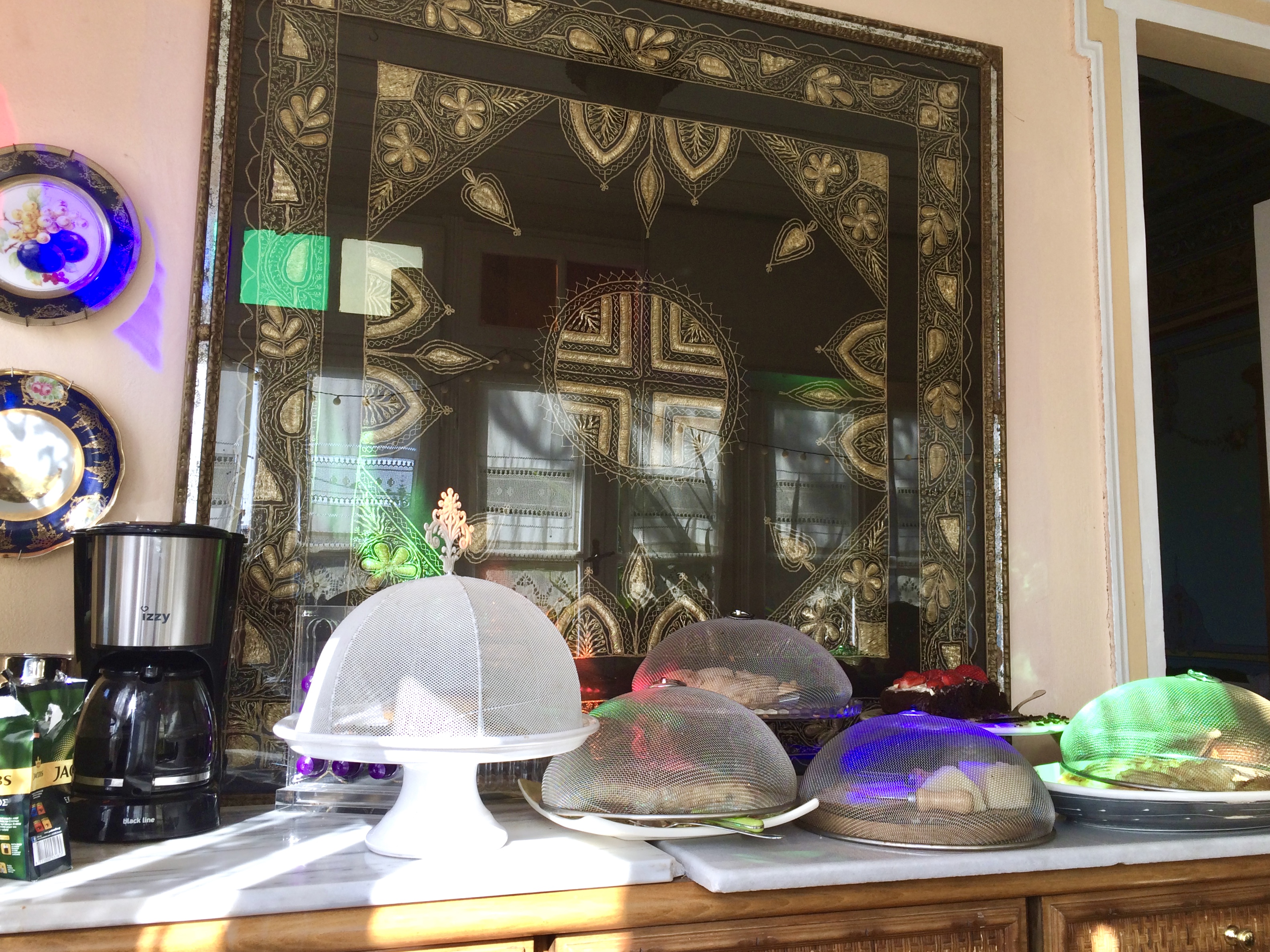
The next morning I climbed up the stairs of the hotel to the breakfast of my dreams in a sunlit indoor terrace. I think the hotel owner made the breakfast in the tiny kitchen that was also her office. She sat me at the corner table, next to stained windows that reflected splotches of color all over the walls, and squeezed some orange juice for me right then and there. Across from me was a buffet table with coffee brewing and a spread of homemade Greek delights. I tried my best to have a little of everything, knowing this was a once in a lifetime opportunity.
That included:
a piece of feta cheese and filo dough pastry
a piece of spinach and feta quiche
a slice of orange syrup cake
a slice of pear syrup cake
a plate layered with slices of ham and cheeses
a bowl of fresh fruit
another strawberry looking cake that I was too full to try.
Under each, a new pastry to try.
At the table just in front of me two Greek women–I think friends with the hotel owner–were listening intently as she listed the ingredients of the quiche, and the best way to make it. I only know this because I heard the word “feta” and “filo,” in the midst of the Greek. She paused in her instructions to give a loud and long “Kaliméraaaa” to a man who walked into the breakfast room. It had quickly become my favorite Greek word because I understood it and also because in France, I never got the sense that people said “bon matin,” in the same way that we in the States often say, “mornin’.” But the Greek “kaliméra” was said like a mom says “good morrrninggg” to her kid who has just gotten up after sleeping way past the allotted time for the greeting to work.
In the room next to the indoor terrace, a group of Brits sat at a round table underneath a painted ceiling, which was the hotel owner’s pride and joy. I listened to their conversation even though I couldn’t directly see them. They had stayed in the hotel before, and seemed to know the hotel owner… or at least they knew her food quite well. I pictured them as a group of British people from a Miss Marple mystery novel: eating eggs, sipping tea and gossiping about important people. Maybe wearing hats. I, the lone traveler with nothing better to do, was Miss Marple in this particular imaginary situation. (Although she would have been knitting.)
The painted ceiling in the breakfast room.
But since there was no actual mystery to solve, I left before their conversation was finished because I wanted to scoot all the way around the island. The scooter rental man had asked me if it was my first time to Aegina, if I knew the roads. I did not know the roads, I told him. “Well,” he said, shrugging. “You’ll figure it out. There’s not that many. Just go easy on the front break around corners.” I told him I had a lot of experience going hard on the front break and crashing. I have lived and learned when it comes to the front break.
My trusty scooter.
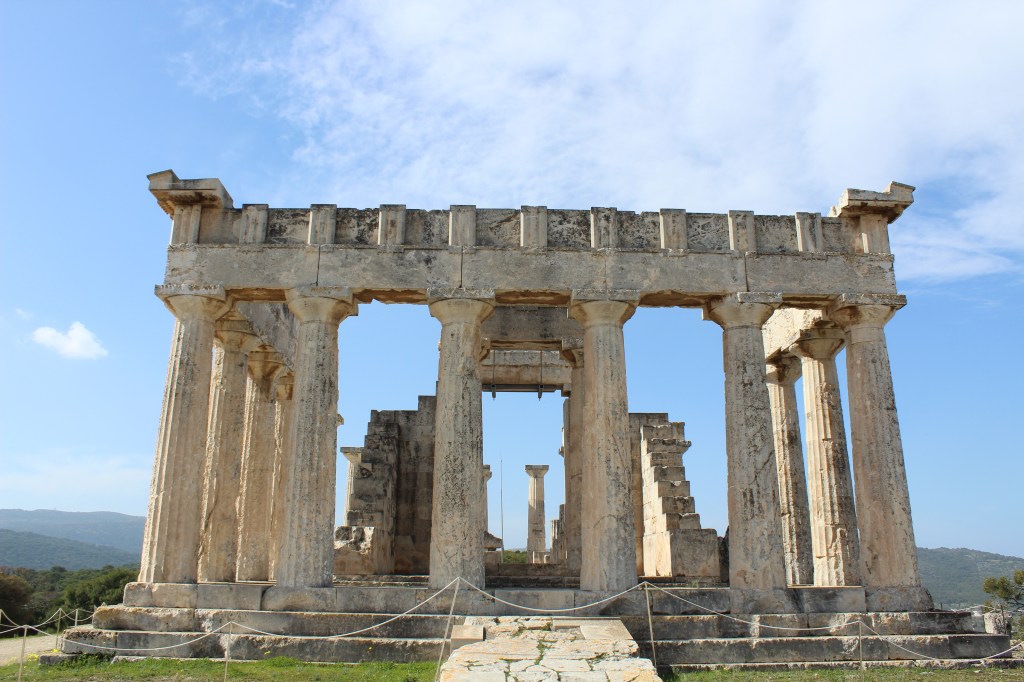
Alone and free, I made many wrong turns as I rode my way around the island in search of the Temple of Aphaea. It was my own personal pilgrimage and I don’t think I’ve ever experienced such a feeling of satisfaction as I did when I took a wrong turn, stopped to turn around and noticed in the distance on the top of a hill the outline of columns rising up above the trees.
The temple is at the top of the hill if you squint.
The road was lined with flowers that smelled sweet and it was quite hot out, even though it was only March. Alone and without cell service, Adventure Lily was beginning to get tired of being a bit lost… but seeing the temple at the top of the hill renewed my energy.
The right road, once found, was a series of steep switchbacks around pistachio farms. (The pistachios are Aegina’s specialty. They are unlike any other pistachio I have ever had.) It would have been quite a walk for the Ancient Aeginetans to get to the temple. They worshiped Aphaea as a Goddess of fertility and the agricultural cycle. She was friends with Artemis and Athena.
Back in France it was cold and rainy. In Greece, the wildflowers had started to bloom.
Traveling in Greece off season meant that I was nearly alone at the temple. The bored lady at the pay station took my three euros and I walked around taking pictures and wondering what I would have been like if I had been an Ancient Greek.
Doric.The current temple was built in 500 BC.The view from the temple.
Sitting at the top of the hill enjoying the view of the island, I planned my next destination: a coffee in Perdika.
Why is it that whenever I’m in France, I’m suddenly like….. “qui suis-je?”
It’s happened before, I know this because I’ve documented it: I suddenly go from reading Cosmo to reading Literature with a Capital L, from writing haikus about eating donuts to thinking about the future of the novel and nonsense like that.
Is it the cafe culture of France, where one finds oneself sitting at those small tables day after day, smelling the cigarette smoke and thinking Deep Thoughts? Is it because I always happen to have loads of time on my hands whenever I am in France? Is there something in the water?
Or is it totally and completely due to the constant and easy access to tiny coffees and whimsical chocolates?
We loaded up on cute mussel shell, acorn and mushroom shaped chocolates because we just couldn’t resist.
While in Honfleur eating whimsical mussel shell shaped chocolates and drinking a tiny coffee, I discovered that I am not the only one whose personality is weirdly affected by the artistic culture of this country.
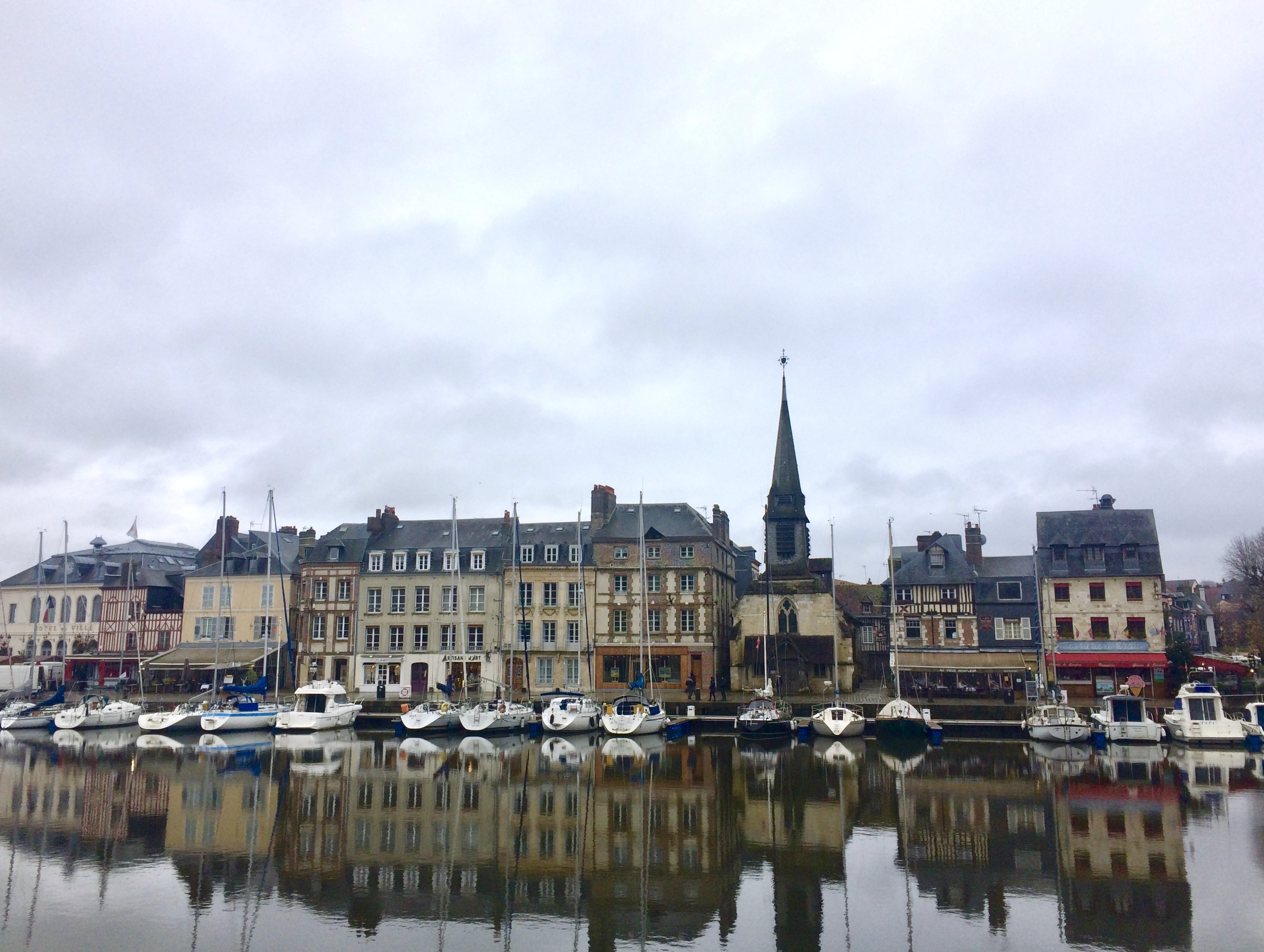
Honfleur is a mecca for the Impressionists (Gustave Courbet, Eugène Boudin, Claude Monet and Johan Jongkind, etc.). The tiny harbor lined with boats and tall wooden houses has inspired painters to portray it time and time again, not caring one bit that they are not the first to paint this recognizable stretch of space much like how I did not care that I wasn’t the first (and won’t be the last) college girl to post a picture of herself reading a book by Patti Smith on Instagram.
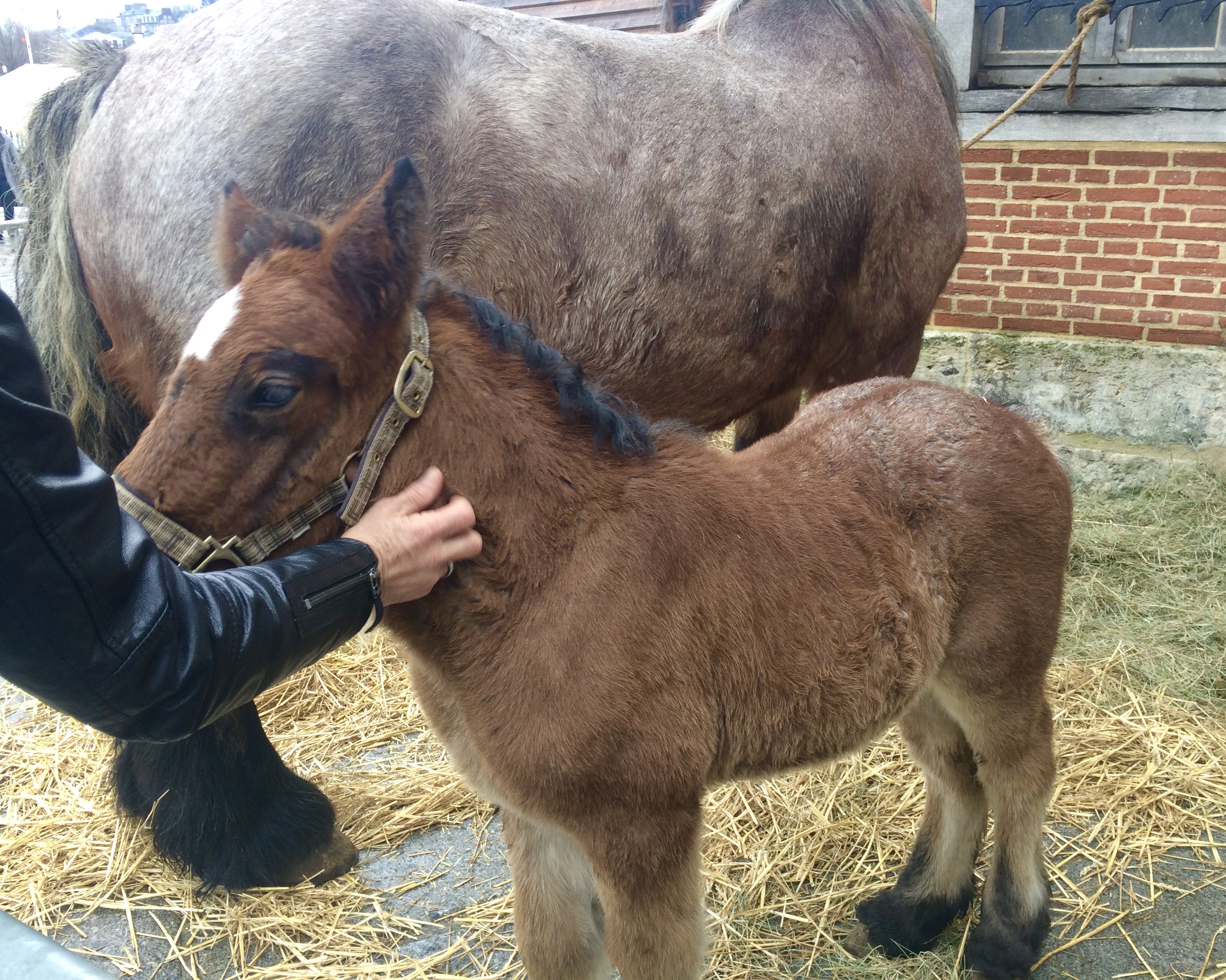
Anyway, because my family is my family, once we arrived in Honfleur (after a quick kebab lunch), we headed straight for the Erik Satie museum, taking just a few moments to pet a baby horse and walk through the oldest and largest wooden church in France.
What a cute lil dude!
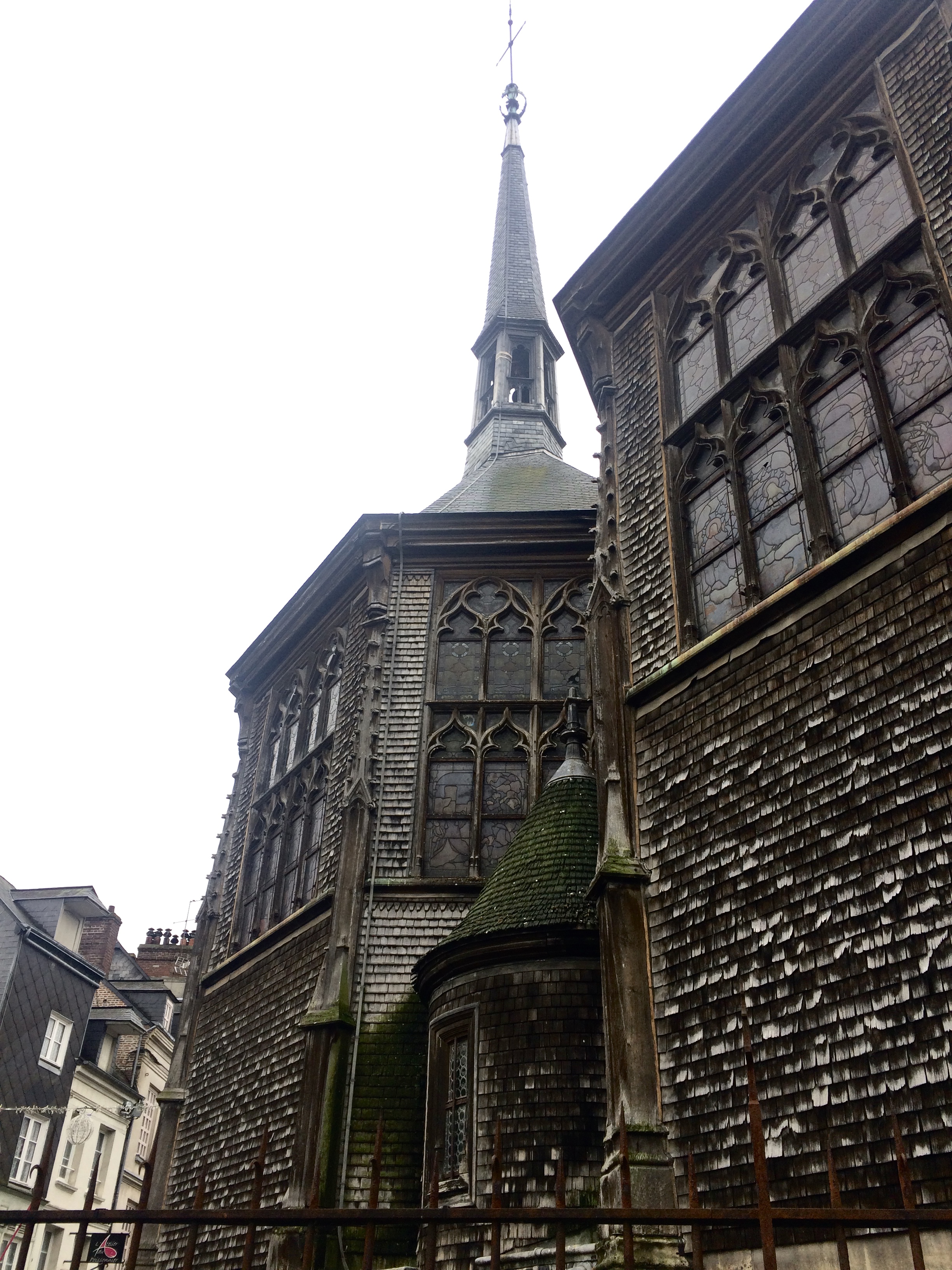
Saint Catherine’s Church smelled deliciously like pine and had one of the most intricately detailed Nativity scenes I have ever seen. It was also guarded by a cute, tiny dog. Within twenty minutes, Honfleur had won me over with its small animals.
Saint Catherine’s guard.
Twenty creche pictures later, we were in the Satie museum, having the strangest time. In case you don’t know, Erik Satie was a musician and composer. He composed piano pieces that my mom, the pianist, qualified as “hard to play even though they sound easy.” (I became his fan after Lana Del Rey used one of his pieces at the end of the music video for Carmen.)
France, the queen of interactive museums, did not let us down. The Satie museum has everything: a giant winged pear, a large animatronic monkey, a white self-playing piano, and a whirly-gig pedal operated machine which museum visitors can take for a spin. All of the rooms come paired with Satie’s music and quotes from the man himself, talking about his very, very odd life.
The museum is creative, strange and perfect. I felt like I knew Satie personally by the time we walked back out onto the quaint streets of Honfleur.
I reflected on the oddball life of Erik Satie while looking at the beautiful Honfleur harbor with my family and came up with a short-term answer to the “qui suis-je” question. Maybe wherever I live, I am a different person who adapts to her surroundings. And maybe in France I happen to adapt to the artiste’s lifestyle. A bit weird, a bit creative, a bit existential. Maybe that’s just the French way.
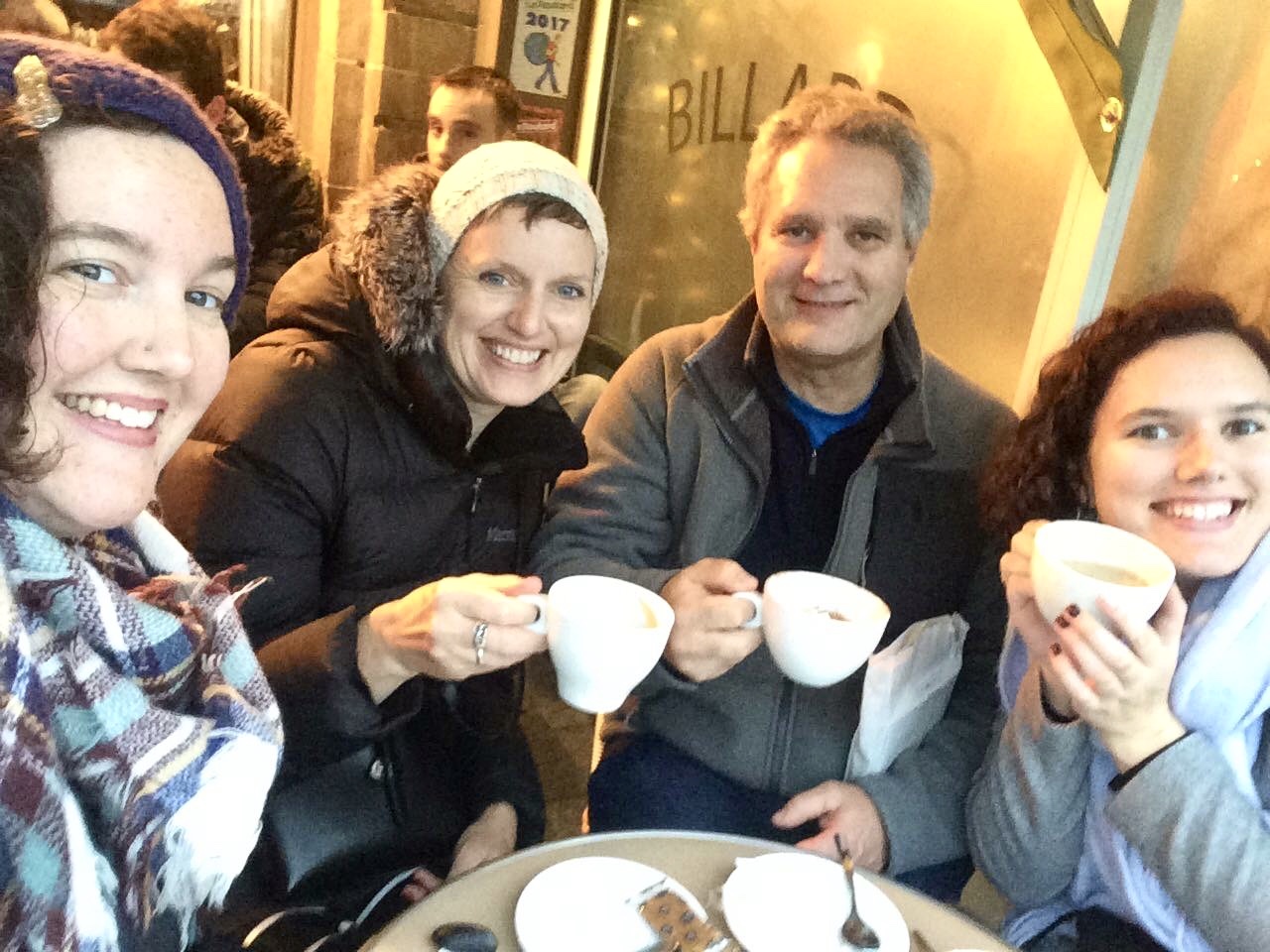
Discussing Satie and impressionists, and drinking the largest coffees we could get our hands on.
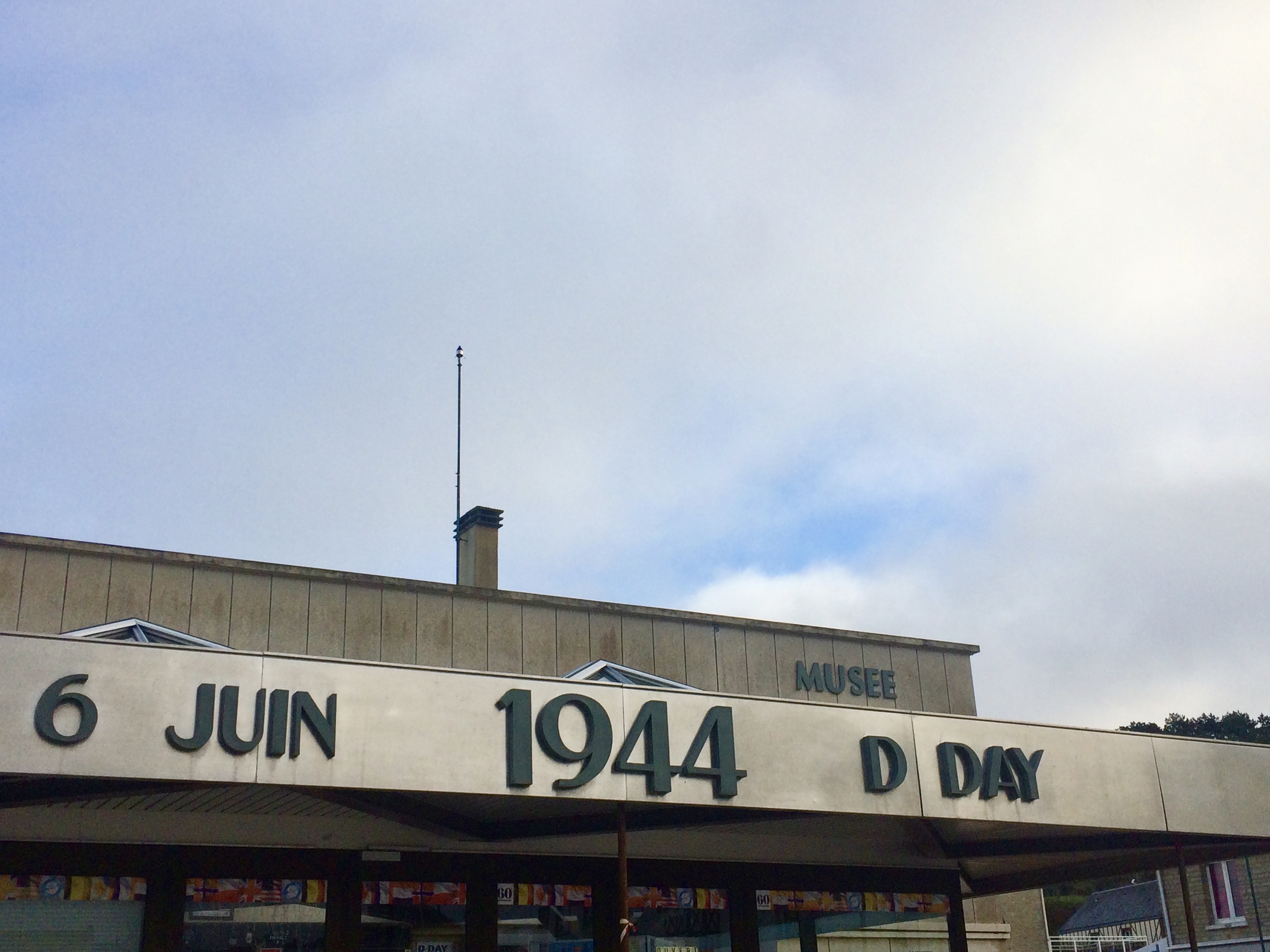
I wasn’t originally going to blog about this day of our trip, because I didn’t take very many photos and the most memorable part of it for me was when my GPS took us on themost round-about journey, through one-way streets next to groups of galloping cows and under tunnels not meant for cars. The day felt too crazy to sum up easily.
But the D-Day beaches are a part of Normandy’s history that also intersects with America’s history, and even our own family’s history–though my grandpa was stationed in North Africa (I think) and not Normandy. Growing up, I assumed he was in Normandy, I’m not sure why, so it still feels connected somehow. In fact, most of the world’s history was impacted by these beaches, which now stand empty, calm and, on the day we were there, bitterly cold.
Omaha Beach
With the help of our Good Friend Rick Steves and his handy map, my family and I began our D-Day discovery in Arromanches, where we watched a tear-jerker movie featuring a tiny kitten amongst the rubble of torn-down Normandy villages. It set the mood.
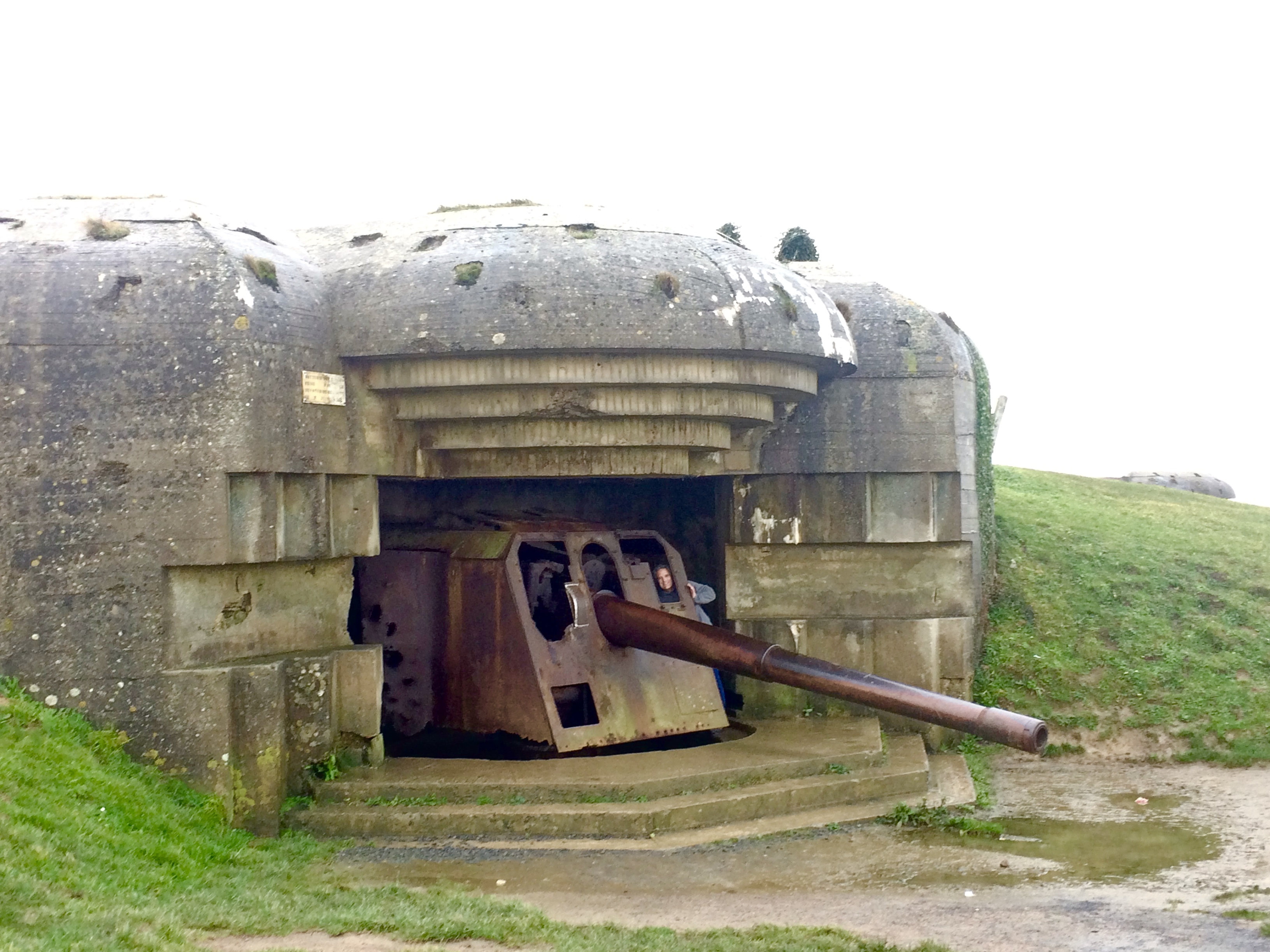
We then hunted down some remaining German artilleries, which looked like they were straight out of Doctor Who and made a stark contrast against the stunning green of the peaceful (and empty, thanks to our off-season traveling) Normandy countryside. It occurred to me that the Germans were there for such a long time, they were able to build such structurally sound artilleries and bunkers that today we can still walk around in them. We peeked our heads through the lookout holes, trying to feel how it felt.
German artillery thingy.Dad’s head for scale.
From there, we took in the quiet solitude of the American Cemetery, before going to the German Cemetery and noticing the differences between the two.
My dad is a huge history nerd (but does not realize it) and in the car on the way to the beaches he talked us all into listening to a book on tape he had from the library about D-Day. One part mentioned how Hemingway was there, something I had not known. I don’t know why, but I like thinking about Hemingway being places.
“No one remembers the date of the Battle of Shiloh. But the day we took Fox Green beach was the sixth of June, and the wind was blowing hard out of the northwest,” Hemingway wrote in a piece called Voyage to Victory.“As we moved in toward land in the gray early light, the 36-foot coffin-shaped steel boats took solid green sheet of water that fell on the helmeted heads of the troops packed shoulder to shoulder in the stiff, awkward, uncomfortable, lonely companionship of men going to a battle.”
I tried to imagine it while standing on the orange sand, but couldn’t. I also poked around a bit, as one naturally would, hoping to find a scrap of metal or cloth or something. Like maybe a skull and crossbones to prove that hundreds had actually died there. All I came up with was sea shells. They’re just beaches.
The lack of evidence in the sand reminded me that I, too, grew up in a time of war, became of age while my country was financing destruction overseas. It feels as abstract to me as how the sea of white crosses in the cemetery look, after you’ve stared at them for too long.
It seemed fitting that the rainiest day my family had while on our trip round Normandie was when we visited Rouen. Despite the weather, the beautiful city just four days away from Noël was still bustling with people in full holiday spirit: the Alsatian market was going strong, the giant wonder wheel taking kids for a ride of their life (no seatbelts), the ice skating rink blasting Christmas music through the windows of the Joan of Arc chapel.
The famously gothic Rouen cathedral.
But we were on a more historical mission than the people in the city that day. Holding our Rick Steves In Normandy library book out to get rained on in the misty streets, we traversed a pathway that led us from one statue of Joan of Arc to another, to another and another. It was a three-church-visit kind of day, and with each steeple came iconography of Joan…… as if the city was desperately trying to apologize for what had happened to her there.
Inside the Joan of Arc church.
That someone who was burned at the stake for heresy was later made into a Saint is amazing to me.
While at the Joan of Arc museum we wondered aloud how many other women had been just like Joan: women who stated their truth, rose to power and then were burned at the stake by men. Or executed. Or thrown in jail. Or lost their jobs, had their careers destroyed, their names trashed in the tabloids. When will we be believed?
If you’re ever in Rouen, I highly suggest going to the Joan of Arc museum. I thought it was going to be super lame, but it turned out to be super cool.
Other sights for lovers of the macabre: the plague cemetery. Go when it’s raining and you’re cold and feel a little sick. It adds to the experience because you begin wondering if you have caught the plague.
Through the passage to the plague cemetery, you pass a cat that’s been petrified. It was gross.We also saw the grave of the Viking King Rolo’s femur.
I will leave you with a video extract of the most terrifying movie I had to watch in my undergrad studies. But I also love it for how it shows Joan, a 19-year-old girl, at the mercy of the buffoonery of men who think they are in charge.
This is a question I’ve been asked many times over the last month as I’ve introduced myself to class after class of English-learning French high schoolers. It’s an easy answer, even if it may be a fudged truth.
“The food.”
After that comes a nod of understanding from everyone respectively, like they’re all thinking about last night’s dinner and going, “yeah, you’re right that is the best part about France.” Then comes another question, a bit more difficult.
“What’s your least favorite part about France?”
It’s harder for me to answer because there might be a few things but I don’t want to offend. So I choose my main complaint, and one that I know will puzzle some of the students.
“I don’t like how nothing is open on Sundays.”
This answer can sometimes prompt a discussion about how one can get anything at any time in America (unless you’re in Coupeville) and how some stores are even open 24 hours a day, seven days a week quellehorreur. But here in Alençon I find my Sundays limited to the Sunday bar–the one bar in Alençon that has capitalized on profits by being the only bar open on Sundays.
I’m not even really exaggerating. Walk the streets of Alençon on a Sunday at 2pm and it is stunningly quiet. All the shops are shuttered (even H&M!), the jazz music that normally plays 24 hours on the pedestrian street is shut off. The only sounds come from the church bells and the occasional scooter or car hurtling down the tiny roads, but even that is not often.
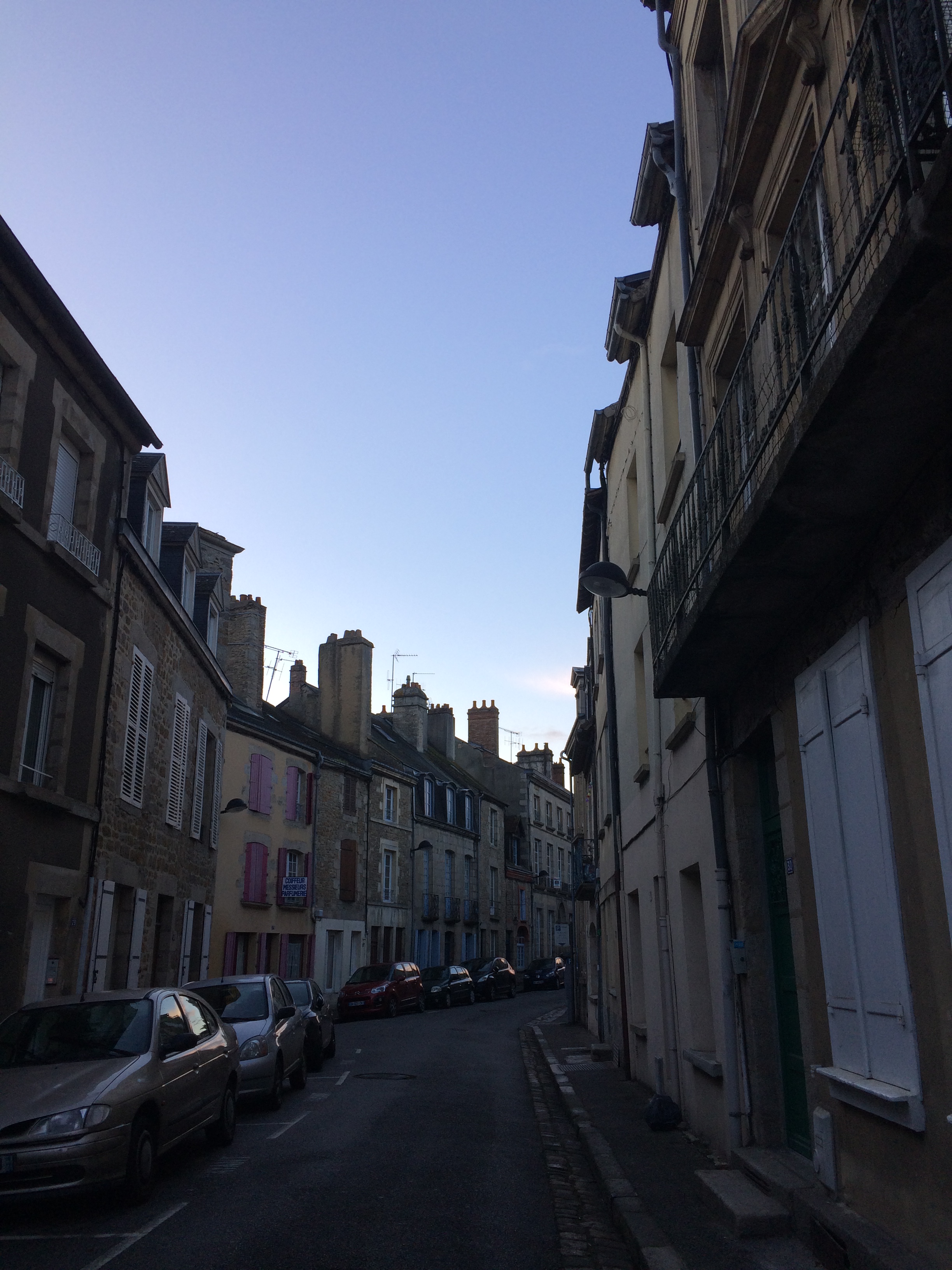
It gets dark so early now.
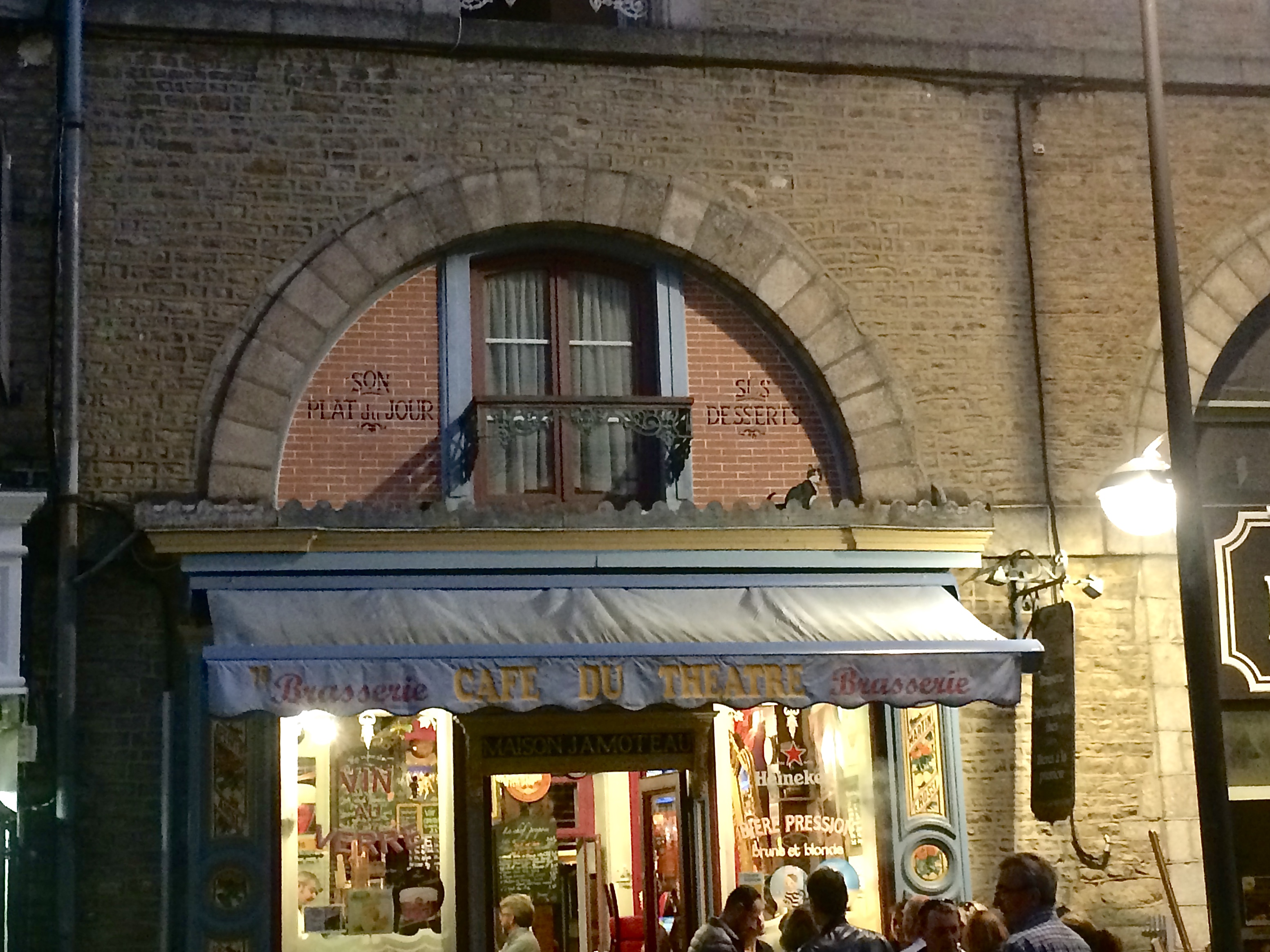
Because of this, taking a walk on a Sunday in Alençon is incredibly peaceful. You don’t feel any rush to be anywhere or do anything other than admire the way that sunlight bounces off the windows of the buildings or notice the tiny bits of moss that grow in between the cobblestones. And then after making your way all around town, which takes maybe 20 minutes in total because it’s small, you make it to the Halle Au Blé. The Halle Au Blé is a rotund dome building where farmers used to sell their grains, hence the name, which means “hall of wheat.” And juste à coté is the Café Du Théâtre, with its blue canopy and old-timey yellow lettering.
A Sunday gathering place.
Outside the cafe, depending on the time of day and the weather, you’ll find small clumps of people drinking and smoking at the tables. Or if it’s 2pm–that time directly between when lunch is over but before the afternoon coffee rush–you’ll find the bartender solo, standing outside the bar’s entrance smoking and waiting for his next customer perhaps hoping that no one will come at all, or at least not for a good while.
Bartender’s on a break.
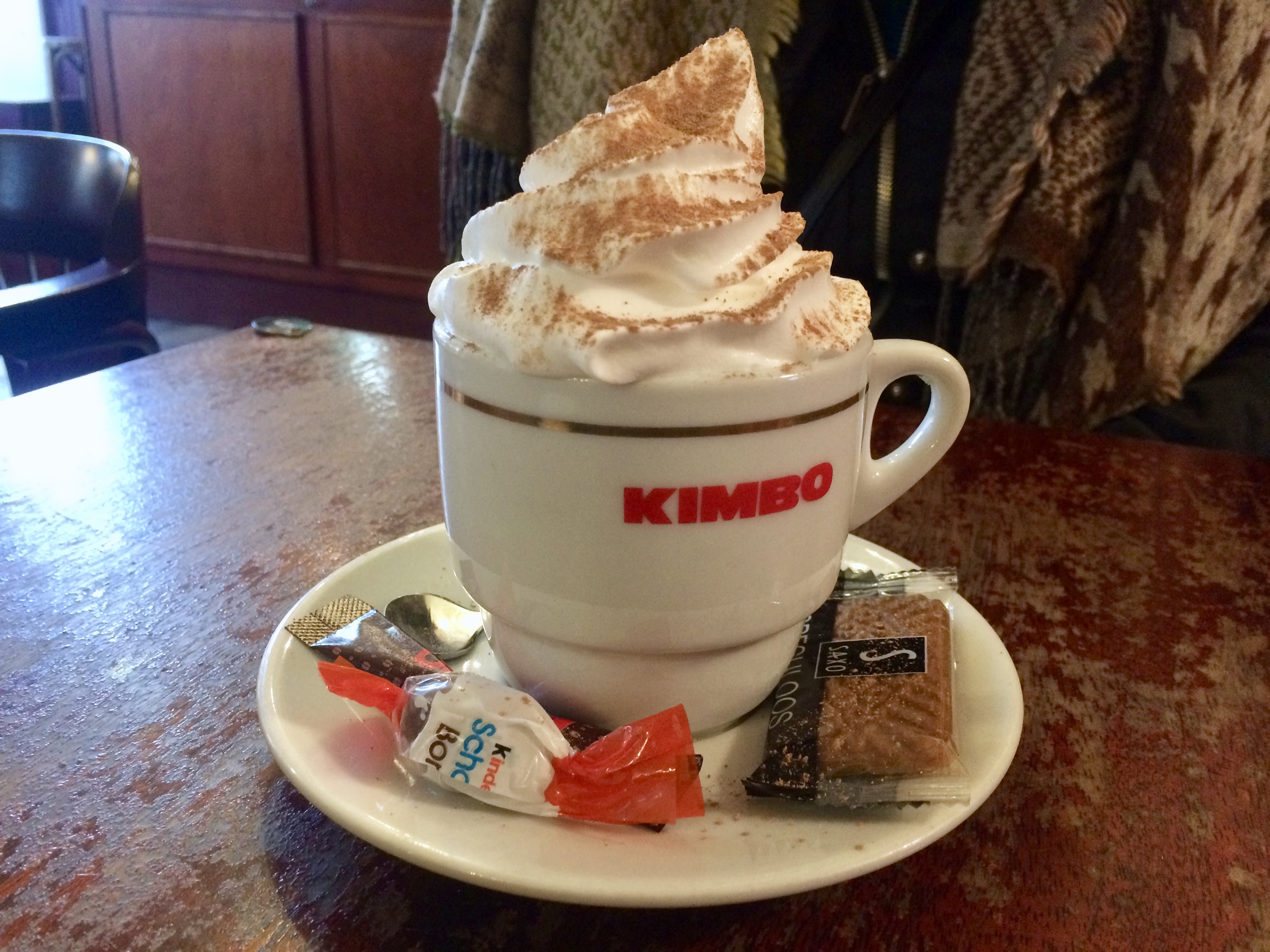
Now that the weather’s gotten colder, I’ve begun to sit inside the cafe, at the tables across from the bar but not directly at the bar. Bar stools are too uncomfortable and reserved mostly for the bartenders friends it seems like. I like watching what he makes because it gives me an idea of what French people like to order. And after observing for about a month now I’ve come to the happy conclusion that there is not a prescribed idea of what one should order in a brasserie. Adults will come in and order a hot cocoa or a diablo (flavored syrup mixed with soda, something I thought for a long while was a kids drink). Yes, the old men will most often get a pint, but other times they’ll nurse a glass of white wine for several hours while reading the newspaper. Fruit juices, espresso, coffee with cream, steamed milk, cider, champagne, beer, vin chaud, rouge, blanc, rosé, and my personal favorite: chocolat viennois, also known as hot chocolate with a pile of whipped cream on top.
The bartender makes all these drinks with ease and a kind of solemnity that gives me the impression that he both values his work and also recognizes the ridiculousness in the way he piles that whipped cream so elegantly. Either way, he’s always there behind that bar except for his smoke breaks and except for Mondays because you can bet a bar that’s open on Sundays will be closed on Mondays.
The man I’ve always assumed is the owner, but who also performs the job of a waiter, is an older man who looks so typically French you can probably picture him in your mind right now. He yells out the orders to the bartender as he gets them in that specific way that French people sometimes speak… like they’re taking pleasure in how their language sounds. He does not know yet that I can speak French even though I order my drink in what I believe is perfect French every time I am there. So instead he communicates with me mostly in mimes, winks, the occasional jaunty dance and by laughing at me. The first time I encountered him I was with the other language assistants–two of whom are Brits–and we all spent several hours drinking beer and chatting at the tables outside. Each time we ordered another round he would express his worry that we were going to get drunk by making various hand signals and over the top expressions that you normally only see in old silent films. I wanted to explain to him that my companions weren’t drunks, just British… but I wasn’t sure how to mime that.
Knitting, writing, drinking vin chaud.
The thing is, every time I’ve been to this bar since that first time, I’ve seen some of the same people there. It’s one of those places that has regulars: the guys with their newspapers, the jokey waiter, the couples coming in for their hot cocoa or beer. I think the routine of it feels so Sunday-ish to me because I grew up with a Sunday routine, a family day.
What would I do on a Sunday if I were at home? Sleep in? Most likely. Eat waffles? If my dad made them. Play with the cat? Certainly. Go to Target or something? Yeah, maybe, why not.
But I’m here on a Sunday, in France. Sans cat, sans waffles, sans family, sans Target. I could lay around. Watch TV, relax, cook some food. Or, I could go for a quiet Sunday walk. Go to the Sunday bar with a friend or a few friends. Or go solo, just to sit. Pretend to read a book and observe the goings on, trying and failing to fit in.
Me, writing this blog post, hair wet from rain, wrinkled shirt and all. Jokey waiter is balding guy in the mirror. Photo courtesy of Sami.
“Go home. Put your best record on. Loud as it’ll play. And with every note, you remember: That’s something the darkness couldn’t take from you.”
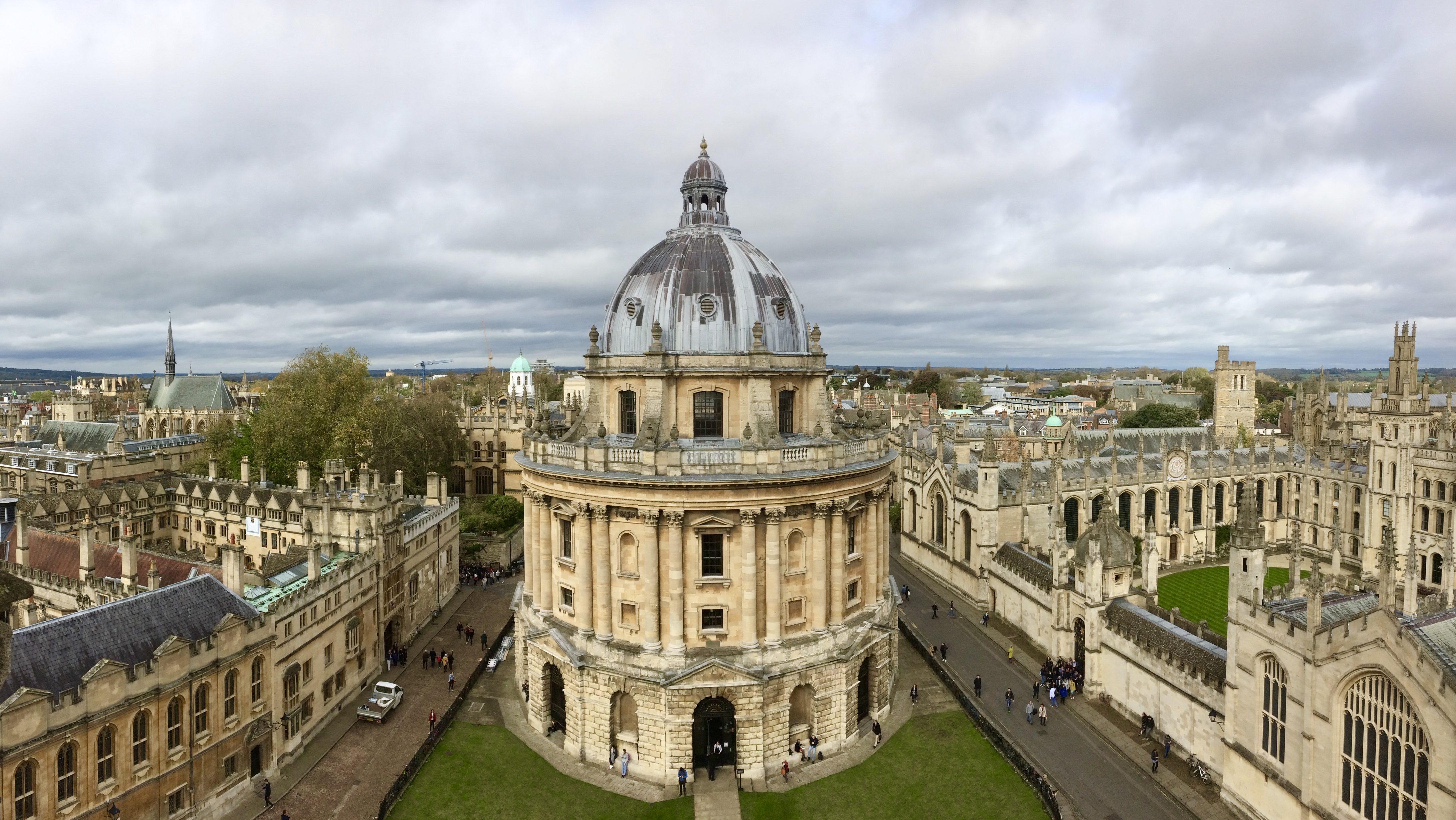
— Detective Fred Thursday to Endeavour Morse while the sun sets against the background of the Oxford skyline. (And also me, to myself while reenacting the scene on the tower of the St. Mary’s church in Oxford last week.)
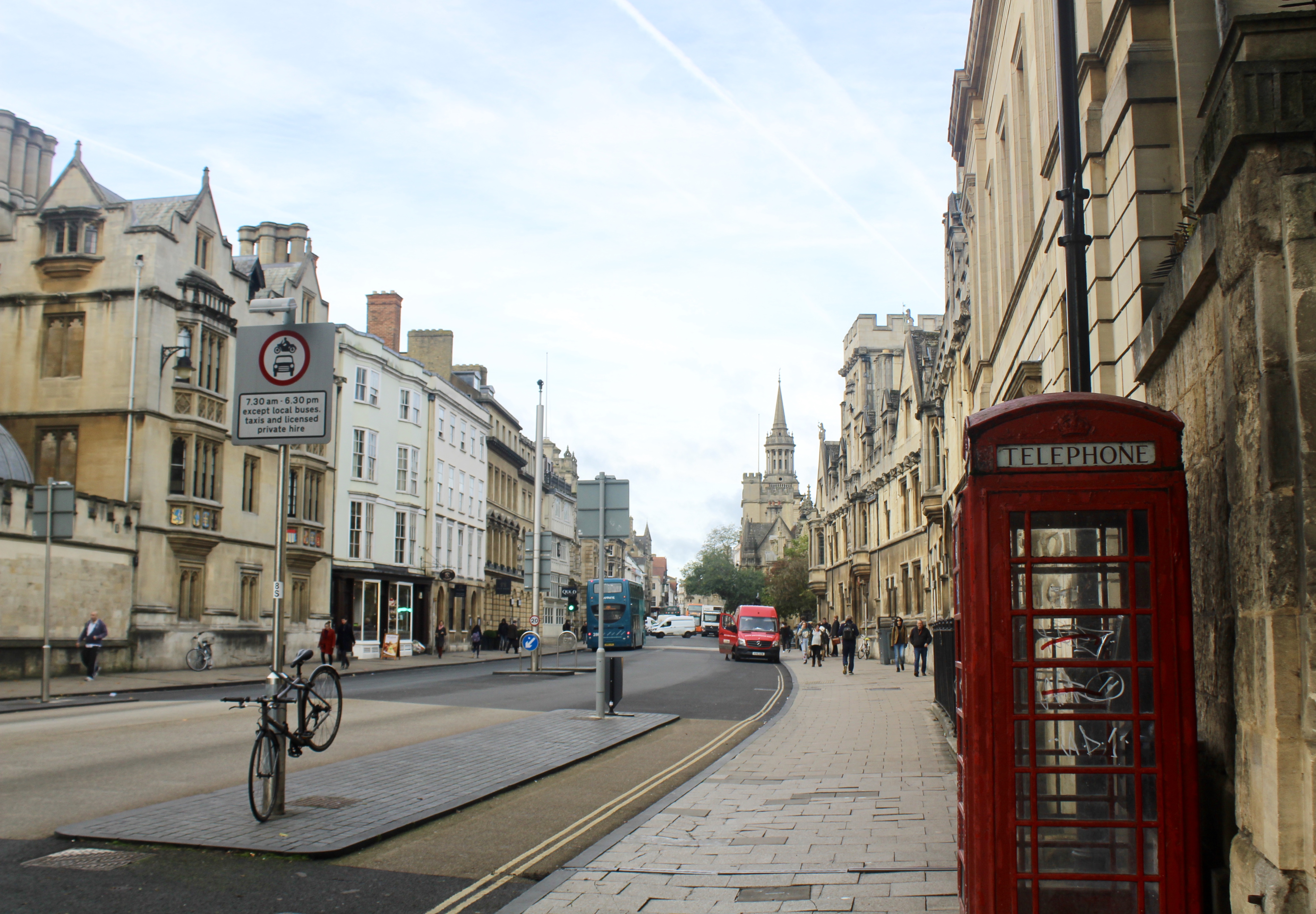
I think Oxford would make an amazing setting for a post apocalyptic movie. Some of the old buildings seem like they’re just waiting to become ruins. Trees growing through their windows, the occasional zombie hidden behind a falling down wall. There’s just something unrealistic about Oxford.
Endeavour Season One, Episode One
It’s probable that the reason I feel this way is because my favorite TV show is set in Oxford, and therefore I feel as if it’s a town that was made to be a backdrop. As I walked around, I felt like I already knew where I was.
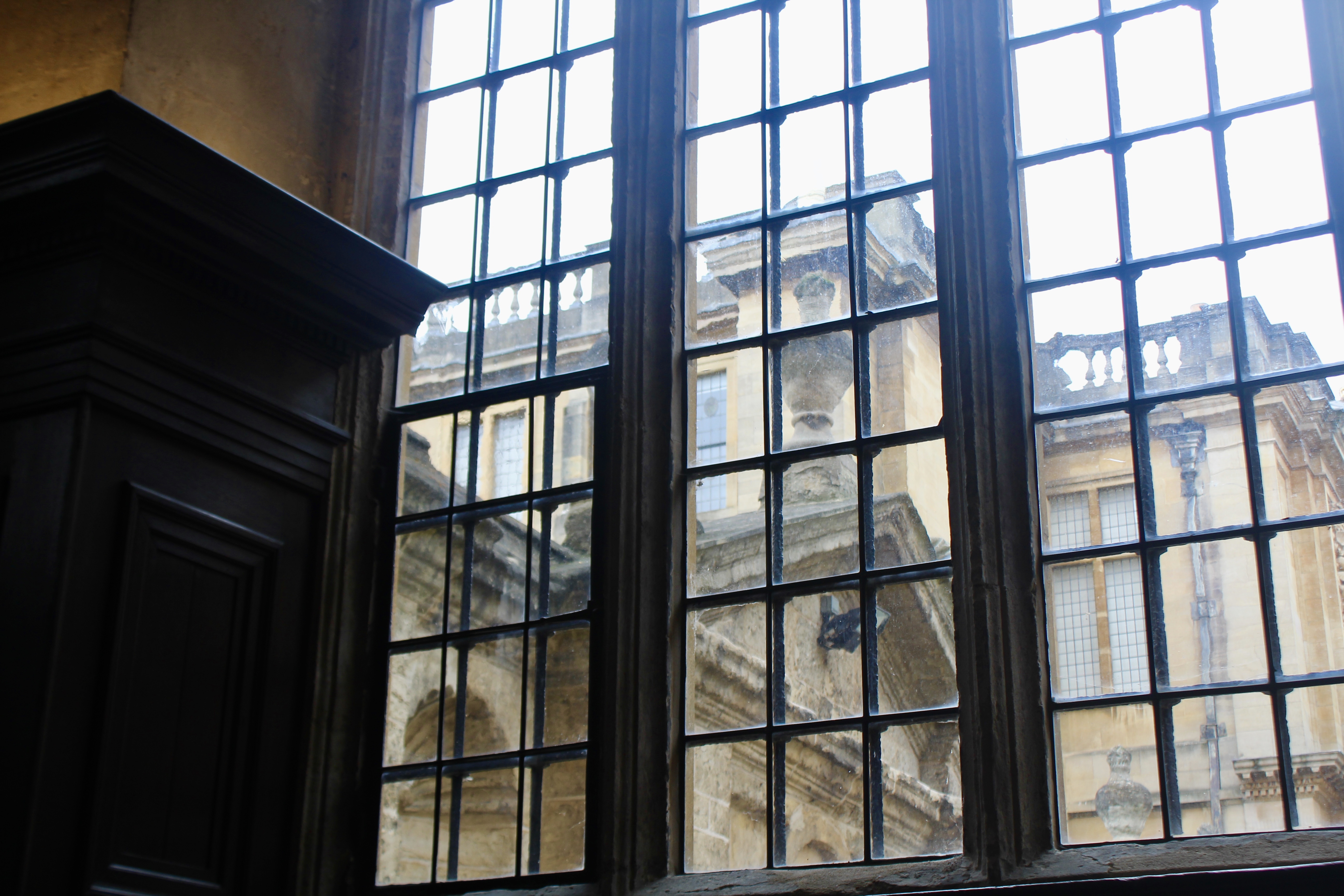
From inside the room where the Gryffindors learn to dance for the Yule Ball in the fourth movie.
And then there were actual real life college students there, which honestly threw me for a loop even though it shouldn’t have. Studying in the library. Getting lunch at the cheap sandwich shop. Wearing their college sweatshirts and nearly running me over on their bikes. I went to college in New York City, so it was almost impossible for me to imagine what it must be like to be a college student at Oxford. So small, so scenic, so many important historical figures.
The sun broke through the clouds for a moment.Did not see any dead bodies. Did see people rowing boats, though.
As I took a break after touring the library I decided that maybe I should go to Oxford. I don’t know what I would study or how to get it in, but I feel it is a definite possibility for me. Either that or becoming a police detective.
 Three thoughts from road tripping from Port Townsend, WA to Santa Maria, CA and back again on Highway 101.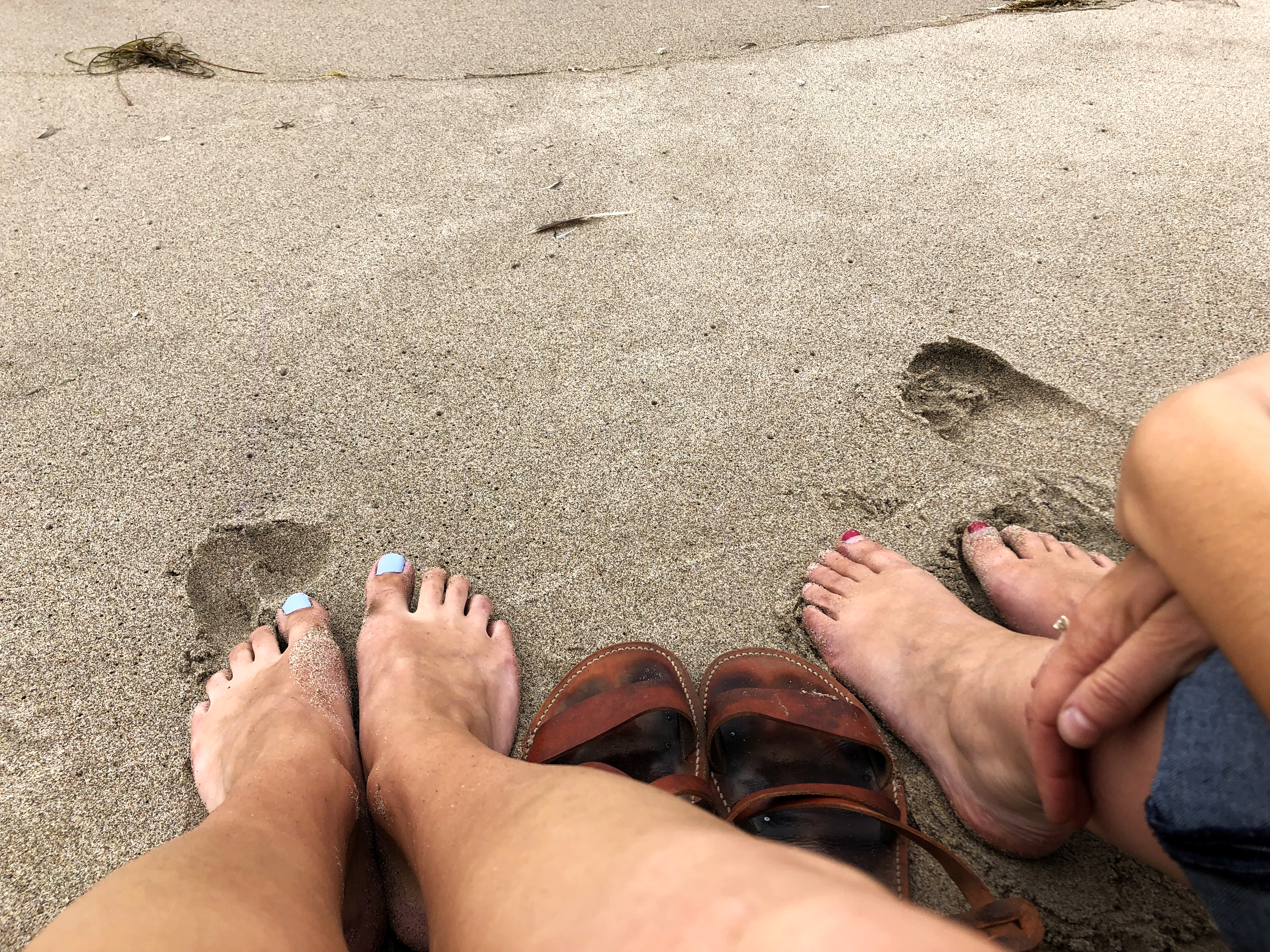




















 Lily Haight