Winter is on its way out and I am counting down the days until spring blooms.
Our jardin is steadily being prepped for planting seeds: I’m slowly getting rid of major weeds and an invasive ground cover plant that I hate. After I finish adding compost to the soil next weekend, we are going to plant some of our first seeds of the year: sweet peas, nasturtiums, poppies and zinnias. Inside, we’re going to start some snapdragon seeds.
For now, though, I’m looking for garden inspiration from the small pops of color that surround me. A visit to the butterflies on my birthday, a trip to the Garden Show in Seattle and the unknown buds that are popping up around the garden.
Nothing better than a tropical butterfly room on a cold winter day.
While we plan our flower garden we are also trying to determine natural ways to deal with pests like deer. Hopefully most of our flowers will be deer-resistant—like foxglove, snapdragon, poppies, zinnias, yarrow and hollyhocks—and we’re planning on creating toxic-flower-barriers by planting them around those that might be a bit more vulnerable, like sunflowers.
Color inspiration from the Garden Show.
We recently planted two bare-root roses (one climbing peach-colored and one pale pink) and I’m excited to see them grow, but terrified of how they might get munched on by deer.
According to a recent article in the New York Times (Titled “On Staten Island, Feeling Overrun”) there are an estimated 30 million deer across the country that eat the equivalent of 15 million metric tons of vegetation — greater than the combined weight of all the aircraft carriers in the Navy.
I’m convinced half of those deer live in Port Townsend.
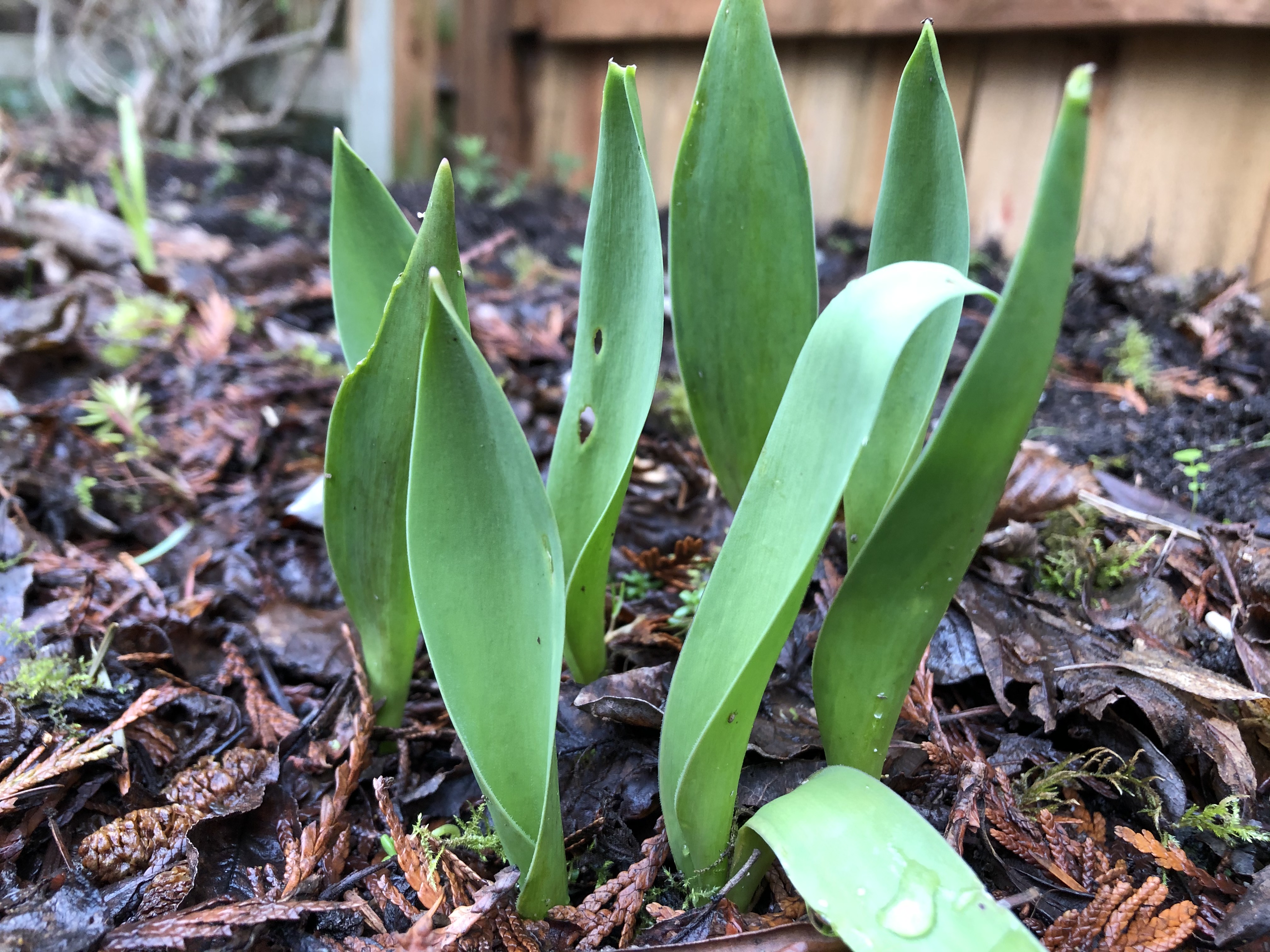
These have since been eaten.
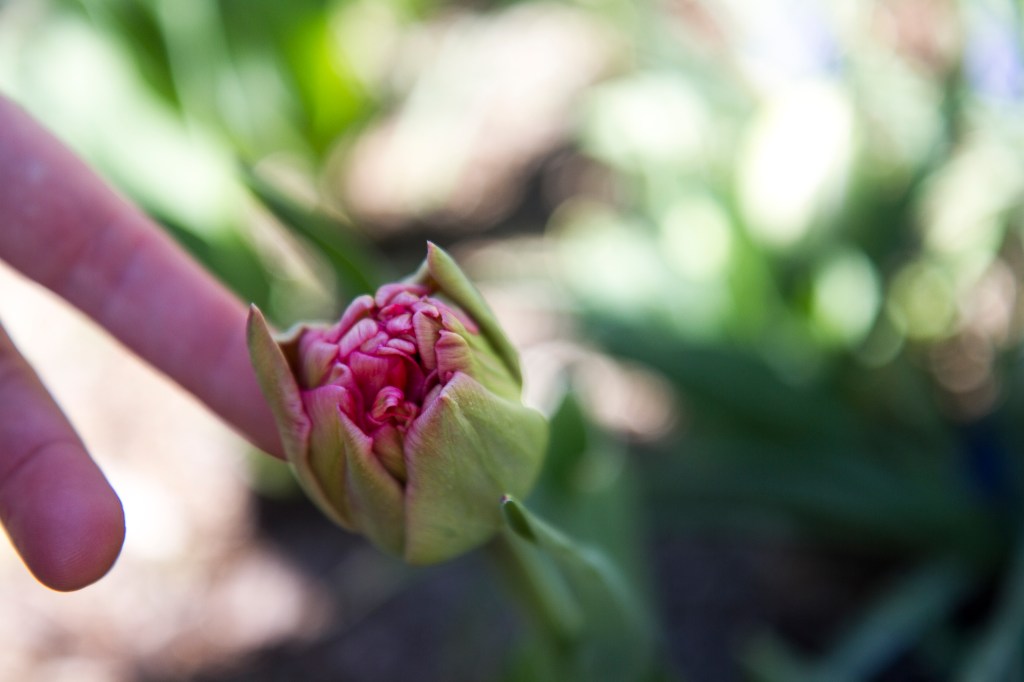
The previous owner of our house planted some tulip bulbs, which started to grow only to be munched on by deer. Despite the sad tulips, I’m staying positive that the deer will leave most of our garden alone. All we can do is stick to toxic flowers and hope for the best!
But this week was one of the worst yet. Day after day of unrelenting rainfall left me feeling like I might drown in the growing mud puddle surrounding my house.
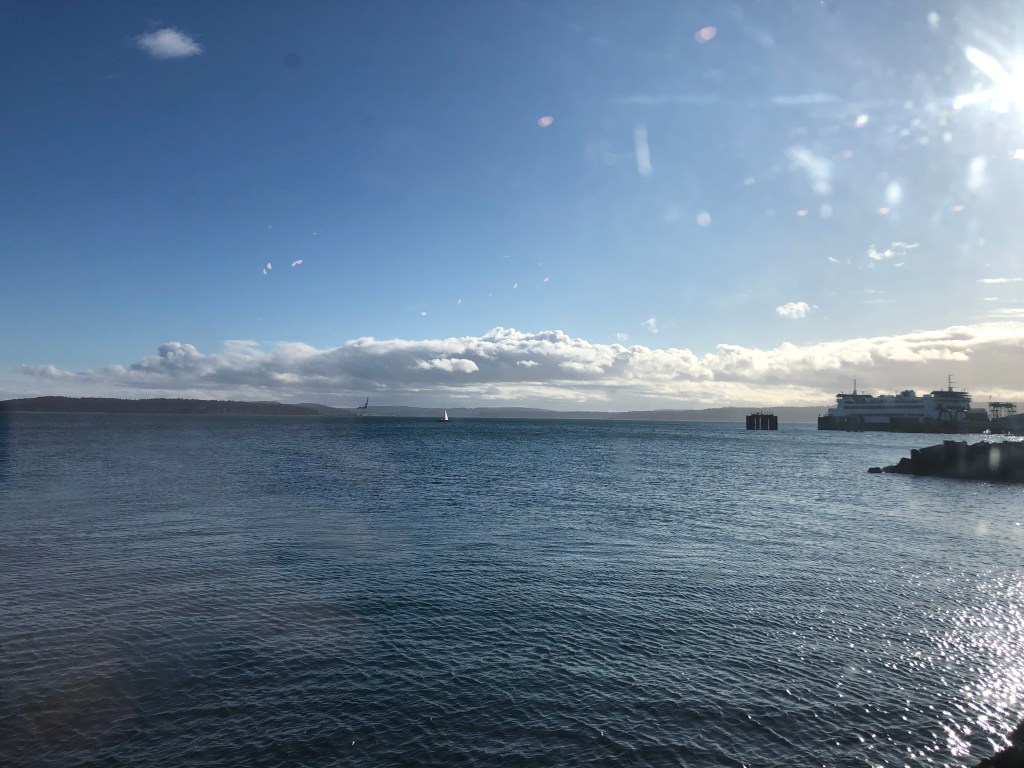
So when the clouds parted Friday afternoon and I saw blue sky for the first time in many, many days, it was like feeling several pounds lighter. Spring will come as it always does.
The first blue day in a long, long time.
On Saturday, Libby and I went for a walk at Chetzemoka park in town, getting inspiration from a tiny daisy that was blooming in the middle of a soggy, grassy knoll. There, a tree has already begun to bloom, making me feel like the pressure is on to get the yard ready for spring planting.
A sunny spot. Blooming already?
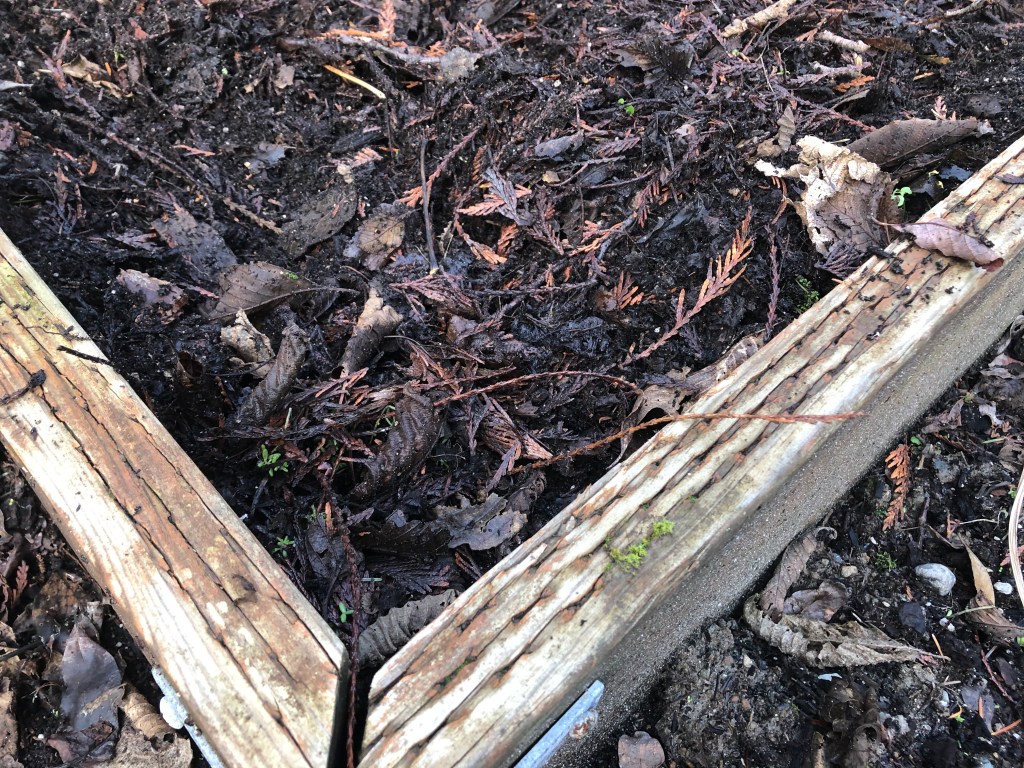
On Sunday, I got out in the yard and began assessing our soil. Fallen leaves and tree debris has made for a nice mulchy layer to add nutrients to the soil.
Planter boxes we plan to fill with flowers.
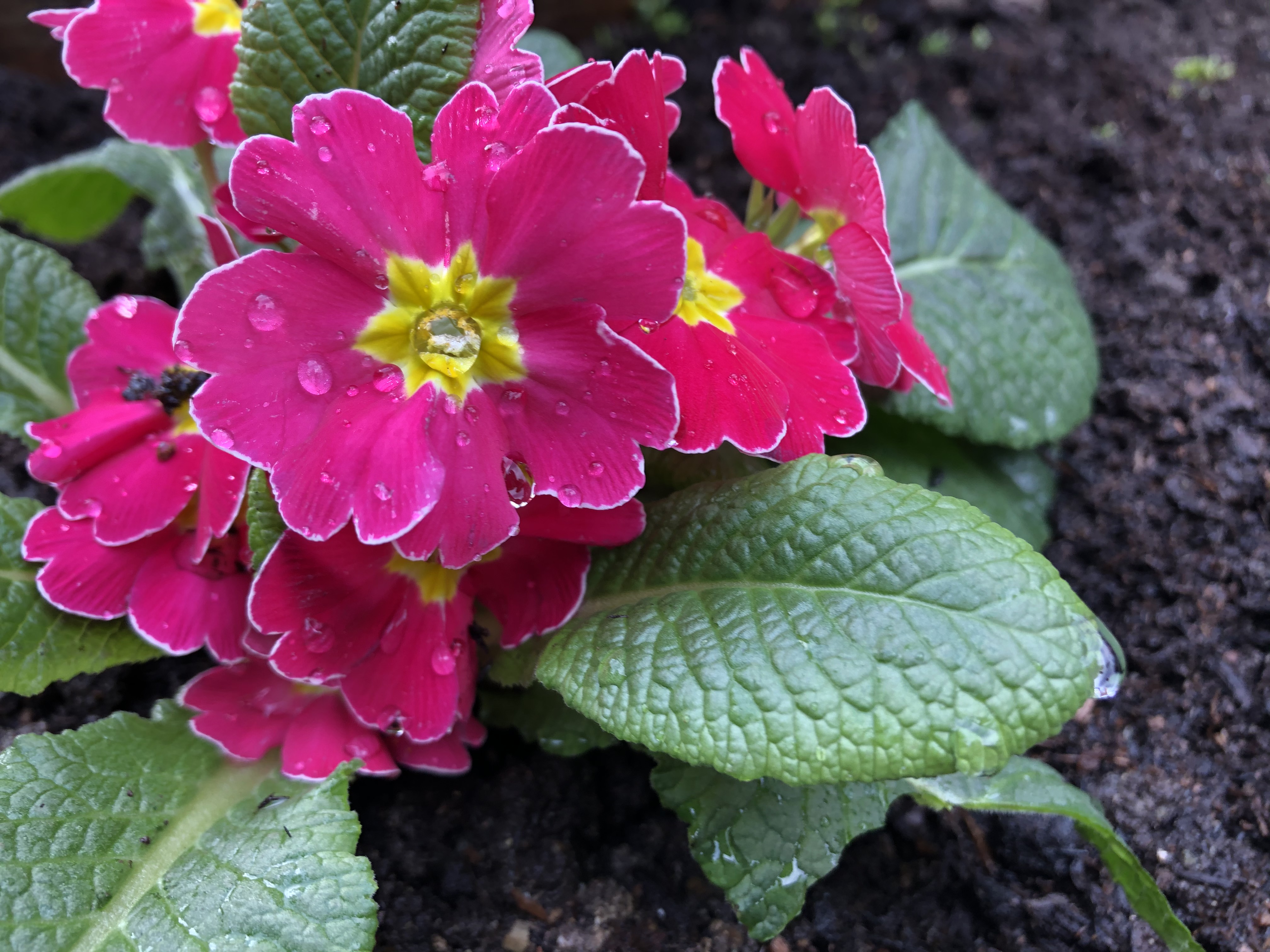
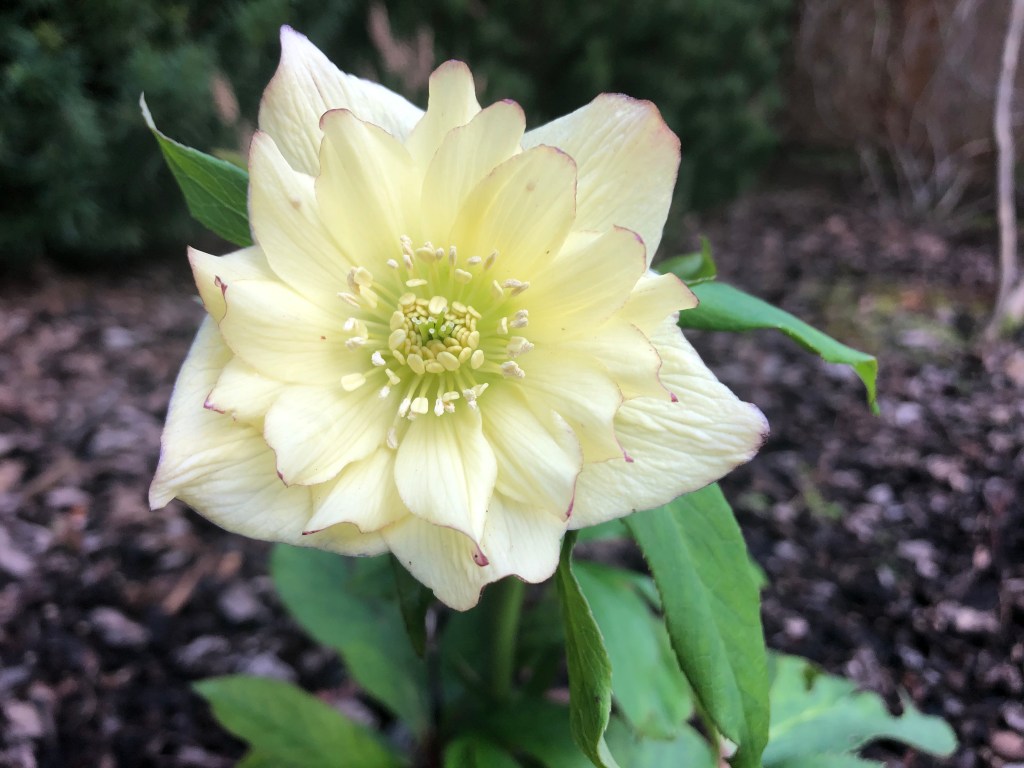
Our winter blooming Hellebores bring a spot of color to the yard—a ray of sunshine to come home to on the days when cloud cover and early sunsets make the entire day seem dark.
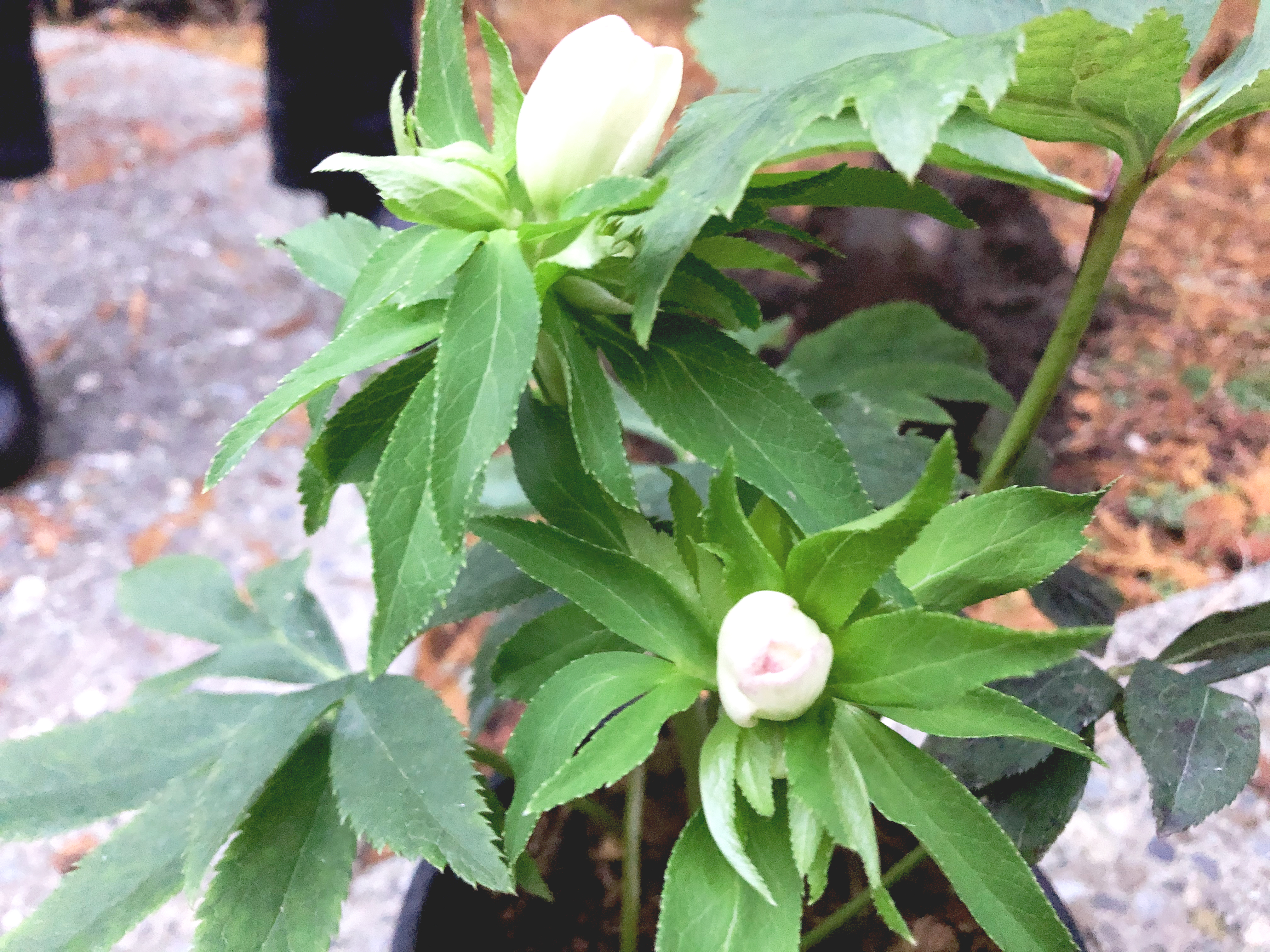
Leafy, yellow and bright. New buds joining the blooms.
And signs of the coming spring are all around: I trimmed off last year’s seed pods from the peony tree, where new buds are forming. They look like clasped hands.
What color will the blooms be?
What’s exciting about our new home is we don’t fully know what is out in the garden yet. We know there are peonies, but don’t know what color. We see buds forming on the rhody, but aren’t sure when it will bloom. There’s a bare shrub that could (hopefully!) be a lilac. And shoots are springing from the dark earth that are likely the first stages of some irises and crocosmias.
Slowly, it will reveal itself to us and we hope to add even more color, with a plan to plant sunflowers, snapdragons, sweet peas, foxgloves, Queen Anne’s Lace, dahlias and much much more.
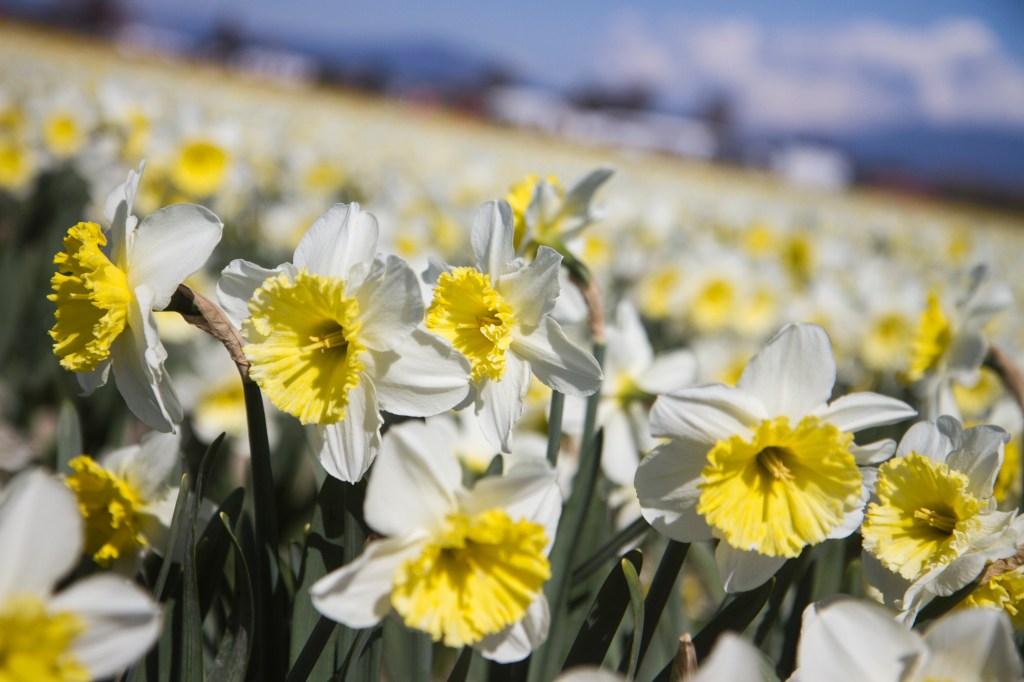
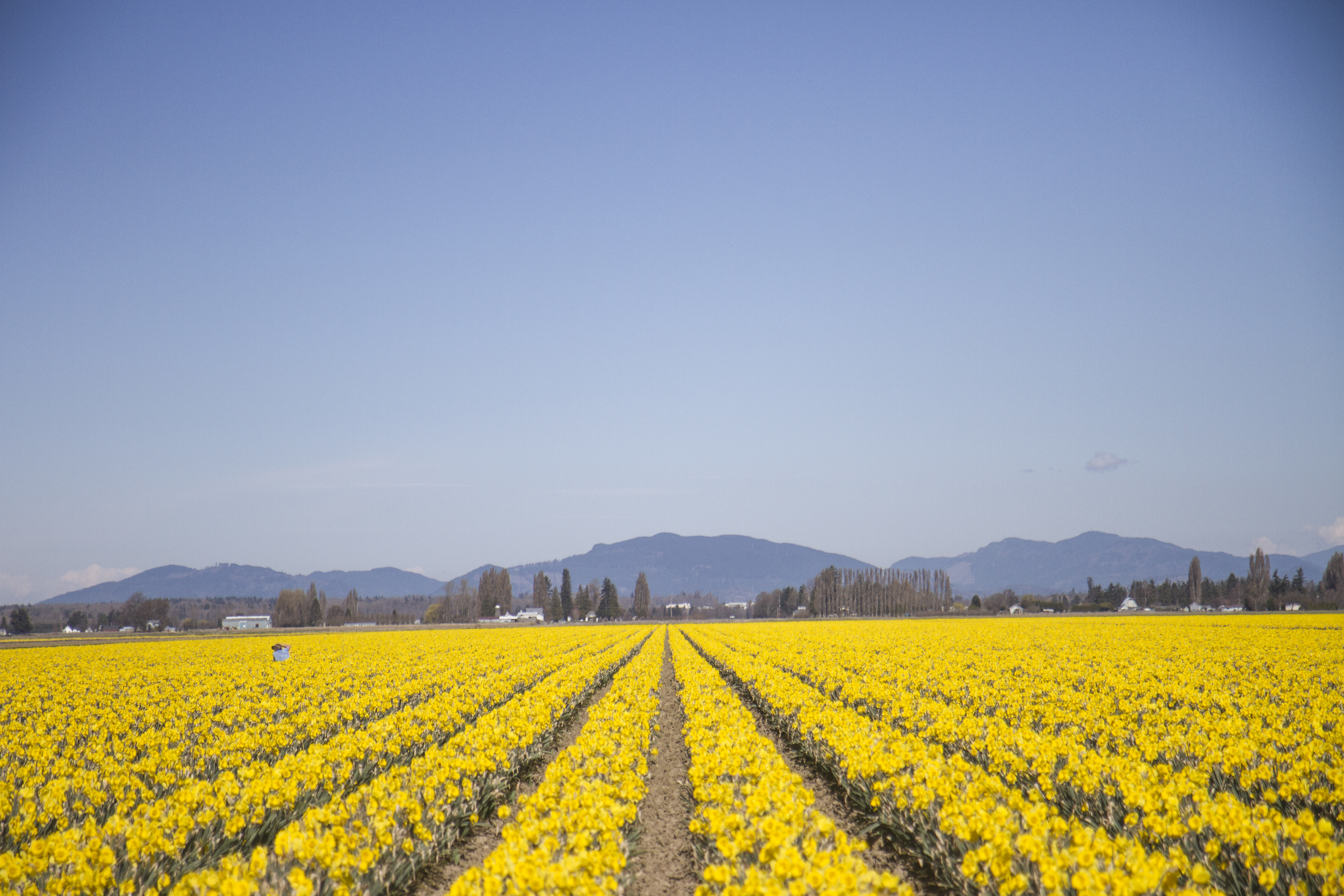
We have already planted a few daffodil bulbs around the yard. I keep looking at the spots where we planted them, imagining them waking up from their dormancy under there. Hopeful that they’ll grow, bloom and bring brightness and color. Waiting, waiting.
We don’t wake up with the sunrise to get out in the garden. It’s still winter, we’re still young and waking up slowly and sweetly is too lovely to give up.
Besides, we know that just as much can be done in the warmth of a setting afternoon sun as in the morning.
In the midst of winter, the earth is still cold but at our seaside home it is damp and soft, making it easy to dig our trowels in, pull up weeds with our bare hands and plant our hopes.
After moving into a new house in Port Townsend last November, Libby and I are spending January planning our flower garden for the summer.
The yard art we decided to keep.
Here are some of the first tasks on a journey which I hope will lead to a blooming paradise this summer:
Figuring out what to do with the yard art left by the home’s previous owner.
Planting what we have brought with us from previous places, like a pot of fever few, a twiggy mint plant and some new birthday hellebores.
Organizing our garden bench
Pulling the weeds, getting rid of the ground cover we hate, mulching and preparing the dirt for planting.
Deciding on our seeds and garden design
Using a sick day to organize seed packets.
I’ve been thinking a lot lately about how planting things is a bit like telling someone you like them: you’re putting something out there that might get dug up and eaten by a bird. It might just stay there, not doing anything at all but eventually molding back into the earth.
But it might grow, slowly reaching out of the depths of the earth into the spring sun, getting taller and taller and finally blooming into something sweet and beautiful.
If we didn’t have winter, would we still feel that immeasurable joy on those first warm, spring days?
First signs of spring.
My job gives me the opportunity to meet and talk with a lot of people. Just last week, I met with a rambunctious crew restoring an old houseboat, talked with a sunny flower farmer, and had lunch with the leader of a local activist group.
Even though other aspects of my job have recently been causing me a lot of (unnecessary) stress, those meetings are what bring me the most joy. I fall in love with someone every day, because humans are interesting, hardworking, creative, smart, and beautiful.
And I feel that not only are these humans fulfilling their purpose by doing whatever it is that they’re doing, but they are also fulfilling their purpose purely by making my day.
Maybe that sounds self-centered. But then I think about how maybe to fulfill my purpose here on this Earth, all I need to do is connect with another human once or twice. Now and then, just have a nice conversation. Share a smile or a thought. Or even a split-second of eye contact. An understanding.
And I like that thought.
A girl and her flowers.
Or maybe my purpose in life is just to lie in the grass on a sunny spring day, soaking in the rays, quietly chatting with a good friend, and observing the early season flowers. I also like this thought.
Beauty is as nourishing as food.
This blog post is sponsored by a crazy amount of optimism and dreaminess.
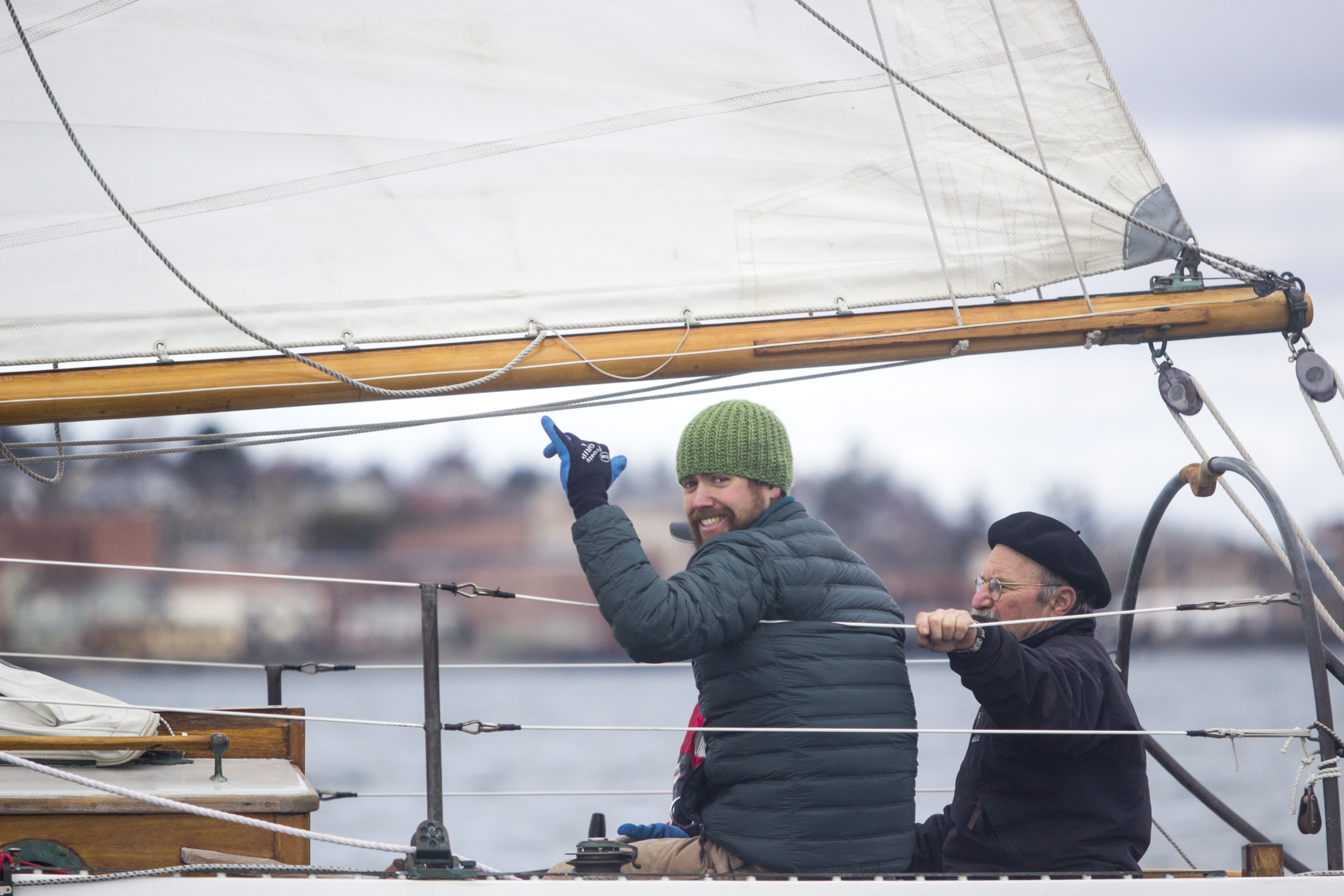
At 9 a.m. Saturday morning, Bertram Levy, a short, mustachioed sailor wearing the beret he is known to wear got in line at the Northwest Maritime Center to sign up for the annual Shipwrights’ Regatta.
In front of him were two novice sailors — young men from the Northwest School of Wooden Boatbuilding, with zero sailing experience besides a love for woodworking and a desire to get out on the water.
Bertram had raced every year since the thing started 28 years ago. Minutes later the veteran sailor and the two newbies were circled up.
“Meet at the end of the D-dock. My boat is called ‘Able,’” Bertram said.
Bertram and Joel
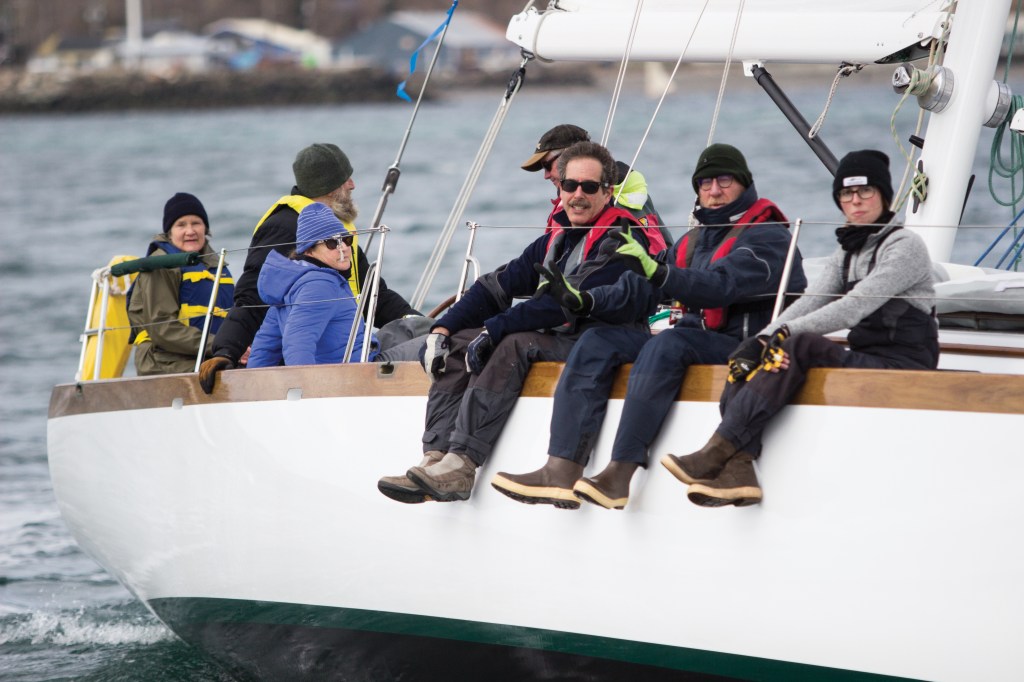
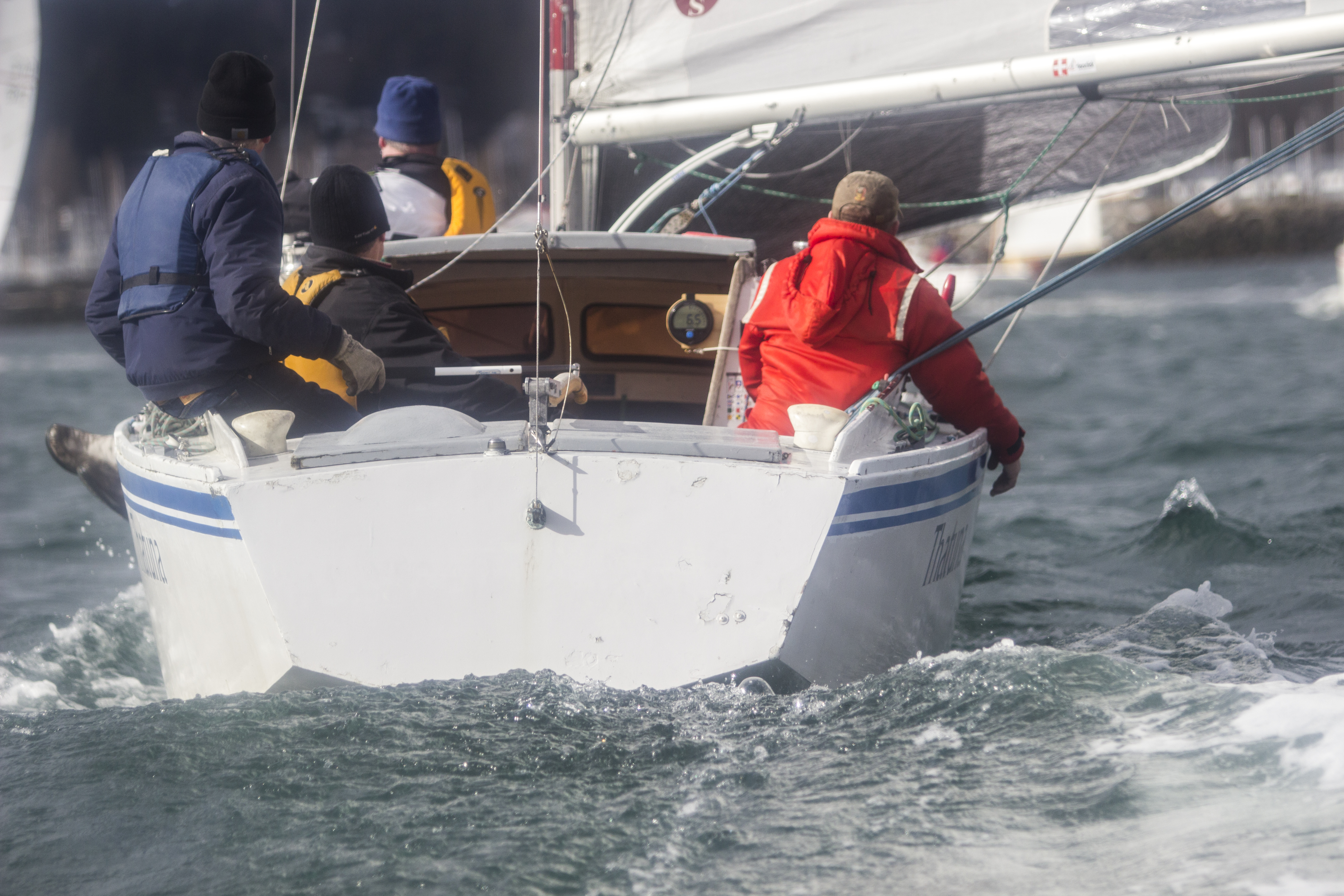
Anyone who shows up to the Skipper’s meeting gets on a boat in the Port Townsend Shipwrights’ Regatta.
This makes for some interesting crews. Old friends, strangers about to become friends.
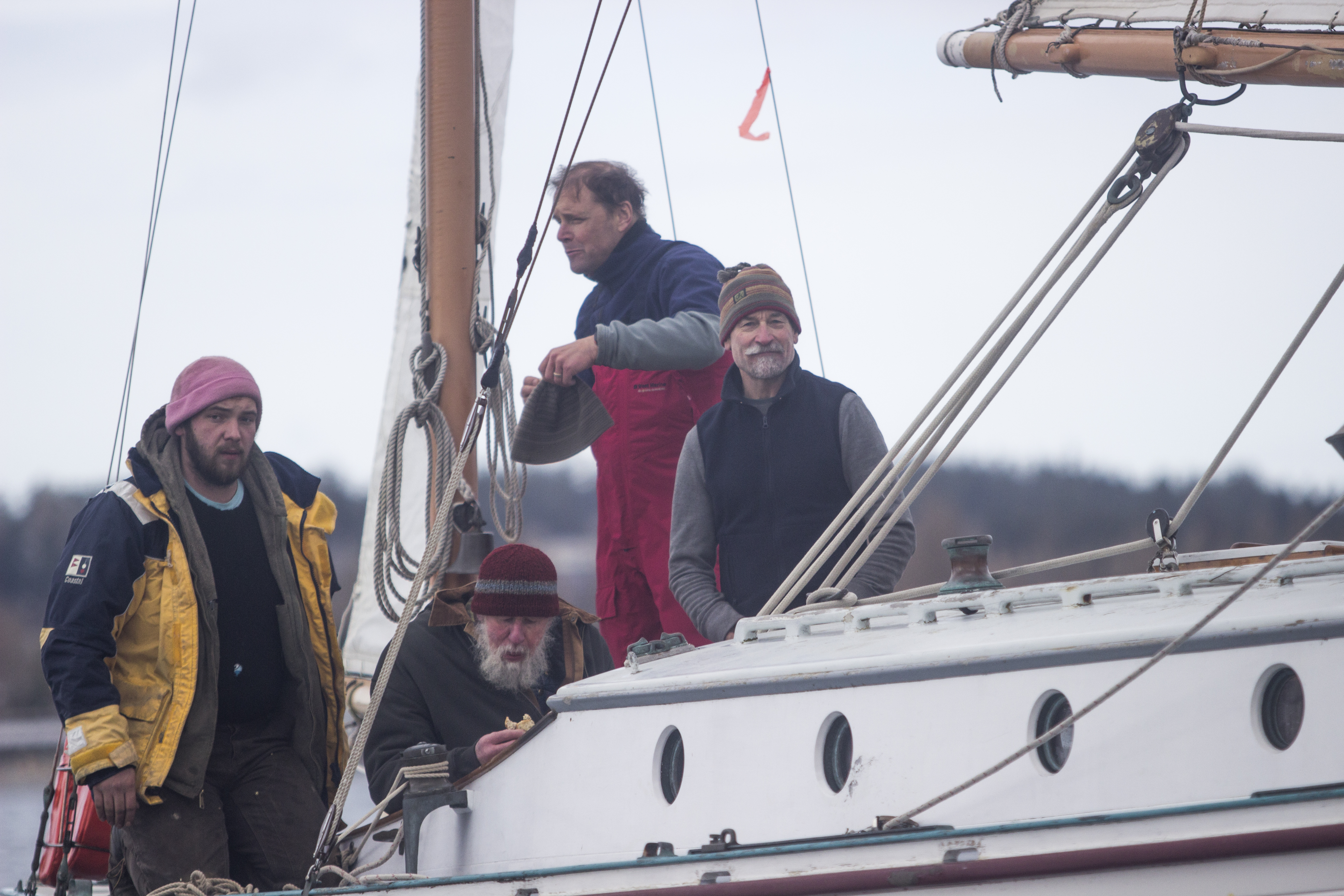
I nicknamed this crew, “Pink Hat & Old-timer Eating Sandwich”
But the February race isn’t about winning (for some). It’s more of a race for the locals to beat the person who beat them last year.
It’s also a chance to show off your handiwork. Many of the boats in the race were wooden, the sails and rigging done by local artisans.
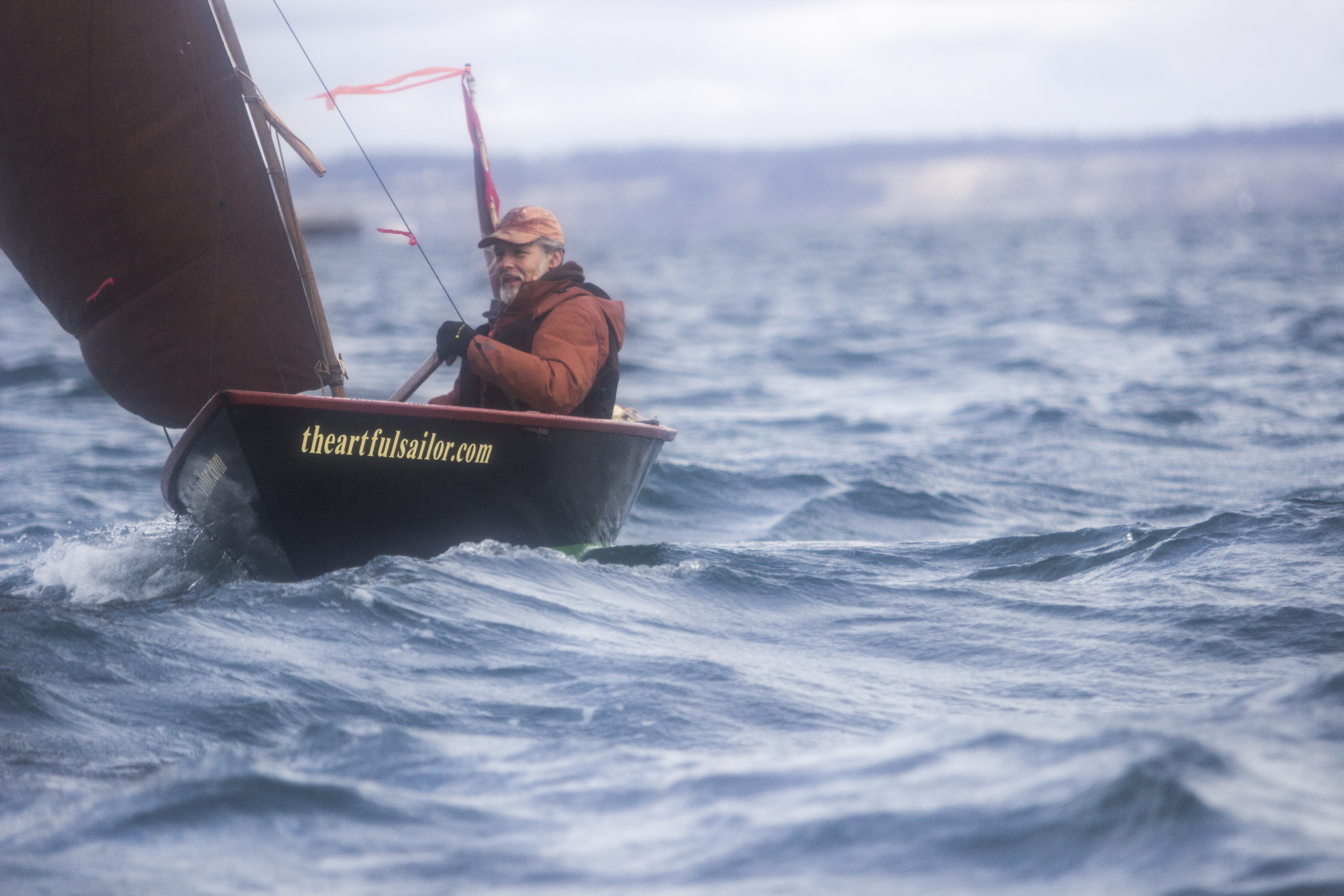
Emiliano, of The Artful Sailor. At this point I had water on my lens.
On the “Able,” Bertram and his two novices lined up for the race. As the starting horn rang out, the southeast wind blew Bertram’s beret into the water.
No problem. He reached into the sea, and fished it out again.
Maybe next time I’ll join a crew.
(Some of these photos and the story of the race winners were published in the Port Townsend Leader.)
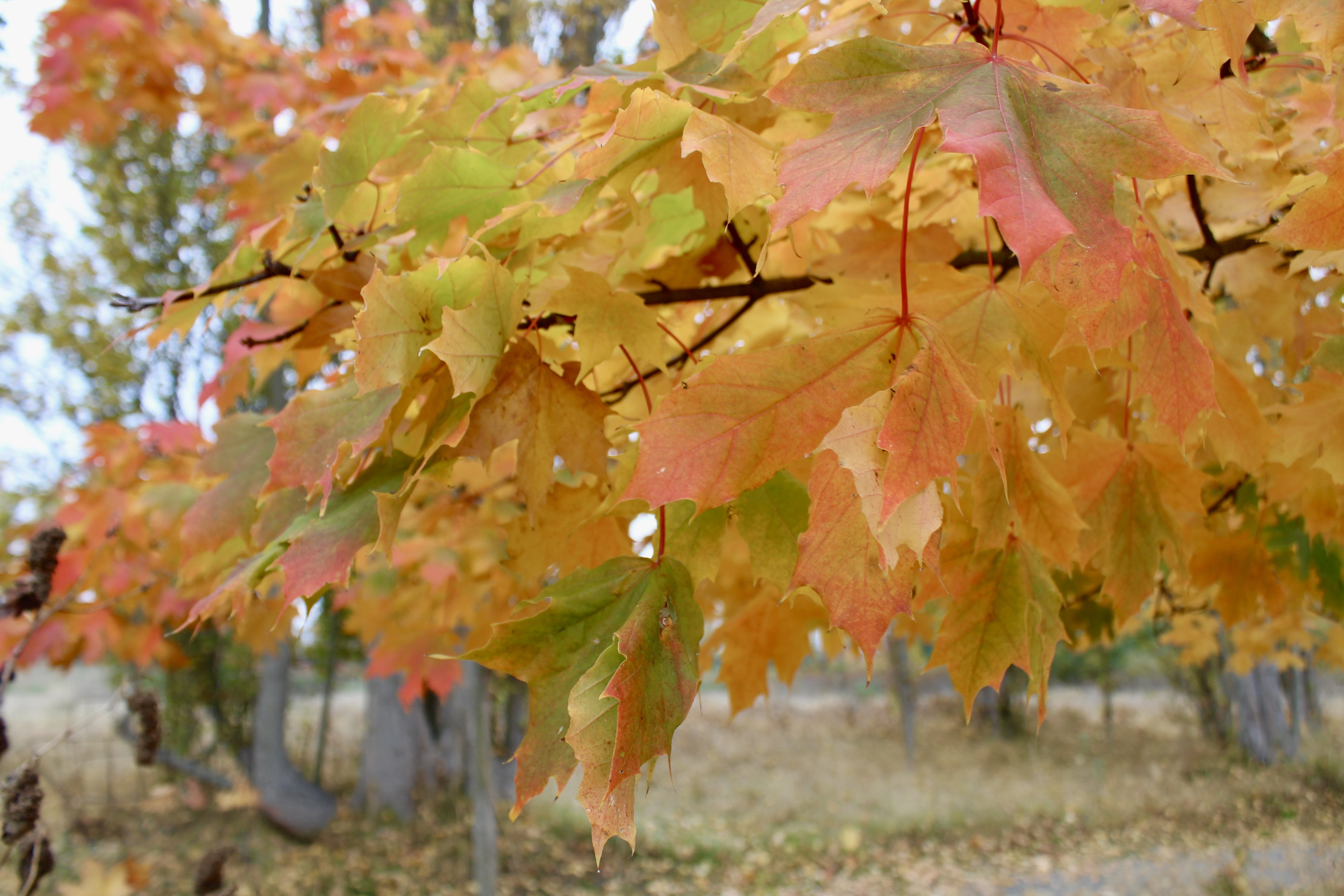
These late night thoughts are sponsored by the colors of autumn
Here’s something I think about a lot: I’m 23 years old. If nothing crazy happens, I might live for another 70 years. What will those 70 years look like?
Smoke-filled skies? Aliens? Lifespans shortening? The rich getting even richer? The poor getting even poorer? The orcas living? Or dying? It’s hard not to imagine the worst. Especially when some things are the worst.
But then… last Sunday. I found the best. In the form of helpers. Tree-planters. Earth-carers.
Otherwise known as a group of Admiralty Audubon members. Some well over the age of 50, and still pulling Scotch broom out of the earth like it was no problem. Bending down, getting dirty, digging holes and planting roses, pines and firs. All so that my fellow young people and I can breathe a little easier in the next 70 years.
At Kah Tai park, which I accidentally spelled as “Quai Tai park” in the paper last week. To much ridicule.
I asked if I could take pictures for the paper.
“You working on a Sunday?” They asked. “Lucky for you, we’ve got an extra shovel!”
She knew it was highly toxic. She picked it up anyway.
“Come over here, get a picture of this Monterey Cypress, it’s going to be huge.”
“Look at this Amanita mushroom, isn’t it beautiful?”
…
A lot of shade gets thrown on baby boomers by my generation. Rightly so, in some respects (hello, housing crisis and 2008 financial recession).
However, I recently moved to the county with the oldest population in Washington State and I keep meeting helpers. Nearly every day, whether in the form of tree planters, green crab finders, creek restorers.
Over and over I also hear similar advice: there are people out there working hard, with new technology, new research, and new energy to help the earth. Instead of getting bogged down in nightmares about the Great Pacific Garbage patch, look at what’s happening.
And go plant a tree. They eat carbon dioxide for breakfast.
By now we’ve all heard of it: that abstract giant mass of garbage, three times the size of France that’s floating out in the middle of the Pacific Ocean. The Garbage Island, or the Great Pacific Garbage Patch. We’re worried about it, collectively, especially when we think of all those cute otters and seals choking on straws and plastic bags.
But out here on the West Coast, especially up north, it’s hard to imagine that much garbage really being in the ocean. Not when the beaches are so beautifully picturesque… so empty and large.
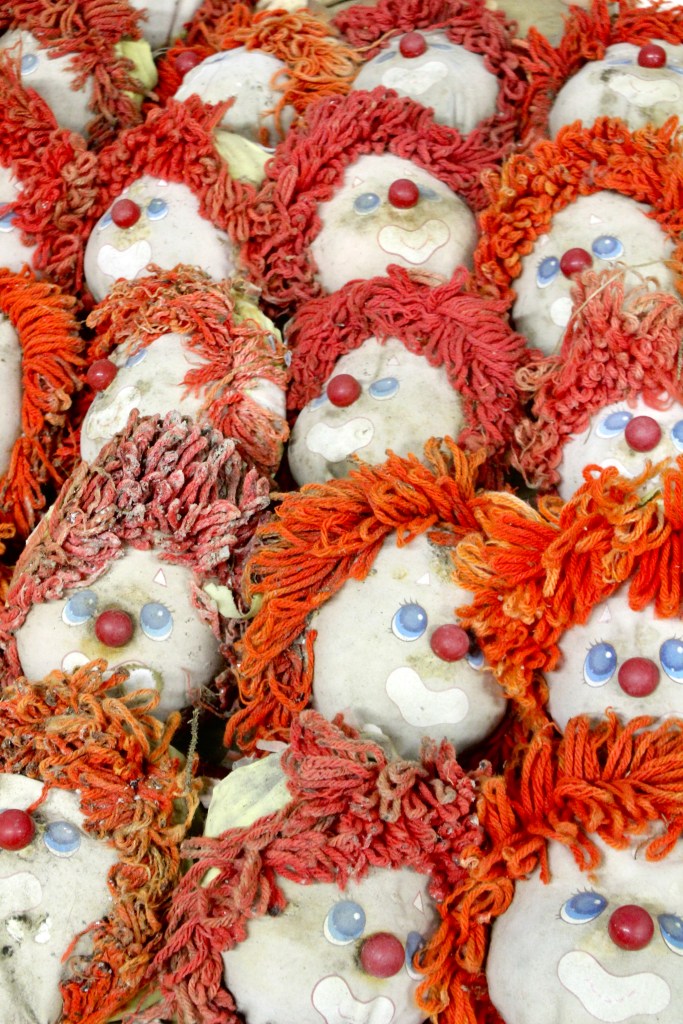
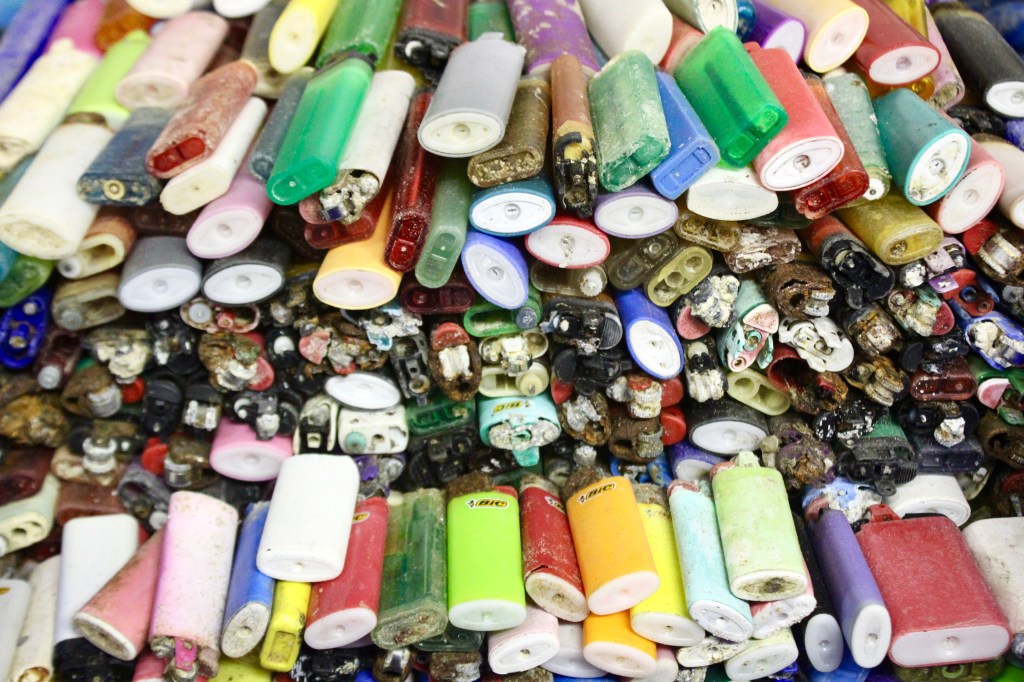
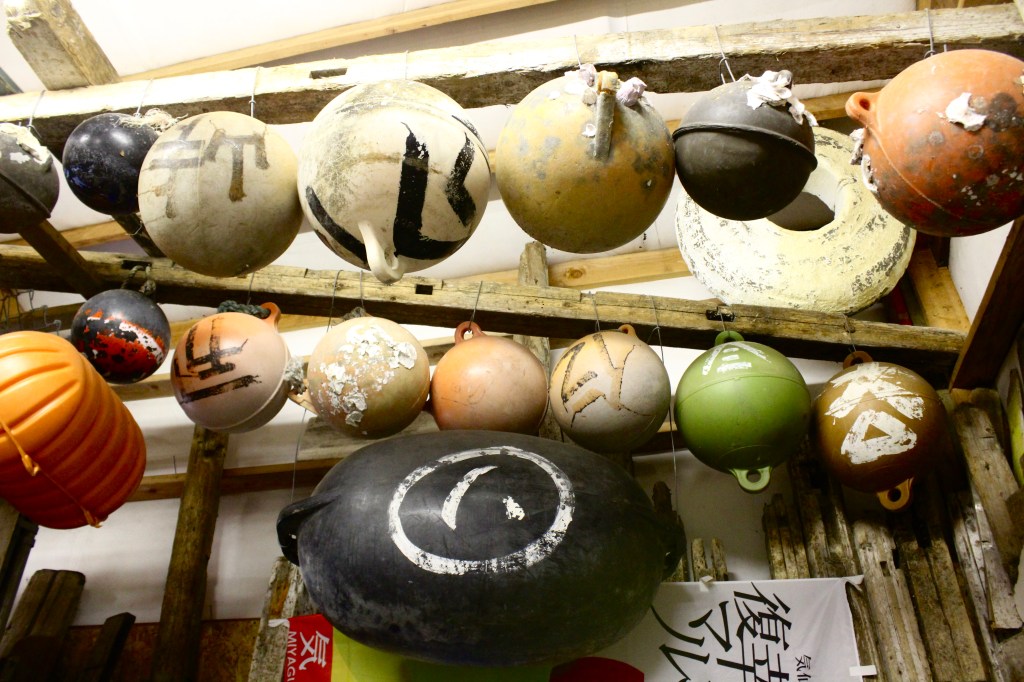
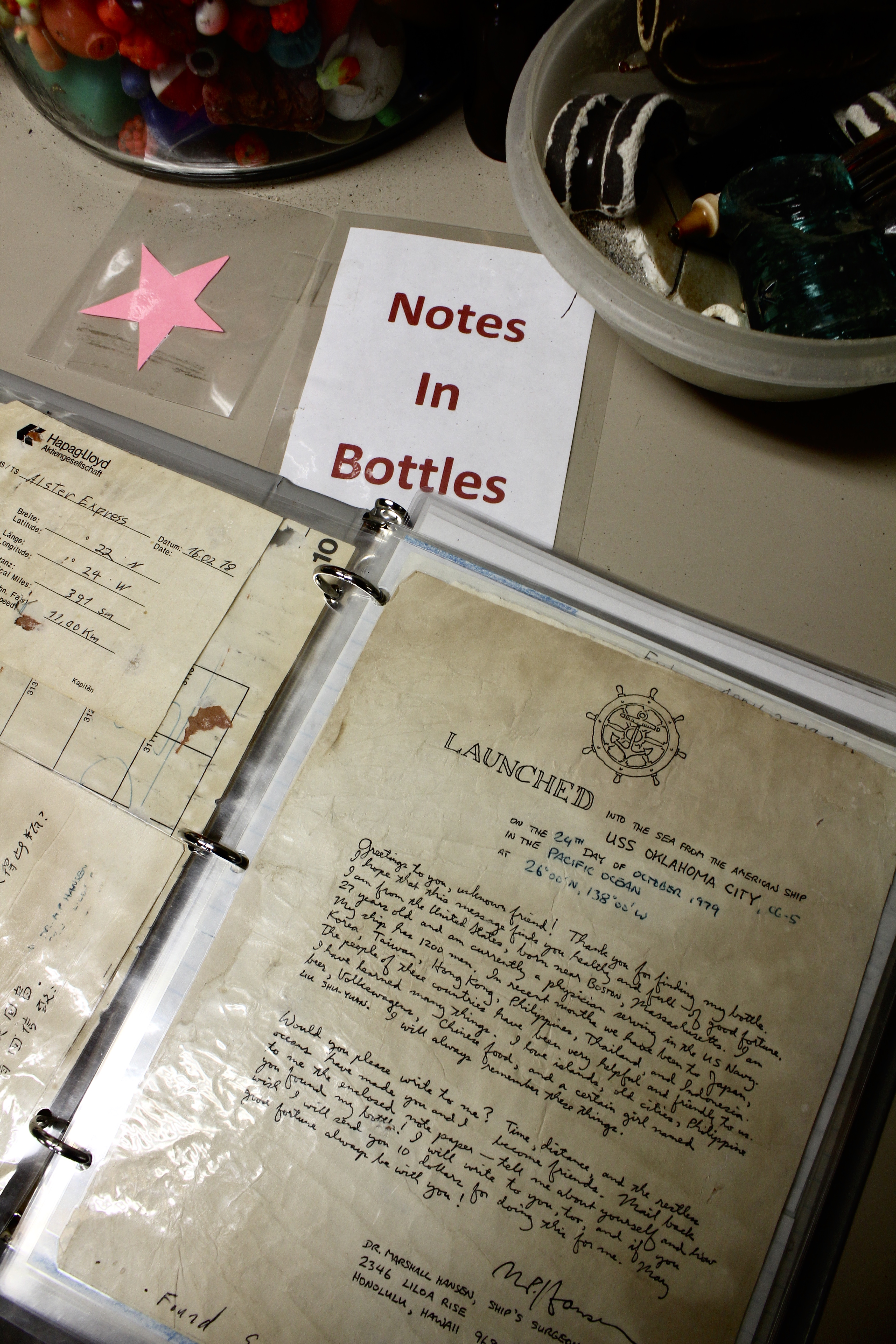
There is one man who probably has no issues imagining all of the garbage floating out there in the ocean. John Anderson lives in Forks, Washington, and no he is not a vampire. He’s a beachcomber. Collecting things from the beach his whole life, little by little, finding messages in bottles, fossils, doll heads, Nikes, and thousands upon thousands of buoys, John has put all of his finds into a treasure-filled museum in his backyard just off the highway in Forks.
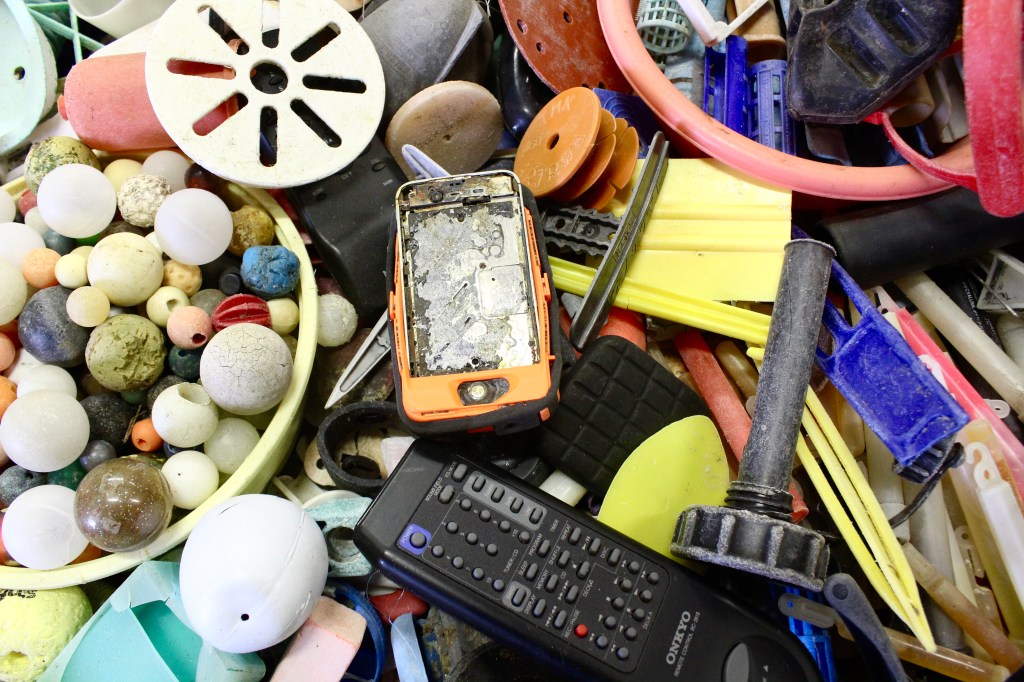
If you were to ask John, what is in the ocean exactly? He would probably answer: a little bit of everything. You never know what you might find.
Yellyfish, one of John’s artistic creations.
Pay the small $5 entry fee (cash only) for John’s museum and he welcomes you into a world of wonders. Look up and down, he says, and even though he’s a quiet person, he has stories to tell for each item.
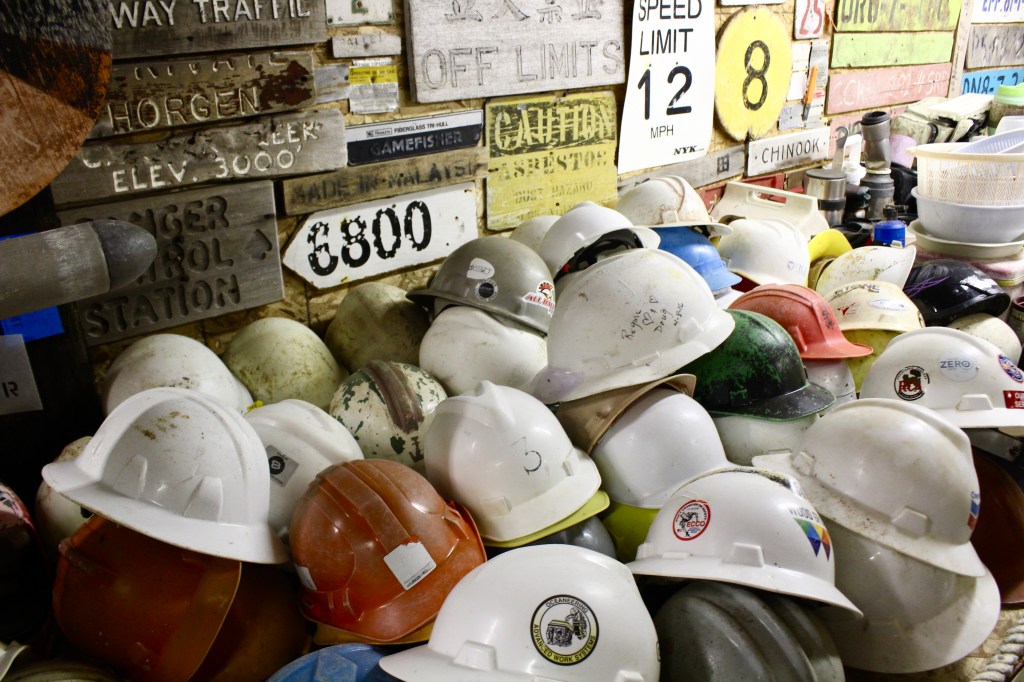
Raggedy Ann doll heads from a 1970’s container spill.90’s Nikes from a container spill.Lighters, collected by John’s son.
John beachcombs on Pacific Northwest beaches, as well as occasionally taking trips south to the beaches of Texas and Florida. Everything in his museum has been found on the beach, and the variety of things, from whale bones, to mammoth teeth, to hard hats and medical supplies will surprise and captivate you. It’s like taking a dive into the truth of a capitalist world: too much stuff, lost at sea, forgotten forever… until found by John.
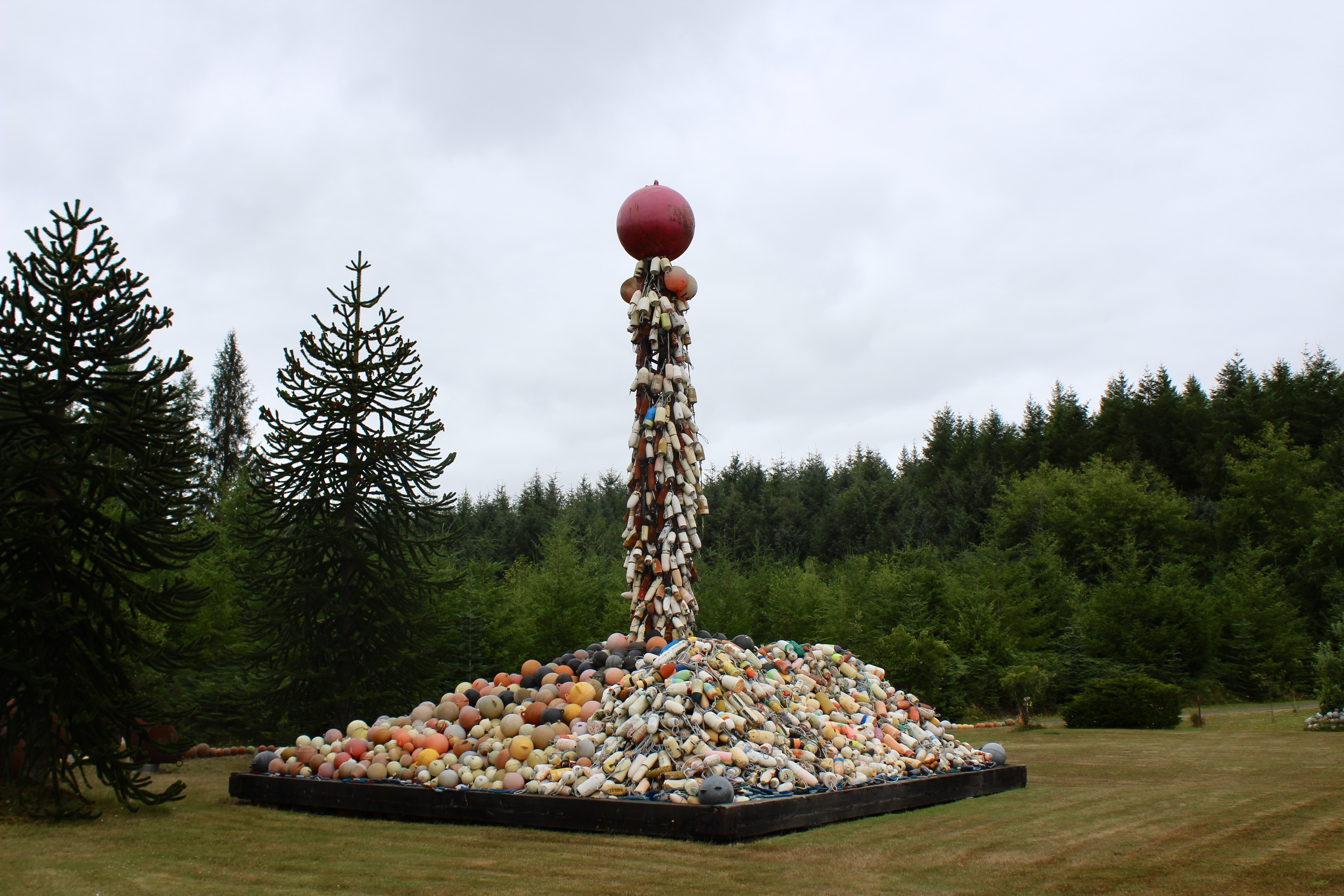
Remnants from the 2011 Fukushima tsunami.Don’t drop your phone in the water.Hard hats and signs. Some of the treasures he’s found have sentimental value.Sea beans… seeds from the Amazon Rain Forest that float up to the Texas coast.John in the background, with a tiki from 1940’s Hawaii.John in his earlier beach combing days.Trying to find the museum? Just look for the enormous buoy statue in John’s front yard.
Whether you’re worried about the Great Pacific Garbage Patch or not, whether you use plastic straws or not… the next time you’re in Forks, skip the Twilight walking tour and check out John’s Beachcombing Museum. In my opinion, it’s a necessity.
John’s Beachcombing Museum
143 Andersonville Avenue, Forks, WA 98331
Open daily, 10am-5pm.
For spring break I brought two of my friends from college to the wild wild west known as Coupeville, WA. They’d never been to the PNW before and so got to experience some special Washington things, such as rain.
Could be in Grey’s Anatomy.
Silly kayakers being chased by harbor seals.
If you’ve never been to Coupeville before and want to know what it’s like you’re in luck because I’m working on a short story about it.
Here’s part one:
Un-William and the Gods of the Deep
(This is a fiction story based off some true facts. It is also a rough draft, so suggestions and critiques are welcome as always.)
William, owner of the famous Local Grown Cafe on the Coupeville wharf, retired and sold Local Grown to Un-William. I think Un-William’s name is Dave.
Ever since William’s departure Local Grown has lost some of its flavor. I don’t mean literal flavor, because you can still get a lavender latte and purchase fresh mussels on Friday’s. I mean its local flavor.
First of all, Un-William is friendlier than William and that turns people off. He is faster at making drinks than William, which is confusing for people. He doesn’t have a dog lying in the middle of the cafe, so people no longer have to watch where they walk and now they don’t really know what to do with their feet. He also doesn’t have the limp that William had, which means he has less mystère, which makes the whole experience a bit too average.
The people of Coupeville aren’t that accustomed to change.
There’s also the flies. William must not have shared his pest killing secrets with Un-William, because the flies circling the dessert case and sucking up the leftover drops of syrup are a major issue.
The writing group still meets there on Thursdays. Tourists still wander in, mostly because there’s not really anything else to do–why do they come here anyway? This town is not interesting, touristically speaking. But there’s something off about it, some sort of bad juju to the place now that Un-William is the owner. Like when a hermit crab wears the discarded shell of an older hermit crab friend. Or like when you walk around your quiet home, wrapped up in your dead father’s sweater. Cozy, but also a bit creepy.
Coupeville isn’t really a magical place, although it was the set for the movie “Practical Magic” with Sandra Bullock and Nicole Kidman. But it is a place where nature still has the upper hand, and there’s something cruel about it. Beautiful and merciless, like the cold sea… or a forest full of stinging nettles.
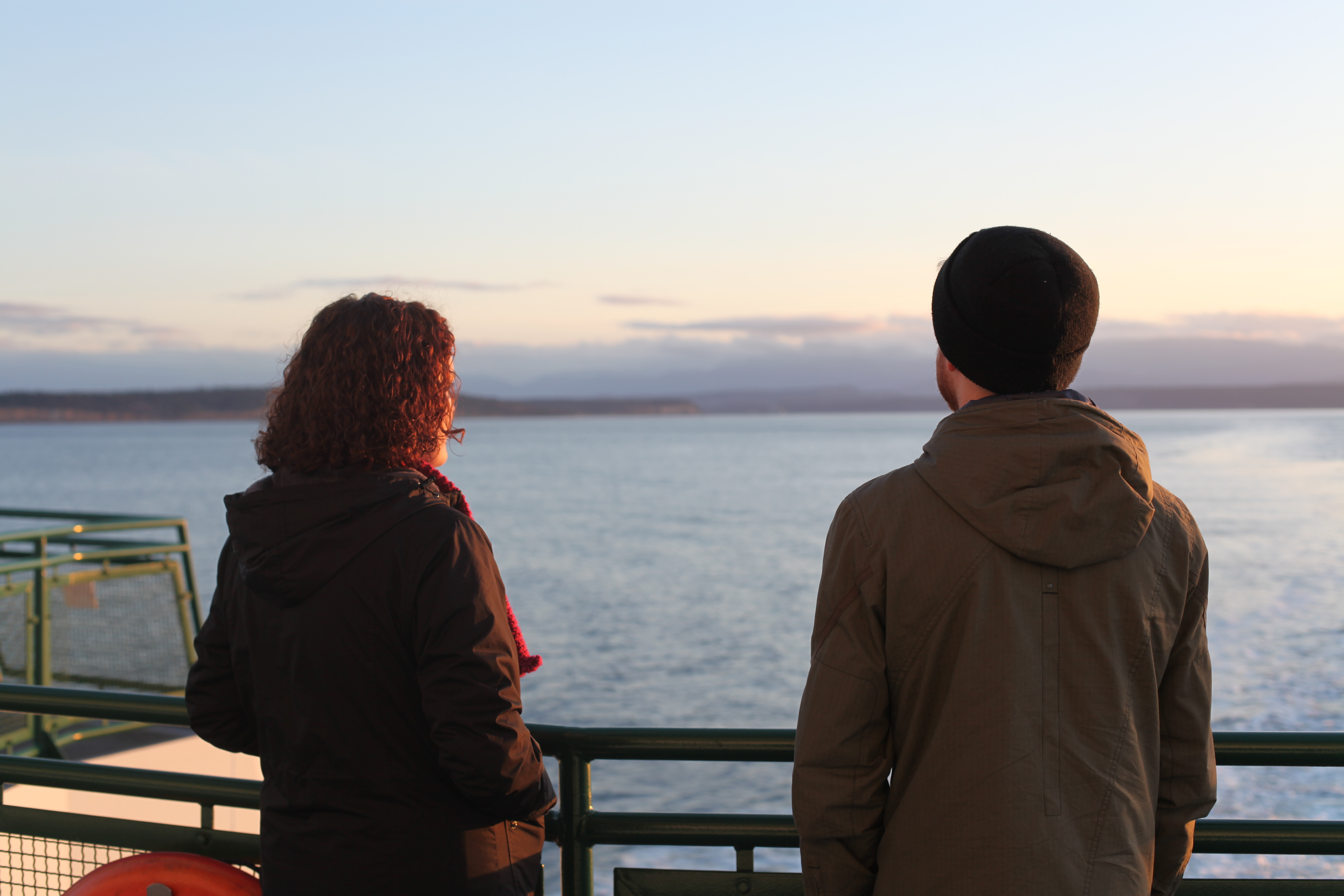
My cousin Evan (a vrai islander) and I on the Port Townsend ferry. Photo Credit: Judy Gu
Un-William–Dave–knows what he has to do to get the good juju back to the cafe on the wharf.
Everyone agrees that Local Grown is a dumb name. Maybe a good name for a food co-op or a farm store, but not a coffee shop. Even a coffee shop that also sells mussels and local wines. Dave decides on “The Salty Mug.” It’s cute and likeable. Tourists will now know that it is a coffee shop and not a random fishing store for boaters who dock nearby.
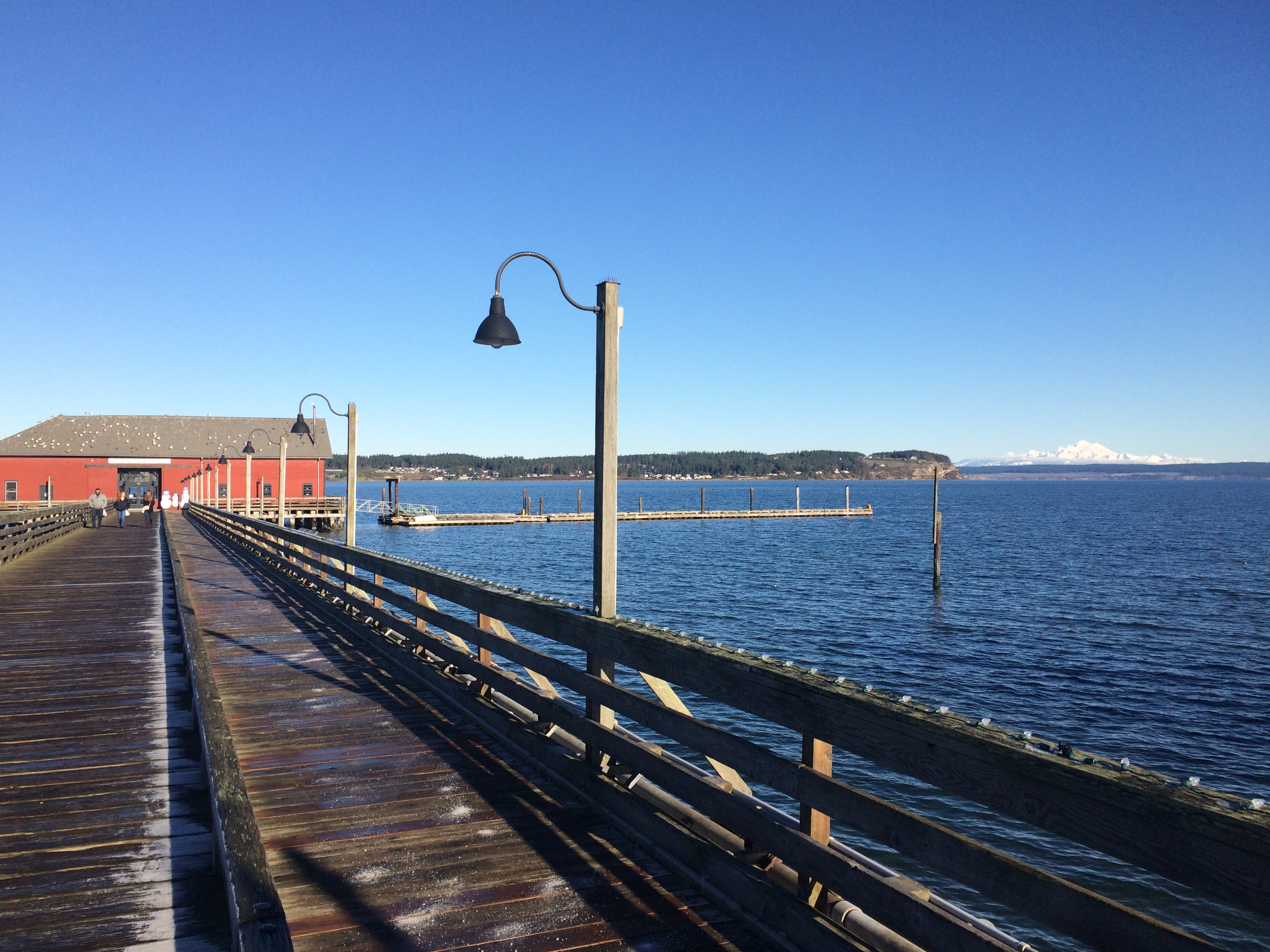
Everyone also agrees that the cafe is not a boat. However, it is kind of like a boat because it’s on the very edge of the wharf, sticking way out into the water like a giant red barn on stilts. When the tide’s in and the wind is blowing it moves side to side with the waves, causing customers that are light of heart to get a bit worried and take their coffee to go. It’s not a boat, but it still should follow the rules of the water, and Dave was a sailor for years before he retired and bought this coffee shop. So he confers with the harbormaster and they decide that it would be best for the good of the cafe and the good of the wharf if they do a renaming ceremony.
Dave has never renamed a boat before because he always loved the name that his sweet sailboat came with: Orcinus, named after the killer whale. So he had to do a bit of research at the local library in order to get down the details of renaming. Especially since this was a delicate situation, given that it was the renaming of a coffee shop, not a boat.
Luckily the library had a whole section on it.
Actually luck has nothing to do with it. Because having an unlucky vessel is not about luck at all; it’s about the wrath of the Gods of the Deep. Poseidon, for example, records the name of every vessel into the Ledger of the Deep and knows them personally. To change the name of a vessel unceremoniously brings about his wrath, therefore the resulting storms that trash the unnamed vessel are not due to bad luck at all, but the results of the laziness and ignorance of the Gods of the Deep. Poseidon is a control freak.
Dave is not lazy nor is he ignorant of the Gods of the Deep, and so he photocopied the three-step renaming process out of an old book and began his preparations.
The three steps are:
Removal of Previous Identity
De-naming Ceremony
Re-naming Ceremony
Sounds simple, right?
No, it is actually very complicated. And missing a step could be disastrous.
Dave held the ceremony on a rainy Saturday morning. The people of Coupeville are early risers and prefer when there’s a bit of a drizzle.
First he purged the previous identity. This was easy and just included taking all the signs down from inside and outside that said “Local Grown.” It was imperative that the new name not enter the premises until after the ceremony, so Dave had yet to even speak it.
Then, on the section of the wharf outside the coffee shop, with the small crowd of Coupevillians around him (and a few confused tourists as well) Dave wrote the name “Local Grown” on a piece of driftwood and held it out, along with a bottle of champagne. Reading from his photocopy, he called out to the Ruler of the Deep for the de-naming part of the ceremony:
“Oh mighty and great ruler of the seas and oceans, to whom all ships and we who venture upon your vast domain are required to pay homage, implore you in your graciousness to expunge for all time from your records and recollection the name “Local Grown” which has ceased to be an entity in your kingdom. As proof thereof, we submit this ingot bearing her name to be corrupted through your powers and forever be purged from the sea.”
He dropped the driftwood off the wharf and into the sea.
“In grateful acknowledgment of your munificence and dispensation, we offer these libations to your majesty and your court.”
He opened the bottle of champagne with a pop and poured it all into the ocean. The Coupevillians clapped politely as Dave went to get another bottle of champagne. He flipped over the crinkly page of his photocopy.
“Oh mighty and great ruler of the seas and oceans,” he called out, the wind whistling slightly.
“To whom all ships and we who venture upon your vast domain are required to pay homage, implore you in your graciousness to take unto your records and recollection this worthy vessel–in the form of a coffee shop–hereafter and for all time known as The Salty Mug, guarding her with your mighty arm and trident and ensuring her of safe and rapid passage throughout her journeys within your realm,” the crowd cheered a bit here.
Photo Credit: Judy Gu
“In appreciation of your munificence, dispensation and in honor of your greatness, we offer these libations to your majesty and your court.”
After finishing this speech, he walked to the West side of the wharf and poured the second bottle of champagne into the ocean while walking to the East side of the wharf.
The crowd clapped and cheered a little. Then Dave got another bottle of champagne and a glass and called out to the mighty rulers of the winds, Great Boreas, Zephyrus, Eurus, and Notus, flinging a glass of champagne towards the North, West, East, and South respectively.
As soon as Dave had finished calling out to Aeolus, guardian of all the winds and all that blows before them, he turned to the crowd and gave a small nod. Everyone clapped rather politely as he started distributing glasses of champagne (from the never ending supply) and the Shifty Sailors (the local Coupeville group of old men who sing sea shanties while wearing striped shirts) began to sing heartily.
Suddenly, not three seconds into the Shifty’s song, there was a deep rumbling that came from underneath the wharf. The wooden structure trembled. The crowd made that noise that crowds make when they’re surprised, then quieted as the wind began to blow a bit harder, the rain suddenly large and fast droplets instead of the mist it was before.
Dave’s white hair was plastered to the top of his head, his socks were soaked through as sandals quickly filled with water. As the crowd drew closer together, for warmth maybe or security, he turned away with his glass of champagne and looked out into the cove, as if searching for something.
The rumbling grew louder. Dave flipped through his photocopies frantically, wondering if he missed something, but they were now streaked with water as the sea began to slosh up against the sides of the wharf.
The rumbling had become painfully loud when a voice from the crowd rose up, “Look!”















 If you were to ask John, what is in the ocean exactly? He would probably answer: a little bit of everything. You never know what you might find.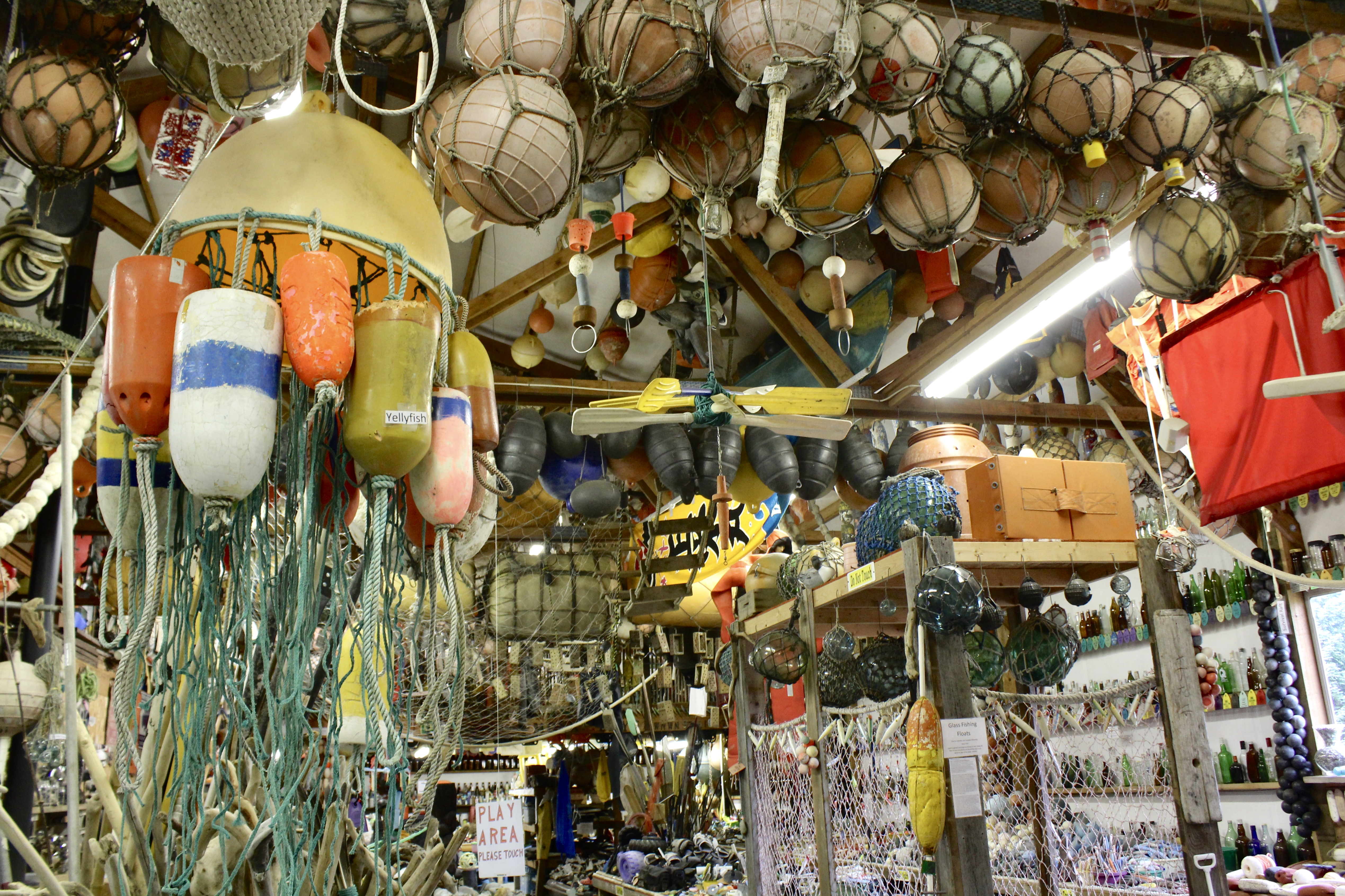






 Lily Haight