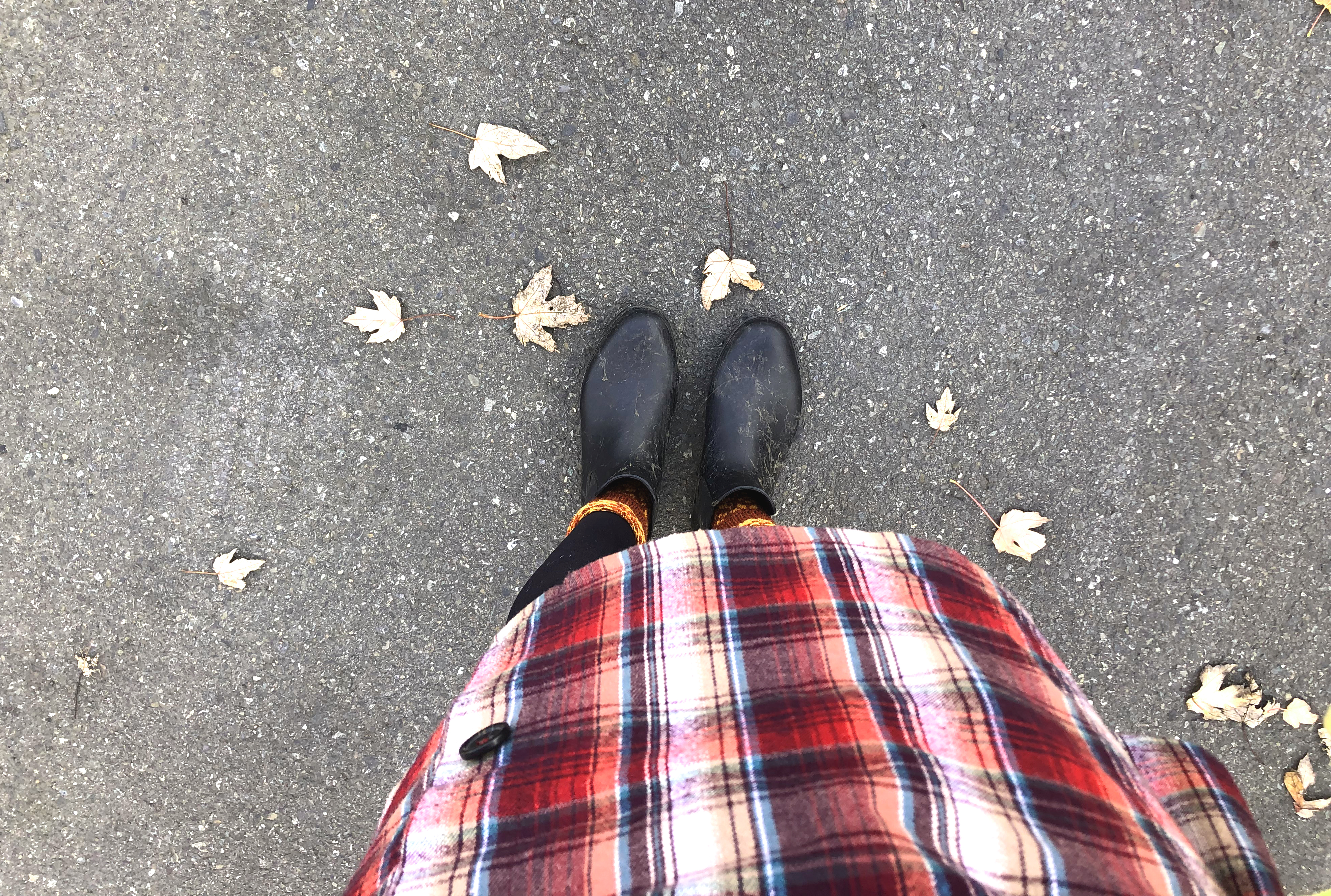
Leaves fall, a breeze blows.
The transition to Autumn
is easy this year.
One reason for that
is this Victorian town:
a beauty in fall.
I find most solace
from the warmth of another;
close on those cold days.

Leaves fall, a breeze blows.
The transition to Autumn
is easy this year.
One reason for that
is this Victorian town:
a beauty in fall.
I find most solace
from the warmth of another;
close on those cold days.
It’s a dilemma: wanting to ride a motorcycle to work, but also wanting to wear a sundress because it has finally gone above 65 degrees and I can reasonably have bare legs in that weather (kind of).
My solution: leggings under dress. Jacket on top. Helmet smashing my curls, but that’s ok. Dress flying in the wind on the way to work.
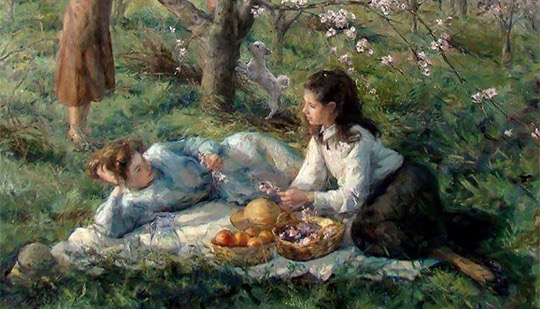
There’s nothing particularly pastoral about this imagery. In fact, there’s nothing particularly pastoral about our world these days. But riding around town reminds me that in my little corner—this tiny edge of our country known as the Quimper Peninsula—the pastoral (the fields, the shepherdess and her sheep, the smell of hay in the warm sun) is the dream. The idealized rural life exists here and in the summer I get to partake: lying on a picnic blanket amidst fields of lavender, petting goats and watching teenage turkeys waddle around a farm. Picking flowers from the county right-of-way and delivering them to someone special, or having them be brought to me in what is now (only in my mind) a Floral Delivery Competition.
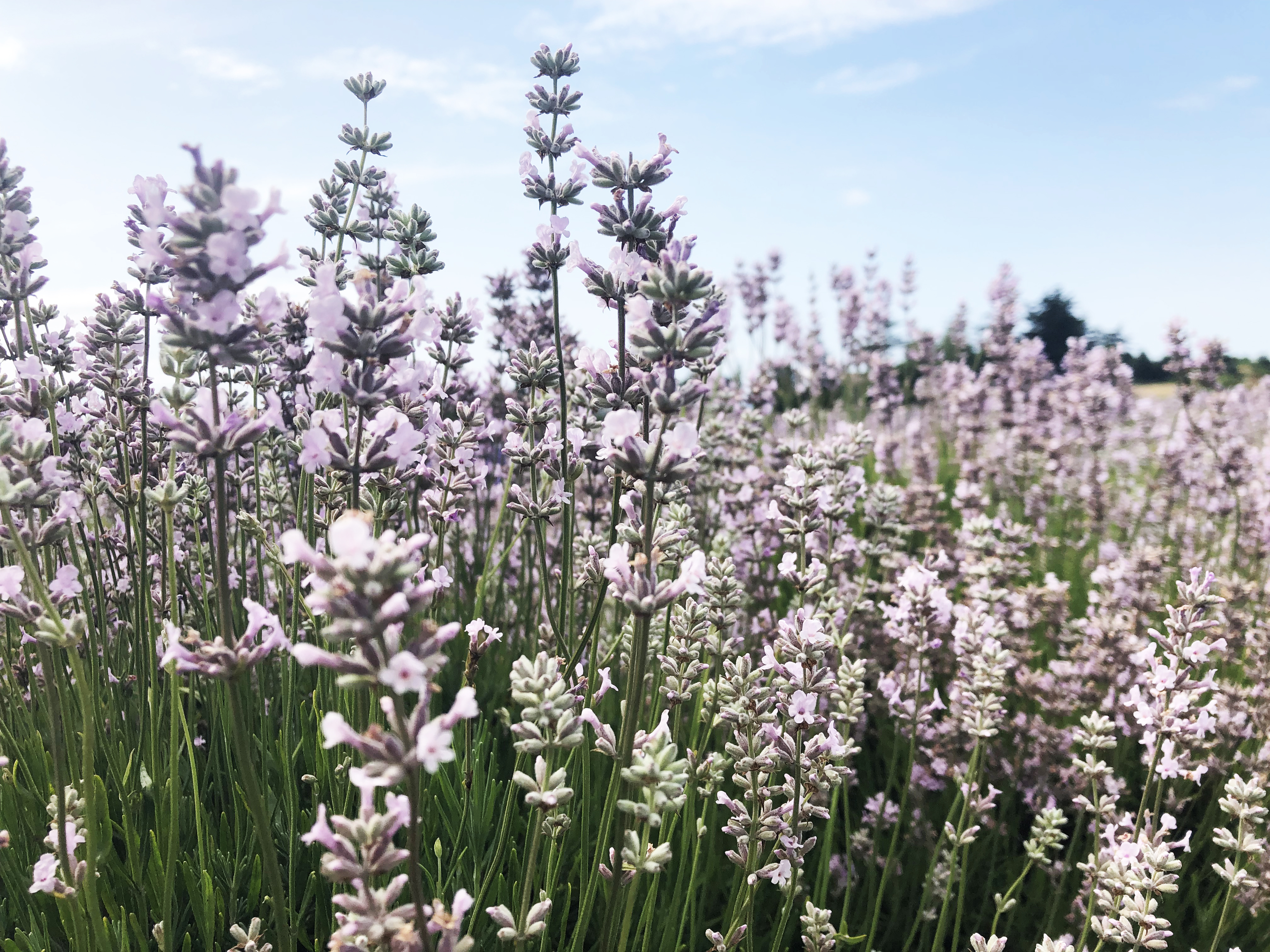
Lying there in the sun I wonder, what is happiness? Is this it? Picking one ripe raspberry and giving it to someone to enjoy? Or is it knowing that out there in the world, someone is writing about you in a three-page letter with perfect handwriting?
I’ve always felt two things about happiness: one is that it doesn’t exist and is something that people strive for, but can never really obtain. The other is that it’s eating a pink cookie.
My former professor (This is Bragging and Name Dropping) Zadie Smith has an excellent essay on the difference between joy and pleasure, parts of which I have always identified with:
“All day long I can look forward to a popsicle. The persistent anxiety that fills the rest of my life is calmed for as long as I have the flavor of something good in my mouth. And though it’s true that when the flavor is finished the anxiety returns, we do not have so many reliable sources of pleasure in this life as to turn our nose up at one that is so readily available, especially here in America. A pineapple popsicle. Even the great anxiety of writing can be stilled for the eight minutes it takes to eat a pineapple popsicle.”
For me, replace “pineapple popsicle” with “pink cookie.”
There is anxiety in happiness (joy, pleasure, whatever you want to call it). For example, does the fact that I am happy right now mean that I will be sad later? Should that affect my current state of happiness? When summer ends, when my idealization of the pastoral scene crumbles and is revealed to be a saturated field of mud and a smelly barn, will I suddenly be lost?

Zadie writes it beautifully:
“Occasionally the child, too, is a pleasure, though mostly she is a joy, which means in fact she gives us not much pleasure at all, but rather that strange admixture of terror, pain, and delight that I have come to recognize as joy, and now must find some way to live with daily. This is a new problem. Until quite recently I had known joy only five times in my life, perhaps six, and each time tried to forget it soon after it happened, out of the fear that the memory of it would dement and destroy everything else.”
My fear is that I have an addiction to summer. The memory of it sometimes destroys the rest of the year, although it does spurn me on to keep living until the next summer. But living just for summer is like living just for the weekend. What about the other five days? I could just move to a tropical location. Or maybe I am actually just missing out on the beauties of fall and winter, which I have recently been told are just as good in their own ways.
July 31 approaches. I am happily riding my motorcycle around town in a dress. I hate that the days get shorter from now on. I want to pick all the flowers off of all the right-of-ways in the entire county. But I am also going to make a small pact with myself, to continue to find beauty, joy and the pastoral perfection in the Dark Days of winter.
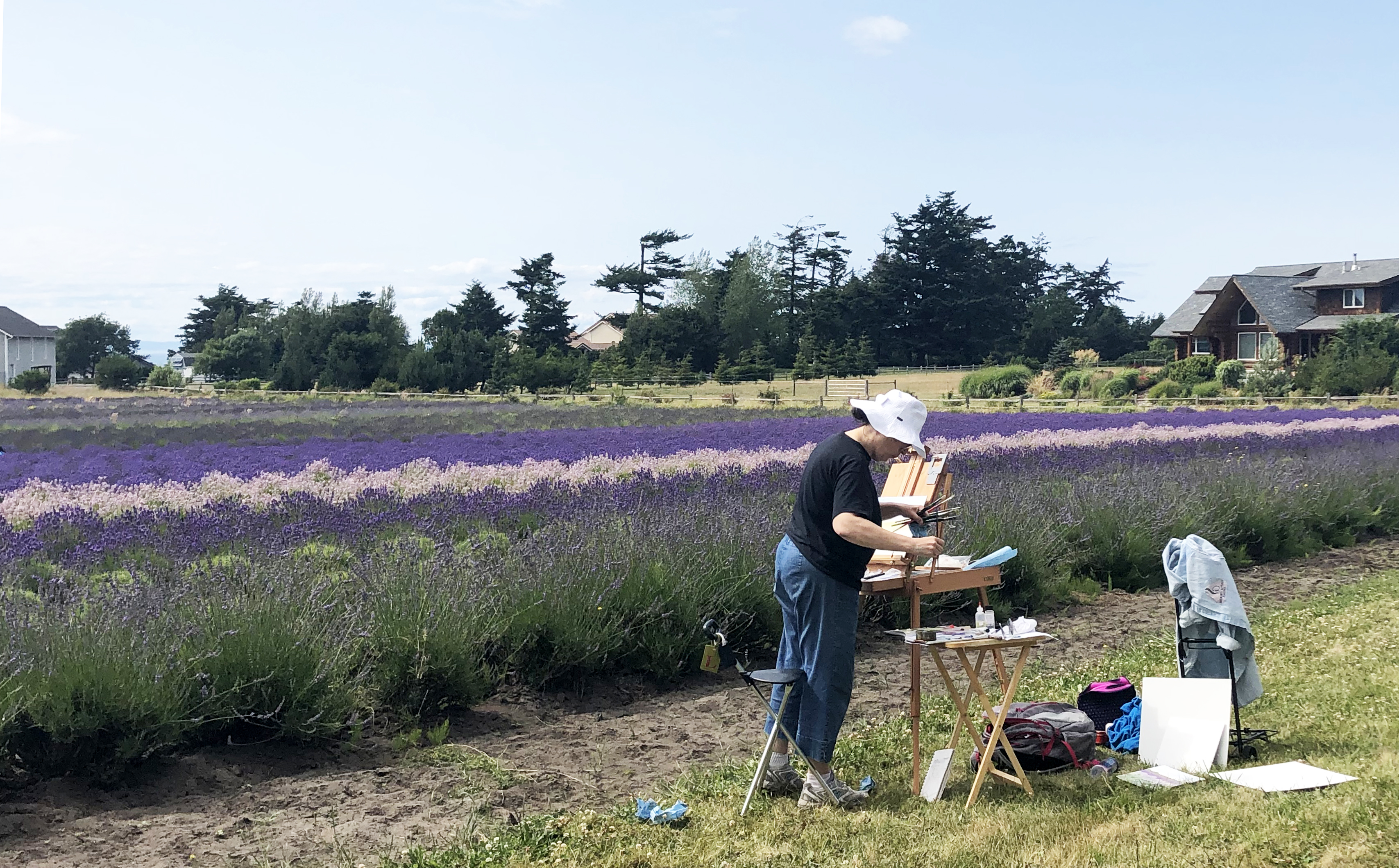
Keats’ poem “Ode to a Nightingale,” is about death for sure. But let me take some of it out of context and fit it to the mood that I am in at this particular moment, where “being too happy in thine happiness” is running through my head on repeat.
‘Tis not through envy of thy happy lot,
But being too happy in thine happiness,—
That thou, light-winged Dryad of the trees
In some melodious plot
Of beechen green, and shadows numberless,
Singest of summer in full-throated ease.

xoLily
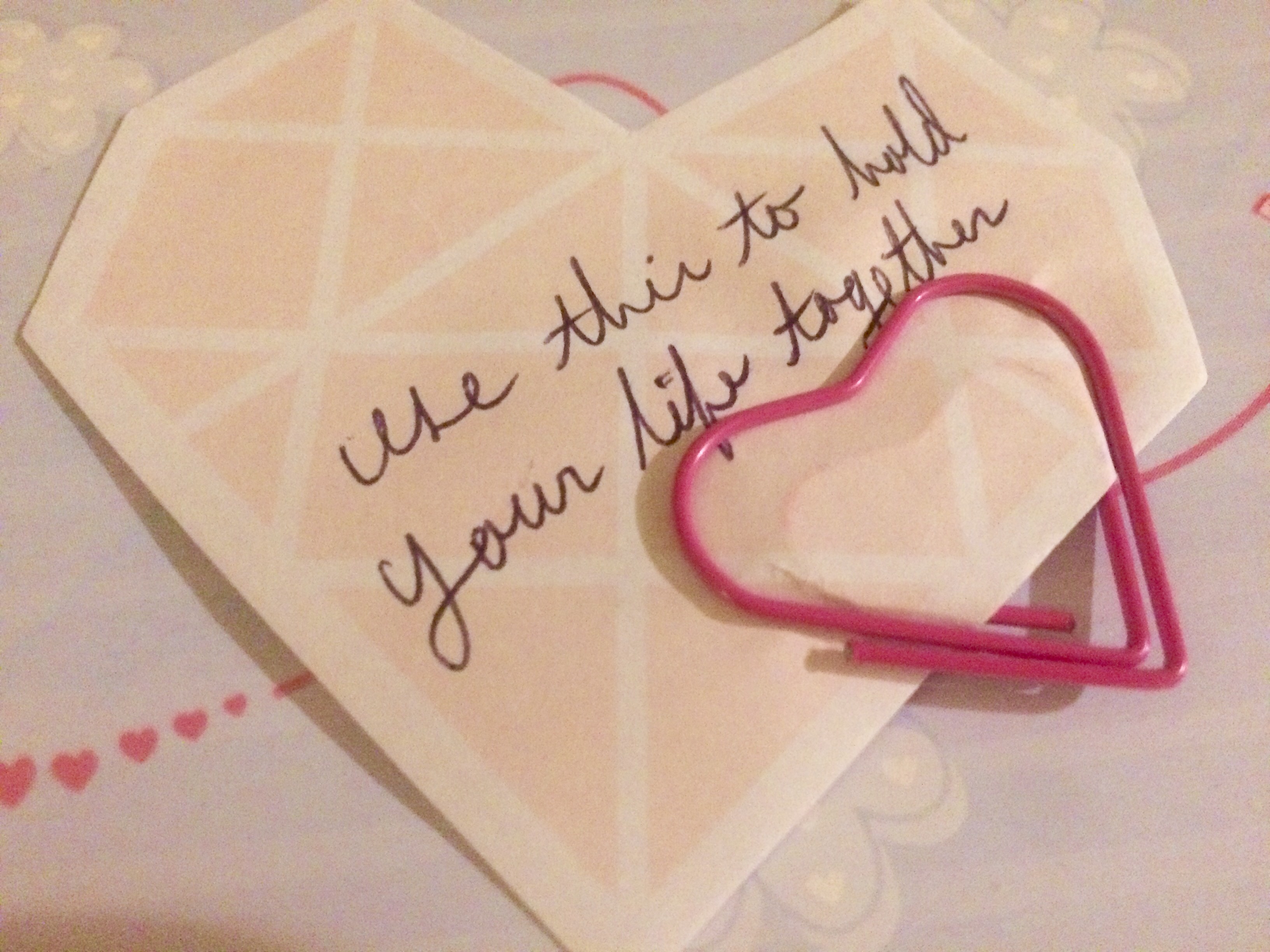
Currently my mood is very “Days” by Philip Larkin:
What are days for?
Days are where we live.
They come, they wake us
Time and time over.
They are to be happy in:
Where can we live but days?
Ah, solving that question
Brings the priest and the doctor
In their long coats
Running over the fields
At any given moment you can be 100 percent certain that what’s going on in my head is just the constant recitation of that first line, “What are days for?”
At least it’s not the Mambo No. 5. (Or would that be better?)
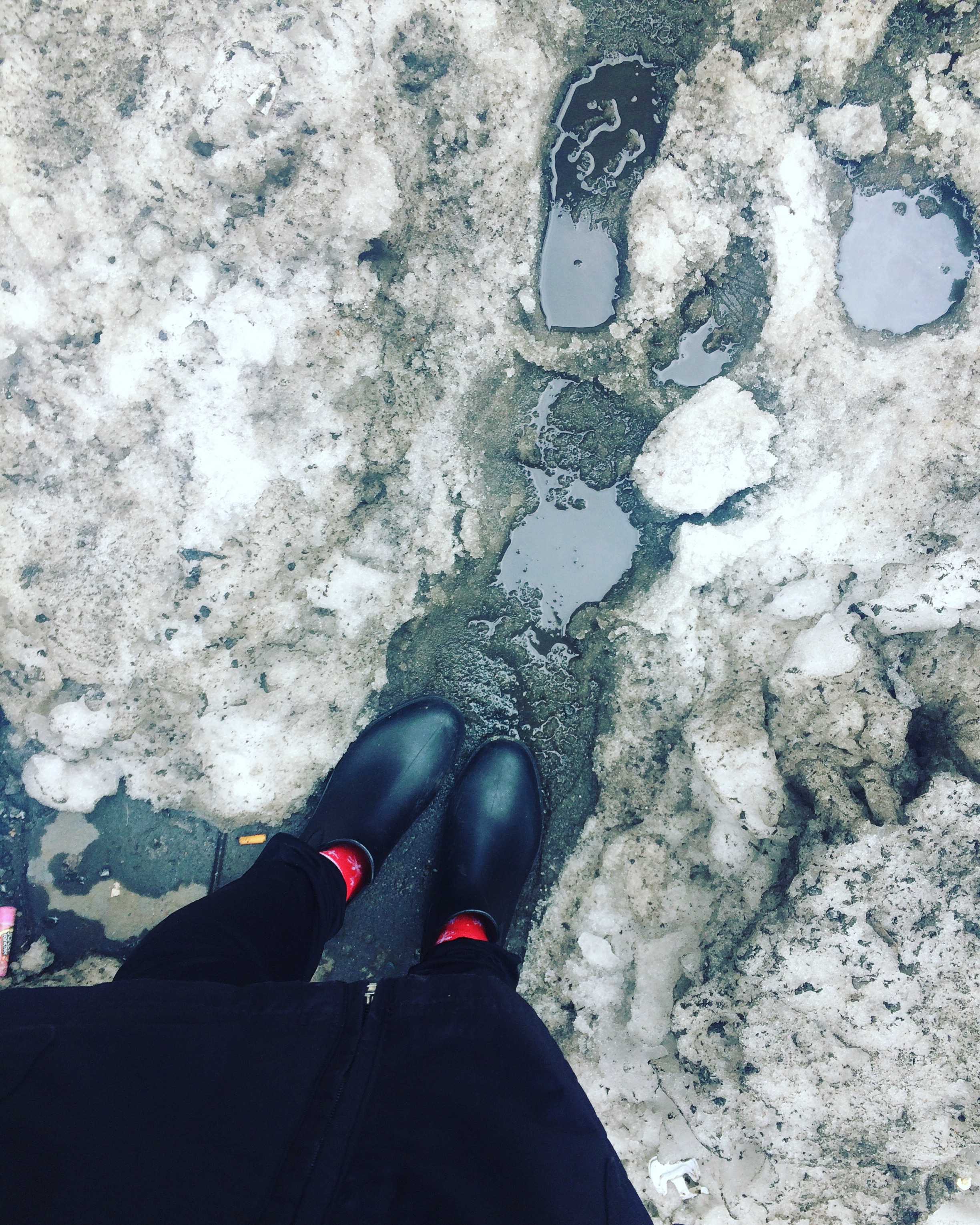
2. I love the weather.
Besides that, I’m juggling staying positive with two jobs and school and the nearing end of my undergraduate career. This is helped by things like reading in the bath, notes sent from friends, museums, the color pink, and that hot-vicar-detective show, “Grantchester.”
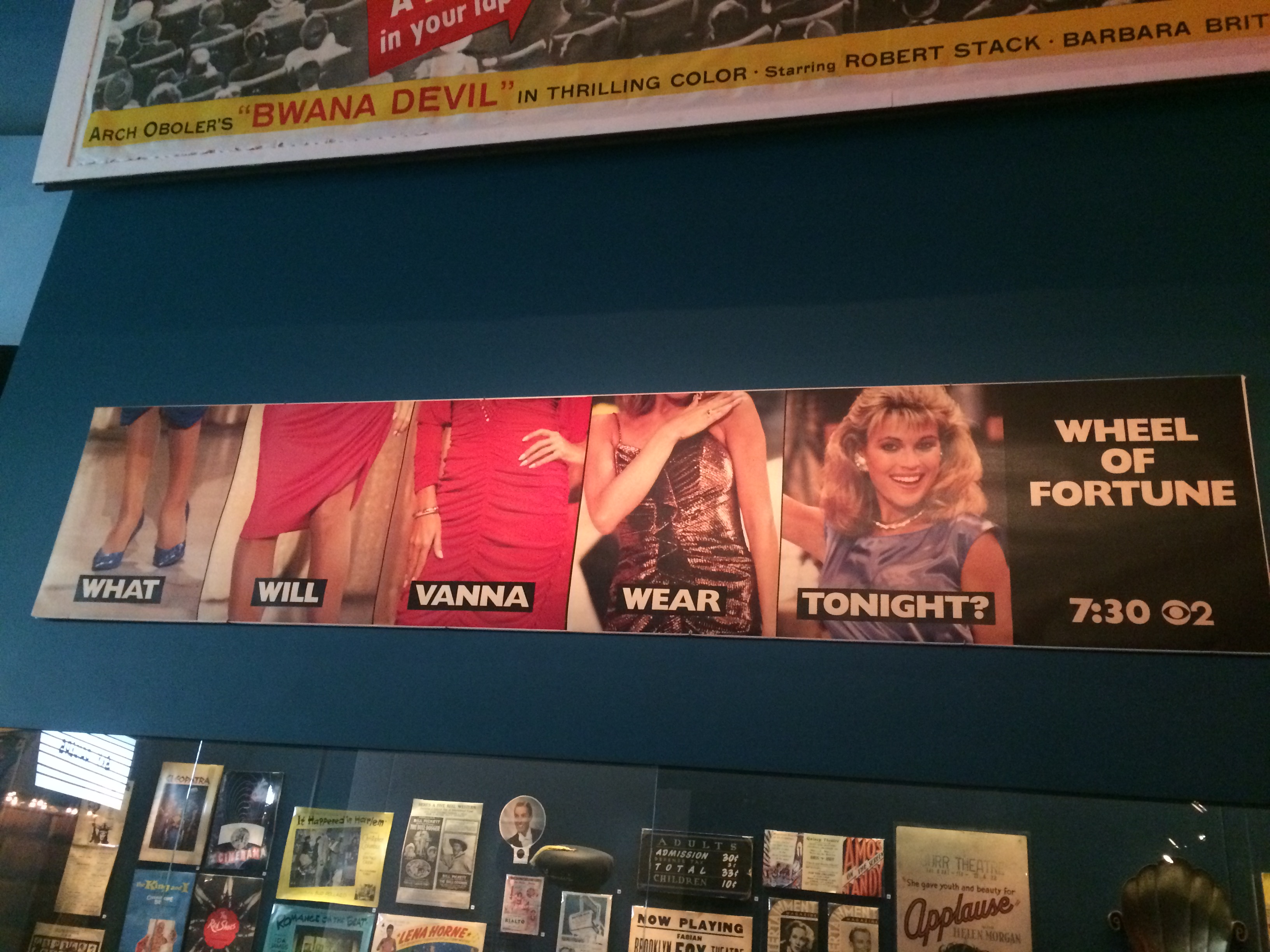
3. Two displaced cousins have a new ritual: brunch & the museum of the moving image.

4. Working in the flower district

5. Estrogen Empire Strikes Back
Another thing that is keeping me positive is activism: huddles of women all over the world plotting to destroy patriarchy, capitalism, racism, etc. In fact, inspired by a huddle I went to recently I decided to make a list of things anyone can do to help the world in this current moment. Let me know if there’s anything I should add.
Stay positive!
XOLily
Spent too much money
At Union Square Green Market
to cheer myself up.
November 2nd
made true with apple cider
and a fresh made pie.
Nearby a band played.
For a second I re-fell
in love with New York.

Every Monday night poets gather at 308 Bowery, not in a low-lit, dingy bar that one might expect for New York poets to hang out in, but in a room that has high ceilings, a glittering chandelier, and fancy French rococo-style wallpaper.
The décor might seem too extravagant for the starving poets of the lower east side, but since its foundation by the American poet Bob Holman in 2002, this space—called The Bowery Poetry Club—has become one of the few places in New York where aspiring poets can come together and share their work.
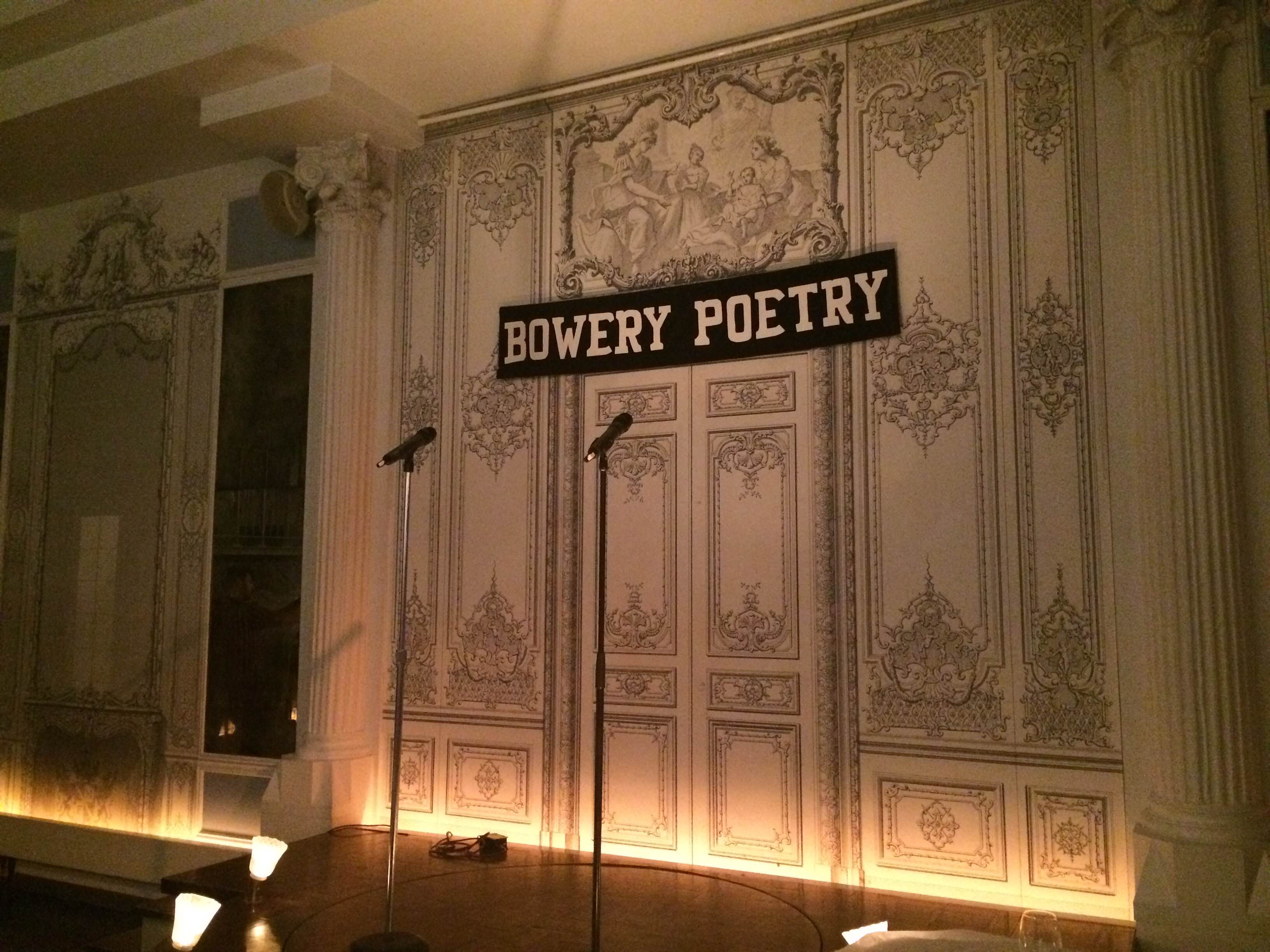
On Sundays and Mondays, poets and musicians take over the Burlesque stage.
“When it opened it was very much the quintessential bohemian dive poetry club, with exposed brick walls and sticky floors,” said Executive Director of Bowery Poetry Nikhil Melnechuk. “It really had a sense of both the eclectic and impoverished nature of poets.”
In 2012 the Bowery Poetry Club became a non-profit organization called Bowery Arts & Science. The space was renovated and rented out to a Burlesque club for 5 days of the week—hence the extravagant furnishings. Now, Bowery Poetry hosts open mics for poetry and music, as well as poetry workshops and reading nights.
“It has weight to it, to be able to say, ‘I’m performing at the Bowery Poetry Club.’ It holds a prestige to it,” said Ariel Yelen, who works alongside Melnechuk as the community manager.
On Monday nights, Bowery Poetry hosts “The Poet In New York,” which features a reading from a published poet—they have featured Eliot Weinberger, Forrest Gander, Eileen Myles, Adam Fitzgerald, and many more—followed by ten open mic spots.
“Poetry encompasses a lot, so it’s very generous in what it considers to be part of its community,” said Yelen. “ [Open mics] bring people from every kind of background and different communities a chance to be at the mic and be a part of it, not just watching it.”
Not only does Bowery Poetry allow new poets to read their work to an audience, but it also provides a place for poets to meet other poets.
“I think poets are masochists. They love a challenge, and they also are loners who are desperate to find people like them,” Melnechuk said.
Becoming a non-profit organization has allowed Bowery Poetry to focus more on keeping poetry and the arts alive in the East Village, a place that has recently become too expensive for many art and cultural spaces.
Bowery Poetry charges $10 at the door for most of their events, relying on ticket revenue and grants to be financially sustainable.
“Now that we’re a non-profit we have a sustainable model, so we’re here. We’re here to stay,” Melnechuk said. “And that’s been something that the community really is happy about.”
Future plans at Bowery Poetry include starting a slam poetry team, creating poetry videos for the web, and possibly opening a pop-up space in Brooklyn.
 Lily Haight