When I was a kid I could spend hours in a swimming pool.
I have no recollection of what I would do. Play? Swim? Splash?
Now, when I get in a pool, I’m at a loss. I feel like I should swim laps, or play a game, or float and read a book.
I never had this problem until I was an adult.
I’ve been thinking about this in regards to gardening. Right now, when my mind starts whirl-pooling into work-thoughts, pandemic-thoughts or worry-thoughts that I can’t shake, I make a conscious decision to start thinking about my garden.
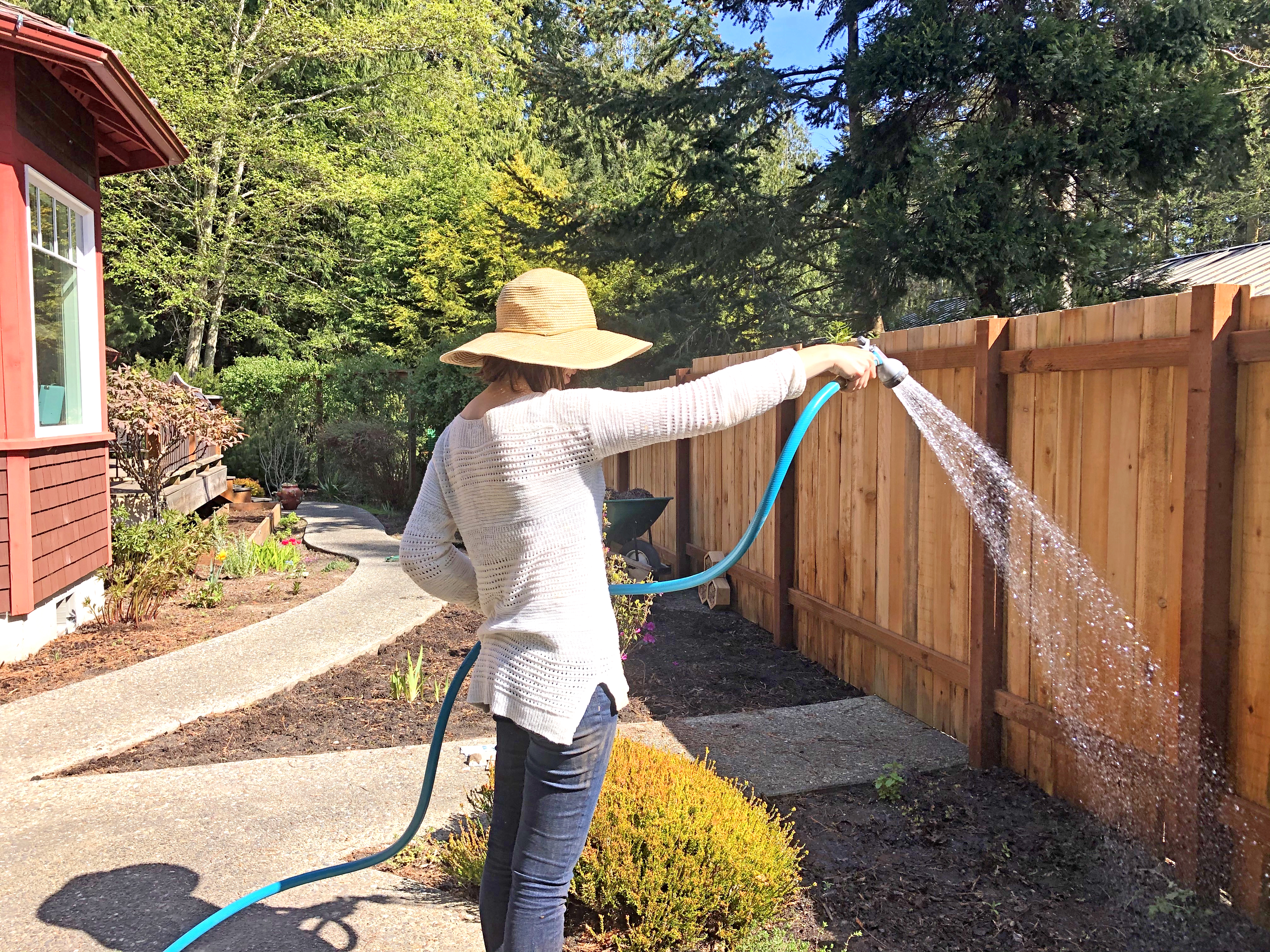
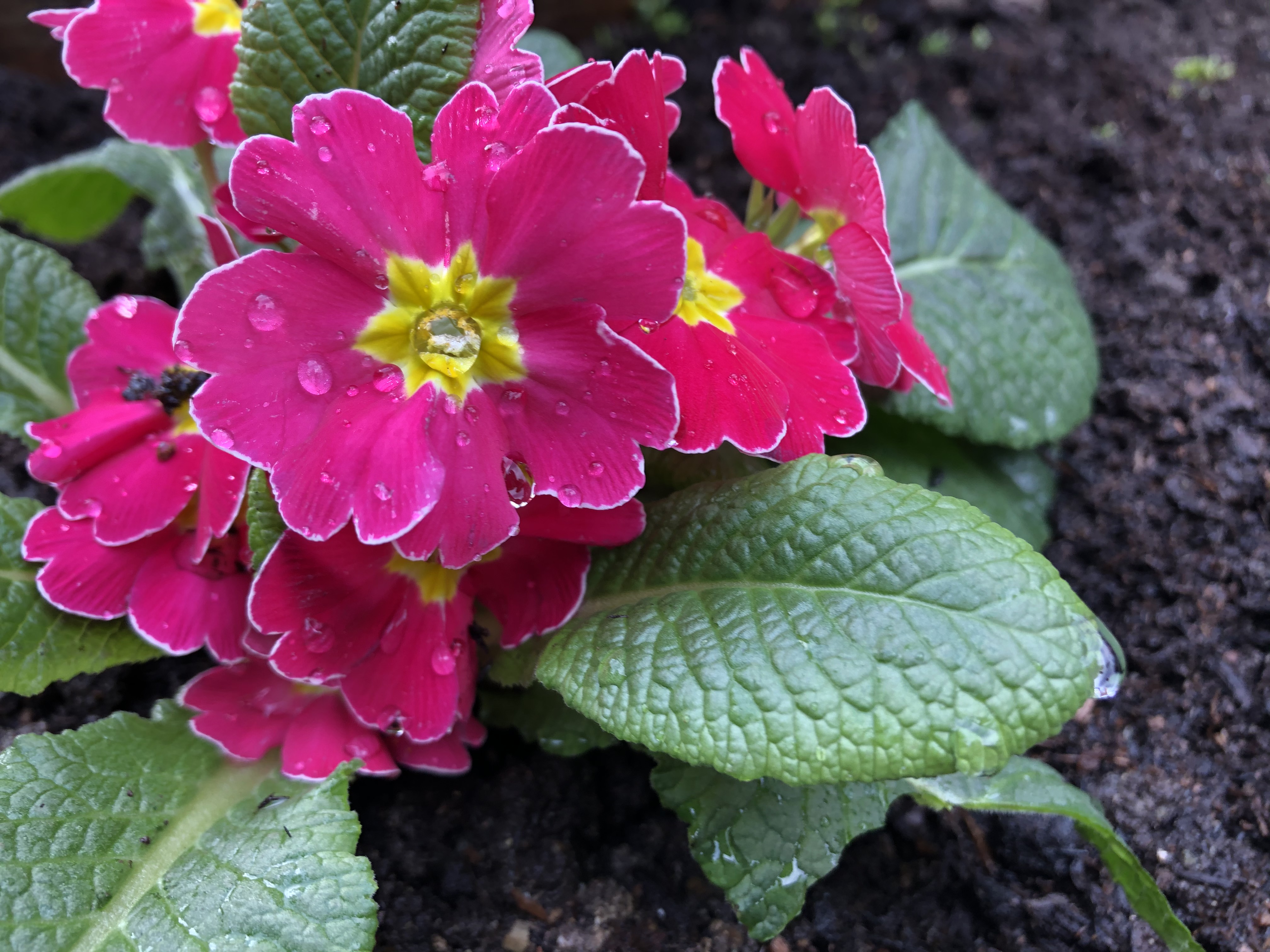
Even since this picture was taken, our garden has grown so much.
What seeds do I plant next? What needs to be pruned, staked, or watered? What areas haven’t been weeded?
But I realized all of these thoughts, while they are nice and distracting, are still goal-oriented. Even when I’m in the garden, I am thinking about what needs to be done. I have my work gloves on, I’m crouching, shoveling, weeding and seeing all the imperfections that should be fixed.
I think sometimes this is just what it means to be an adult. There comes a time when our “play” is actually work. It’s creating something, or fixing something, or baking something. It’s about swimming when you’re in the pool, instead of just being in the pool.
Yes, being in the garden is still way more relaxing than being at work. But part of my own struggles with work-life balance, especially when work and home are becoming ever more entwined during this pandemic, is that I forget I don’t always have to produce something.
I guess I’m trying to rediscover the inner child that allowed me to experience things without expecting an outcome from them. To rediscover the me who would spend hours outside, just playing. Petting the cats, turning flower petals into boats for fairies, plucking blades of grass and braiding it.
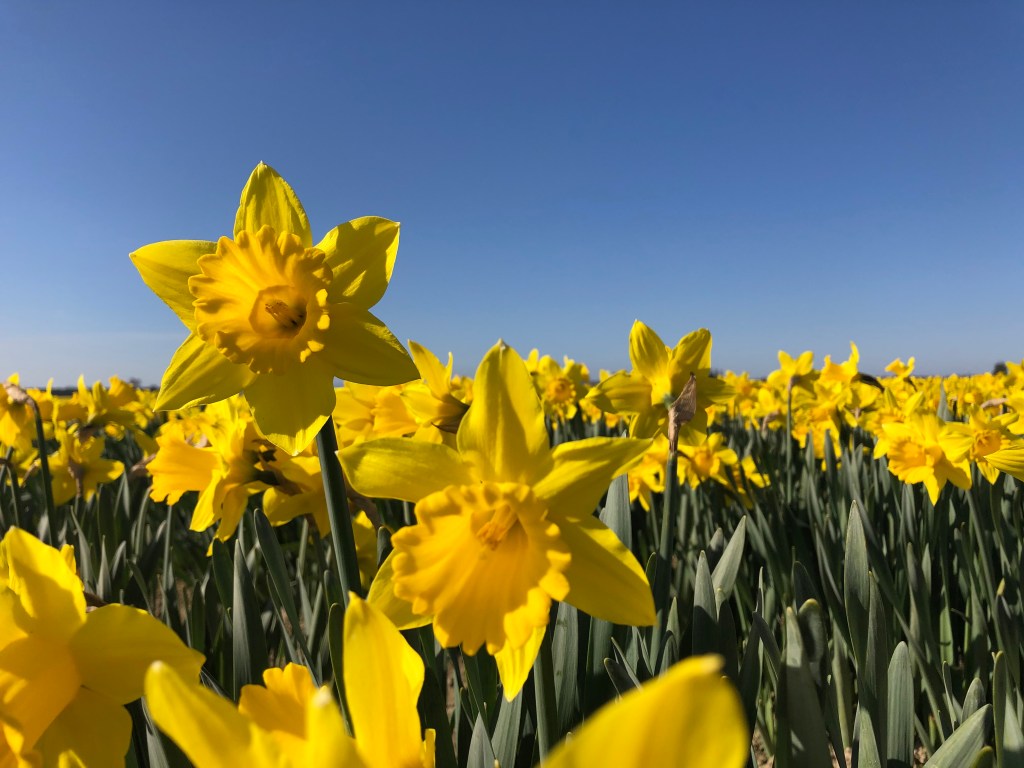
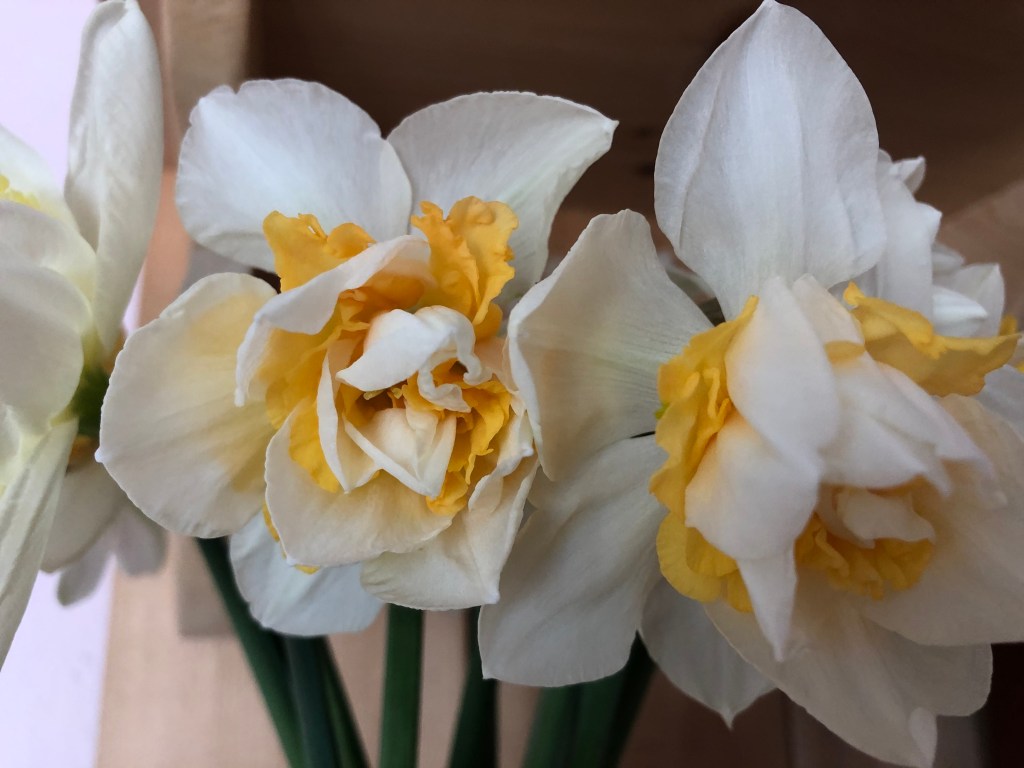
A magical daffodil moment this morning.
Gardening doesn’t have to be to produce a beautiful garden. It can be just to get outside, put my hands in the dirt and feel.
Although I write for a living, my writing doesn’t always have to have a monetary value. It doesn’t have to have a value at all.
For example, does this blog post have to have a call to action, a focal point, or an ending? Or can it just be a moment for me to express thought, choose words and put them in an order, for no reason at all other than to feel how I feel while I’m doing it.
We moved into our house in late November, and after a full December, only got around to planting daffodil bulbs in January.
I was convinced they weren’t going to show up at all this year. But just like all the gardening advice columns I consulted, it looks like they’re going to be late bloomers. Last weekend we noticed a few daffodils springing up and this weekend found even more.
A new ranunculus, which I hope the deer won’t eat.
And with each day, our garden is shaped into the natural paradise I want it to be. We’re nearly done weeding all the beds—although that work never truly ends—and are beginning to think more strategically about where to plant our seed starts and future annuals.
Inheriting a garden is exciting because there are some established plants I know are bound to be beautiful, and some new arrivals that I didn’t realize were there, like what I think is a host of Lily of the Valley coming up from below the deck.
Red twig dogwood where a heather used to be.
But the inherited garden also comes with a lot of things we aren’t overly fond of, such as randomly spaced out heathers that take up too much room for little viewing pleasure. We both love heather, but these particular heather plants are not our favorite varieties, nor are they in a place we love.
So we are removing them and planning to either give them away or move them to a different spot. In their place we are adding some native plants, like a red twig dogwood shrub. We also added a forsythia this weekend—a bit of bright yellow to help us greet spring each year.
Our new forsythia.Hoping it grows tall.
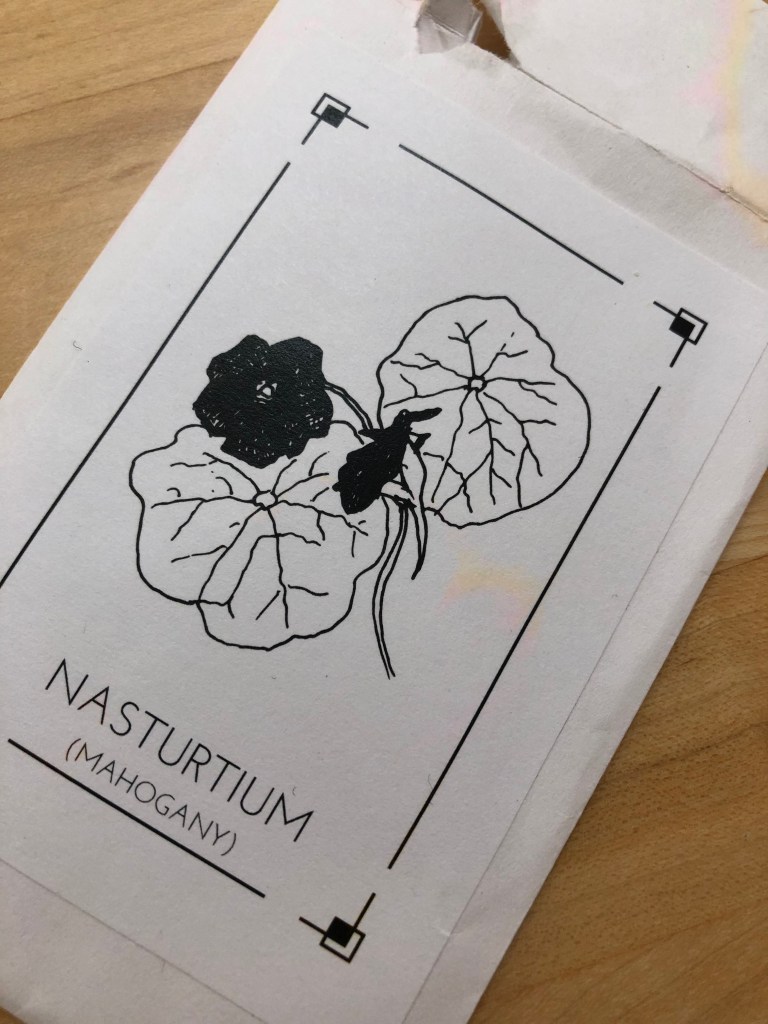
Inside, the seed starts are well on their way and I can’t wait for them to be ready to plant. In the planter boxes outside, we have sown poppies, sweet peas and now nasturtiums as well.
Nasturtium seeds.Edible and cute.Snapdragons peeking out.
Every time I stick a seed in the earth I wonder if anything will come of it. Maybe it’s an exercise in taming perfectionism: the worst case scenario is nothing. But the best case scenario is beautiful blooms.
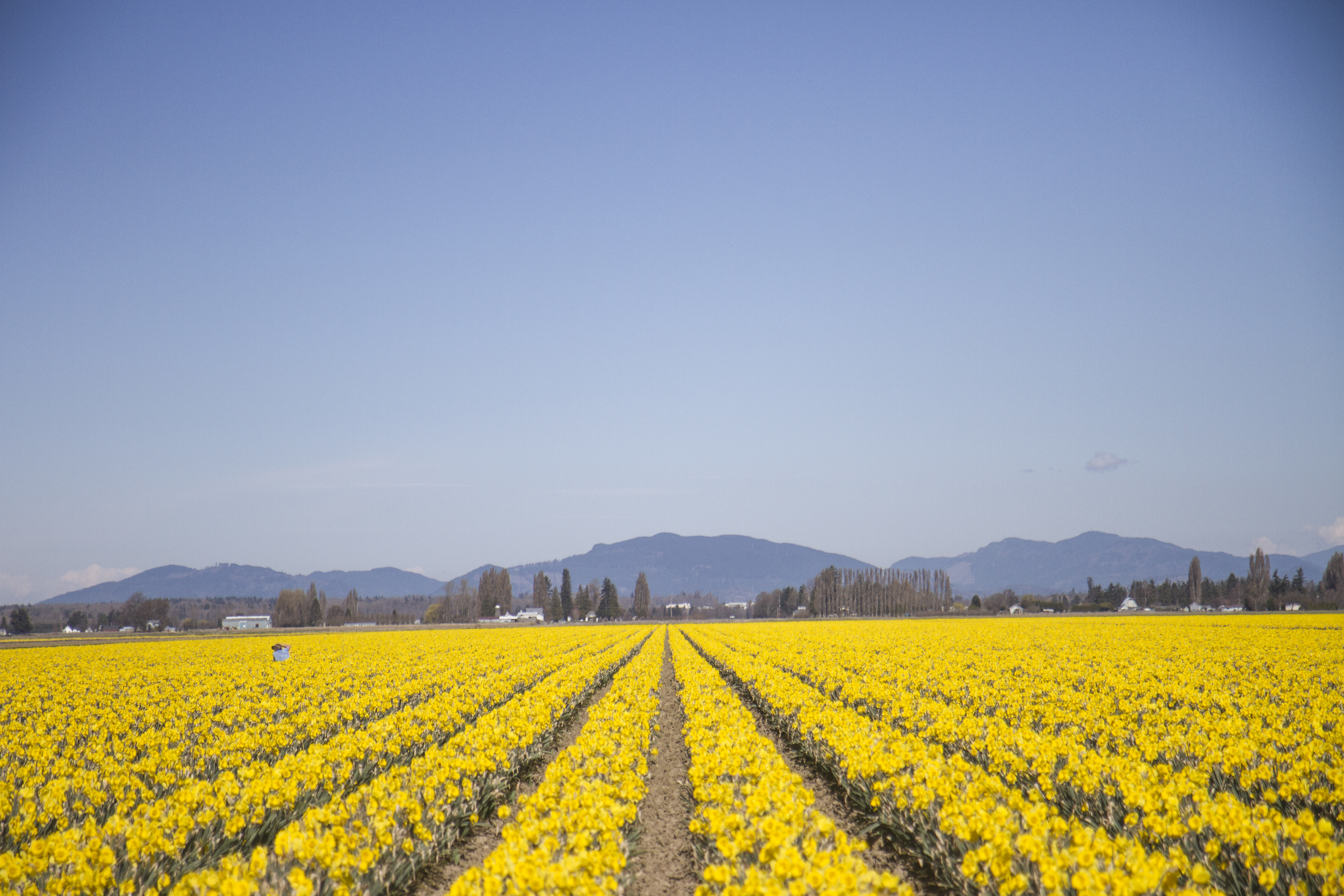
On the last day of freedom before our sheltering-in-place began, Libby and I made our way over to Mount Vernon to soak in some sunshine—both the actual rays on this first spring Saturday of the year and the sunny, yellow fields of daffodils.
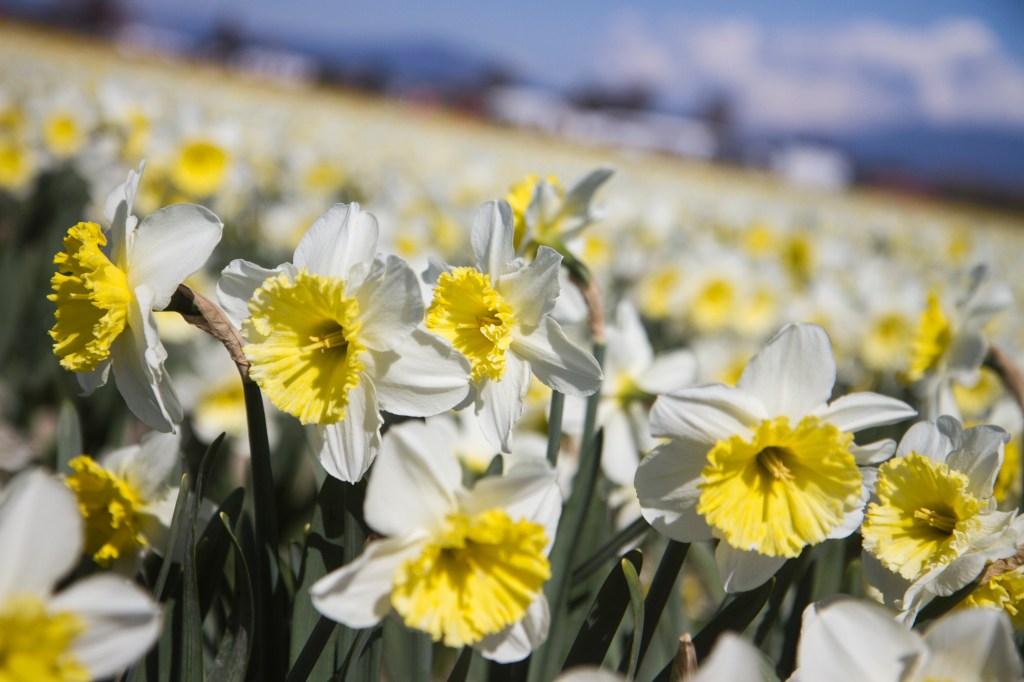
Sunny girl.Surrounded by beauty.Ruffly petals.
The farms weren’t open to the public, so we had a socially distant lunch on the dirt in the middle of the daffodil field. Heaven.
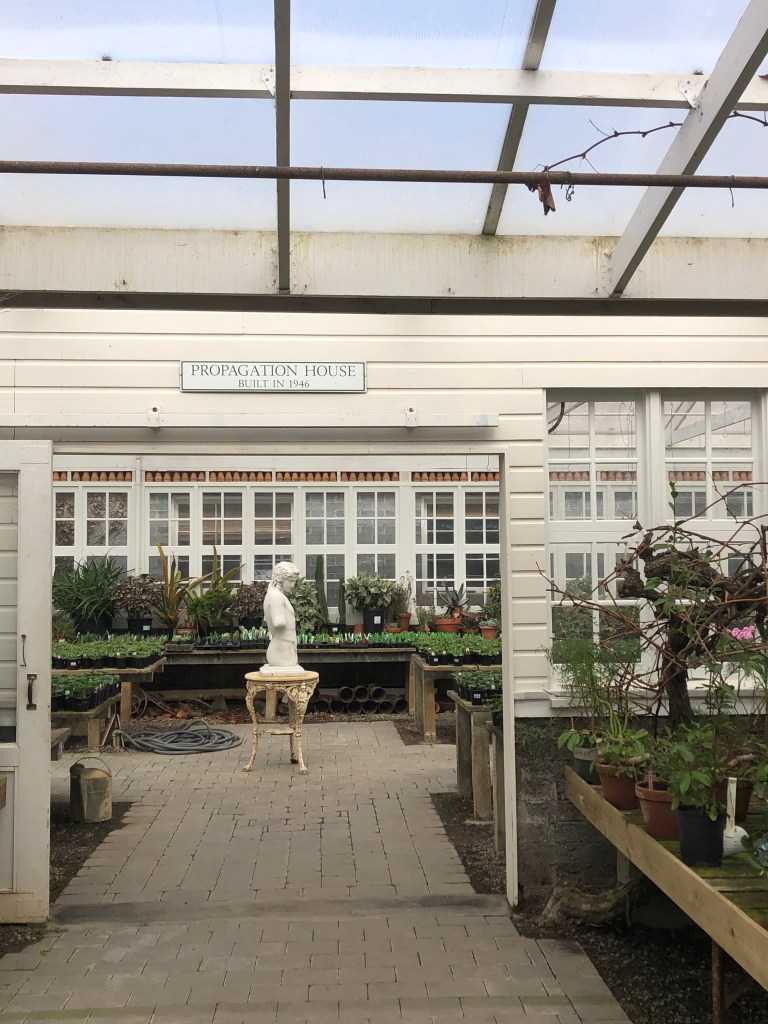
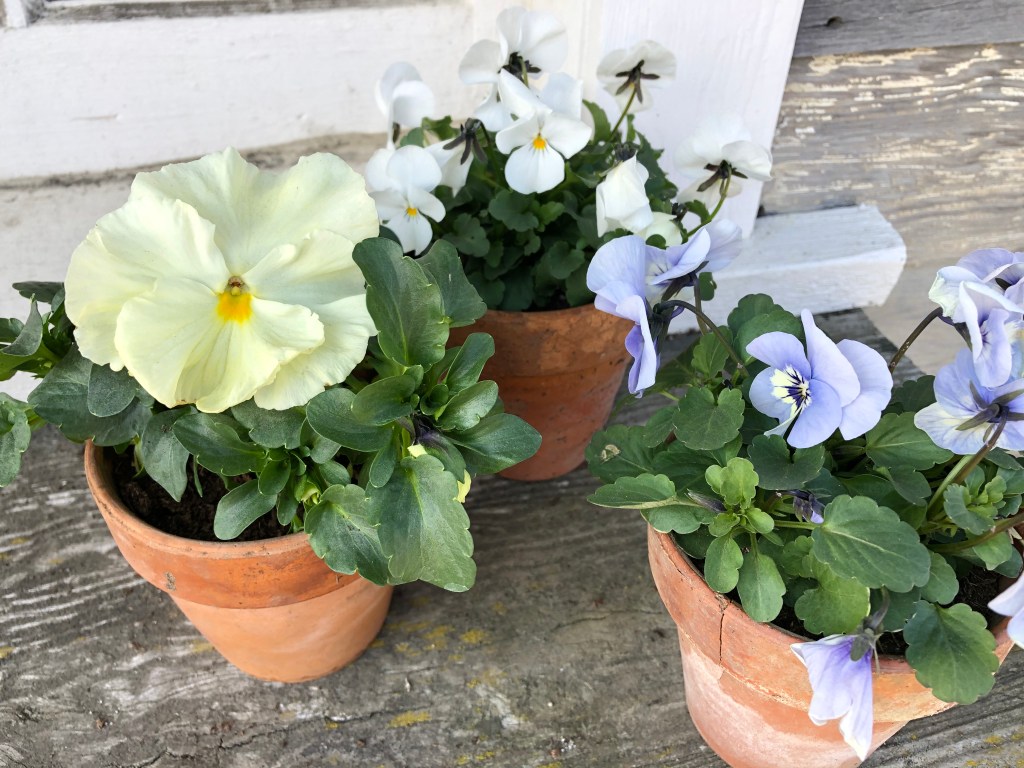
We also stopped by Christianson’s, one of the best local nurseries in the area, for some garden inspiration. There we greeted doves, walked lazily through greenhouse after greenhouse and purchased a few tiny pots to plant violets in.
My favorite propagation house.Doves are also sheltering.Inspiration for our violet pots.
The next day, having spent all that time soaking up beauty, we tackled some much needed weeding AND planted seeds—poppies and sweet peas direct-seeded outside, while a host of others, such as yarrow, hollyhocks, snapdragons, foxgloves, started indoors.
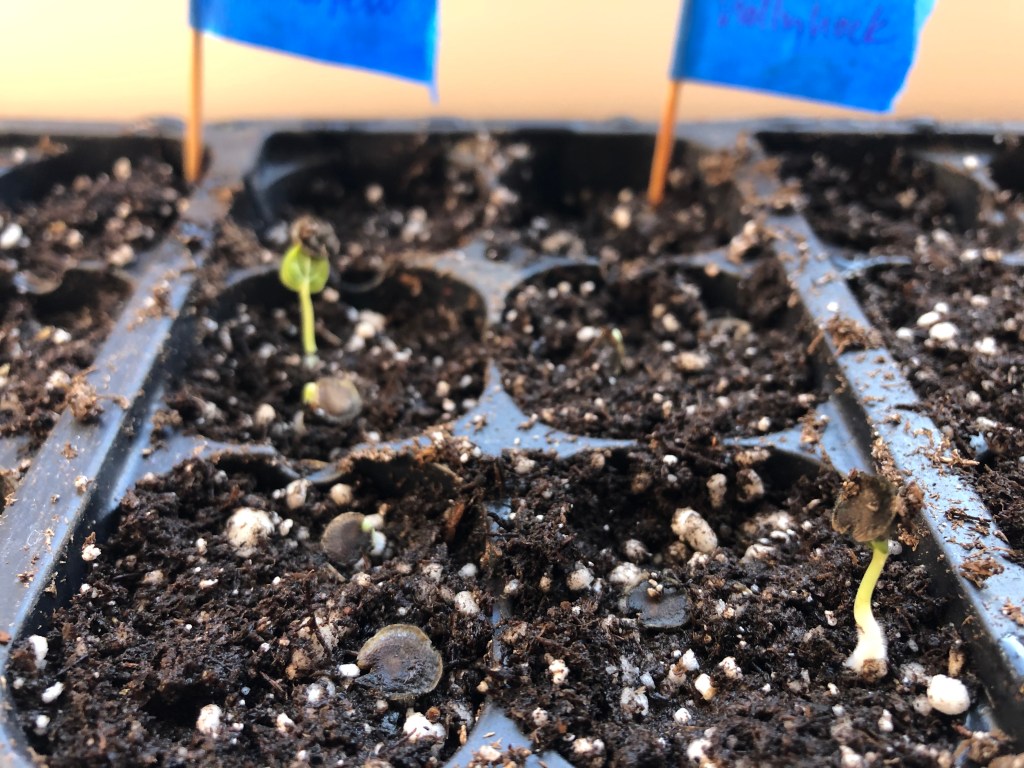
Just a few days later and already tiny sprouts are popping out of the soil!
Hollyhocks coming up.
In these days surrounded by deaths—now climbing into the hundreds in Washington state—it’s good to see life unfolding before my eyes.
Perhaps this pandemic will bring about one thing of beauty: everyone’s gardens will be lush this summer after days spent at home, in isolation, working the soil.
Winter is on its way out and I am counting down the days until spring blooms.
Our jardin is steadily being prepped for planting seeds: I’m slowly getting rid of major weeds and an invasive ground cover plant that I hate. After I finish adding compost to the soil next weekend, we are going to plant some of our first seeds of the year: sweet peas, nasturtiums, poppies and zinnias. Inside, we’re going to start some snapdragon seeds.
For now, though, I’m looking for garden inspiration from the small pops of color that surround me. A visit to the butterflies on my birthday, a trip to the Garden Show in Seattle and the unknown buds that are popping up around the garden.
Nothing better than a tropical butterfly room on a cold winter day.
While we plan our flower garden we are also trying to determine natural ways to deal with pests like deer. Hopefully most of our flowers will be deer-resistant—like foxglove, snapdragon, poppies, zinnias, yarrow and hollyhocks—and we’re planning on creating toxic-flower-barriers by planting them around those that might be a bit more vulnerable, like sunflowers.
Color inspiration from the Garden Show.
We recently planted two bare-root roses (one climbing peach-colored and one pale pink) and I’m excited to see them grow, but terrified of how they might get munched on by deer.
According to a recent article in the New York Times (Titled “On Staten Island, Feeling Overrun”) there are an estimated 30 million deer across the country that eat the equivalent of 15 million metric tons of vegetation — greater than the combined weight of all the aircraft carriers in the Navy.
I’m convinced half of those deer live in Port Townsend.
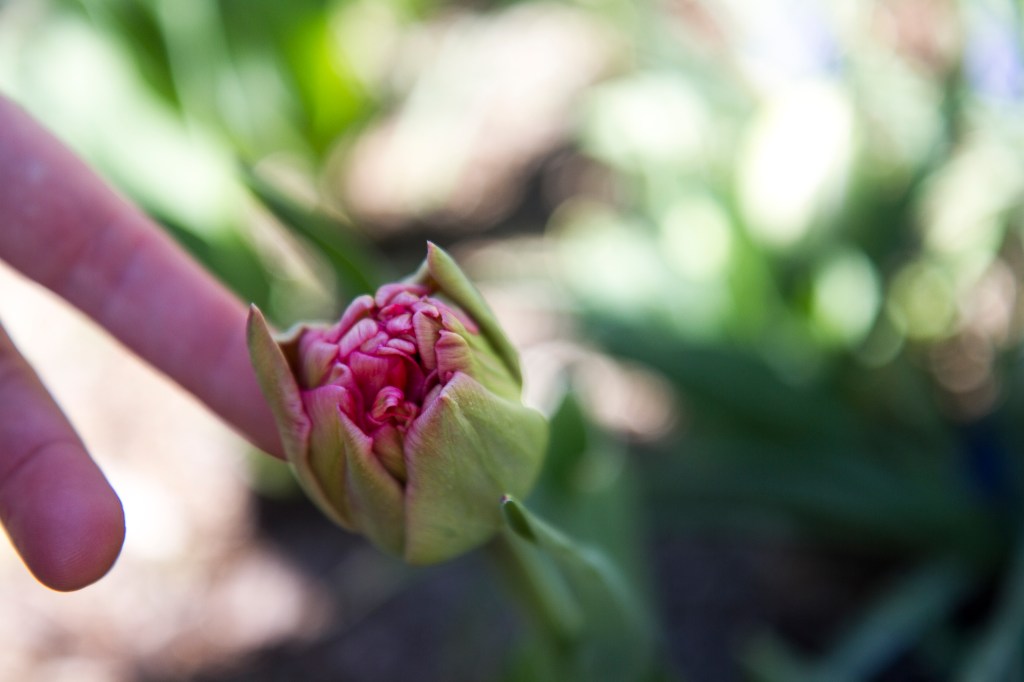
These have since been eaten.
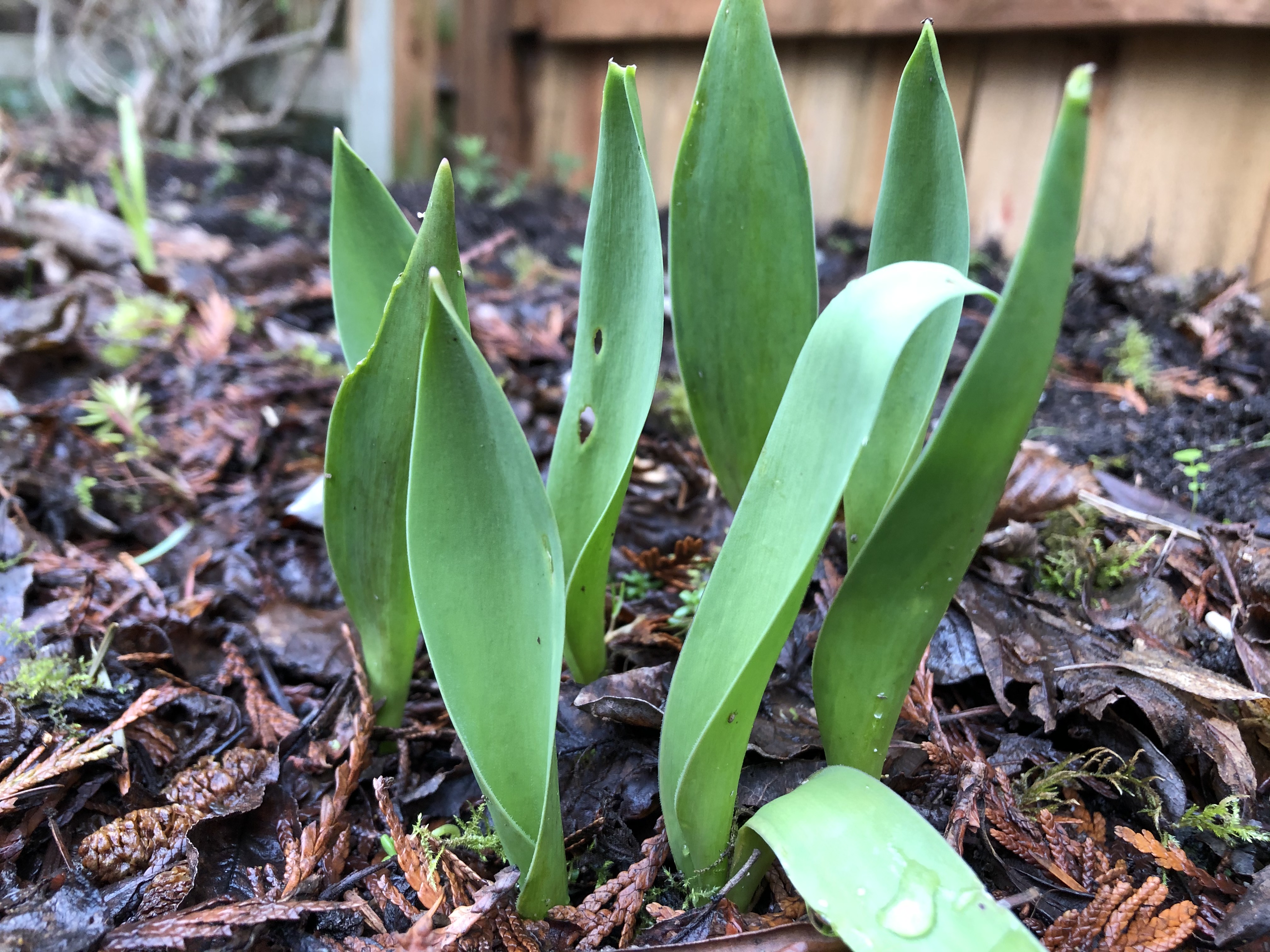
The previous owner of our house planted some tulip bulbs, which started to grow only to be munched on by deer. Despite the sad tulips, I’m staying positive that the deer will leave most of our garden alone. All we can do is stick to toxic flowers and hope for the best!
But this week was one of the worst yet. Day after day of unrelenting rainfall left me feeling like I might drown in the growing mud puddle surrounding my house.
So when the clouds parted Friday afternoon and I saw blue sky for the first time in many, many days, it was like feeling several pounds lighter. Spring will come as it always does.
The first blue day in a long, long time.
On Saturday, Libby and I went for a walk at Chetzemoka park in town, getting inspiration from a tiny daisy that was blooming in the middle of a soggy, grassy knoll. There, a tree has already begun to bloom, making me feel like the pressure is on to get the yard ready for spring planting.
A sunny spot. Blooming already?
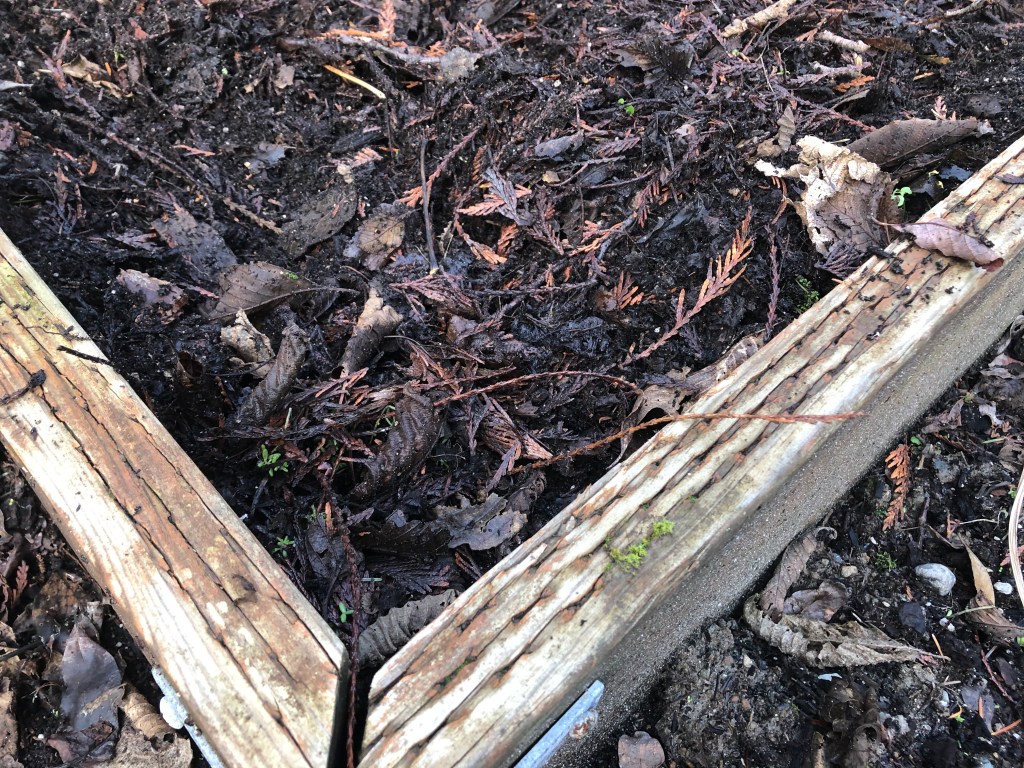
On Sunday, I got out in the yard and began assessing our soil. Fallen leaves and tree debris has made for a nice mulchy layer to add nutrients to the soil.
Planter boxes we plan to fill with flowers.
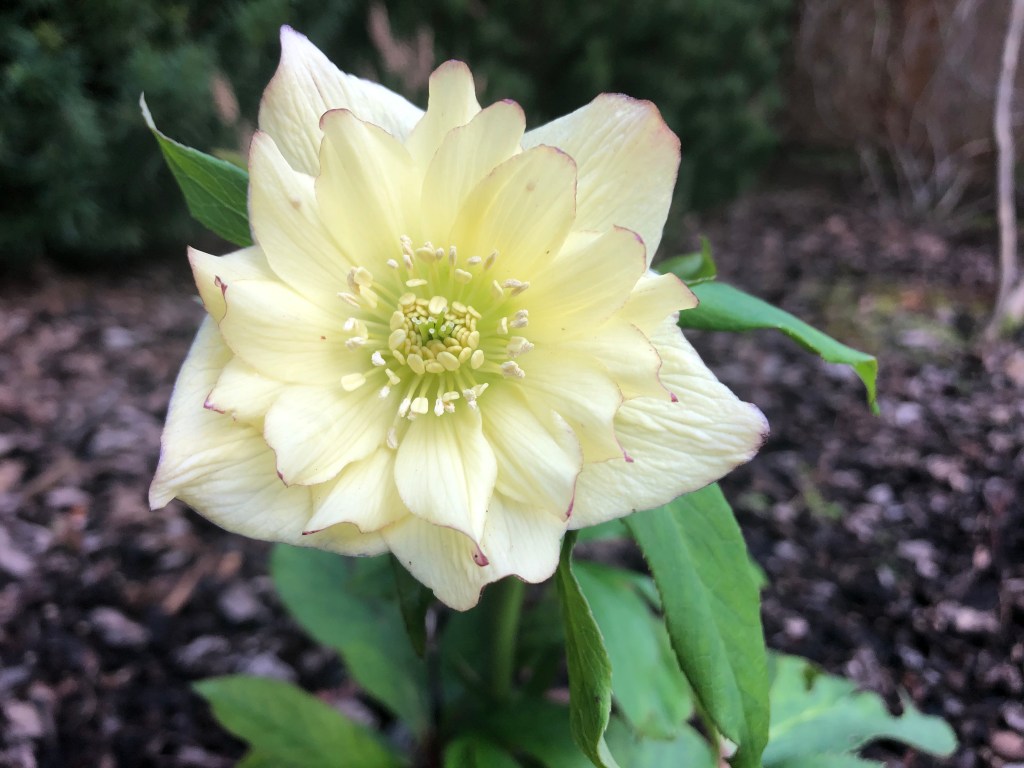
Our winter blooming Hellebores bring a spot of color to the yard—a ray of sunshine to come home to on the days when cloud cover and early sunsets make the entire day seem dark.
Leafy, yellow and bright. New buds joining the blooms.
And signs of the coming spring are all around: I trimmed off last year’s seed pods from the peony tree, where new buds are forming. They look like clasped hands.
What color will the blooms be?
What’s exciting about our new home is we don’t fully know what is out in the garden yet. We know there are peonies, but don’t know what color. We see buds forming on the rhody, but aren’t sure when it will bloom. There’s a bare shrub that could (hopefully!) be a lilac. And shoots are springing from the dark earth that are likely the first stages of some irises and crocosmias.
Slowly, it will reveal itself to us and we hope to add even more color, with a plan to plant sunflowers, snapdragons, sweet peas, foxgloves, Queen Anne’s Lace, dahlias and much much more.
We have already planted a few daffodil bulbs around the yard. I keep looking at the spots where we planted them, imagining them waking up from their dormancy under there. Hopeful that they’ll grow, bloom and bring brightness and color. Waiting, waiting.
If we didn’t have winter, would we still feel that immeasurable joy on those first warm, spring days?
First signs of spring.
My job gives me the opportunity to meet and talk with a lot of people. Just last week, I met with a rambunctious crew restoring an old houseboat, talked with a sunny flower farmer, and had lunch with the leader of a local activist group.
Even though other aspects of my job have recently been causing me a lot of (unnecessary) stress, those meetings are what bring me the most joy. I fall in love with someone every day, because humans are interesting, hardworking, creative, smart, and beautiful.
And I feel that not only are these humans fulfilling their purpose by doing whatever it is that they’re doing, but they are also fulfilling their purpose purely by making my day.
Maybe that sounds self-centered. But then I think about how maybe to fulfill my purpose here on this Earth, all I need to do is connect with another human once or twice. Now and then, just have a nice conversation. Share a smile or a thought. Or even a split-second of eye contact. An understanding.
And I like that thought.
A girl and her flowers.
Or maybe my purpose in life is just to lie in the grass on a sunny spring day, soaking in the rays, quietly chatting with a good friend, and observing the early season flowers. I also like this thought.
Beauty is as nourishing as food.
This blog post is sponsored by a crazy amount of optimism and dreaminess.
I got a coffee and sat down on the boat from Athens to Aegina while trying to make peace with its rockiness. That’s the problem with Adventure Lily. She has limits such as motion sickness and being bad at speaking different languages. Greek is especially hard as a language because when you’re looking at the letters you think you might know what the word is… but then you end up being totally wrong.
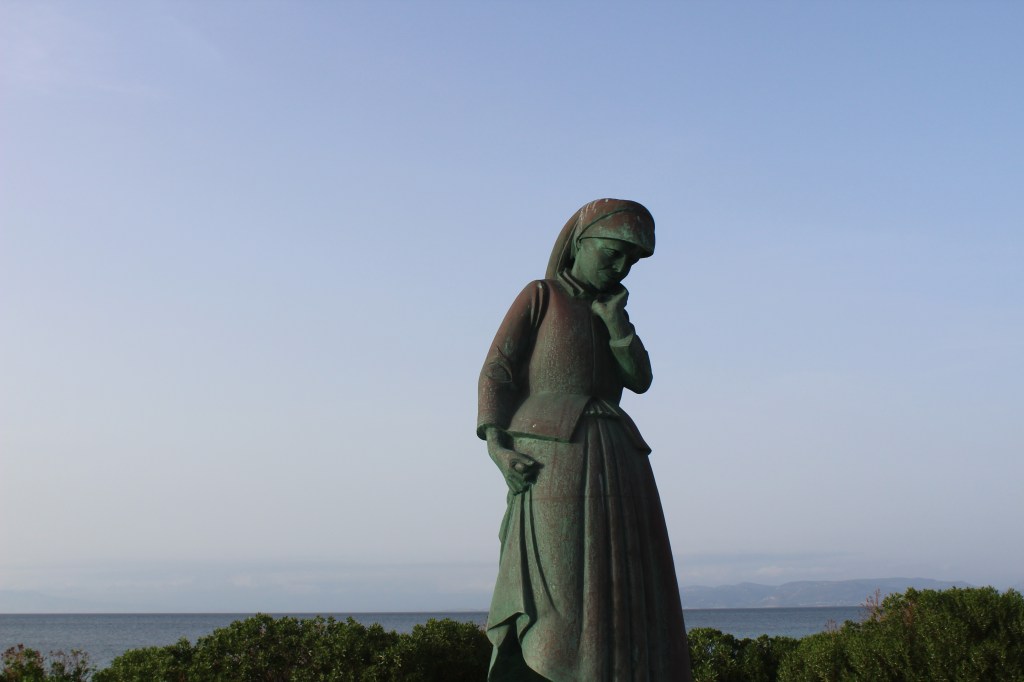
Stormy skies made for a sickening ferry rideMother of Aegina statue.
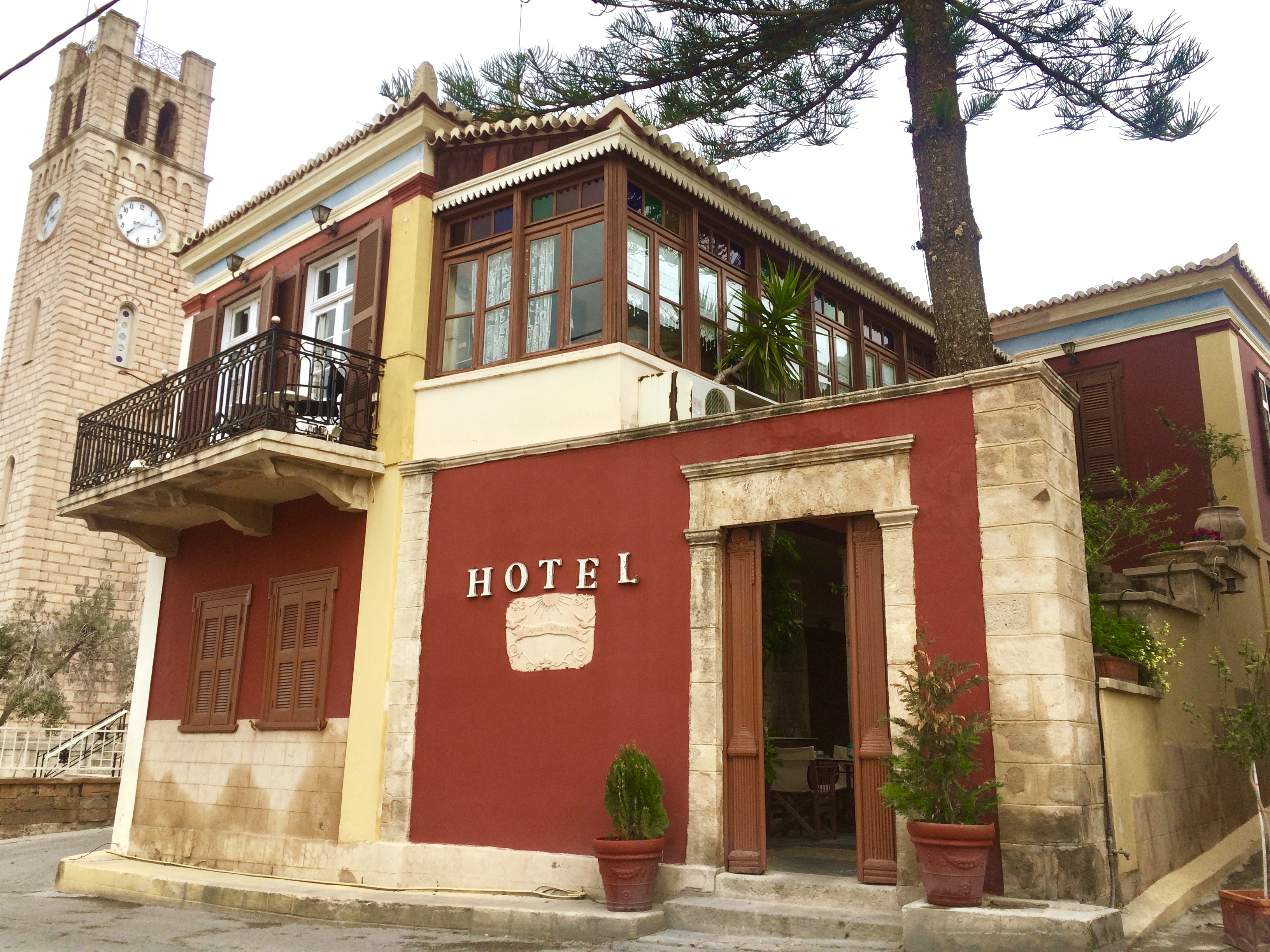
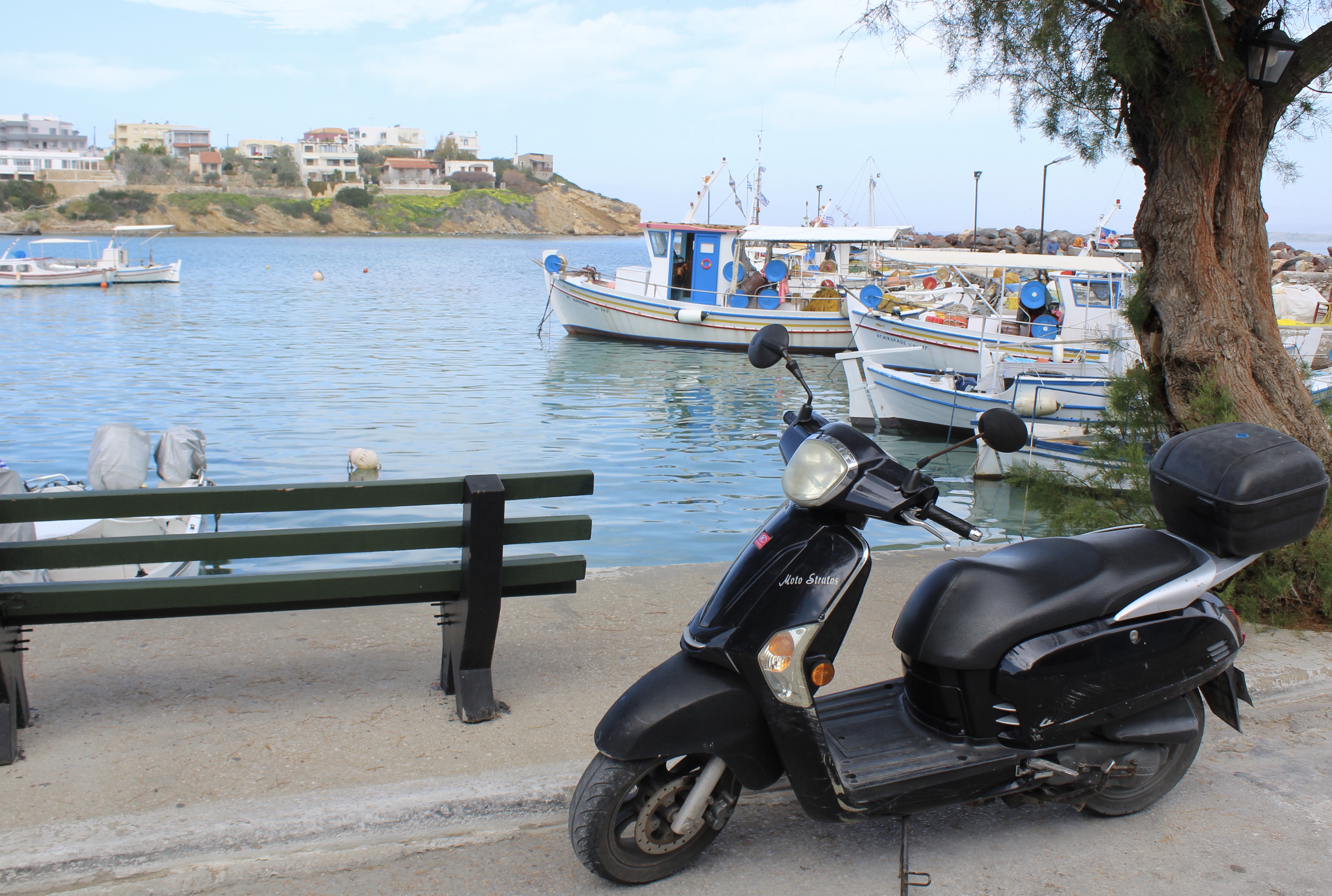
It was a bit stormy when I arrived at the Aeginitiko Archontiko hotel in Aegina, but the door was standing open anyway. The hotel owner, whose name I have since forgotten, pinched my cheeks and said I had a cute face, immediately taking on the role of a sort of Greek auntie. Later that evening, I went down the street to rent a scooter (the best decision I made during the whole trip). The scooter man asked me what hotel I was staying at and after the name came scrambled out of my mouth, he nodded and said, “Ah I know that lady… she talks too much.” But I liked her.
The Aeginitiko Archontiko hotel.
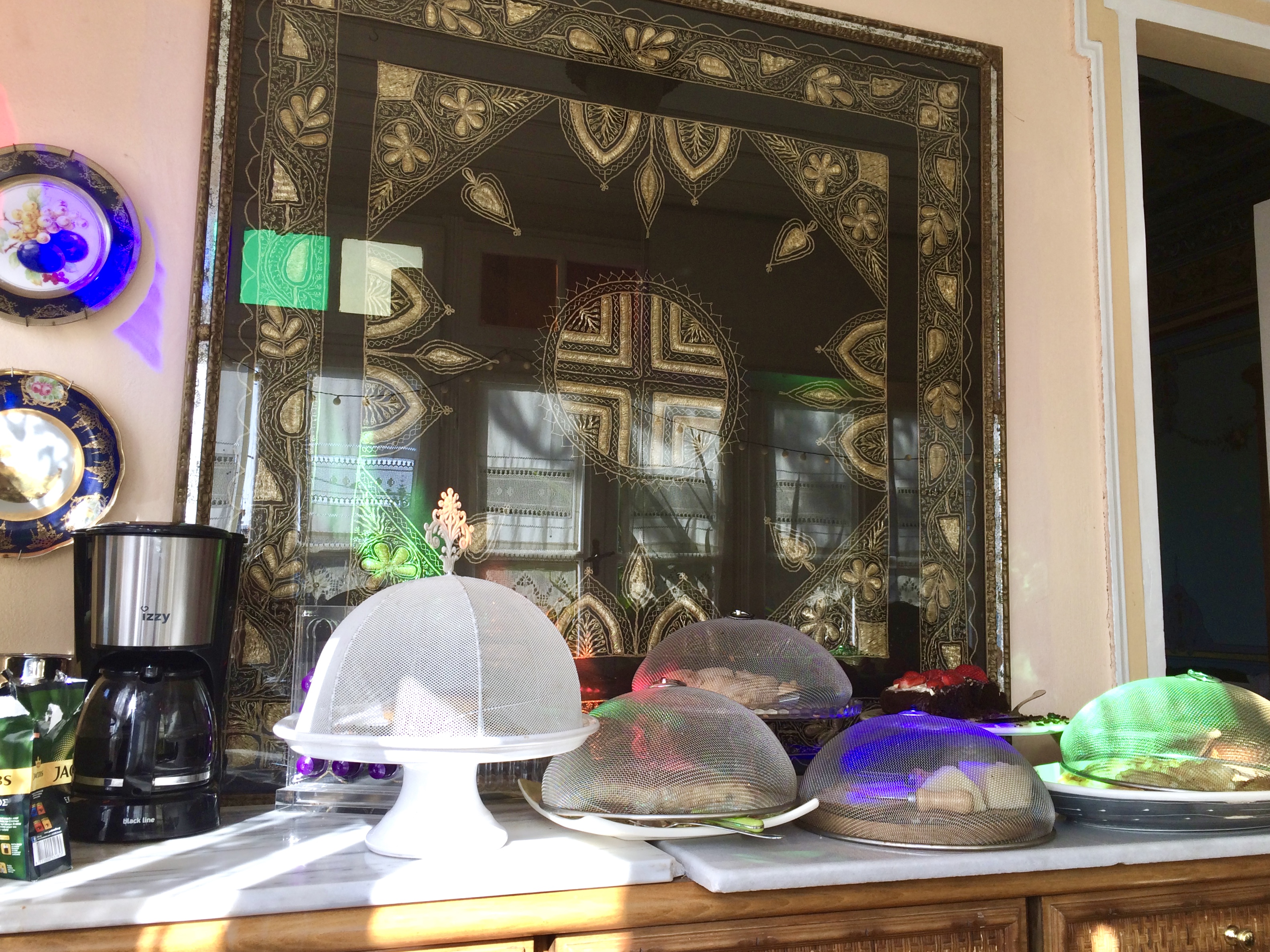
The next morning I climbed up the stairs of the hotel to the breakfast of my dreams in a sunlit indoor terrace. I think the hotel owner made the breakfast in the tiny kitchen that was also her office. She sat me at the corner table, next to stained windows that reflected splotches of color all over the walls, and squeezed some orange juice for me right then and there. Across from me was a buffet table with coffee brewing and a spread of homemade Greek delights. I tried my best to have a little of everything, knowing this was a once in a lifetime opportunity.
That included:
a piece of feta cheese and filo dough pastry
a piece of spinach and feta quiche
a slice of orange syrup cake
a slice of pear syrup cake
a plate layered with slices of ham and cheeses
a bowl of fresh fruit
another strawberry looking cake that I was too full to try.
Under each, a new pastry to try.
At the table just in front of me two Greek women–I think friends with the hotel owner–were listening intently as she listed the ingredients of the quiche, and the best way to make it. I only know this because I heard the word “feta” and “filo,” in the midst of the Greek. She paused in her instructions to give a loud and long “Kaliméraaaa” to a man who walked into the breakfast room. It had quickly become my favorite Greek word because I understood it and also because in France, I never got the sense that people said “bon matin,” in the same way that we in the States often say, “mornin’.” But the Greek “kaliméra” was said like a mom says “good morrrninggg” to her kid who has just gotten up after sleeping way past the allotted time for the greeting to work.
In the room next to the indoor terrace, a group of Brits sat at a round table underneath a painted ceiling, which was the hotel owner’s pride and joy. I listened to their conversation even though I couldn’t directly see them. They had stayed in the hotel before, and seemed to know the hotel owner… or at least they knew her food quite well. I pictured them as a group of British people from a Miss Marple mystery novel: eating eggs, sipping tea and gossiping about important people. Maybe wearing hats. I, the lone traveler with nothing better to do, was Miss Marple in this particular imaginary situation. (Although she would have been knitting.)
The painted ceiling in the breakfast room.
But since there was no actual mystery to solve, I left before their conversation was finished because I wanted to scoot all the way around the island. The scooter rental man had asked me if it was my first time to Aegina, if I knew the roads. I did not know the roads, I told him. “Well,” he said, shrugging. “You’ll figure it out. There’s not that many. Just go easy on the front break around corners.” I told him I had a lot of experience going hard on the front break and crashing. I have lived and learned when it comes to the front break.
My trusty scooter.
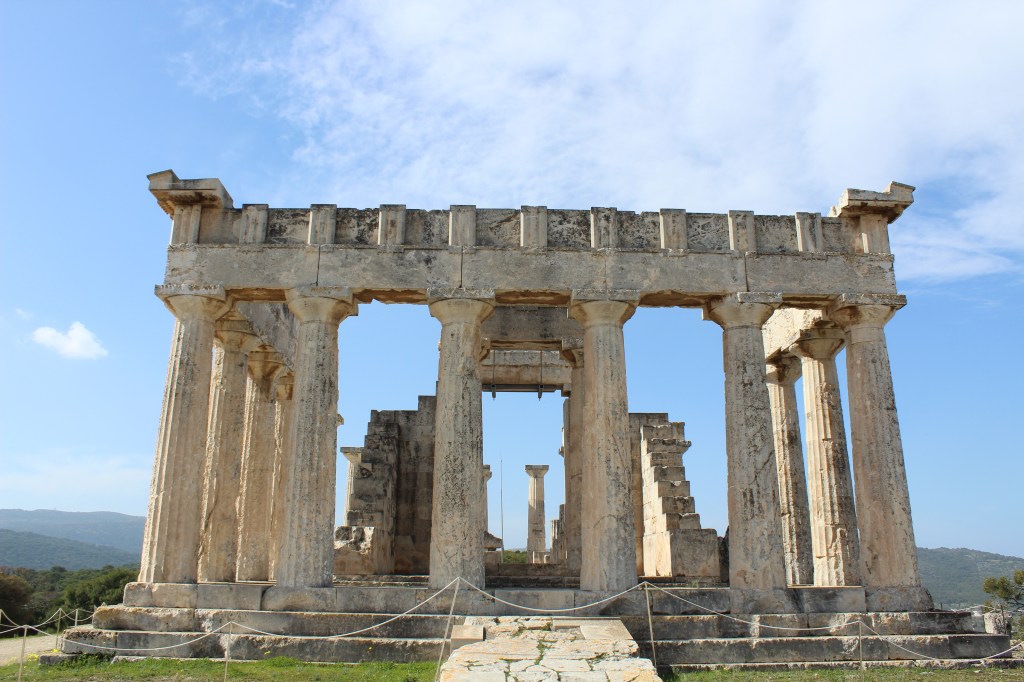
Alone and free, I made many wrong turns as I rode my way around the island in search of the Temple of Aphaea. It was my own personal pilgrimage and I don’t think I’ve ever experienced such a feeling of satisfaction as I did when I took a wrong turn, stopped to turn around and noticed in the distance on the top of a hill the outline of columns rising up above the trees.
The temple is at the top of the hill if you squint.
The road was lined with flowers that smelled sweet and it was quite hot out, even though it was only March. Alone and without cell service, Adventure Lily was beginning to get tired of being a bit lost… but seeing the temple at the top of the hill renewed my energy.
The right road, once found, was a series of steep switchbacks around pistachio farms. (The pistachios are Aegina’s specialty. They are unlike any other pistachio I have ever had.) It would have been quite a walk for the Ancient Aeginetans to get to the temple. They worshiped Aphaea as a Goddess of fertility and the agricultural cycle. She was friends with Artemis and Athena.
Back in France it was cold and rainy. In Greece, the wildflowers had started to bloom.
Traveling in Greece off season meant that I was nearly alone at the temple. The bored lady at the pay station took my three euros and I walked around taking pictures and wondering what I would have been like if I had been an Ancient Greek.
Doric.The current temple was built in 500 BC.The view from the temple.
Sitting at the top of the hill enjoying the view of the island, I planned my next destination: a coffee in Perdika.
Why is it that whenever I’m in France, I’m suddenly like….. “qui suis-je?”
It’s happened before, I know this because I’ve documented it: I suddenly go from reading Cosmo to reading Literature with a Capital L, from writing haikus about eating donuts to thinking about the future of the novel and nonsense like that.
Is it the cafe culture of France, where one finds oneself sitting at those small tables day after day, smelling the cigarette smoke and thinking Deep Thoughts? Is it because I always happen to have loads of time on my hands whenever I am in France? Is there something in the water?
Or is it totally and completely due to the constant and easy access to tiny coffees and whimsical chocolates?
We loaded up on cute mussel shell, acorn and mushroom shaped chocolates because we just couldn’t resist.
While in Honfleur eating whimsical mussel shell shaped chocolates and drinking a tiny coffee, I discovered that I am not the only one whose personality is weirdly affected by the artistic culture of this country.
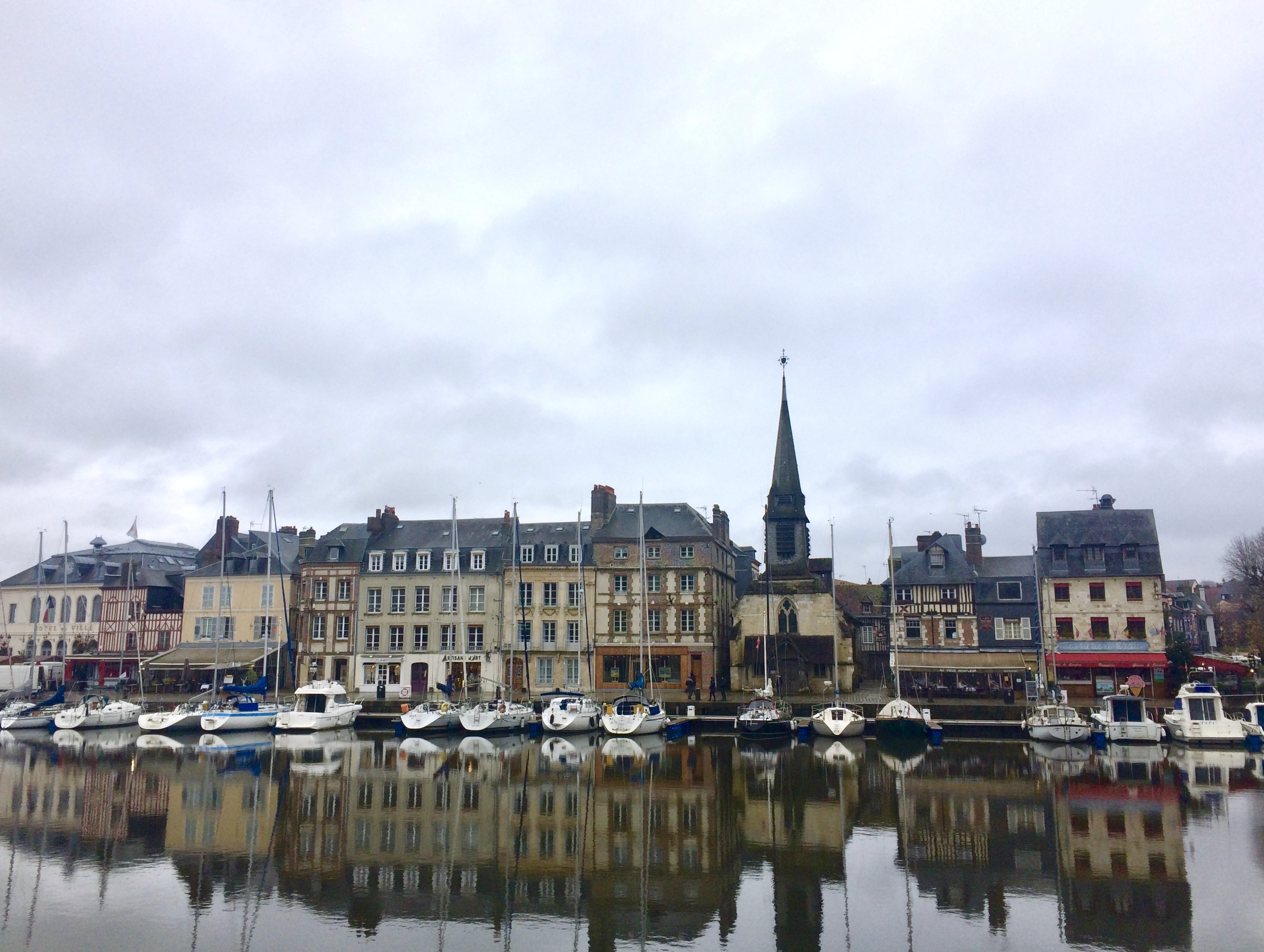
Honfleur is a mecca for the Impressionists (Gustave Courbet, Eugène Boudin, Claude Monet and Johan Jongkind, etc.). The tiny harbor lined with boats and tall wooden houses has inspired painters to portray it time and time again, not caring one bit that they are not the first to paint this recognizable stretch of space much like how I did not care that I wasn’t the first (and won’t be the last) college girl to post a picture of herself reading a book by Patti Smith on Instagram.
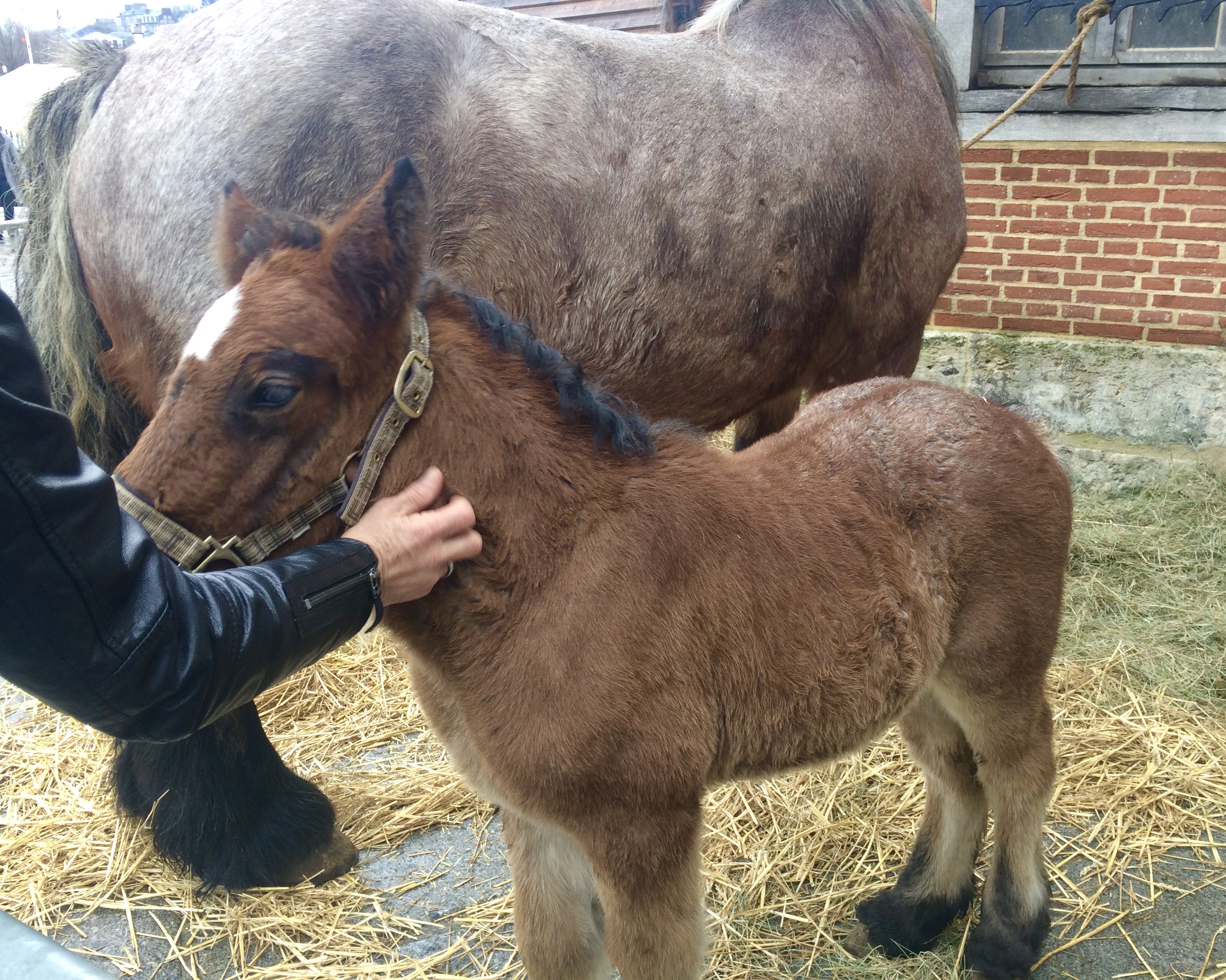
Anyway, because my family is my family, once we arrived in Honfleur (after a quick kebab lunch), we headed straight for the Erik Satie museum, taking just a few moments to pet a baby horse and walk through the oldest and largest wooden church in France.
What a cute lil dude!
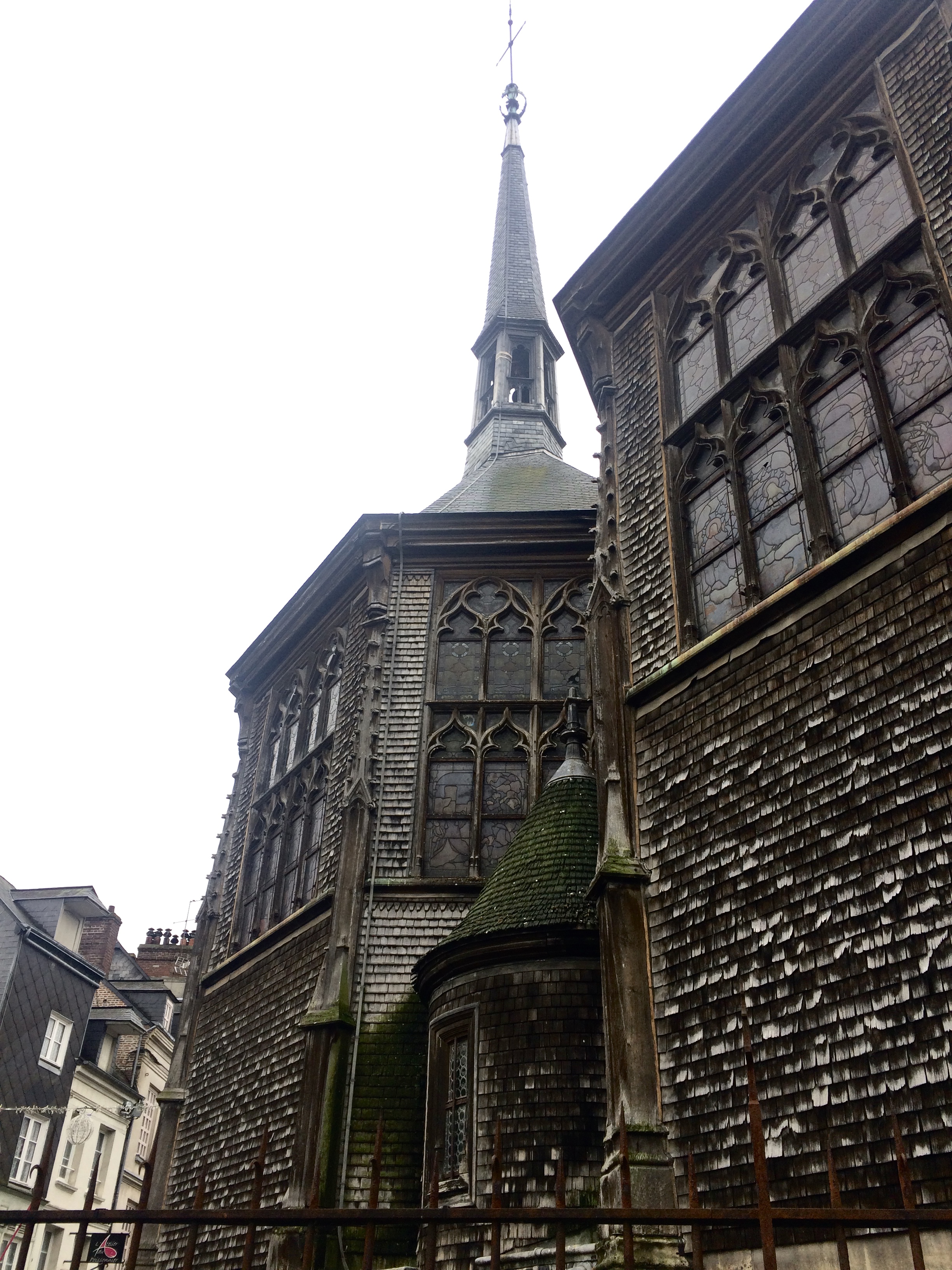
Saint Catherine’s Church smelled deliciously like pine and had one of the most intricately detailed Nativity scenes I have ever seen. It was also guarded by a cute, tiny dog. Within twenty minutes, Honfleur had won me over with its small animals.
Saint Catherine’s guard.
Twenty creche pictures later, we were in the Satie museum, having the strangest time. In case you don’t know, Erik Satie was a musician and composer. He composed piano pieces that my mom, the pianist, qualified as “hard to play even though they sound easy.” (I became his fan after Lana Del Rey used one of his pieces at the end of the music video for Carmen.)
France, the queen of interactive museums, did not let us down. The Satie museum has everything: a giant winged pear, a large animatronic monkey, a white self-playing piano, and a whirly-gig pedal operated machine which museum visitors can take for a spin. All of the rooms come paired with Satie’s music and quotes from the man himself, talking about his very, very odd life.
The museum is creative, strange and perfect. I felt like I knew Satie personally by the time we walked back out onto the quaint streets of Honfleur.
I reflected on the oddball life of Erik Satie while looking at the beautiful Honfleur harbor with my family and came up with a short-term answer to the “qui suis-je” question. Maybe wherever I live, I am a different person who adapts to her surroundings. And maybe in France I happen to adapt to the artiste’s lifestyle. A bit weird, a bit creative, a bit existential. Maybe that’s just the French way.
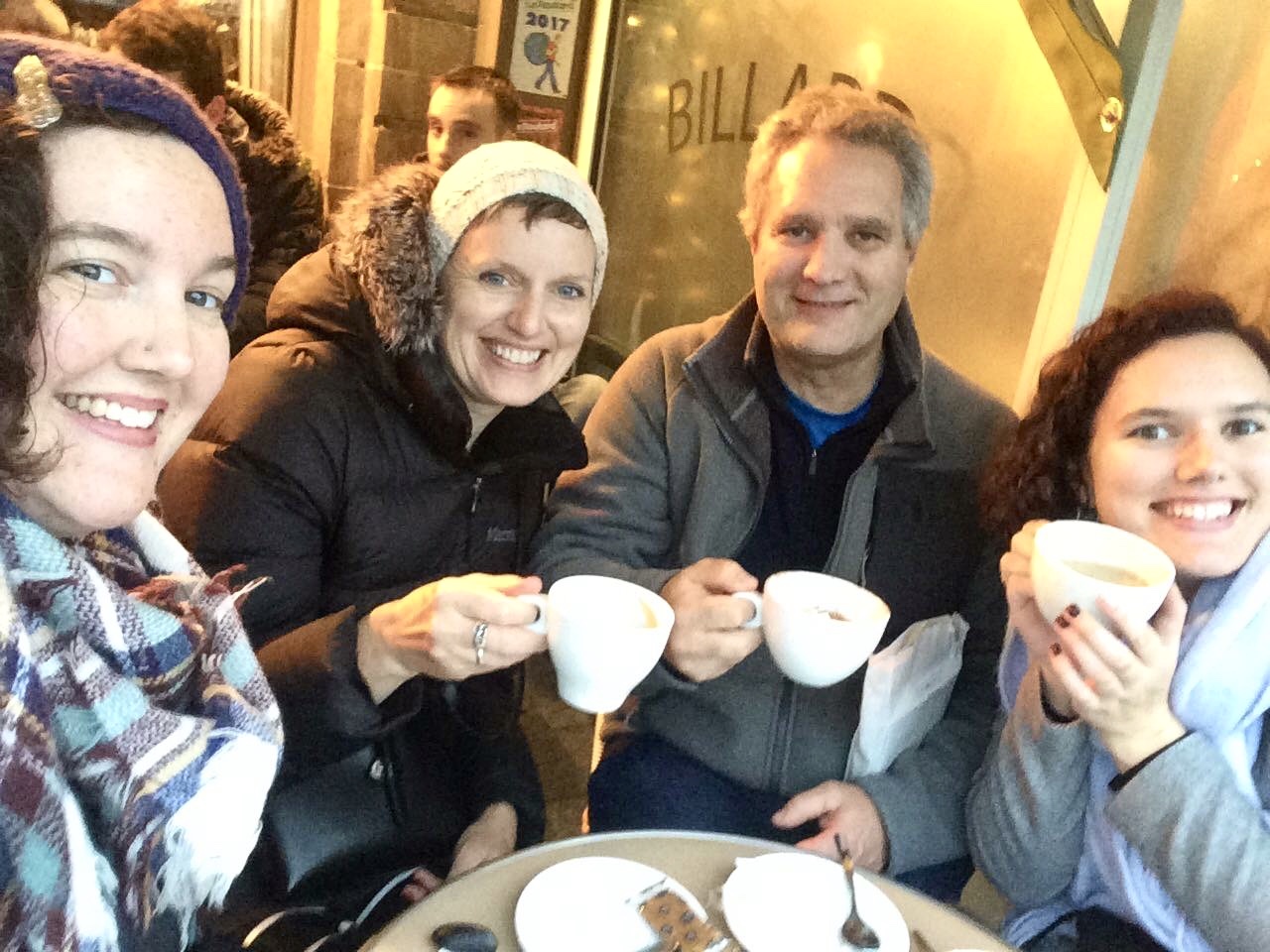
Discussing Satie and impressionists, and drinking the largest coffees we could get our hands on.
This is a question I’ve been asked many times over the last month as I’ve introduced myself to class after class of English-learning French high schoolers. It’s an easy answer, even if it may be a fudged truth.
“The food.”
After that comes a nod of understanding from everyone respectively, like they’re all thinking about last night’s dinner and going, “yeah, you’re right that is the best part about France.” Then comes another question, a bit more difficult.
“What’s your least favorite part about France?”
It’s harder for me to answer because there might be a few things but I don’t want to offend. So I choose my main complaint, and one that I know will puzzle some of the students.
“I don’t like how nothing is open on Sundays.”
This answer can sometimes prompt a discussion about how one can get anything at any time in America (unless you’re in Coupeville) and how some stores are even open 24 hours a day, seven days a week quellehorreur. But here in Alençon I find my Sundays limited to the Sunday bar–the one bar in Alençon that has capitalized on profits by being the only bar open on Sundays.
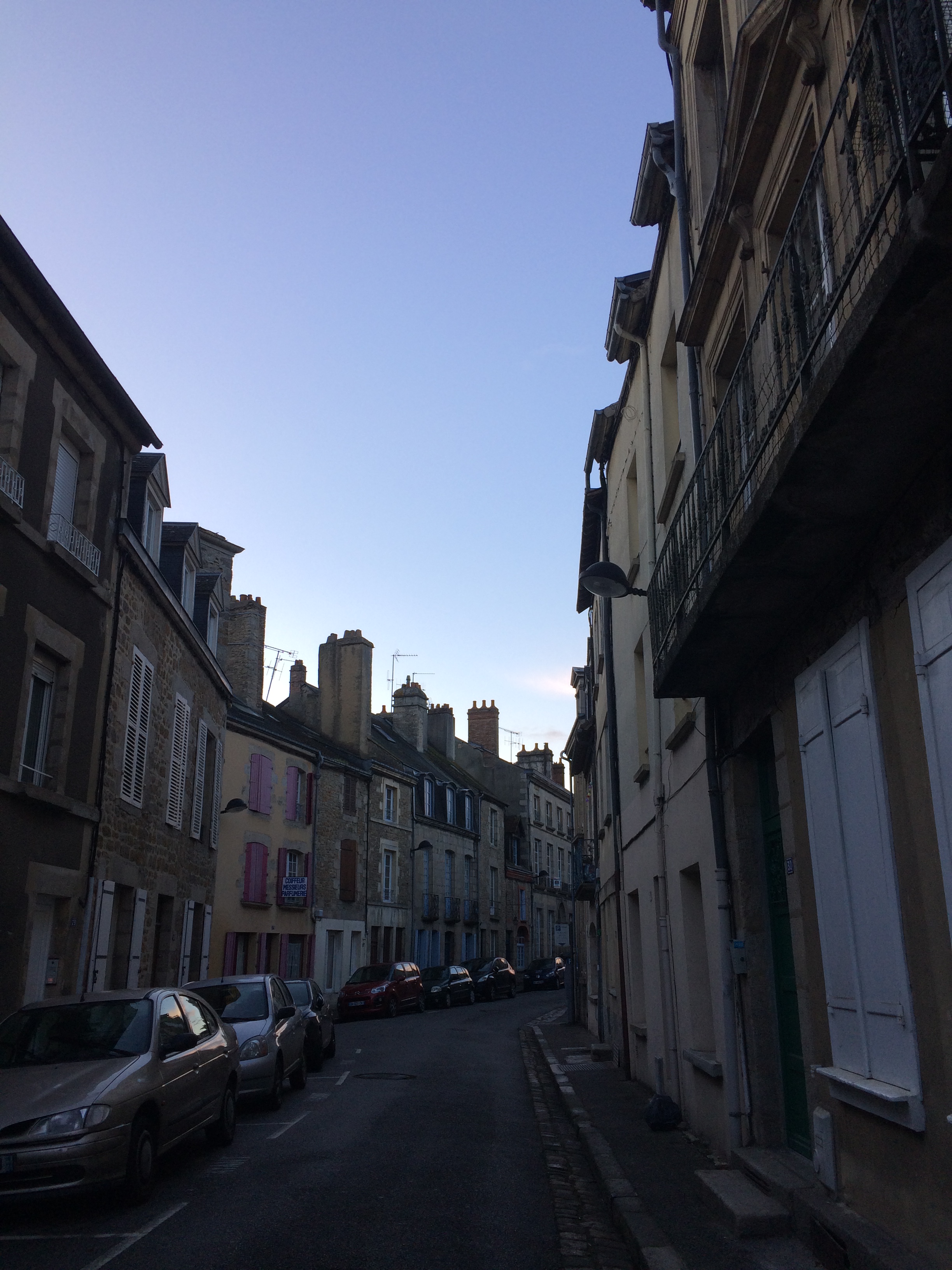
I’m not even really exaggerating. Walk the streets of Alençon on a Sunday at 2pm and it is stunningly quiet. All the shops are shuttered (even H&M!), the jazz music that normally plays 24 hours on the pedestrian street is shut off. The only sounds come from the church bells and the occasional scooter or car hurtling down the tiny roads, but even that is not often.
It gets dark so early now.
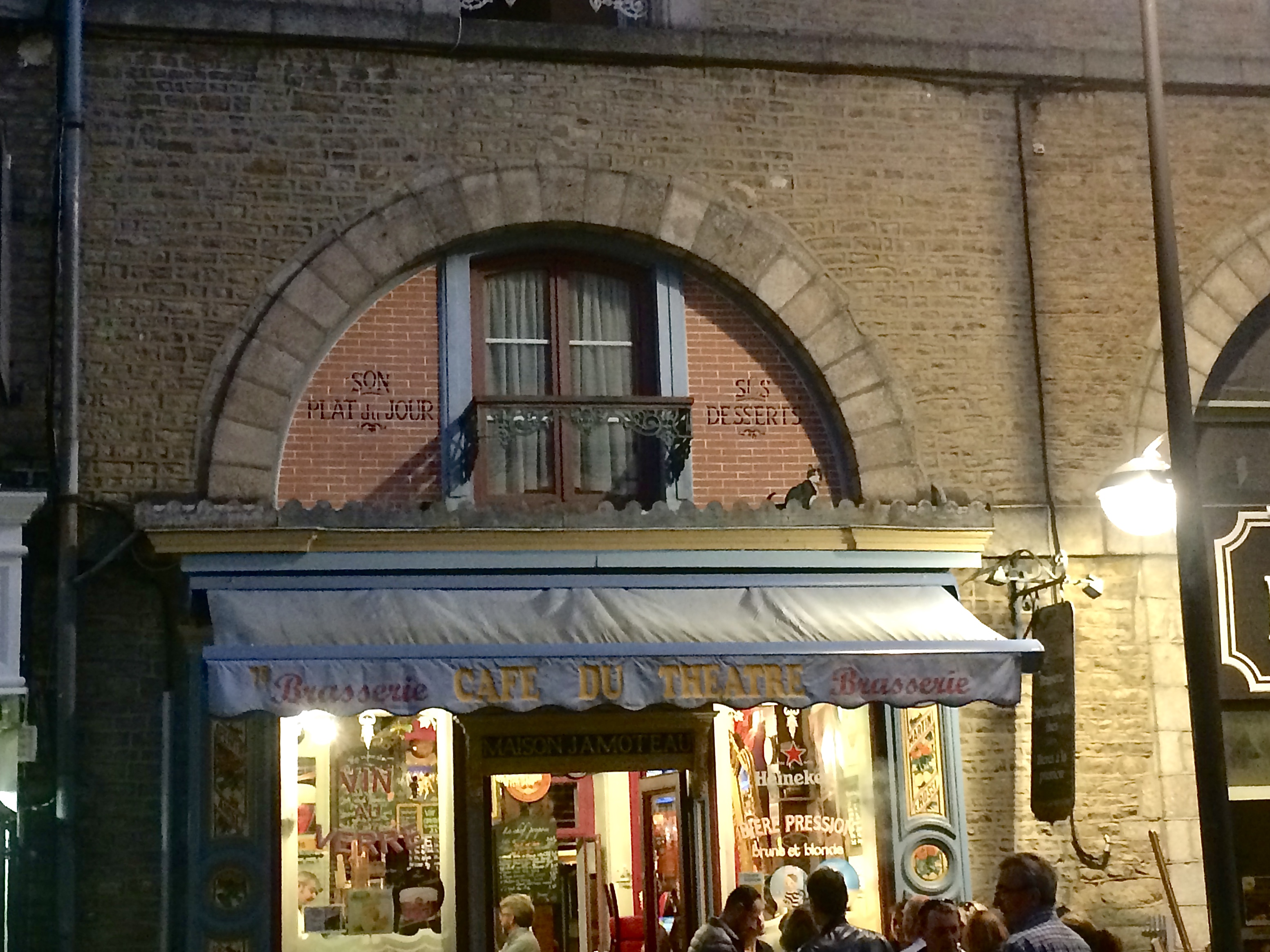
Because of this, taking a walk on a Sunday in Alençon is incredibly peaceful. You don’t feel any rush to be anywhere or do anything other than admire the way that sunlight bounces off the windows of the buildings or notice the tiny bits of moss that grow in between the cobblestones. And then after making your way all around town, which takes maybe 20 minutes in total because it’s small, you make it to the Halle Au Blé. The Halle Au Blé is a rotund dome building where farmers used to sell their grains, hence the name, which means “hall of wheat.” And juste à coté is the Café Du Théâtre, with its blue canopy and old-timey yellow lettering.
A Sunday gathering place.
Outside the cafe, depending on the time of day and the weather, you’ll find small clumps of people drinking and smoking at the tables. Or if it’s 2pm–that time directly between when lunch is over but before the afternoon coffee rush–you’ll find the bartender solo, standing outside the bar’s entrance smoking and waiting for his next customer perhaps hoping that no one will come at all, or at least not for a good while.
Bartender’s on a break.
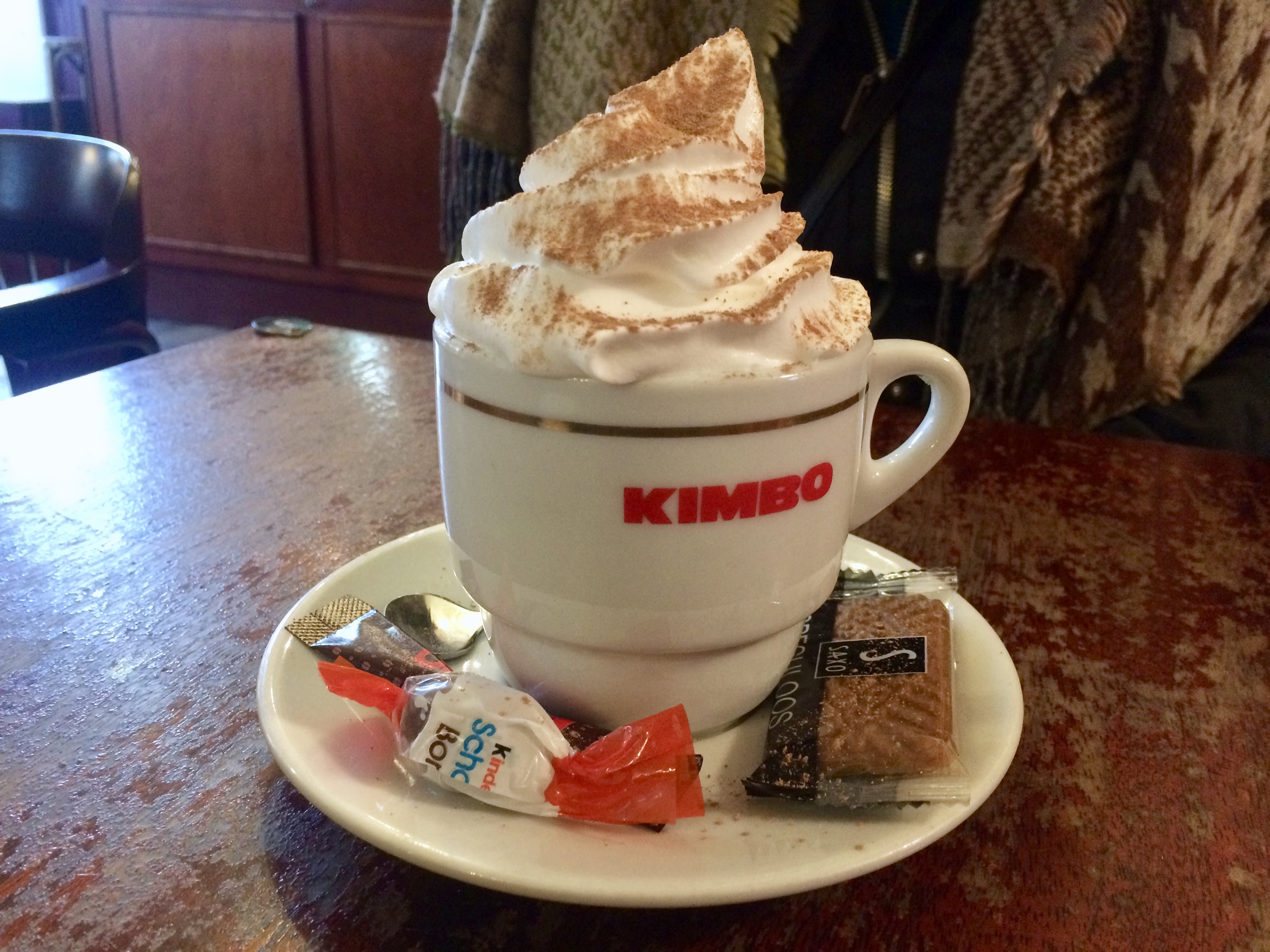
Now that the weather’s gotten colder, I’ve begun to sit inside the cafe, at the tables across from the bar but not directly at the bar. Bar stools are too uncomfortable and reserved mostly for the bartenders friends it seems like. I like watching what he makes because it gives me an idea of what French people like to order. And after observing for about a month now I’ve come to the happy conclusion that there is not a prescribed idea of what one should order in a brasserie. Adults will come in and order a hot cocoa or a diablo (flavored syrup mixed with soda, something I thought for a long while was a kids drink). Yes, the old men will most often get a pint, but other times they’ll nurse a glass of white wine for several hours while reading the newspaper. Fruit juices, espresso, coffee with cream, steamed milk, cider, champagne, beer, vin chaud, rouge, blanc, rosé, and my personal favorite: chocolat viennois, also known as hot chocolate with a pile of whipped cream on top.
The bartender makes all these drinks with ease and a kind of solemnity that gives me the impression that he both values his work and also recognizes the ridiculousness in the way he piles that whipped cream so elegantly. Either way, he’s always there behind that bar except for his smoke breaks and except for Mondays because you can bet a bar that’s open on Sundays will be closed on Mondays.
The man I’ve always assumed is the owner, but who also performs the job of a waiter, is an older man who looks so typically French you can probably picture him in your mind right now. He yells out the orders to the bartender as he gets them in that specific way that French people sometimes speak… like they’re taking pleasure in how their language sounds. He does not know yet that I can speak French even though I order my drink in what I believe is perfect French every time I am there. So instead he communicates with me mostly in mimes, winks, the occasional jaunty dance and by laughing at me. The first time I encountered him I was with the other language assistants–two of whom are Brits–and we all spent several hours drinking beer and chatting at the tables outside. Each time we ordered another round he would express his worry that we were going to get drunk by making various hand signals and over the top expressions that you normally only see in old silent films. I wanted to explain to him that my companions weren’t drunks, just British… but I wasn’t sure how to mime that.
Knitting, writing, drinking vin chaud.
The thing is, every time I’ve been to this bar since that first time, I’ve seen some of the same people there. It’s one of those places that has regulars: the guys with their newspapers, the jokey waiter, the couples coming in for their hot cocoa or beer. I think the routine of it feels so Sunday-ish to me because I grew up with a Sunday routine, a family day.
What would I do on a Sunday if I were at home? Sleep in? Most likely. Eat waffles? If my dad made them. Play with the cat? Certainly. Go to Target or something? Yeah, maybe, why not.
But I’m here on a Sunday, in France. Sans cat, sans waffles, sans family, sans Target. I could lay around. Watch TV, relax, cook some food. Or, I could go for a quiet Sunday walk. Go to the Sunday bar with a friend or a few friends. Or go solo, just to sit. Pretend to read a book and observe the goings on, trying and failing to fit in.
Me, writing this blog post, hair wet from rain, wrinkled shirt and all. Jokey waiter is balding guy in the mirror. Photo courtesy of Sami.
Friday night Judy and I were having a slumber party. Yes, it is possible to have a slumber party with someone you already live with. Just add: face masks, wine, deep talks. Eventually we ended up sprawled on Judy’s bed, reading through our old journals which were both hilarious and illuminating.
Things are different since the year Judy and I met in Paris and since the year we shared a tiny dorm room on 14th Street. The world, and our place in the world, has changed rapidly, a nicer way of saying we’re seniors now and are freaking out about it. But as I read through my Bridget Jones-esque writing from the last couple years, it became clear that some of the qualities that make me into the person I am have so far stayed the same.
Take this story that I wrote sophomore year as example:
Tuesday May 5th, 2015
Truth-telling, witchcraft, bread-and-butter
I stole Judy’s pen. I am writing with said stolen pen right now. The thing is this pen is exactly like a pen I had a few months ago. So really… whose pen is it? Maybe we just switched pens? Maybe she didn’t notice her number 1 pen was missing? Maybe she did notice and just didn’t say anything? I used this very stolen pen while sitting right next to her and she said nothing.
Maybe this pen has become shared property kind of like the little pile of hair ties that sits on the edge of the sink in the bathroom. Truthfully, I never intended for those hair ties to become shared property. They’re Judy’s hair ties. I only use them occasionally and only because my hair tie — which was blue so it had a distinction from the others which are black — went missing. Much like Judy’s pen has “gone missing.” Only I don’t think that Judy is now in possession of my hair tie because I asked her about it and she said she didn’t know where it was, so obviously somebody who isn’t Judy has stolen it and is using it. That same somebody probably switched our pens too.
I bet that somebody is a leprechaun or a small pixie. It’s my fault really. Everyone knows that small pixies eat warm-ish butter and yet I still leave our butter to sit out in the cupboard instead of in the fridge.
The thing is, I love toast. And putting hard, unspreadable butter on a piece of bread is literally the worst thing ever. So I leave it in the cupboard to get to room temperature spreadability. And before you start to think about possible unsanitariness I will tell you that you are wrong and that leaving the butter out is perfectly safe, thank you very much. Except for the possibility of a butter-eating pixie infestation.
—
I will never not desire room temperature butter. And it makes me happy that Judy and I are still friends, roommates, excessive tea-drinkers. That we still learn from each other, inspire creativity in each other. And that our new apartment in Queens always smells like lemon and toast.


























 Lily Haight