When I was a kid I could spend hours in a swimming pool.
I have no recollection of what I would do. Play? Swim? Splash?
Now, when I get in a pool, I’m at a loss. I feel like I should swim laps, or play a game, or float and read a book.
I never had this problem until I was an adult.
I’ve been thinking about this in regards to gardening. Right now, when my mind starts whirl-pooling into work-thoughts, pandemic-thoughts or worry-thoughts that I can’t shake, I make a conscious decision to start thinking about my garden.
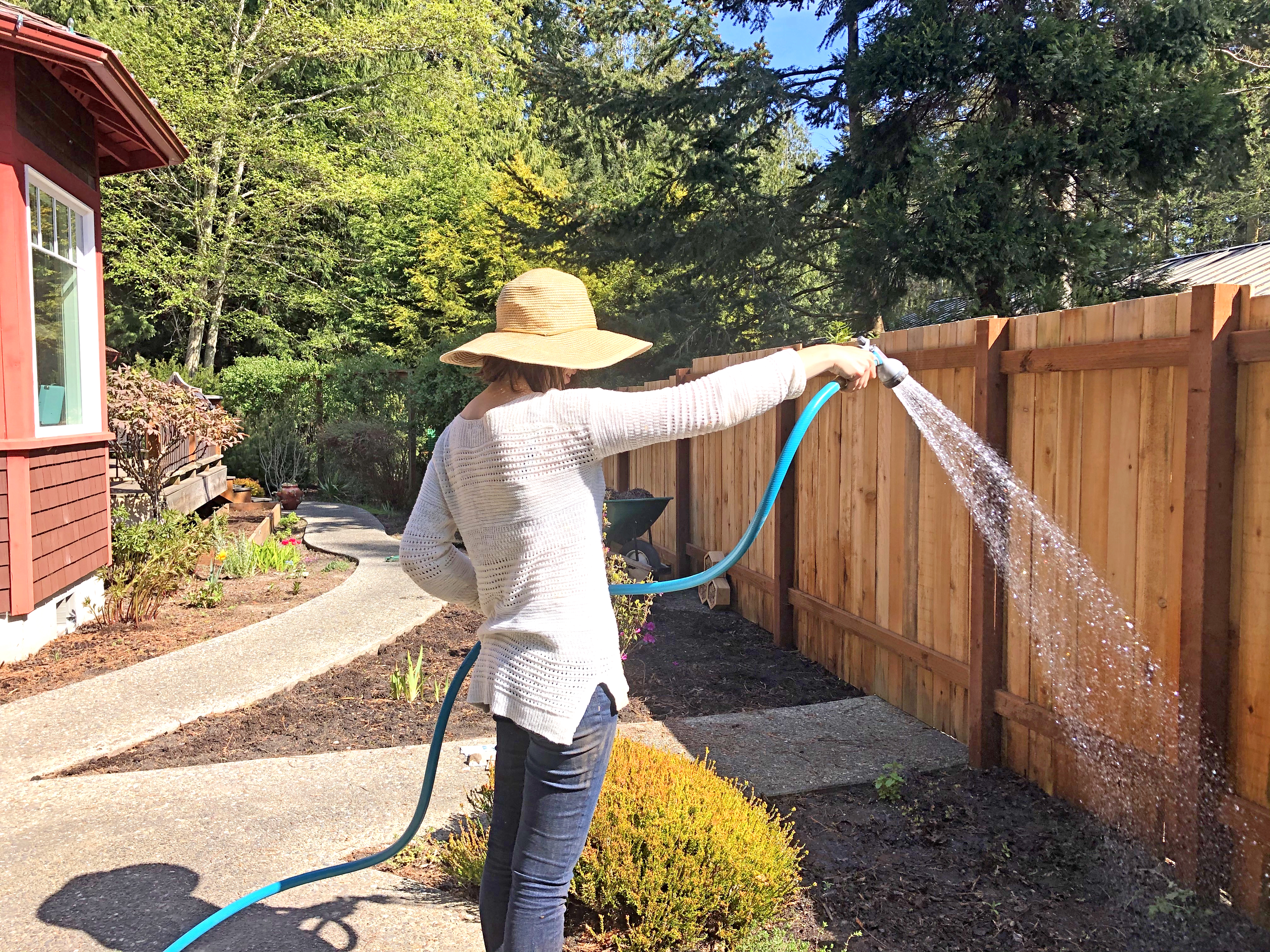
Even since this picture was taken, our garden has grown so much.
What seeds do I plant next? What needs to be pruned, staked, or watered? What areas haven’t been weeded?
But I realized all of these thoughts, while they are nice and distracting, are still goal-oriented. Even when I’m in the garden, I am thinking about what needs to be done. I have my work gloves on, I’m crouching, shoveling, weeding and seeing all the imperfections that should be fixed.
I think sometimes this is just what it means to be an adult. There comes a time when our “play” is actually work. It’s creating something, or fixing something, or baking something. It’s about swimming when you’re in the pool, instead of just being in the pool.
Yes, being in the garden is still way more relaxing than being at work. But part of my own struggles with work-life balance, especially when work and home are becoming ever more entwined during this pandemic, is that I forget I don’t always have to produce something.
I guess I’m trying to rediscover the inner child that allowed me to experience things without expecting an outcome from them. To rediscover the me who would spend hours outside, just playing. Petting the cats, turning flower petals into boats for fairies, plucking blades of grass and braiding it.
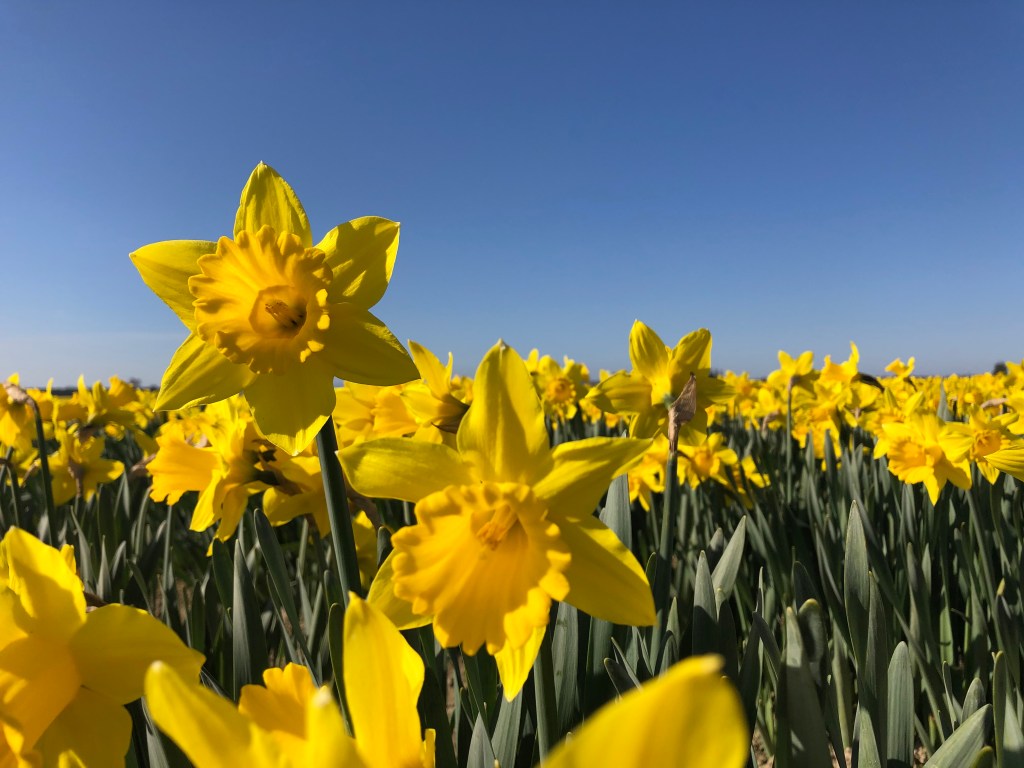
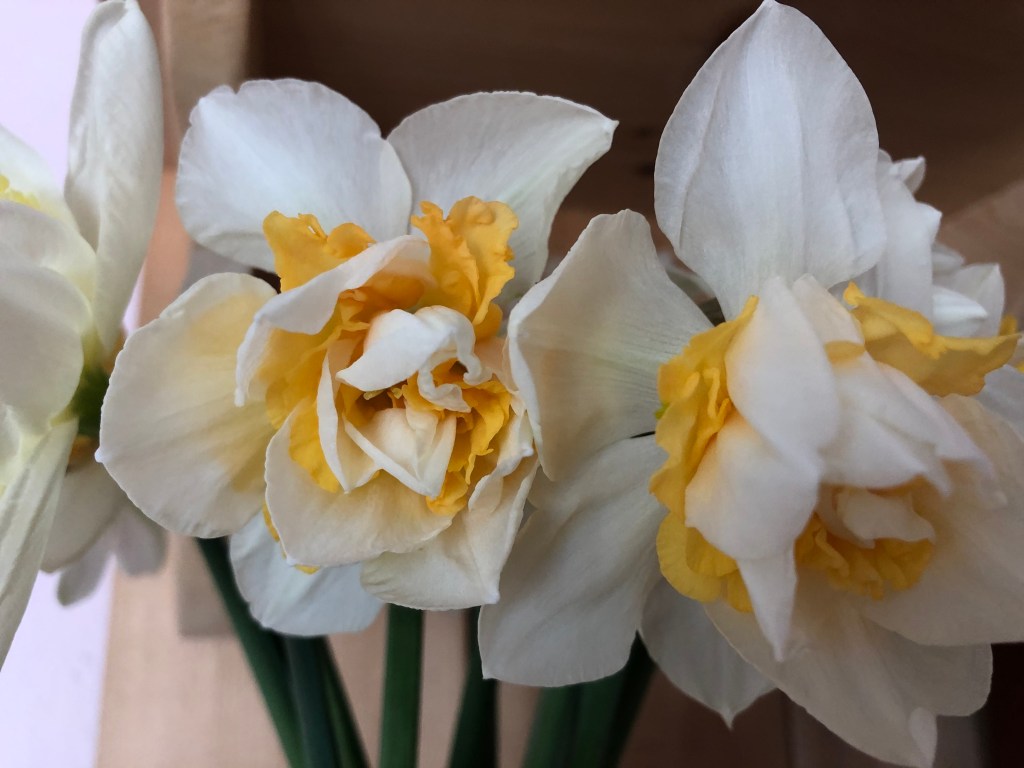
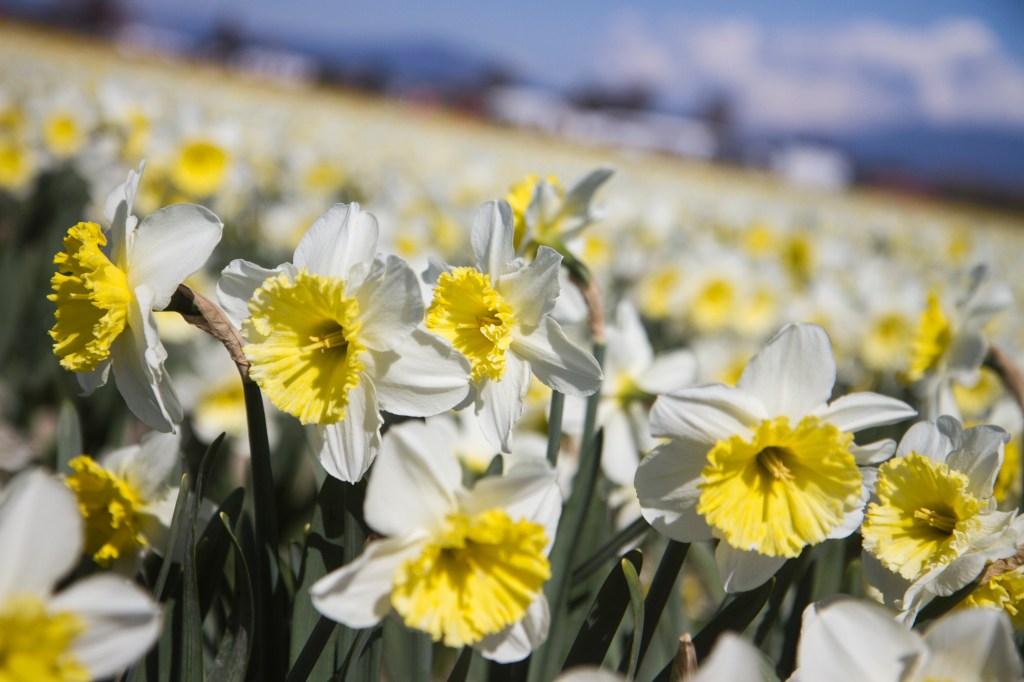
A magical daffodil moment this morning.
Gardening doesn’t have to be to produce a beautiful garden. It can be just to get outside, put my hands in the dirt and feel.
Although I write for a living, my writing doesn’t always have to have a monetary value. It doesn’t have to have a value at all.
For example, does this blog post have to have a call to action, a focal point, or an ending? Or can it just be a moment for me to express thought, choose words and put them in an order, for no reason at all other than to feel how I feel while I’m doing it.
We moved into our house in late November, and after a full December, only got around to planting daffodil bulbs in January.
I was convinced they weren’t going to show up at all this year. But just like all the gardening advice columns I consulted, it looks like they’re going to be late bloomers. Last weekend we noticed a few daffodils springing up and this weekend found even more.
A new ranunculus, which I hope the deer won’t eat.
And with each day, our garden is shaped into the natural paradise I want it to be. We’re nearly done weeding all the beds—although that work never truly ends—and are beginning to think more strategically about where to plant our seed starts and future annuals.
Inheriting a garden is exciting because there are some established plants I know are bound to be beautiful, and some new arrivals that I didn’t realize were there, like what I think is a host of Lily of the Valley coming up from below the deck.
Red twig dogwood where a heather used to be.
But the inherited garden also comes with a lot of things we aren’t overly fond of, such as randomly spaced out heathers that take up too much room for little viewing pleasure. We both love heather, but these particular heather plants are not our favorite varieties, nor are they in a place we love.
So we are removing them and planning to either give them away or move them to a different spot. In their place we are adding some native plants, like a red twig dogwood shrub. We also added a forsythia this weekend—a bit of bright yellow to help us greet spring each year.
Our new forsythia.Hoping it grows tall.
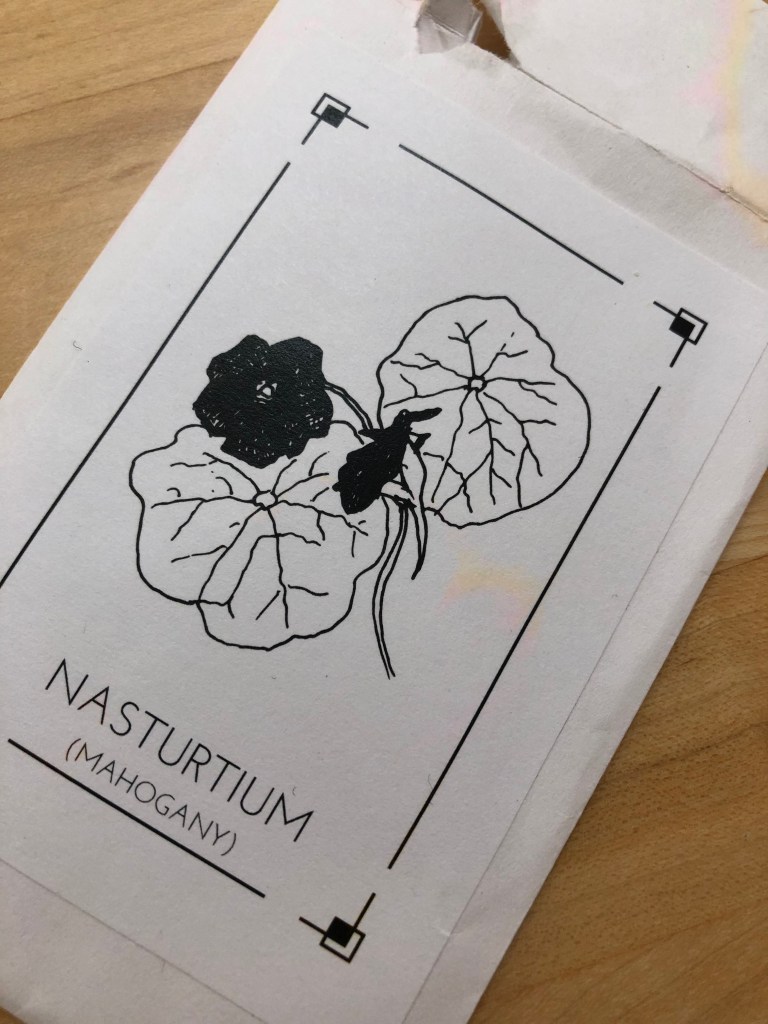
Inside, the seed starts are well on their way and I can’t wait for them to be ready to plant. In the planter boxes outside, we have sown poppies, sweet peas and now nasturtiums as well.
Nasturtium seeds.Edible and cute.Snapdragons peeking out.
Every time I stick a seed in the earth I wonder if anything will come of it. Maybe it’s an exercise in taming perfectionism: the worst case scenario is nothing. But the best case scenario is beautiful blooms.
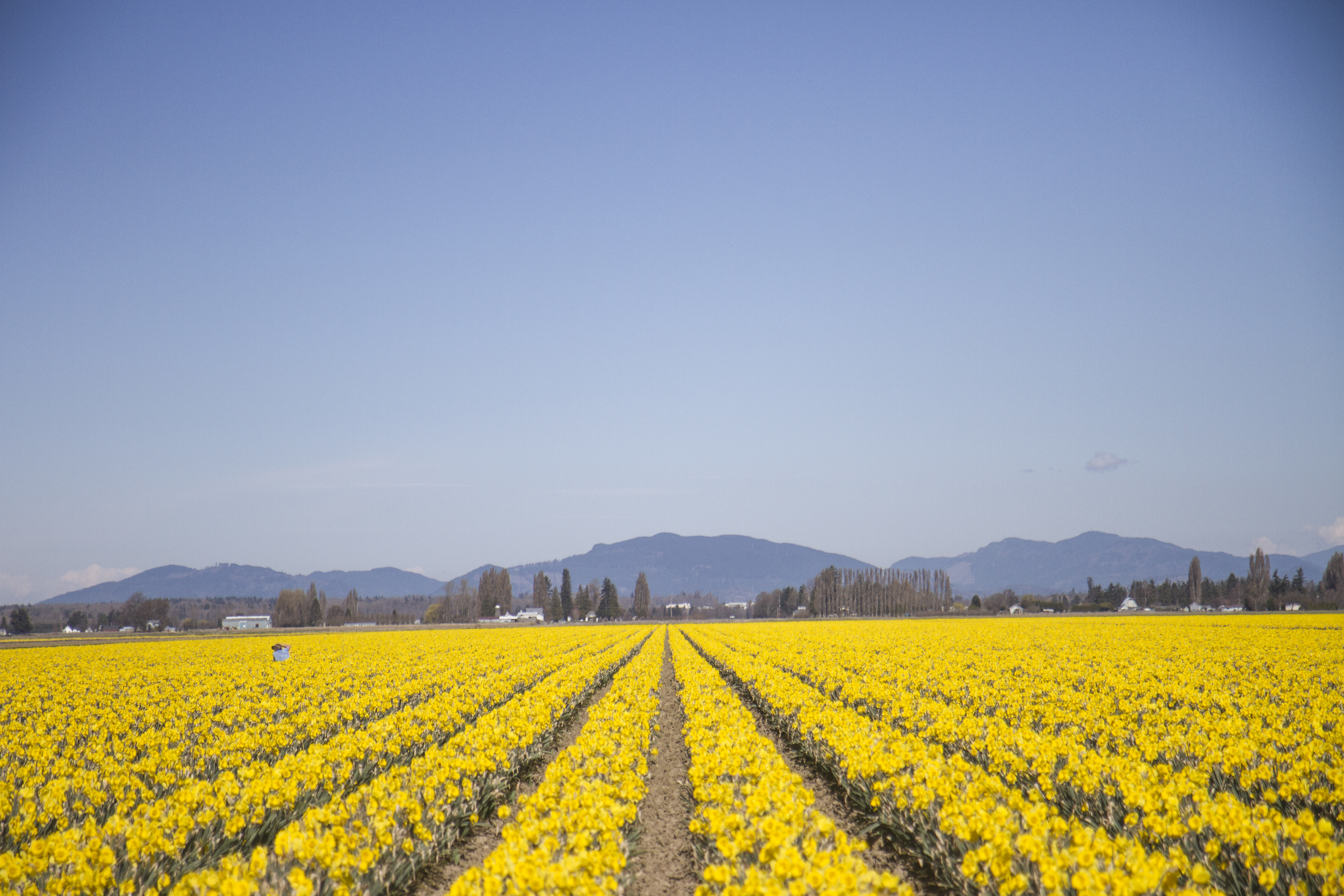
On the last day of freedom before our sheltering-in-place began, Libby and I made our way over to Mount Vernon to soak in some sunshine—both the actual rays on this first spring Saturday of the year and the sunny, yellow fields of daffodils.
Sunny girl.Surrounded by beauty.Ruffly petals.
The farms weren’t open to the public, so we had a socially distant lunch on the dirt in the middle of the daffodil field. Heaven.
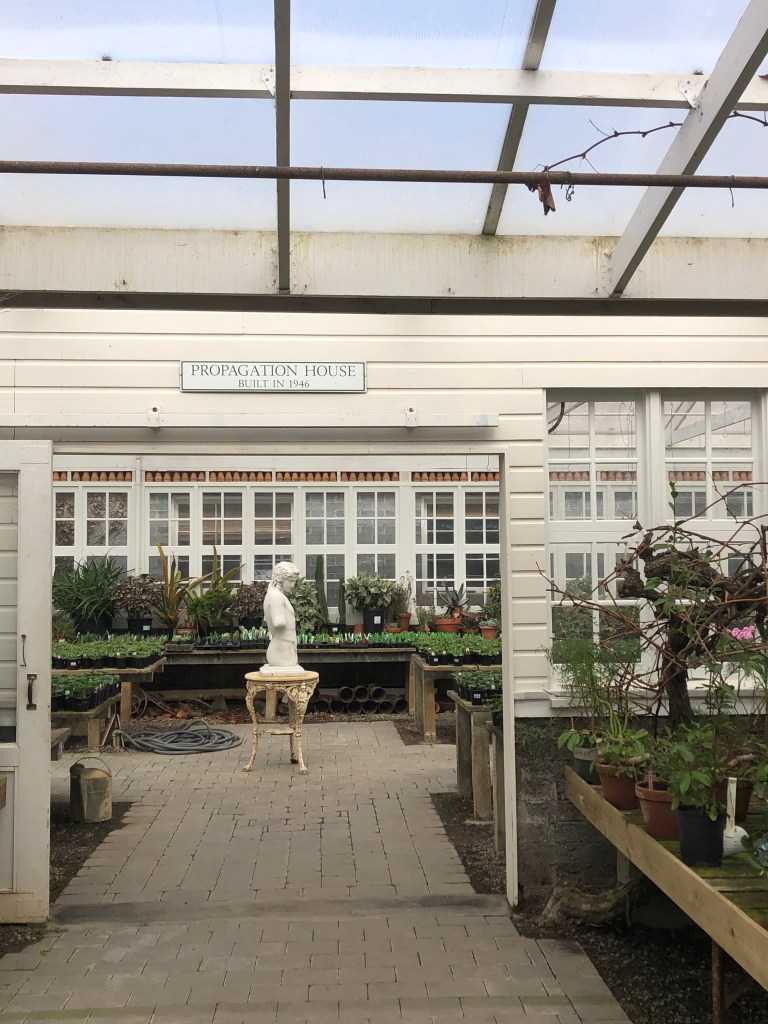
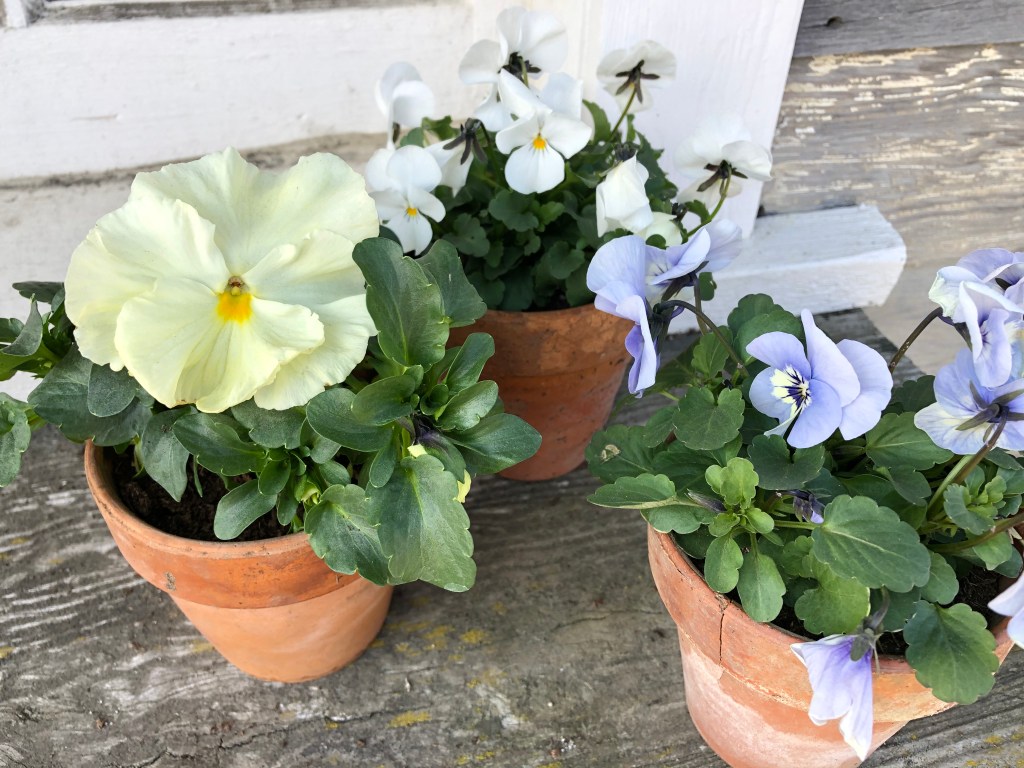
We also stopped by Christianson’s, one of the best local nurseries in the area, for some garden inspiration. There we greeted doves, walked lazily through greenhouse after greenhouse and purchased a few tiny pots to plant violets in.
My favorite propagation house.Doves are also sheltering.Inspiration for our violet pots.
The next day, having spent all that time soaking up beauty, we tackled some much needed weeding AND planted seeds—poppies and sweet peas direct-seeded outside, while a host of others, such as yarrow, hollyhocks, snapdragons, foxgloves, started indoors.
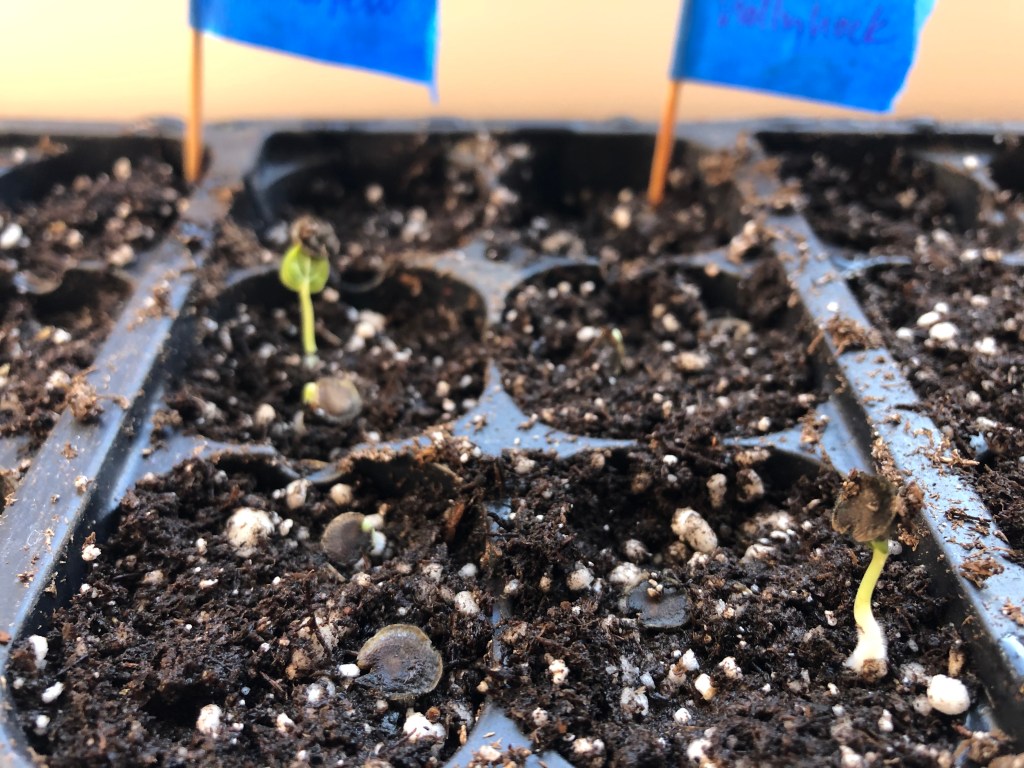
Just a few days later and already tiny sprouts are popping out of the soil!
Hollyhocks coming up.
In these days surrounded by deaths—now climbing into the hundreds in Washington state—it’s good to see life unfolding before my eyes.
Perhaps this pandemic will bring about one thing of beauty: everyone’s gardens will be lush this summer after days spent at home, in isolation, working the soil.
Winter is on its way out and I am counting down the days until spring blooms.
Our jardin is steadily being prepped for planting seeds: I’m slowly getting rid of major weeds and an invasive ground cover plant that I hate. After I finish adding compost to the soil next weekend, we are going to plant some of our first seeds of the year: sweet peas, nasturtiums, poppies and zinnias. Inside, we’re going to start some snapdragon seeds.
For now, though, I’m looking for garden inspiration from the small pops of color that surround me. A visit to the butterflies on my birthday, a trip to the Garden Show in Seattle and the unknown buds that are popping up around the garden.
Nothing better than a tropical butterfly room on a cold winter day.
While we plan our flower garden we are also trying to determine natural ways to deal with pests like deer. Hopefully most of our flowers will be deer-resistant—like foxglove, snapdragon, poppies, zinnias, yarrow and hollyhocks—and we’re planning on creating toxic-flower-barriers by planting them around those that might be a bit more vulnerable, like sunflowers.
Color inspiration from the Garden Show.
We recently planted two bare-root roses (one climbing peach-colored and one pale pink) and I’m excited to see them grow, but terrified of how they might get munched on by deer.
According to a recent article in the New York Times (Titled “On Staten Island, Feeling Overrun”) there are an estimated 30 million deer across the country that eat the equivalent of 15 million metric tons of vegetation — greater than the combined weight of all the aircraft carriers in the Navy.
I’m convinced half of those deer live in Port Townsend.
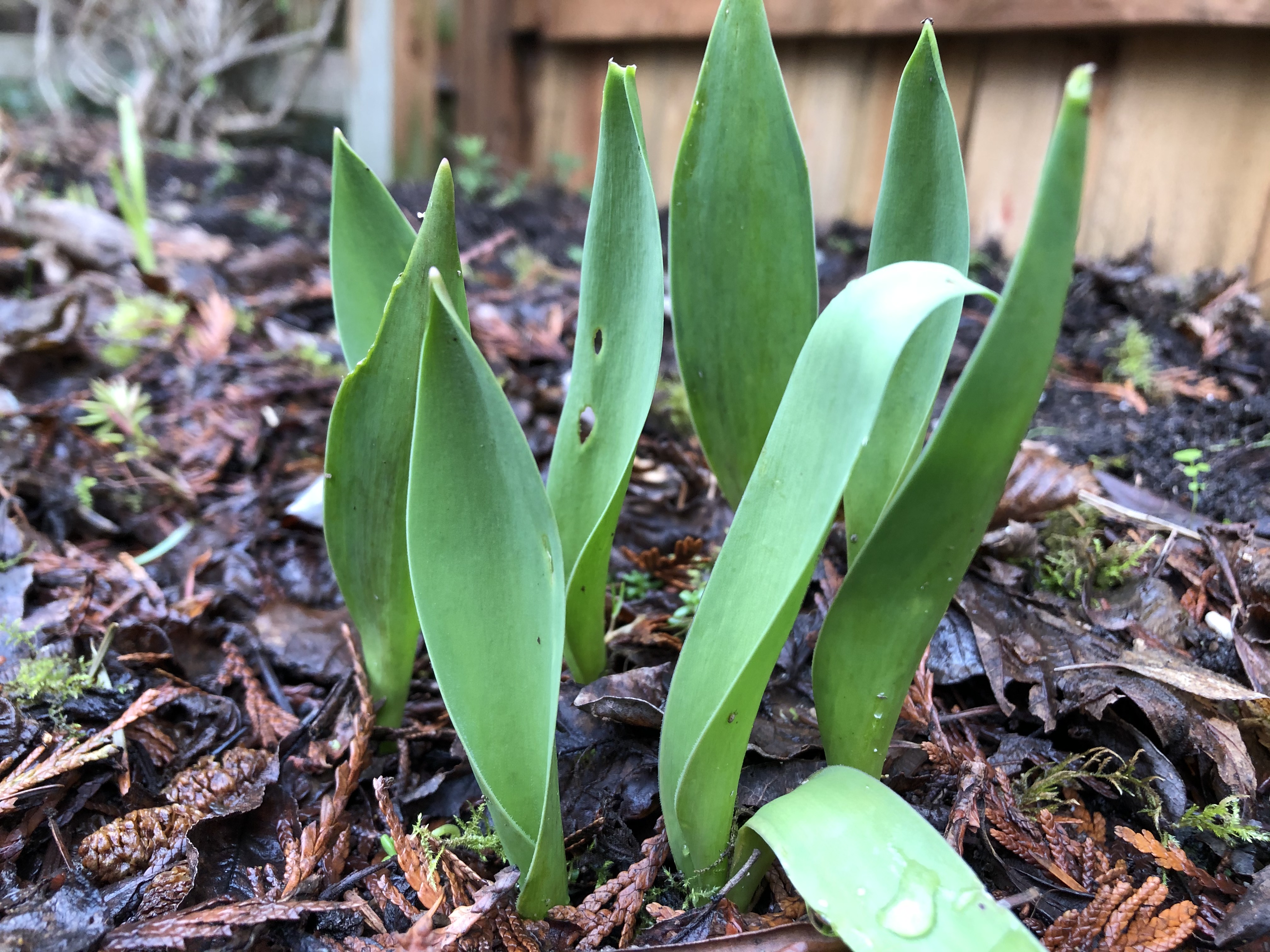
These have since been eaten.
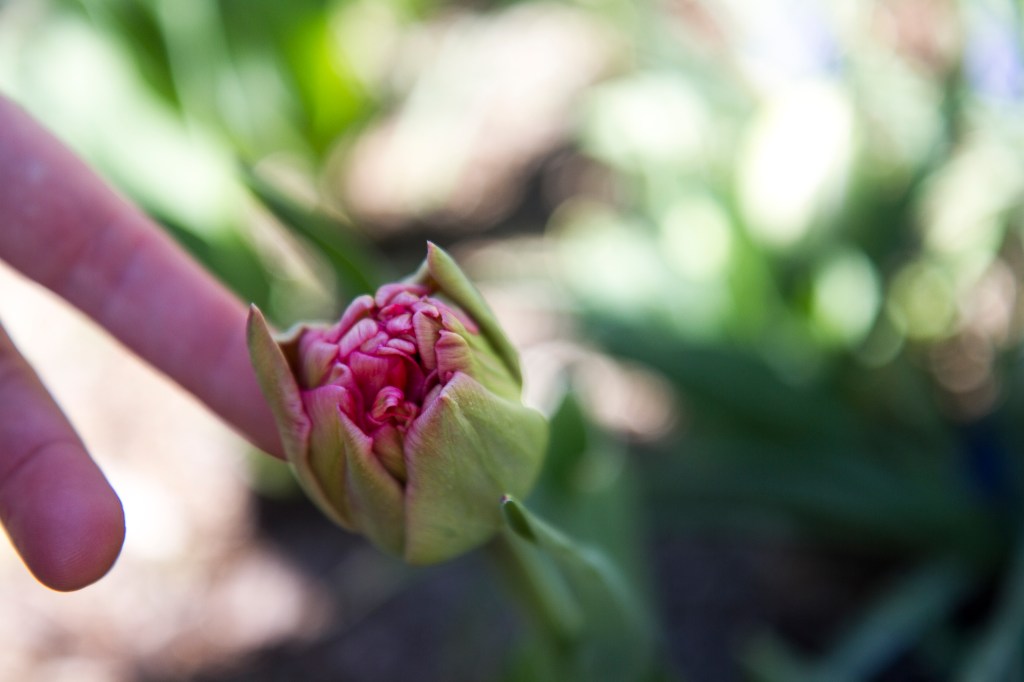
The previous owner of our house planted some tulip bulbs, which started to grow only to be munched on by deer. Despite the sad tulips, I’m staying positive that the deer will leave most of our garden alone. All we can do is stick to toxic flowers and hope for the best!
But this week was one of the worst yet. Day after day of unrelenting rainfall left me feeling like I might drown in the growing mud puddle surrounding my house.
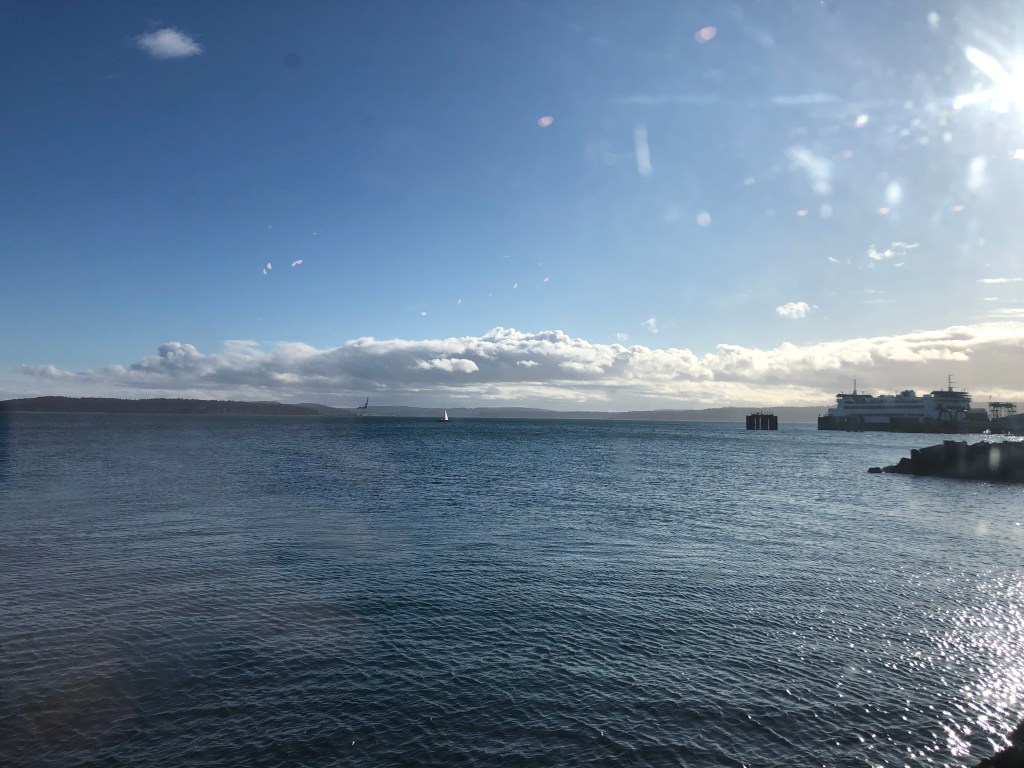
So when the clouds parted Friday afternoon and I saw blue sky for the first time in many, many days, it was like feeling several pounds lighter. Spring will come as it always does.
The first blue day in a long, long time.
On Saturday, Libby and I went for a walk at Chetzemoka park in town, getting inspiration from a tiny daisy that was blooming in the middle of a soggy, grassy knoll. There, a tree has already begun to bloom, making me feel like the pressure is on to get the yard ready for spring planting.
A sunny spot. Blooming already?
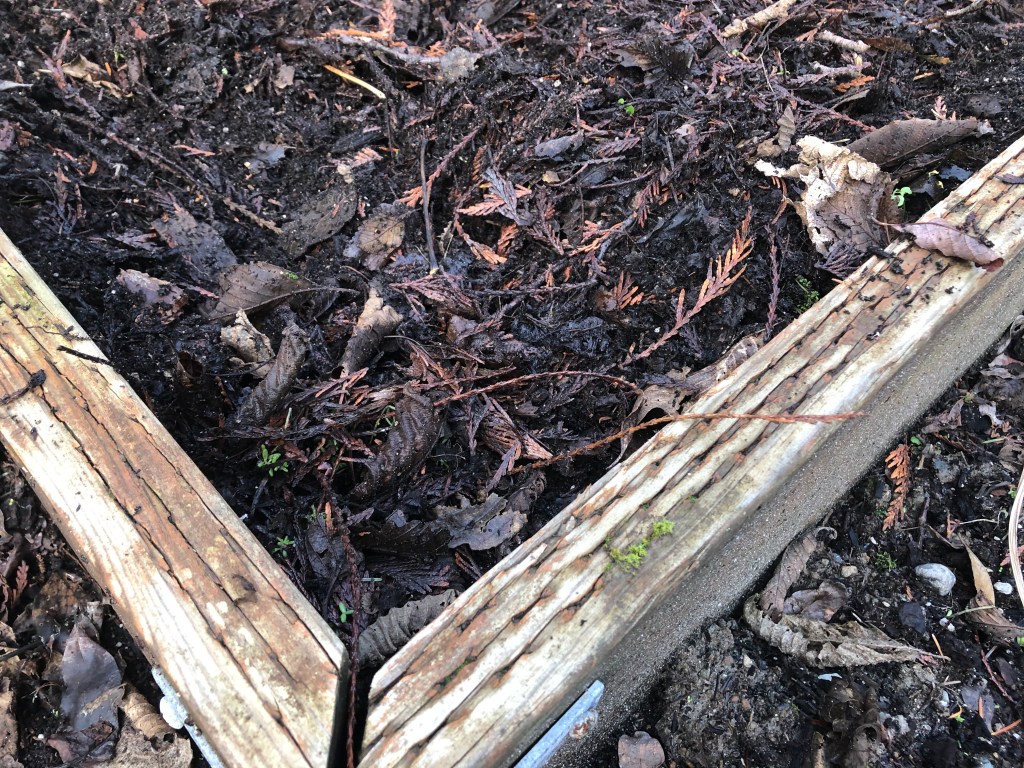
On Sunday, I got out in the yard and began assessing our soil. Fallen leaves and tree debris has made for a nice mulchy layer to add nutrients to the soil.
Planter boxes we plan to fill with flowers.
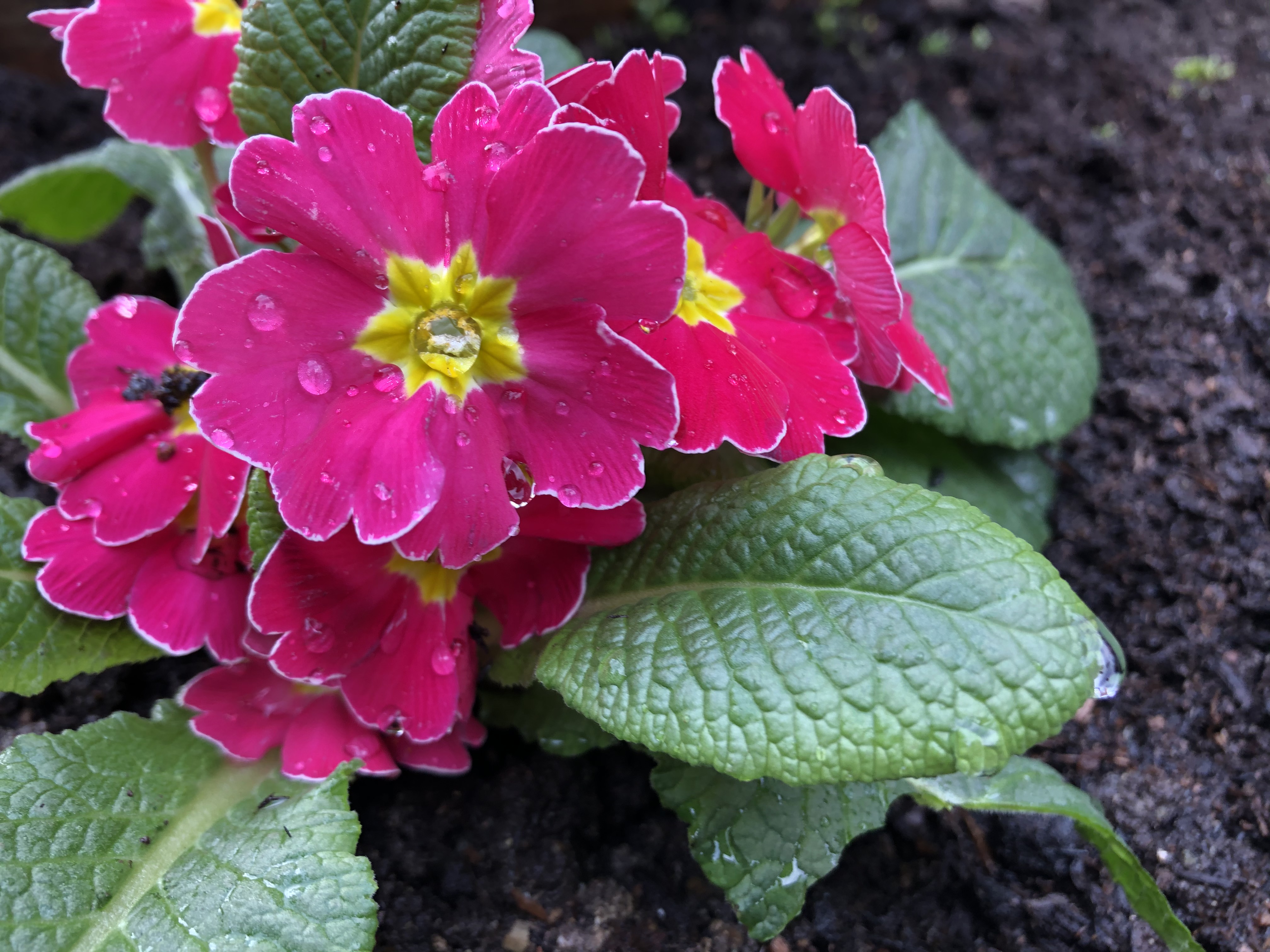
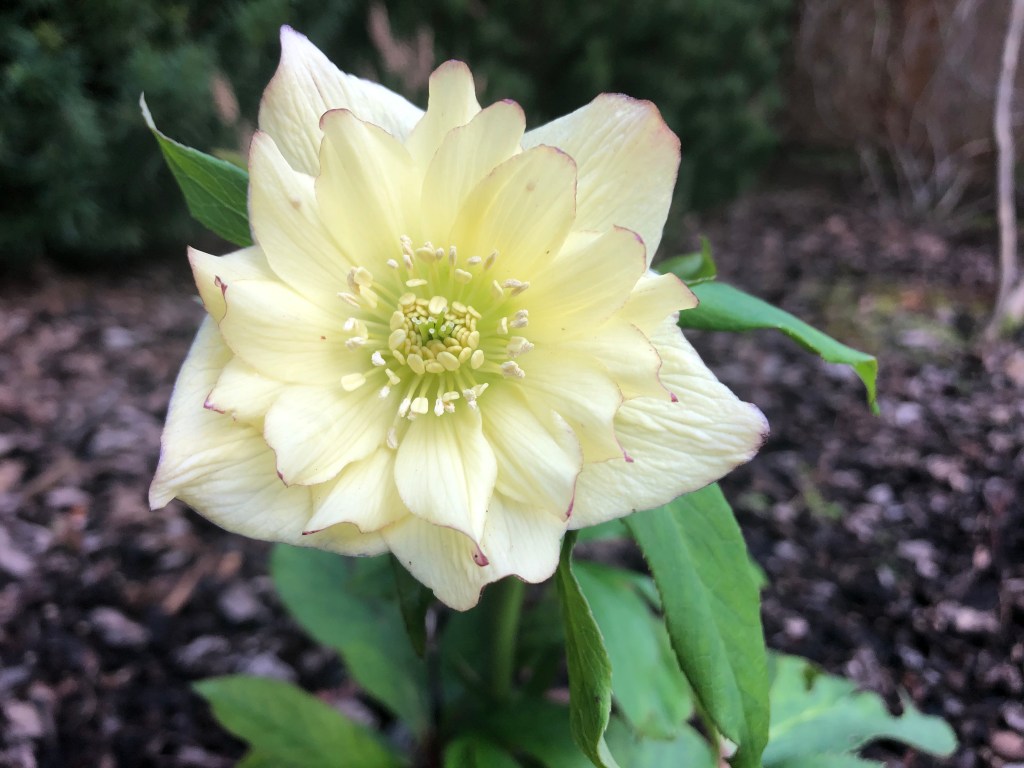
Our winter blooming Hellebores bring a spot of color to the yard—a ray of sunshine to come home to on the days when cloud cover and early sunsets make the entire day seem dark.
Leafy, yellow and bright. New buds joining the blooms.
And signs of the coming spring are all around: I trimmed off last year’s seed pods from the peony tree, where new buds are forming. They look like clasped hands.
What color will the blooms be?
What’s exciting about our new home is we don’t fully know what is out in the garden yet. We know there are peonies, but don’t know what color. We see buds forming on the rhody, but aren’t sure when it will bloom. There’s a bare shrub that could (hopefully!) be a lilac. And shoots are springing from the dark earth that are likely the first stages of some irises and crocosmias.
Slowly, it will reveal itself to us and we hope to add even more color, with a plan to plant sunflowers, snapdragons, sweet peas, foxgloves, Queen Anne’s Lace, dahlias and much much more.
We have already planted a few daffodil bulbs around the yard. I keep looking at the spots where we planted them, imagining them waking up from their dormancy under there. Hopeful that they’ll grow, bloom and bring brightness and color. Waiting, waiting.
We don’t wake up with the sunrise to get out in the garden. It’s still winter, we’re still young and waking up slowly and sweetly is too lovely to give up.
Besides, we know that just as much can be done in the warmth of a setting afternoon sun as in the morning.
In the midst of winter, the earth is still cold but at our seaside home it is damp and soft, making it easy to dig our trowels in, pull up weeds with our bare hands and plant our hopes.
After moving into a new house in Port Townsend last November, Libby and I are spending January planning our flower garden for the summer.
The yard art we decided to keep.
Here are some of the first tasks on a journey which I hope will lead to a blooming paradise this summer:
Figuring out what to do with the yard art left by the home’s previous owner.
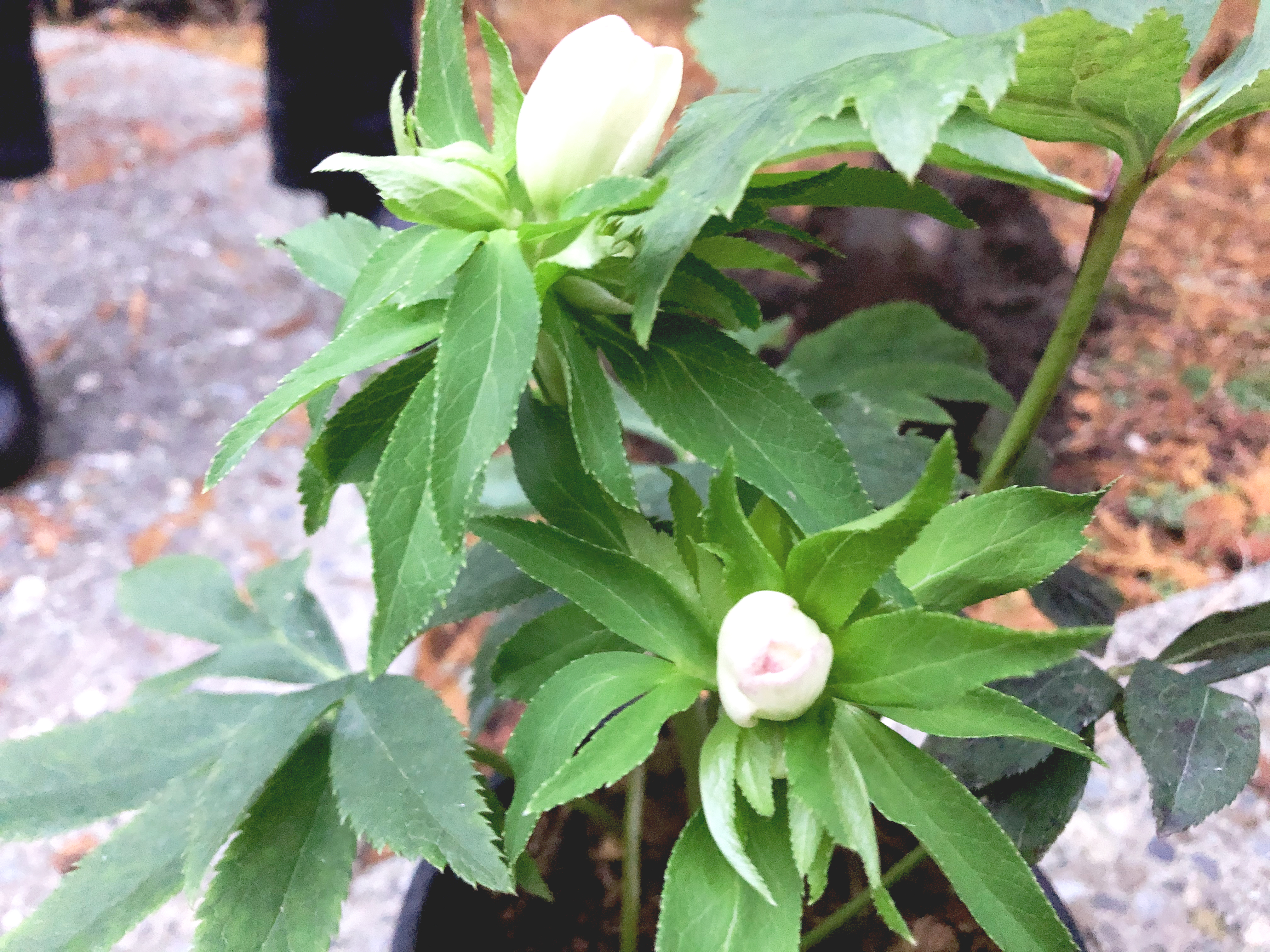
Planting what we have brought with us from previous places, like a pot of fever few, a twiggy mint plant and some new birthday hellebores.
Organizing our garden bench
Pulling the weeds, getting rid of the ground cover we hate, mulching and preparing the dirt for planting.
Deciding on our seeds and garden design
Using a sick day to organize seed packets.
I’ve been thinking a lot lately about how planting things is a bit like telling someone you like them: you’re putting something out there that might get dug up and eaten by a bird. It might just stay there, not doing anything at all but eventually molding back into the earth.
But it might grow, slowly reaching out of the depths of the earth into the spring sun, getting taller and taller and finally blooming into something sweet and beautiful.
Three thoughts from road tripping from Port Townsend, WA to Santa Maria, CA and back again on Highway 101.
1. Sand beneath fingernails is one of the most uncomfortable feelings I know. But I put up with it for the sensation of running my hands through it; hot, dry sand that you pile on top of your bare legs like a blanket.
Dirty feet, sandal tans
The beauty of a coastal road trip is that when your back gets tired and your legs begin to cramp, you can pull over almost anywhere and plop yourself down on sand. The sea is often the same color as the sky: blue meets blue, or icy grey meets impenetrable fog. But the sand—whether packed down and cold with water, or soft and warm across your toes, or burning hot beneath the soles of your bare feet—is always a contrast, like the rind to a melon.
2. It feels good to be dirty on a road trip. Three days sans shower and your skin and clothes begin to take on their own smells: bacon leggings from when you cooked those massive strips on the ancient Coleman stove in your jammies; a smokey sweater from bathing in the light of a campfire, reaching in to readjust the logs every now and then; gasoline shorts from when you stopped to refill and got a bit of gas on your hand because you’re clumsy and so you wipe it on your shorts which are also known as Nature’s Napkin.
Our favorite campground in Humboldt Redwoods State Park.
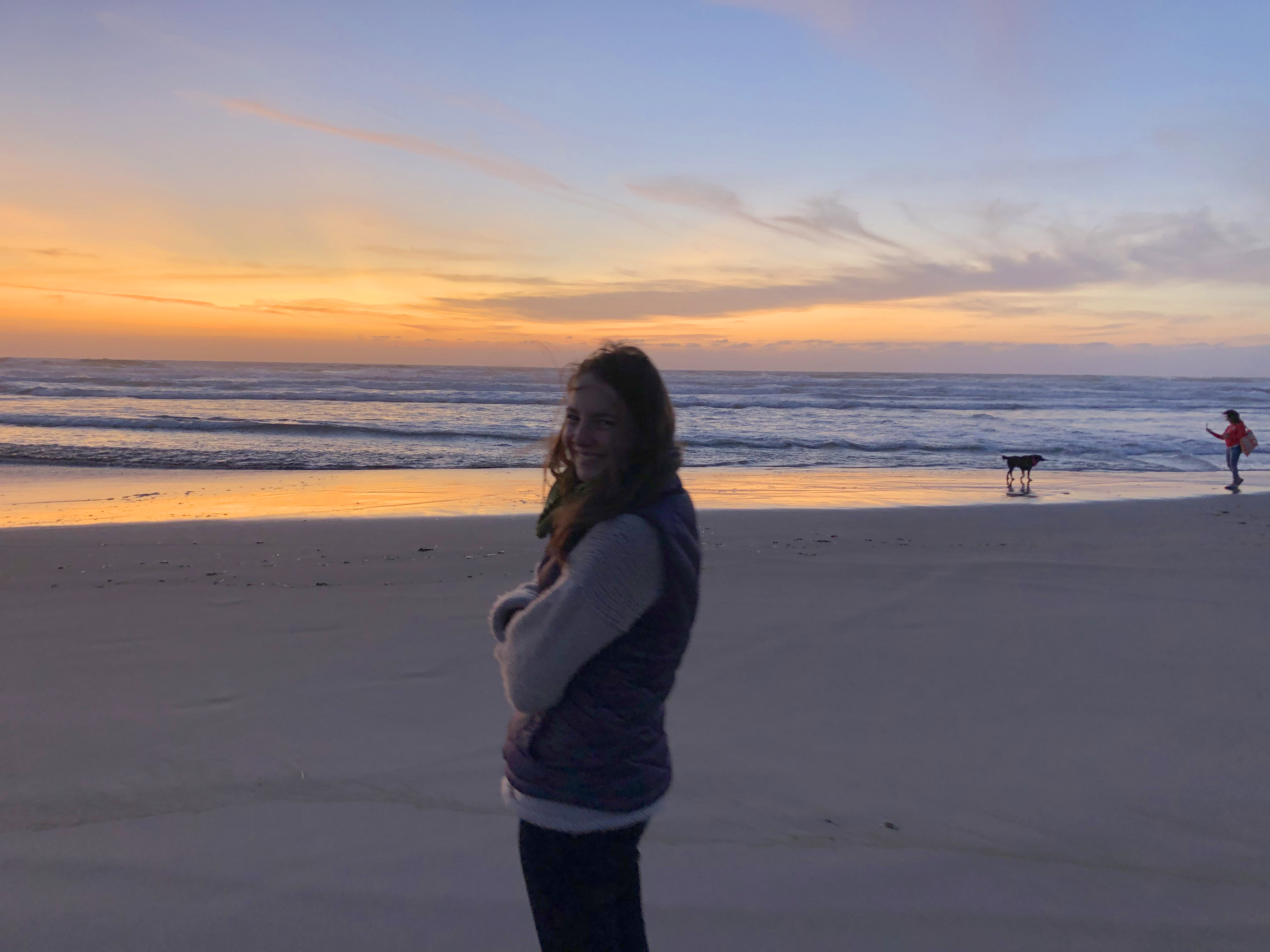
Sure, there is also the smell of sweat soaked into a few t-shirts (and you will shower eventually when day three hits mostly because your hair has become so unruly you aren’t sure it will ever be controlled again). But every time you kiss the neck of your loved one and taste a bit of salt, you are reminded of the delights of living outdoors, away from the Rules and Regs of your every day life. That’s what makes it fun.
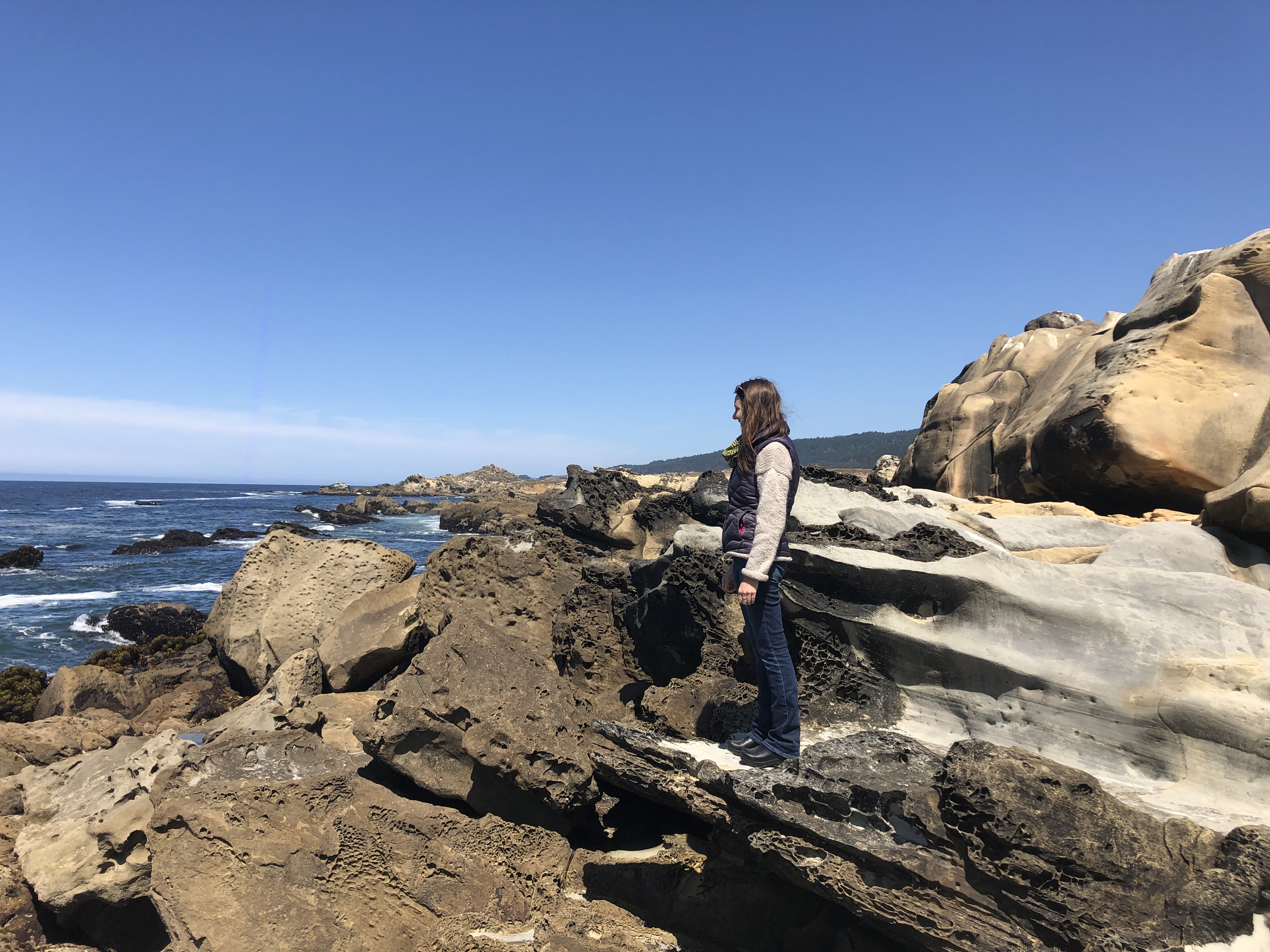
Salt Point State Park, where we got drenched by a sudden wave.
3. Bark is not impenetrable, but when you stroke the side of a massive Sequoia it feels like it is. What makes those trees so special, besides their size and age, is that their bark is relatively fire-resistant. Therefore, those that have been struck by fire become these living caverns—a portion of the inside is hollow, while the outside keeps living and growing.
Lady Bird Johnson Grove in the Redwoods National Park.
I don’t have impenetrable skin although I sometimes wish that I did. Strong, scratchy bark that no one can see through. But recently I’ve been exploring the softness of myself—the vulnerable. It feels warm and dark and secret, like standing in the blackened, hollowed-out insides of a giant Sequoia that survived a fire.
It’s a dilemma: wanting to ride a motorcycle to work, but also wanting to wear a sundress because it has finally gone above 65 degrees and I can reasonably have bare legs in that weather (kind of).
My solution: leggings under dress. Jacket on top. Helmet smashing my curls, but that’s ok. Dress flying in the wind on the way to work.
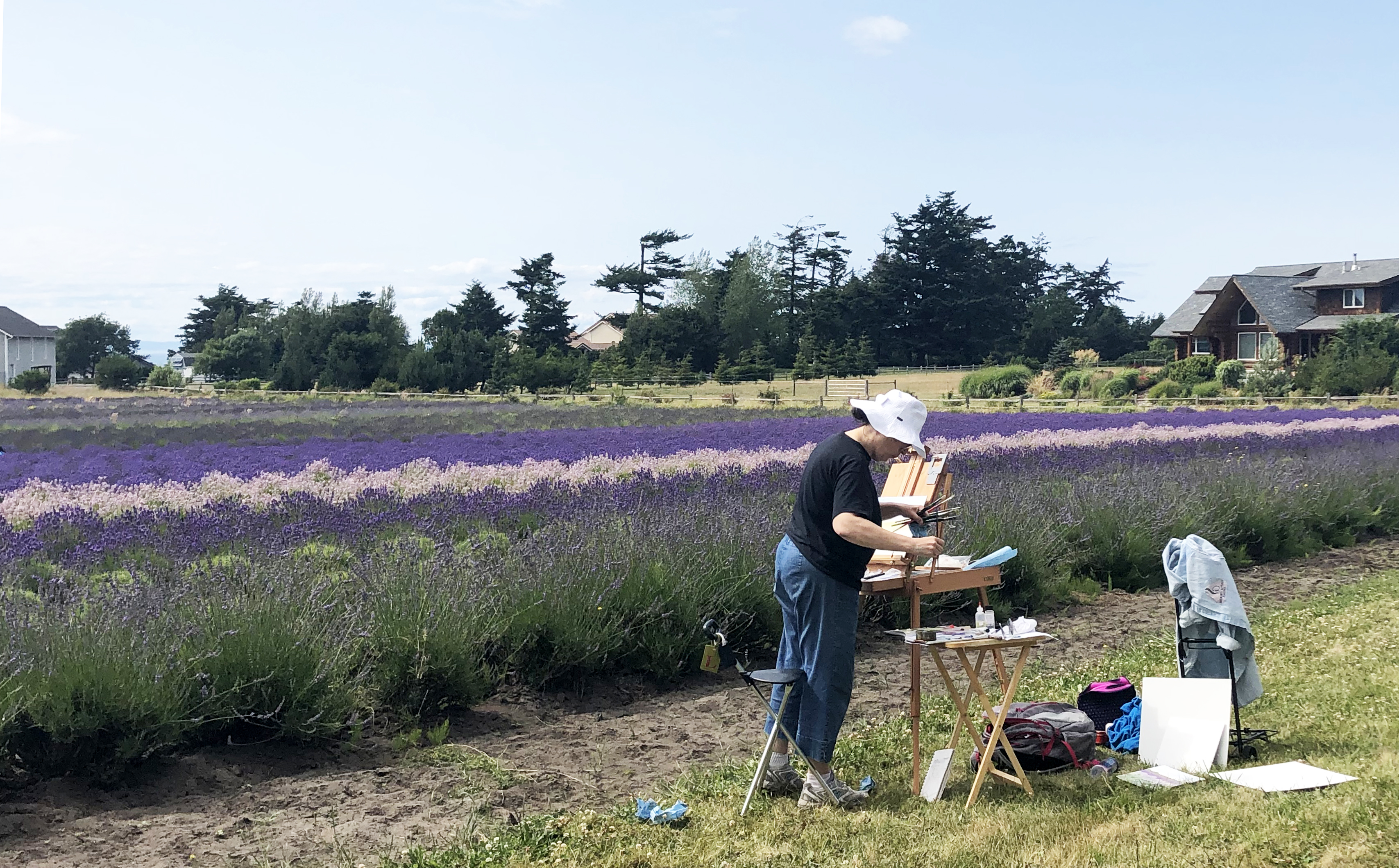
There’s nothing particularly pastoral about this imagery. In fact, there’s nothing particularly pastoral about our world these days. But riding around town reminds me that in my little corner—this tiny edge of our country known as the Quimper Peninsula—the pastoral (the fields, the shepherdess and her sheep, the smell of hay in the warm sun) is the dream. The idealized rural life exists here and in the summer I get to partake: lying on a picnic blanket amidst fields of lavender, petting goats and watching teenage turkeys waddle around a farm. Picking flowers from the county right-of-way and delivering them to someone special, or having them be brought to me in what is now (only in my mind) a Floral Delivery Competition.
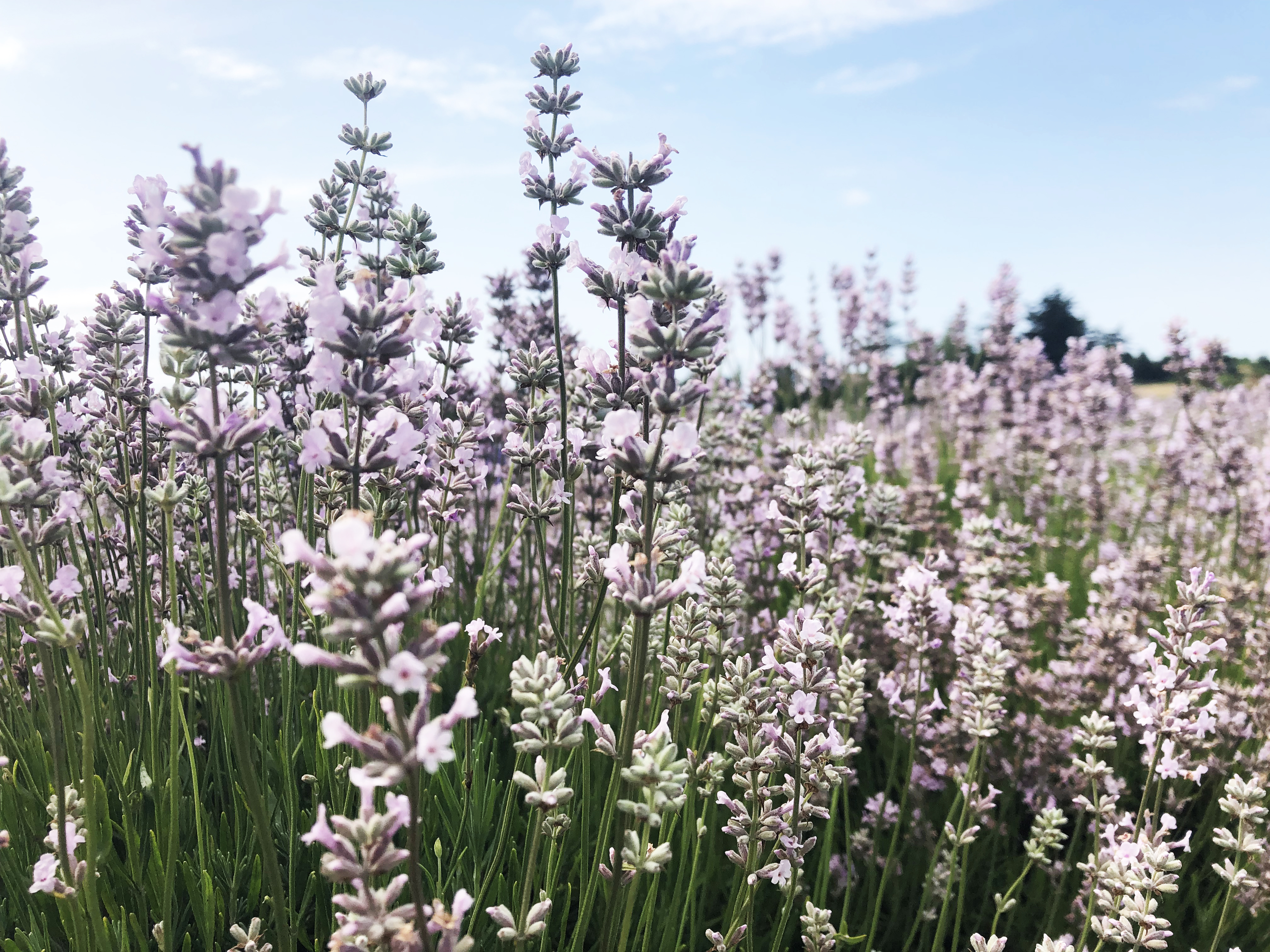
My favorite lavender is the light purple variety.
Lying there in the sun I wonder, what is happiness? Is this it? Picking one ripe raspberry and giving it to someone to enjoy? Or is it knowing that out there in the world, someone is writing about you in a three-page letter with perfect handwriting?
I’ve always felt two things about happiness: one is that it doesn’t exist and is something that people strive for, but can never really obtain. The other is that it’s eating a pink cookie.
My former professor (This is Bragging and Name Dropping) Zadie Smith has an excellent essay on the difference between joy and pleasure, parts of which I have always identified with:
“All day long I can look forward to a popsicle. The persistent anxiety that fills the rest of my life is calmed for as long as I have the flavor of something good in my mouth. And though it’s true that when the flavor is finished the anxiety returns, we do not have so many reliable sources of pleasure in this life as to turn our nose up at one that is so readily available, especially here in America. A pineapple popsicle. Even the great anxiety of writing can be stilled for the eight minutes it takes to eat a pineapple popsicle.”
For me, replace “pineapple popsicle” with “pink cookie.”
There is anxiety in happiness (joy, pleasure, whatever you want to call it). For example, does the fact that I am happy right now mean that I will be sad later? Should that affect my current state of happiness? When summer ends, when my idealization of the pastoral scene crumbles and is revealed to be a saturated field of mud and a smelly barn, will I suddenly be lost?
A smooch.
Zadie writes it beautifully:
“Occasionally the child, too, is a pleasure, though mostly she is a joy, which means in fact she gives us not much pleasure at all, but rather that strange admixture of terror, pain, and delight that I have come to recognize as joy, and now must find some way to live with daily. This is a new problem. Until quite recently I had known joy only five times in my life, perhaps six, and each time tried to forget it soon after it happened, out of the fear that the memory of it would dement and destroy everything else.”
My fear is that I have an addiction to summer. The memory of it sometimes destroys the rest of the year, although it does spurn me on to keep living until the next summer. But living just for summer is like living just for the weekend. What about the other five days? I could just move to a tropical location. Or maybe I am actually just missing out on the beauties of fall and winter, which I have recently been told are just as good in their own ways.
July 31 approaches. I am happily riding my motorcycle around town in a dress. I hate that the days get shorter from now on. I want to pick all the flowers off of all the right-of-ways in the entire county. But I am also going to make a small pact with myself, to continue to find beauty, joy and the pastoral perfection in the Dark Days of winter.
Pastoral
Keats’ poem “Ode to a Nightingale,” is about death for sure. But let me take some of it out of context and fit it to the mood that I am in at this particular moment, where “being too happy in thine happiness” is running through my head on repeat.
‘Tis not through envy of thy happy lot, But being too happy in thine happiness,— That thou, light-winged Dryad of the trees In some melodious plot Of beechen green, and shadows numberless, Singest of summer in full-throated ease.
If we didn’t have winter, would we still feel that immeasurable joy on those first warm, spring days?
First signs of spring.
My job gives me the opportunity to meet and talk with a lot of people. Just last week, I met with a rambunctious crew restoring an old houseboat, talked with a sunny flower farmer, and had lunch with the leader of a local activist group.
Even though other aspects of my job have recently been causing me a lot of (unnecessary) stress, those meetings are what bring me the most joy. I fall in love with someone every day, because humans are interesting, hardworking, creative, smart, and beautiful.
And I feel that not only are these humans fulfilling their purpose by doing whatever it is that they’re doing, but they are also fulfilling their purpose purely by making my day.
Maybe that sounds self-centered. But then I think about how maybe to fulfill my purpose here on this Earth, all I need to do is connect with another human once or twice. Now and then, just have a nice conversation. Share a smile or a thought. Or even a split-second of eye contact. An understanding.
And I like that thought.
A girl and her flowers.
Or maybe my purpose in life is just to lie in the grass on a sunny spring day, soaking in the rays, quietly chatting with a good friend, and observing the early season flowers. I also like this thought.
Beauty is as nourishing as food.
This blog post is sponsored by a crazy amount of optimism and dreaminess.













 Three thoughts from road tripping from Port Townsend, WA to Santa Maria, CA and back again on Highway 101.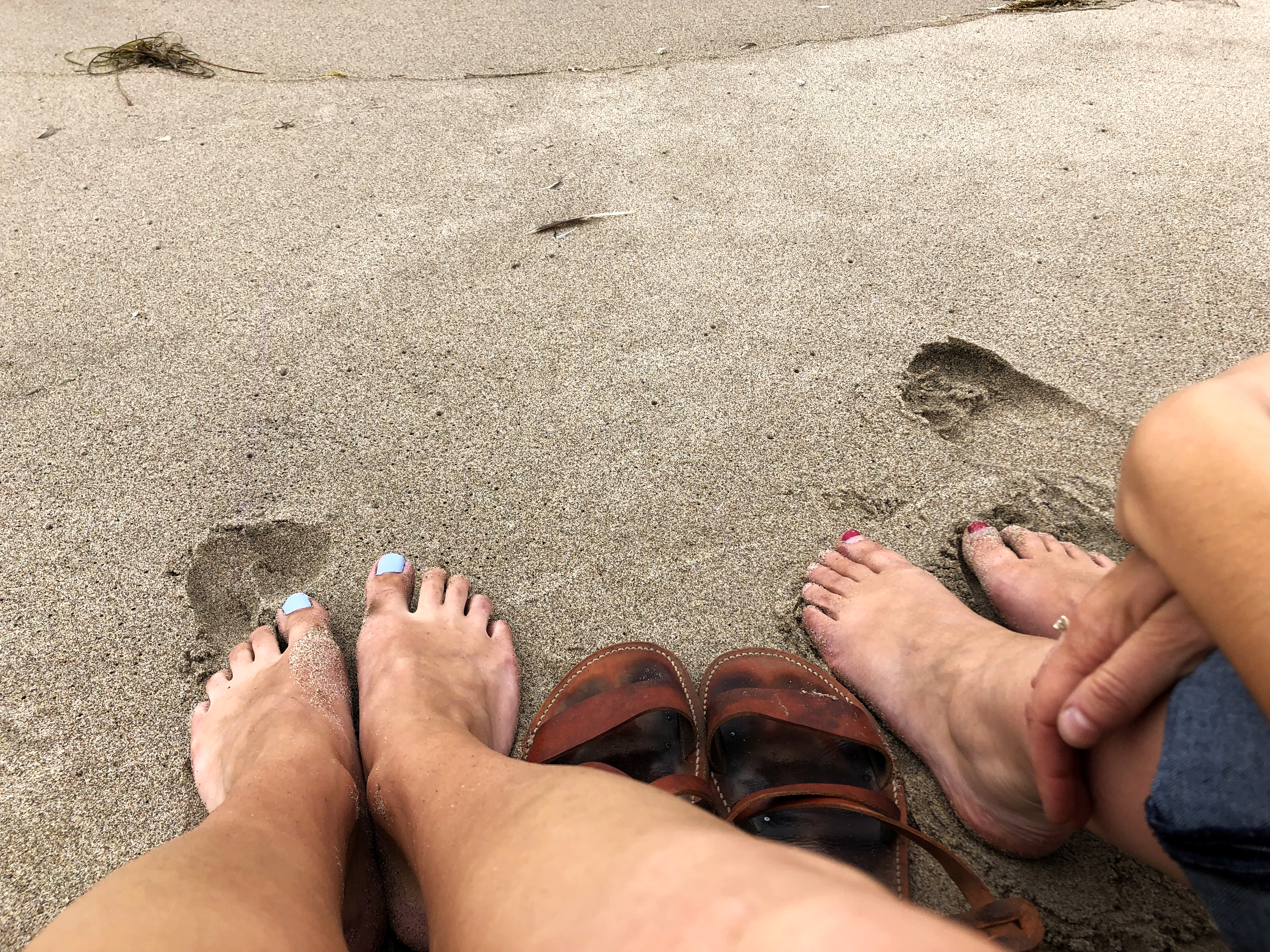







 Lily Haight